


The No-Pull Harness That Won't Wreck Your Dog's Shoulders: 8 Picks Ranked
Not all no-pull harnesses work the same way, and some of the most popular ones can change your dog's gait over time. Here's the difference between gentle redirection and a harness that just makes pulling hurt, plus 8 picks chosen by mechanism and body type.

Affiliate disclosure. This article contains affiliate links. We may earn a small commission if you buy through a link, at no extra cost to you. How we handle recommendations.
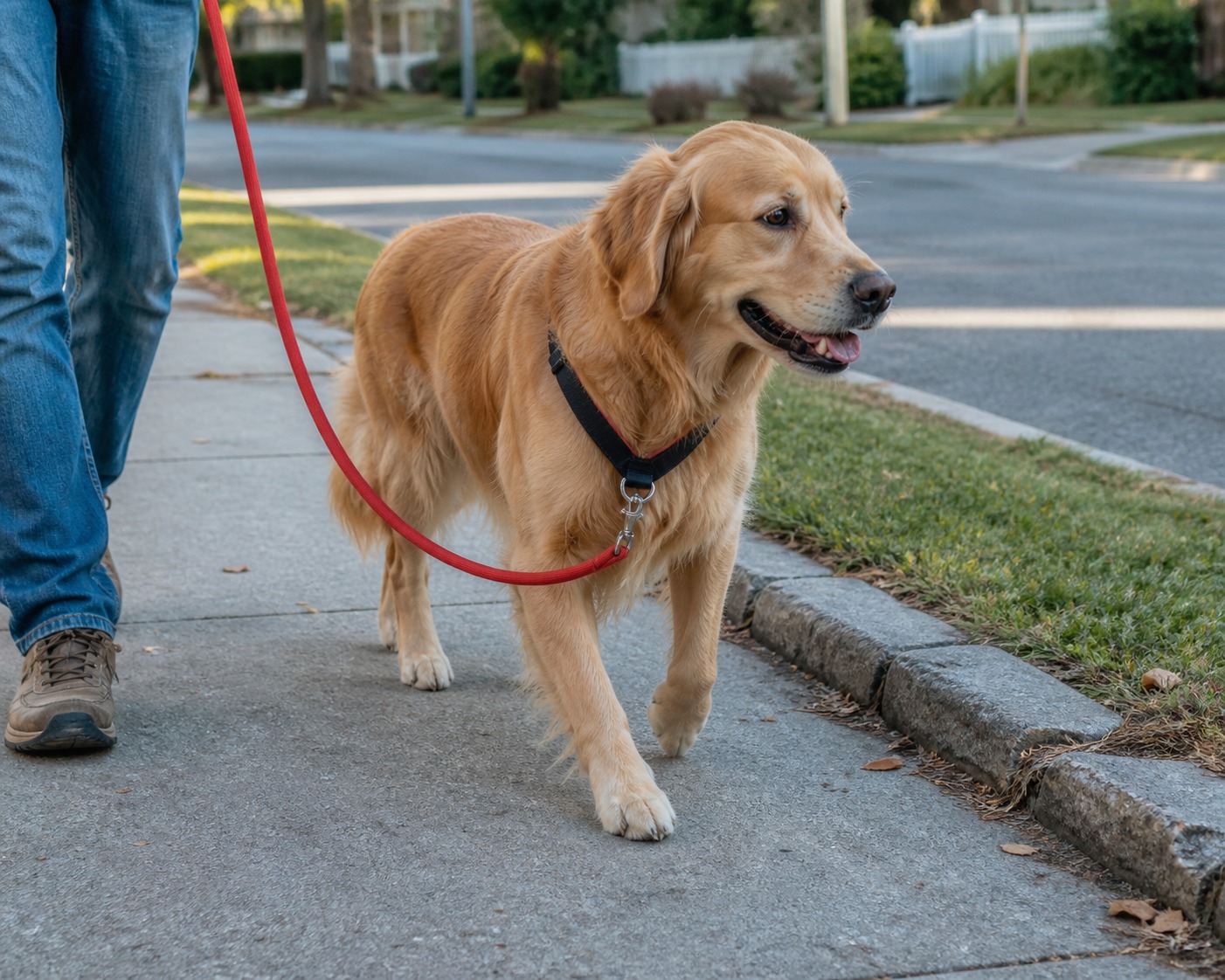
Walk into any pet store and the no-pull harnesses all look like minor variations on one idea: clip the leash to the front instead of the back, and the dog stops dragging you down the block. What the packaging never tells you is that these harnesses stop the pull in two fundamentally different ways, and one of them can quietly cost your dog their shoulders.
Some redirect. When your dog lunges forward, a front leash point pivots them back toward you, so charging ahead simply turns them in a circle and stops working. Others restrict or squeeze. A strap tightens when the dog pulls, and the dog eases off to make the pinch stop. Both are sold under the same “no-pull” banner, but the first is gentle steering and the second relies on discomfort. And a third design problem cuts across both: a horizontal strap that runs straight across the chest, or any strap that sags low over the shoulder, can interfere with a dog’s natural stride. Veterinary physical therapists report seeing more dogs with gait changes and chronic forelimb strain traced back to exactly that.
So this is not a ranking of which harness has the most colors. It is a guide to the two questions that actually decide whether a no-pull harness helps your dog or hurts them: how it stops the pull, and whether its shape lets the front legs move freely. Then eight picks chosen against those answers.
The mechanism: steering good, squeezing use-with-care
A front-clip or dual-clip harness redirects. The leash ring sits on the chest, so a pulling dog gets turned, not pinched, and that turn is what teaches them that lunging goes nowhere. This is the design most trainers reach for first, and the one safest for puppies and dogs with any orthopedic history.
A tightening “martingale-style” harness cinches when the dog pulls. It can be effective on a determined adult puller, but it works through mild discomfort, and it is a poor fit for puppies, dogs with shoulder injuries, or anyone hoping to use it long-term without also training. We include one in this list because it genuinely helps some big pullers, but we flag it for what it is.
“A harness should turn your dog, not punish them,” says Dr. Mara Chen, a Pet Times veterinary contributor. “When a client tells me their dog ‘stopped pulling overnight’ in a harness that tightens, I ask what the dog learned. Usually the answer is that pulling now hurts, not that walking calmly pays off. I would rather see a front-clip that steers, fitted so the chest strap sits clear of the shoulder, paired with a few weeks of rewarding the dog for staying close.”
The shape: look for a Y, avoid the bar across the chest
Hold the harness up before you buy. The front should form a Y that sits in the center of the chest and drops between the front legs, leaving the shoulder joints free to rotate. The design to be wary of is the single horizontal strap that lies straight across the front of the chest, on top of the shoulders. A 2023 biomechanics study and multiple veterinary sources tie that across-the-chest geometry, and straps fitted too low, to altered gait and forelimb strain over time. For a dog who only ambles around the block this is a minor risk; for an athletic dog who runs, hikes, or does sport, it is the single most important thing on this page.
Fit, in three numbers
Measure the base of the neck and the widest part of the chest, just behind the front legs, and match both to the specific product’s chart. Do not size by weight. Then, once it is on, check that you can slide two flat fingers under any strap and that the chest strap sits low enough to clear the windpipe but high enough to stay out of the armpit. Re-check after your dog walks for a minute, because a harness that looks right standing still can ride up into the throat or saw at the leg in motion.
How we picked, and why eight instead of ten
We weighted mechanism (steering over squeezing), front-strap shape, adjustability, and real chafe-and-fit reports over color count. We cut two entries common on competing lists: a “Roman”-style strappy harness that is really a standard back-clip walking harness rather than a true no-pull design, and a near-duplicate padded vest that offered nothing the best-overall pick does better. Eight picks, each genuinely distinct.
rabbitgoo No-Pull Dog Harness
The rabbitgoo No-Pull Dog Harness earns the top spot because it gets the fundamentals right at a low price: a padded overhead vest with both a front steering clip and a back clip, four points of adjustment so you can keep the straps off the shoulder joint, reflective seams, a grab handle, and a breathable mesh lining, in numerous sizes and colors. The honest limit is the plastic buckles, fine for most dogs but the first part to wear, so inspect them periodically.
Best for: most dogs and most budgets, first-time no-pull buyers. Skip if: you want metal hardware throughout for a powerful chewer. Rating: 4.6/5
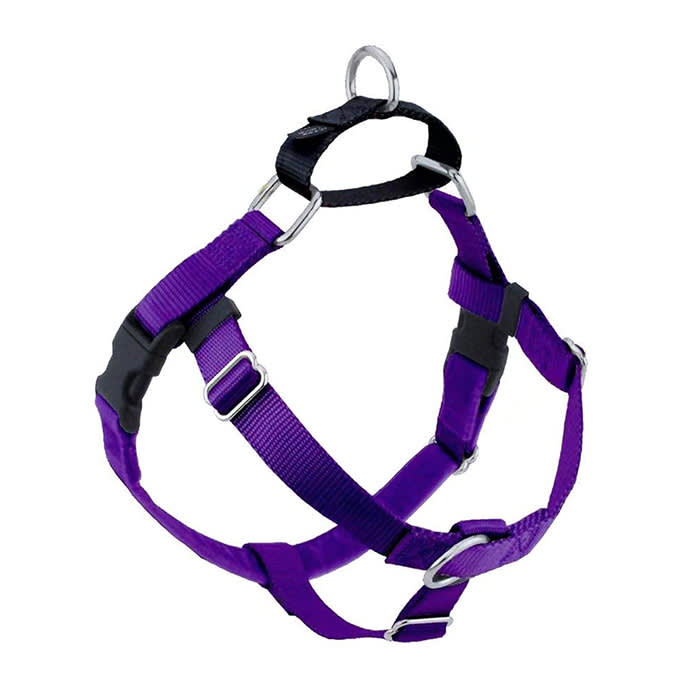
2 Hounds Design Freedom No-Pull Harness
The 2 Hounds Design Freedom is the tightening design done about as thoughtfully as the category gets: a front loop plus a martingale-style chest strap that gently snugs when the dog surges, velvet-lined to reduce rubbing, with a wide size range. It genuinely stops some 70-plus-pound pullers that nothing else slows. But because it works partly through pressure, treat it as a training aid for a strong adult dog, not a default for puppies or dogs with joint issues, and always pair it with rewarding calm walking.
Best for: large, determined pullers, paired with active training. Skip if: puppy, senior, or any dog with shoulder or elbow history. Rating: 4.4/5
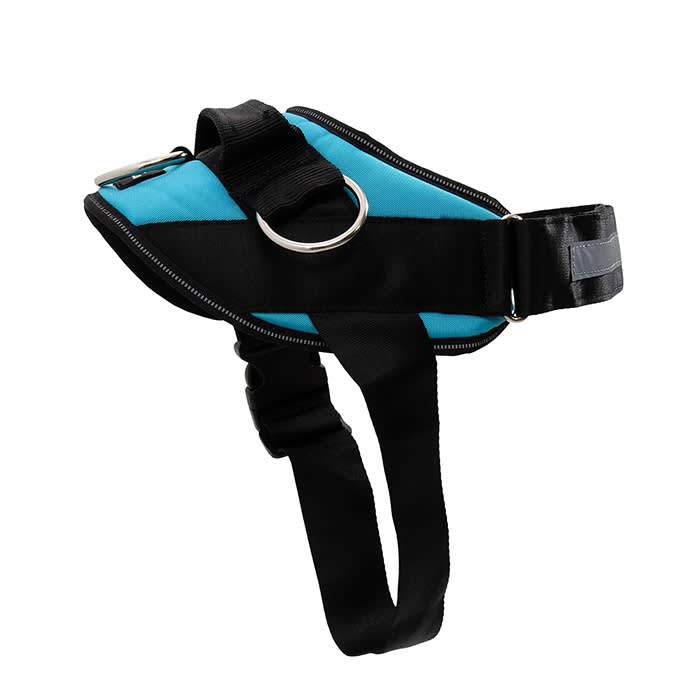
ShawnCo Essential Dog Harness
For a master puller where your priority is keeping all pressure off the windpipe, the ShawnCo Essential Dog Harness spreads load across a padded chest panel and adds side leash rings for heeling work, plus a control handle. It will not magically end pulling, but it lets a strong dog lean without crushing their throat.
Best for: large dogs who pull hard, owners who want side-clip heeling options. Skip if: you want a true gait-neutral Y-front for an athletic dog. Rating: 4.4/5
PetSafe Easy Walk Harness
The PetSafe Easy Walk is the strappy, lightweight option, and one of the most widely used front-clip harnesses there is. Its patented front loop turns a lunging dog back toward you with very little bulk. The tradeoff is honest: it uses a horizontal-ish chest strap, so fit it carefully and keep it for everyday neighborhood walks rather than running or sport, and watch the slim straps for underarm chafing.
Best for: light, simple everyday control on flat walks. Skip if: your dog runs or hikes and needs a gait-neutral Y-front. Rating: 4.3/5
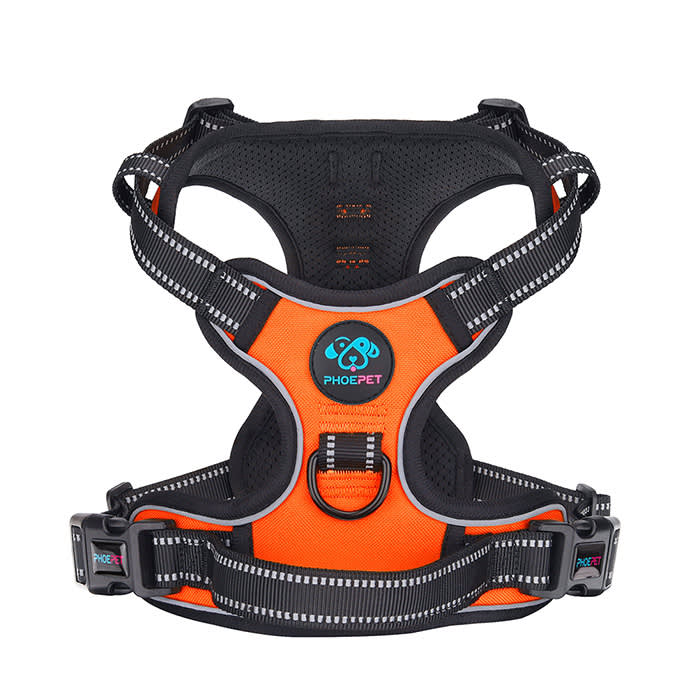
PHOEPET Reflective No-Pull Vest
If you walk at dawn, dusk, or in low light, the PHOEPET Reflective No-Pull Vest weaves reflective material throughout the whole vest rather than one token strip, with front and back clips, a four-way adjustable fit, a handle, and breathable mesh. Plastic buckles are the weak point over the long haul.
Best for: early-morning and evening walkers, visibility-first buyers. Skip if: you need premium metal hardware. Rating: 4.5/5
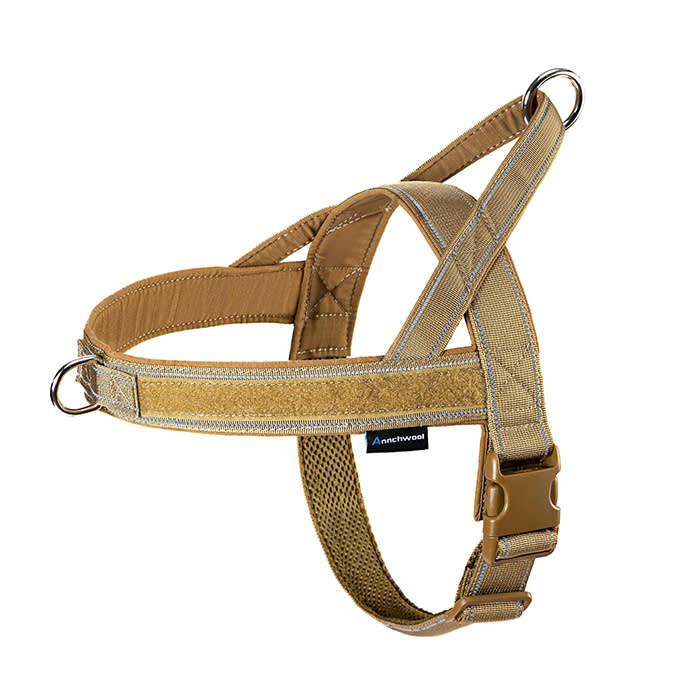
Annchwool No-Pull Dog Harness
For a harness that takes years of abuse, the Annchwool No-Pull Dog Harness uses ripstop nylon with front and back clips, an easy-grip handle, reflective seams, and Velcro panels for ID or training patches. It has only one adjustable strap, so measure carefully, especially for an oddly proportioned dog.
Best for: rough use, dogs who are hard on gear. Skip if: your dog needs lots of adjustment points to fit right. Rating: 4.5/5
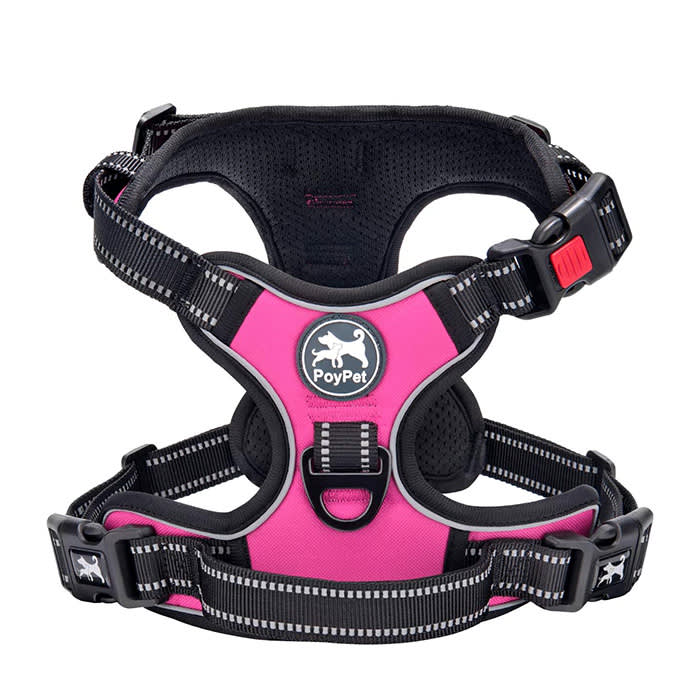
PoyPet No-Pull Dog Harness with Lock
If your dog backs out of harnesses, the PoyPet adds a lockable neck clip on top of a padded, four-way adjustable vest with front and back clips, reflective seams, and a handle. The extra lock is the reason it is here: it is genuinely hard to wriggle out of mid-walk.
Best for: Houdini dogs, nervous dogs who back up when startled. Skip if: you want the absolute lightest harness. Rating: 4.5/5
Zee.Dog SofterWalk Harness
Style without giving up function: the Zee.Dog SofterWalk places its support on the chest rather than the neck, offers front and back clips and a handle, and comes in bold colorways. The catch is limited sizing, so check the chart before you fall for a color.
Best for: owners who want a head-turner that still redirects. Skip if: your dog falls between its limited sizes. Rating: 4.6/5
The honest bottom line
A no-pull harness buys you control today; it does not teach your dog to walk nicely on its own. Pick the steering kind over the squeezing kind, hold it up and make sure the front forms a Y that clears the shoulders, fit it so the chest strap sits clear of the armpit, and then actually reward your dog for staying near you. Do that, and many dogs eventually graduate off the no-pull harness entirely, which is the real goal.
References
- PetMD. “Surprising Dog Harness Dangers to Avoid.” petmd.com.
- Whole Dog Journal. “Finding the Best Front Clip Dog Harness.” whole-dog-journal.com.
- Lafuente, P., et al. “Effect of Harness Design on the Biomechanics of Domestic Dogs (Canis lupus familiaris).” Journal of Applied Animal Welfare Science, 2023.
- Zoetis Petcare. “Types of Dog Harnesses and How to Choose One.” zoetispetcare.com.
Common questions
How do no-pull harnesses actually stop pulling?
Two different ways, and the difference matters. Front-clip and dual-clip harnesses work by steering: when your dog surges ahead, the front leash attachment turns them gently back toward you, so forward pulling stops being rewarding. Tightening or 'martingale-style' harnesses work by squeezing: pulling makes a strap cinch uncomfortably until the dog eases off. The first redirects, the second relies on mild discomfort. We favor the steering kind, especially for puppies and dogs with any joint history.
Can a no-pull harness hurt my dog?
A badly designed or badly fitted one can. Harnesses with a horizontal strap straight across the chest, or straps that sag low across the shoulder, can interfere with the natural gait and, over time, contribute to shoulder strain, especially in active dogs. A Y-shaped front that sits clear of the shoulder joint is the design vets and canine physios prefer. Fit matters as much as design: a harness riding too low is a known source of forelimb strain.
What size no-pull harness do I need?
Measure two numbers, the base of the neck and the widest part of the chest just behind the front legs, and match both to that specific product's chart rather than guessing by weight. Prioritize a harness with multiple adjustment points so you can keep the chest strap sitting clear of the armpit and the shoulder.
Will a no-pull harness train my dog not to pull?
No, and that is the honest part most roundups skip. A no-pull harness manages pulling while you teach loose-leash walking; it is a tool, not a cure. Used alone it can become a permanent crutch. Pair it with rewarding your dog for walking near you, and many dogs eventually graduate to a standard harness.
Sasha Ford is a certified cat behaviour consultant who has worked with shelters, catteries, and private clients across the country. They review all feline behaviour content at The Pet Times, with expertise in multi-cat households, indoor enrichment, and stress-related disorders.
Meet our experts ↗Keep reading
 Product PicksWhy Every Cool Dog's Leash Suddenly Looks the SameLeila Torres · 5 min
 Product PicksTheir First Dog Backpack Fell Apart in Two Weeks. So They Built One That Doesn't.Sasha Ford · 7 min
 Product PicksYour Dog Can't Walk Out. A Pocket-Sized Sling Can Carry Them.Tom Hadley · 4 min
 Product PicksOnly One Piece of Dog Car Gear Actually Saves Their LifeMarcus Webb · 8 min
 Product PicksThe $350 Viral Boot Sold Out. Your Dog's $49 Version Is Better.Sasha Ford · 4 min
 Product PicksThe Escape-Proof Collar Shelters Swear By Comes From a Town of 400Nina Vasquez · 5 min