


The Leash Can't Stop the Pulling. It Can Stop the Injury
A pulling dog is a force problem, not a willpower problem. Here is where that force goes, why retractables are the worst answer, and the gear that protects your dog while you train.

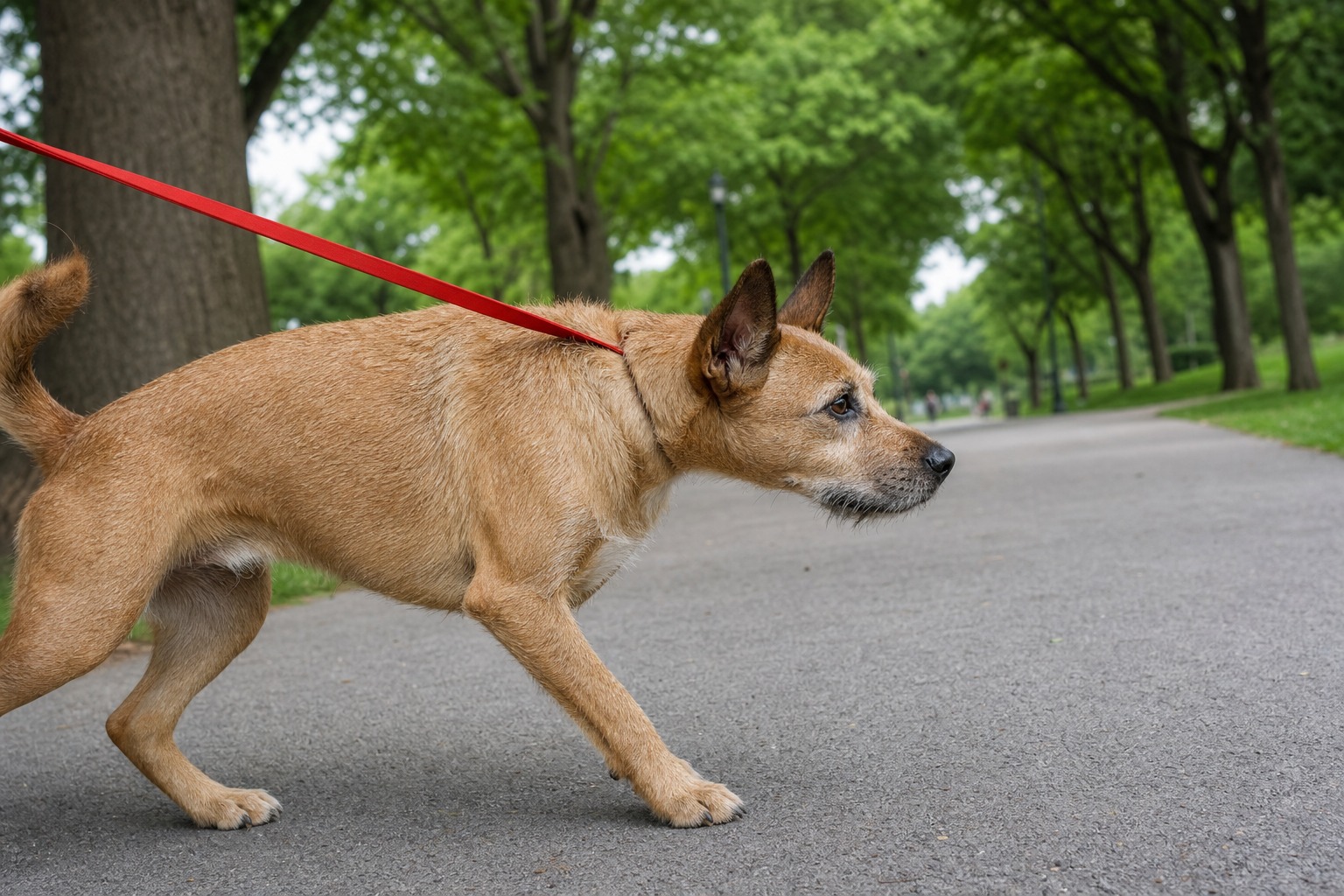
Here is the thing most “best leash for pullers” lists get backwards: no leash stops a dog from pulling. Pulling is a trained-out behavior, not a hardware feature. What the right gear actually does is decide where all that force goes while you do the training, into a harness that spreads it across the chest, or into a thin collar wrapped around a trachea. That distinction is not academic. A 2024 review in the Journal of the American Veterinary Medical Association found leash-related injuries are a real and understudied risk, and a separate review of 443 hand-and-wrist cases documented finger fractures and even amputations from leashes snapping taut. The dog’s end is worse: a hard lunge against a collar can bruise the trachea, displace a vertebra, or spike pressure in the eyes. So choose a leash the way you would choose a seatbelt: assume the worst moment will happen, and pick the thing that protects both ends when it does.
The Worst Answer, Up Front: Retractable Leashes
Most lists bury this. We will lead with it, because it is the single highest-impact choice you can make. A retractable leash trains a dog to pull, because pulling is literally how they get more line, the leash rewards the exact behavior you are trying to end. Worse, the thin cord is the one most associated with injury: friction burns and deep gashes to human hands, and for the dog, a sudden full-extension jolt with nothing to absorb it. If you own one, the most useful upgrade in this guide is throwing it away. Everything below is a better answer.
Follow the Force: How to Read Any Leash Setup
Every pulling-control decision comes down to one question: when your dog hits the end of the line, where does the energy land? Sort your options by that and the right pick becomes obvious.
Onto the neck is the danger zone. A flat collar plus a strong puller concentrates force on the trachea and spine. Fine for a trained walker, risky for a dog still learning.
Across the chest is the safe zone. A well-fitted harness spreads the same force over the dog’s sternum and shoulders, the body’s load-bearing structure, which is why it is the default starting point for big breeds and serious pullers.
Into a shock absorber is the comfort zone. A bungee section softens the jolt of a sudden lunge for both of you, but with a critical catch: used too early, that same give teaches a dog that pulling is comfortable. Bungees are a graduation tool, not a starting one.
Into your hands, instantly, is the control zone. A traffic handle or a second short grip lets you reel in to a few inches in a crowd, at a curb, or the instant you feel a lunge build. This is the single most useful feature on any pulling leash, and you should not buy one without it.
Now the gear, organized by where it sends the force.
Across the Chest
Best Heavy-Duty Harness: Ruffwear Front Range
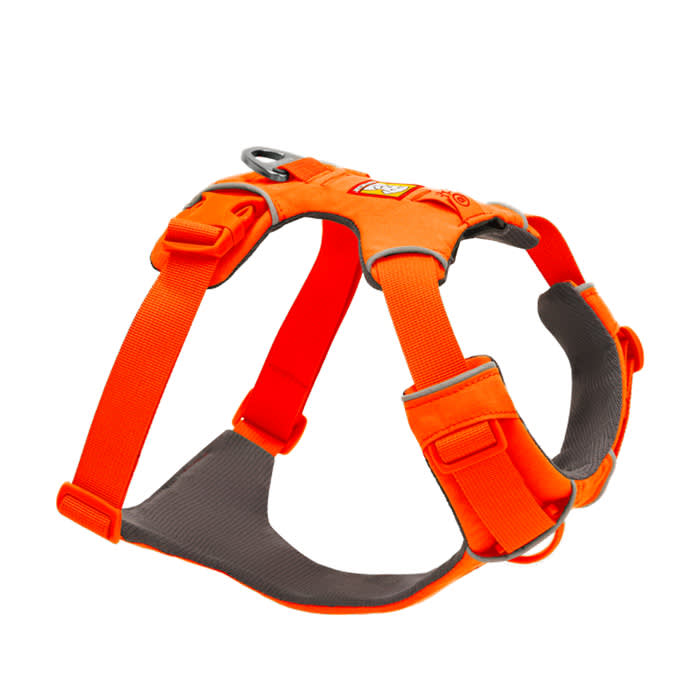
Start here if your dog is big, strong, or both. A front-clip harness like Ruffwear’s spreads force across the chest and adds a front attachment point that turns a forward lunge into a gentle sideways turn, taking the leverage away from the dog instead of fighting it. It is padded at the chest and belly, has four adjustment points for a non-chafing fit, two leash attachment points, and reflective trim for low light. For a dog that can sprain your shoulder, this is the foundation everything else builds on.
Best Slip Lead for Pros: Mendota
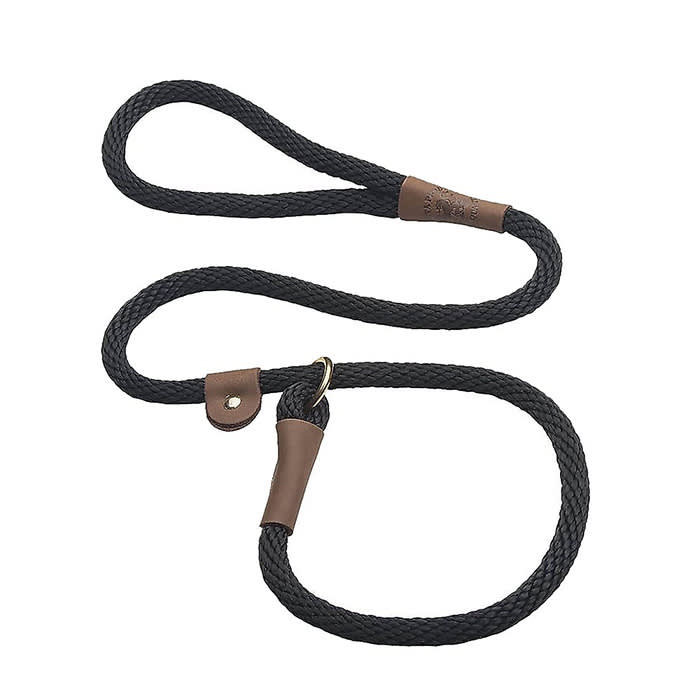
A slip lead is the opposite philosophy, minimalist, immediate, and unforgiving, which is exactly why trainers reach for it. With no hardware between hand and dog, your inputs are felt instantly, and a dog learns to read subtle body-language cues rather than brace against constant tension. Mendota’s British-style lead is weatherproof, packs into a pocket, and fits almost any neck. The caveat is real: a slip lead places force on the neck, so it belongs only with a dog you already have a training relationship with, never a green puller. In the right hands it is the most responsive tool there is.
Into a Shock Absorber
Best Bungee Leash: EzyDog Zero Shock
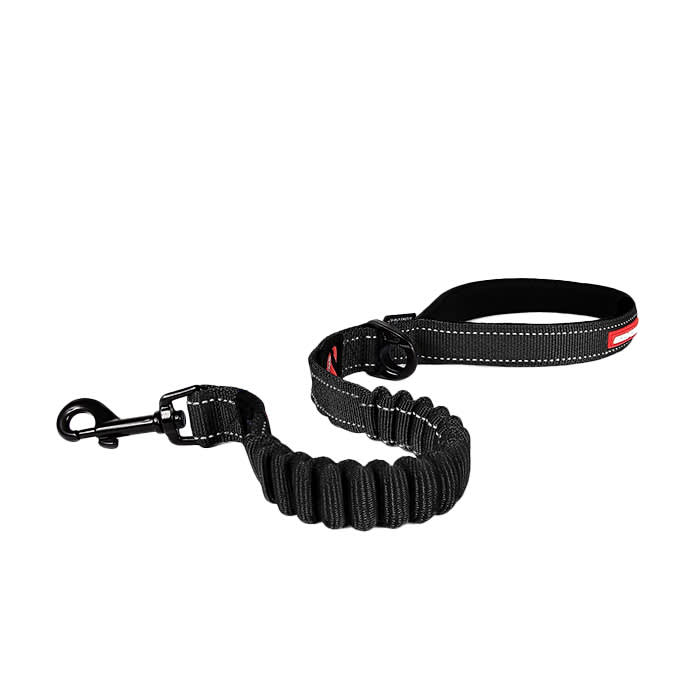
For a dog who has made real progress and is ready for more freedom, the EzyDog Zero Shock packs a lot into a small package: “Soft Touch” webbing that takes the sting out of sudden movements, a secondary traffic handle for tight spots, reflective stitching, and a clip for keys. Remember the rule, this is for a dog past the pulling stage, not one in the thick of it. Give a bungee to an untrained puller and you are teaching them that yanking feels fine.
Best Hands-Free Leash: Mighty Paw Bungee
New since the original version of this guide, and a genuinely useful category: a waist-worn bungee leash that keeps your hands free for treats and clicker work, which matters because rewarding good behavior the instant it happens is most of the training. The elastic section absorbs jolts, and the waist anchor keeps a moderate puller from torquing your arm. Pair it with a front-clip harness, not a collar, so the force still lands on the chest. Best for jogging or hiking with a dog who pulls from enthusiasm rather than panic.
Into Your Hands, Instantly
Best Double-Handle Leash
A double-handle leash gives you two lengths in one: a normal six feet for open space, and a second handle near the clip that drops your effective lead to a few inches the moment you need it. That short setting is also a training aid, it lets you signal “too far” by simply shortening and stopping, and makes practicing sit and heel at your side easy. Look for one rated for medium and large dogs with solid hardware. The braided-leather versions look like fashion but are built as serious training tools.
Best Rope Leash: Ruffwear Knot-a-Leash
A climbing-rope leash is the durable everyday workhorse, comfortable in the hand, weatherproof, and packable, with a tri-action auto-locking carabiner that will not pop open on a hard pull. On its own it does not control pulling, but clipped to a front-range harness it is the leash you will actually reach for every day, and it outlasts cheaper webbing by years.
The Training That Makes the Gear Work
Gear buys you safety; training buys you the calm walk. Start by naming the why: a dog who pulls from fear needs a different response than one pulling toward a thrilling smell. Then react correctly, do not pull back, and do not follow the tug. Dogs have a hard-wired opposition reflex, so pressure in one direction makes them push harder against it. Instead, stop dead, and resume only when the line goes slack. After enough of these standstills, the dog learns that pulling is the slowest way to get anywhere. Keep sessions short, since puppies and untrained dogs have brief attention spans, and reward slack-leash walking enthusiastically the instant it happens, which is exactly why a hands-free or traffic-handle setup that keeps a hand free pays off.
The Bottom Line
Every dog pulls at some point, and the cost of getting it wrong is not just a sore shoulder, it is whiplash, a bruised trachea, or a vet visit for your dog. Match the tool to the stage: a front-clip harness for an untrained or large puller, a traffic handle or double-handle for instant control, a bungee or slip lead only once your dog has earned it, and a retractable for no dog, ever. The leash will not end the pulling. Your training will. The leash just makes sure neither of you gets hurt before it does.
References
- Mittal, Rohun, et al. “Hand and Wrist Dog-Leash Injuries in the Outpatient Setting: A Review of 443 Cases.” Hand (Sage), 2024.
- “Leash-Related Injuries Associated with Dog Walking: An Understudied Risk for Dog Owners?” Journal of the American Veterinary Medical Association, 2024.
- “Controlling Pulling on Walks.” VCA Animal Hospitals.
- “How to Choose and Use a Dog Harness.” American Kennel Club.
Sasha Ford is a certified cat behaviour consultant who has worked with shelters, catteries, and private clients across the country. They review all feline behaviour content at The Pet Times, with expertise in multi-cat households, indoor enrichment, and stress-related disorders.
Meet our experts ↗Keep reading
 Product PicksYour Tug Toy Isn't Failing at the Rope. It's Failing at the Handle.Marcus Webb · 9 min
 Product PicksYour Puppy's First Leash Should Be Boring. Here's the Upgrade Path AfterSasha Ford · 9 min
 Product PicksYour Dog Can't Walk Out. A Pocket-Sized Sling Can Carry Them.Tom Hadley · 4 min
 Product PicksYour Hand Is the Worst Place for a Leash. 7 Hands-Free Picks for Active Dogs.Marcus Webb · 6 min
 Product PicksDog Ear Muffs for Fireworks: What They Actually Do, and the 6 Worth BuyingNina Vasquez · 6 min
 Product PicksThe Poop-Bag Holders That Pass the One-Handed Test (and Still Look Good)Leila Torres · 4 min