


South Korea Outlawed Its Dog Meat Trade. The Hard Part Is the Half-Million Dogs Left Behind.
In 2024 South Korea passed a landmark law ending its dog meat industry by 2027. Two years on, most farms have closed, but the question the law couldn't answer is what happens to the dogs still on them.

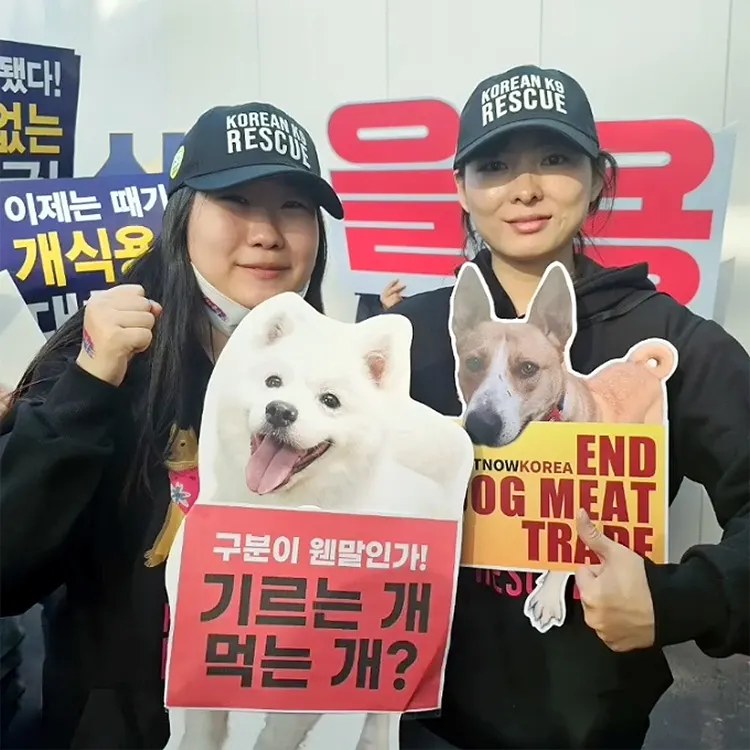
On January 9, 2024, South Korea’s National Assembly did something animal advocates had spent decades believing they’d never see: it voted, almost unanimously, to end the country’s dog meat industry. The tally was 208 in favor, with two abstentions. The bill bans breeding and slaughtering dogs for meat and gives the trade a three-year runway to shut down, making the practice fully illegal in 2027.
That’s the headline, and it’s a genuine milestone. But a law is a starting line, not a finish, and the most important part of this story isn’t the vote. It’s the arithmetic left over afterward: hundreds of thousands of dogs still sitting on farms that now have an expiration date, and a plan for them that is far thinner than the plan for the industry itself.
Why the ban happened when it did
The vote didn’t come out of nowhere. It rode a collapse in demand that had been building for years. A decade ago, roughly 17,000 dog-meat farms operated across the South Korean countryside; by the time the bill passed, rescue groups estimated the number had fallen to half that or less. Consumption had cratered alongside it. A 2022 poll found that only about eight percent of South Koreans had eaten dog meat in the past year, and 64 percent opposed the practice outright, up sharply from 27 percent opposition in 2015.
The generational split is the clearest signal of where the country is heading. Younger South Koreans overwhelmingly reject dog meat, and the most commonly cited reason people still eat it is social pressure from older relatives rather than any real appetite for it. In other words, the industry was already dying. The law simply set a date.
A ban like this doesn’t create public opinion, it ratifies it. By the time a legislature moves on something this culturally loaded, the culture has usually already moved. What the law does is protect the animals caught in the last, most desperate stretch of a dying trade, and that’s where the real work starts.
What the law actually does
The legislation targets the supply side. Breeding or slaughtering dogs for meat becomes punishable by up to three years in prison or a fine of 30 million won, roughly 22,800 dollars. Notably, the bill sets no penalty for eating dog meat, a deliberate choice that keeps the focus on shutting down farms and slaughterhouses rather than criminalizing individuals.
To ease the transition, the law offers farmers, butchers, and restaurant owners a three-year grace period plus compensation and government support to close or convert their businesses. That carrot-over-stick approach was meant to head off the fierce resistance an outright, immediate ban would have provoked from an industry facing sudden ruin.
The question the law struggles to answer
Here is where the milestone runs into reality. Government figures cited when the law passed pointed to nearly half a million dogs that would need to be moved out of the industry as farms wound down. Relocating, sheltering, and rehoming that many animals, many of them large-breed dogs raised in barren cages with little human socialization, is a logistical challenge on a scale no shelter system is built for.
The dogs on these farms have typically lived in small metal cages exposed to the elements, given just enough to stay alive. They are not, for the most part, socialized pets ready to slot into a family home. Preparing them for adoption takes time, space, staff, and money, and the compensation structure was designed to close businesses, not to guarantee a soft landing for every animal.
What newer reporting reveals
Two years on, the picture is both encouraging and troubling. By May 2026, government and advocacy figures indicated that around 78 to 82 percent of dog farms had closed, with more than 1,200 farms shut down since enforcement ramped up. Compensation ran from roughly 225,000 to 600,000 won per dog, scaled so that farmers who closed earliest received more, an incentive to move fast rather than run out the clock.
But the number that should give anyone pause is what officials couldn’t say. Reporting in 2026 found that the agriculture ministry did not track where dogs went once farms emptied, with one inspector stating plainly that the government was “not involved in what was done with the dogs.” Estimates put around 20,000 dogs still on farms as of 2026, and the fate of many who left the closed ones remains genuinely unclear. A ban that ends an industry is not the same as a system that saves every animal in it, and that gap is exactly where rescue organizations are still fighting.
How to help while the clock runs
During the grace period, and in the many countries that have no such ban at all, there’s real work to support. Advocates say one of the most useful things is dismantling the myth that a large consumer demand for dog meat still exists; specialists describe it as a trade driven by sellers rather than households. Beyond that, the organizations doing hands-on rescue and rehoming, groups like Humane Society International, Korean K9 Rescue, the Soi Dog Foundation, the Duo Duo Project, and others, rely on donations, fosters, adopters, and people willing to spread their message. The law bought these dogs a future. Whether they get to live it is still being decided.
References
- Humane World for Animals: South Korea bans dog meat industry
- Humane World for Animals: Two years after South Korea banned the dog meat industry
- The Korea Herald: Law to ban dog meat takes effect
- NPR: South Korea outlaws dog meat industry
- Reuters: South Korea’s parliament passes bill to ban dog meat trade
Leila Torres leads our Living coverage, from home life and travel to the products and rescue stories that come with sharing a life with animals. She edits and writes across the section, with a soft spot for pieces about the bond between people and their pets.
Meet our experts ↗Keep reading
 LivingThe Cheapest Way to Empty a Shelter Is the One Nobody UsesJames Okafor · 6 min
 LivingHe's Fostered Almost 40 Pit Bulls. The Stigma Is the Only Thing He Can't Rehome.Leila Torres · 8 min
 LivingNobody Wanted Elvis. Then an Elvis Impersonator Walked In.Nina Vasquez · 3 min
 LivingThe Blue Dogs of Chernobyl Aren't Radioactive. The Truth Is Grosser.James Okafor · 5 min
 LivingHe Left Jail After Five Days. One of His Dogs Was Already Dead.Sasha Ford · 4 min
 Living'Unadoptable' Is a Description of the Building, Not the DogDr. Amara Solis · 7 min