


Forget 'Does My Cat Love Me?' The Real Question Is Whether They Feel Safe. 6 Signs They Do.
Cats can't tell us how they feel, and 'love' may not even be the right frame. For a small prey animal, safety is the whole game, and these six behaviors show your cat has decided you're it.

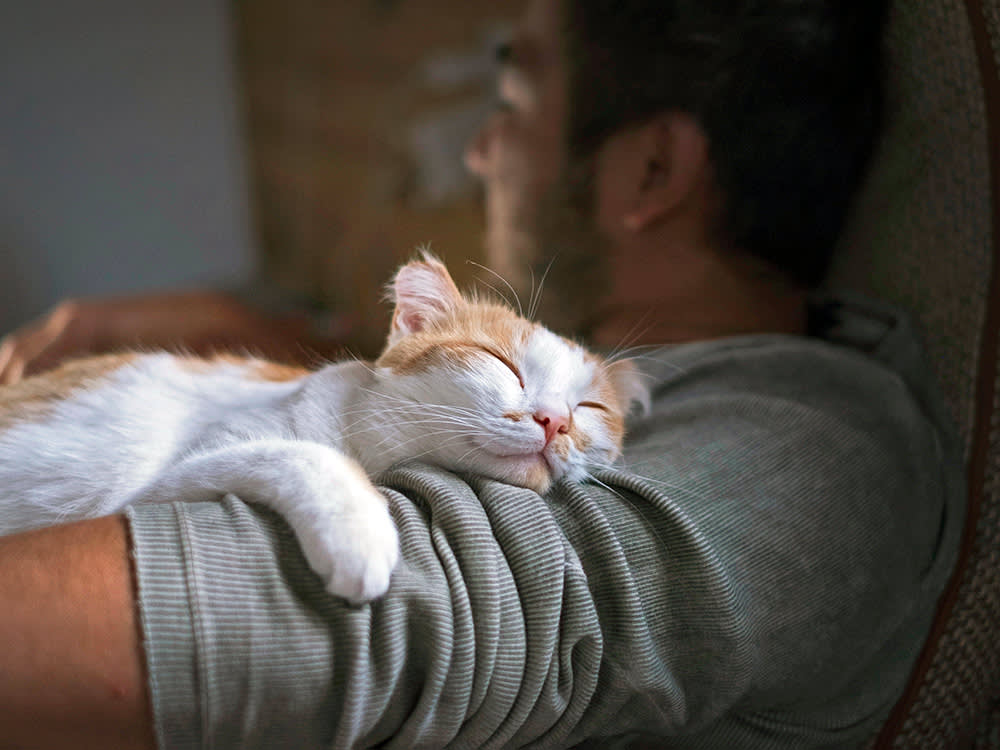
You love your cat. The harder question, the one that keeps cat people up at night, is whether the feeling is mutual. And it’s genuinely hard to answer, because cats can’t sit you down and explain themselves. Love is a complicated, human-shaped idea, and it may not map neatly onto a cat’s inner life at all.
So try a different lens. For a small animal wired by evolution as prey, the currency that matters most isn’t romance, it’s safety. Safety is survival. Whatever love means to a cat, it almost certainly grows out of feeling secure. Read your cat through that lens and the signals get a lot clearer.
People want a cat to prove love the way a dog might, and cats just don’t operate that way. What you’re really looking for is evidence that your cat feels safe with you. Safety is the foundation everything else, including affection, gets built on top of.
Here are six signs your cat has decided you’re their safe place.
1. They choose your orbit
A cat who feels safe tends to gravitate toward wherever you are. This doesn’t mean they’re plastered to your side, plenty of cats dislike being handled and still want proximity. Given the choice, though, a secure cat will usually park themselves wherever you are instead of retreating somewhere solitary. The sign is even stronger when they come looking for you specifically at the moments they’re startled or on edge. A cat who seeks you out when spooked is telling you that you register as protection.
2. They let their guard down around you
Watch for a cat who lounges near you and allows access to the parts they instinctively protect, their belly, throat, and paws. Even a cat who turns their back to you is paying you a compliment: they’re comfortable enough to stop monitoring you every second. It can look like they’re ignoring you. In cat terms, it means they don’t feel the need to keep watch. A cat who feels unsafe, by contrast, stays watchful and avoidant.
3. They sleep deeply near you
Nothing leaves an animal more exposed than real sleep. So a cat who conks out near you, curled at the foot of the bed or dozing on the couch beside you, is making a genuine statement of trust. Cats also fake sleep to keep a lazy eye on things, so the tell is depth: soft, slack, actually-out sleep in your presence is one of the clearest safety signals there is.
4. They do their most vulnerable things in front of you
Some acts leave a cat exposed, and doing them while you’re around says they don’t consider you a threat in those moments. Using the litter box with you in the room is one. Eating comfortably in your presence is another. Both are moments a wary animal would rather keep private. If your cat also insists on trailing you into the bathroom, that’s less about the plumbing and more about wanting to be near you while you’re doing something vulnerable, too.
5. They grant you privileges no one else gets
A cat who’s truly sold on you will allow handling they’d flatly refuse from anyone else, scooping them up, trimming their claws, checking their ears. You may not have unlimited access, but you’ll have a level of permission your guests and even other household members don’t. That exclusive allowance is a quiet, specific vote of confidence.
6. They greet you and check back in
A cat who trots over when you come home, tail held upright like a little question mark, is giving you a friendly, affiliative hello, the feline equivalent of a warm greeting. Cats who feel secure with a person tend to acknowledge them, come and go, and periodically touch base, rather than treating them as furniture to be avoided.
Deepening the trust you’ve already built
Whether or not your cat ticks every box above, you can always strengthen the bond, and the sturdier that foundation, the better your whole relationship gets.
Honor the “no.” If your cat signals they’ve had enough, pushing your hand away, walking off, growling, listen. You still have to care for them, so this doesn’t mean claws grow forever, but when they’ve hit their limit on an activity, back off and revisit it another time.
“The fastest way to erode a cat’s trust is to override their ‘no,’” says Sara Lim, a cat behavior consultant. “When you honor their signals, they learn they have some control over their own world, and paradoxically, that’s what makes them willing to let you do more over time.”
Get fluent in their body language. A cat’s signaling toolkit is small, so decoding it is essential. A cat showing you their belly may want a rub, or may be in a defensive posture, context decides. Side-eye, a hunched fearful stance, or flattened ears mean stress. Lip licking is a known distress signal, not a request for treats. Reading these cues isn’t just good manners; it prevents bites and scratches. Cats rarely lash out with no warning. Unless they’re startled, they almost always broadcast discomfort first. It’s on us to notice.
Seek enthusiastic consent. Just because a cat tolerates being petted doesn’t mean they feel safe. Let your cat approach you first, offer a hand to sniff, then pet for a few seconds and pause. If they lean in and come back for more, continue. If they move off or don’t re-engage, that’s a polite “no thanks,” and honoring it builds security.
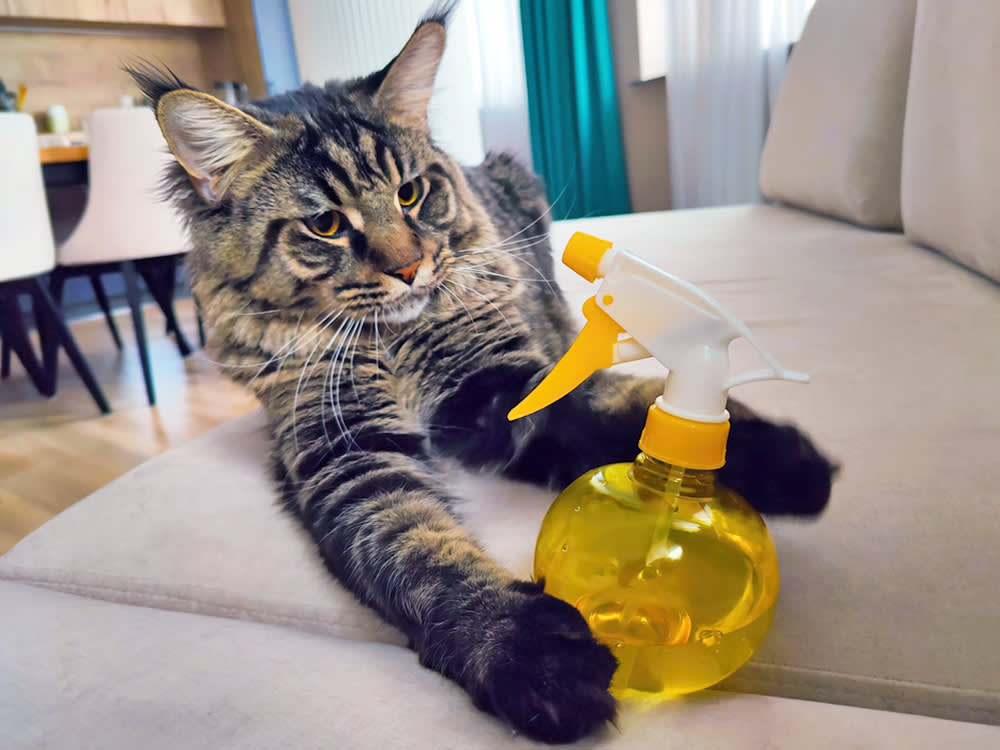
Be predictable, and skip the punishment. Cats thrive on routine, so keep your interactions calm and consistent, predictable feeding, play, and reactions all help a cat relax. And if your cat does something you’d rather they didn’t, don’t yell or reach for a spray bottle. Negative tactics don’t create lasting change; they just make a cat anxious and can damage your bond. To move a cat off a spot, tempt them elsewhere with a wand toy, treats, or catnip instead of forcing them.
What newer research adds
The idea that cats form real, secure attachments to their people isn’t just wishful thinking anymore. Research using the same “secure base” test designed for human infants and dogs has found that most cats form secure attachments to their caregivers, seeking comfort from a familiar person and then relaxing enough to explore. In other words, your cat treating you as a safe base isn’t you projecting, it’s a measurable bond that looks a lot like the ones we recognize in other species.
Your cat may never write you a love letter. But safety speaks louder than sentiment. Show them you’ll listen, respect their limits, and stay predictable, and they’ll answer in the language that counts: they’ll loosen up in your presence, come find you, and stay trusting even when they’re most exposed. That’s roughly the feline equivalent of saying they love you.
References
- Vitale, Kristyn R., et al. “Attachment bonds between domestic cats and humans.” Current Biology, vol. 29, no. 18, 2019. doi.org
- Vitale, Kristyn R., and Monique A. R. Udell. “The quality of being sociable: The influence of human attentional state on the behavior of domestic cats.” Behavioural Processes, 2019.
- International Cat Care. “Understanding your cat’s body language.” icatcare.org
Dr. Chen is a small-animal veterinarian who leads health and safety coverage at The Pet Times. She writes and reviews the bulk of our illness, condition, and safety content, translating clinical guidance into clear, practical advice owners can act on at home.
Meet our experts ↗Keep reading
 TrainingYour Cat Isn't Being Weird. Your Bowl IsDr. Ravi Mehta · 8 min
 TrainingYour Cat Is Trying to Bury Something. The Question Is What.Dr. Lena Park · 8 min
 TrainingThe Paw in the Water Glass Is 10,000 Years of InstinctDr. Mara Chen · 6 min
 TrainingYour Cat Probably Taught Itself to Fetch, and That's the Real HeadlineLeila Torres · 5 min
 TrainingYour Cat Isn't Being Naughty. The Chewing Is a MessageDr. Nina Kohl · 9 min
 TrainingThe Spray Bottle Doesn't Teach Your Cat to Stop. It Teaches Them to Wait Until You Leave.Dr. Ravi Mehta · 6 min