


Can You Overexercise a Dog? The Signs You've Pushed Too Far
Exercise is good for dogs, but there's such a thing as too much. Learn the signs of an overexercised dog, how weather and breed change the math, and how to build endurance safely.

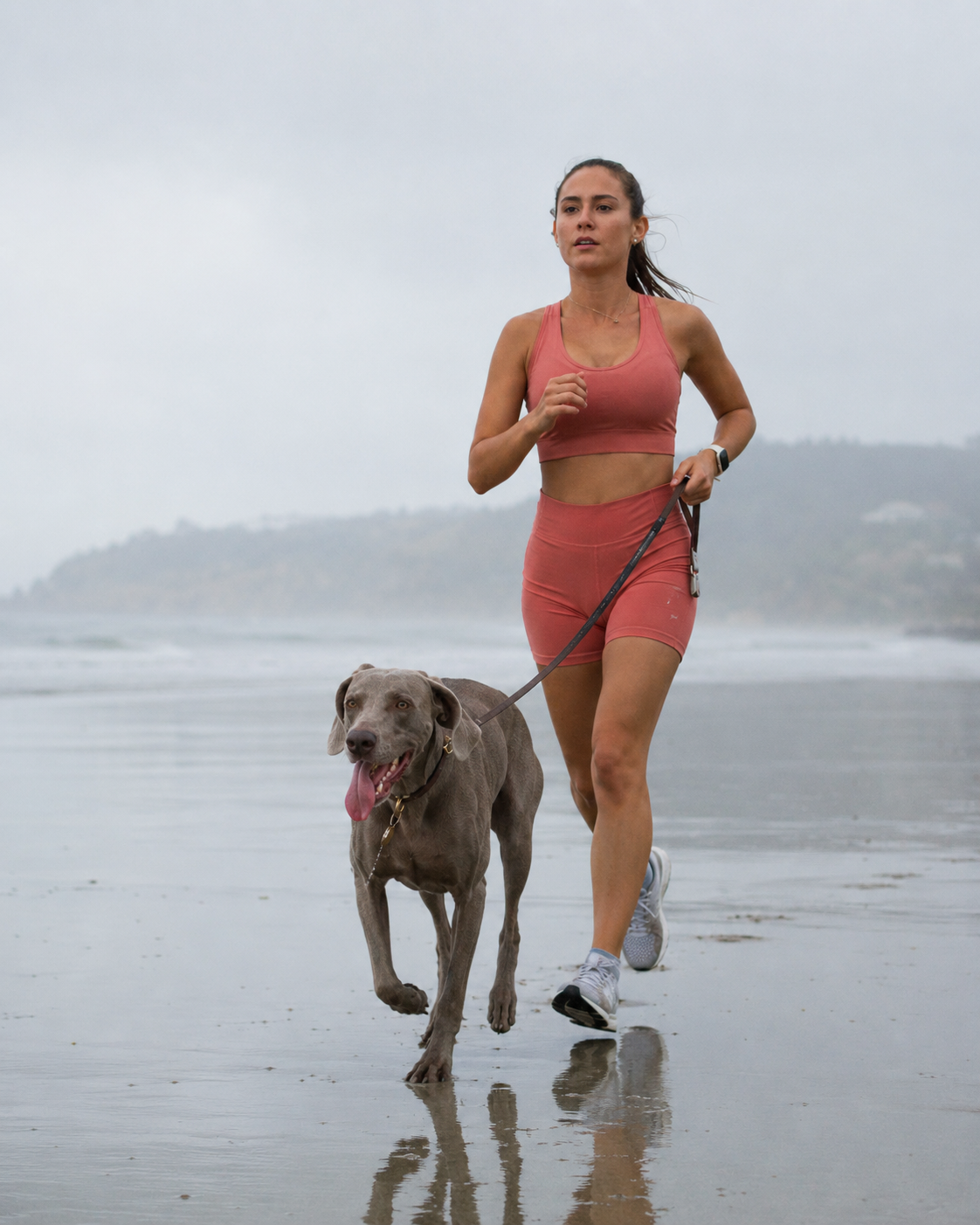
Picture this: you’re a few miles into a hike on a warm afternoon, feeling great, when your dog plants themselves on a rock and flatly refuses to move. It’s a humbling moment, and a common one. We tend to assume our dogs are ready for any adventure at a moment’s notice, and exercise is good for them, right? Mostly. But there’s such a thing as too much of a good thing. Just like us, a dog pushed too far, too fast can get fatigued, overheated, or injured.
The fix isn’t to do less, it’s to read your dog better and build them up sensibly. Here’s how to tell when you’ve overdone it, how to prevent it, and how to condition your pup so they can do more.
Signs you may have overexercised your dog
Whether you’re hiking, running, or just doing a long loop around the neighborhood, your dog’s behavior and energy level are your best gauge. The rule of thumb: if they look tired, they probably are.
If a dog starts panting harder, or they’re hanging back and lagging behind instead of trotting up front with you, that’s a signal it’s getting too long for them. Dogs aren’t great at quitting on their own, so it’s on us to notice.
And, of course, if your dog sits down on a rock and refuses to budge, the hike is officially too long.
Some dogs will push through discomfort during a strenuous outing, so the warning signs can show up later. After a longer-than-usual walk or run, keep an eye on how your dog recovers at home.
Delayed soreness is real. If a dog rests for a couple of hours after a big walk, then stands up stiff or sore and you notice limping, that’s often a sign the outing was too much for them.
Soreness isn’t the only risk, either. Repeatedly overexercising a dog can overstress their muscles, tendons, and ligaments and lead to a more serious soft-tissue injury.
Weather changes the math
Overexercising isn’t only about distance and speed. Weather is a major factor in how much your dog can handle on any given day. In warmer months especially, dogs can develop heat exhaustion even when covering the same distance they’d breeze through in cooler weather.
When it’s hot, watch for signs of heat exhaustion: excessive or shallow panting, and in more severe cases lethargy, disorientation, drooling, and dry gums that are bright red rather than pale pink. Those can signal that your dog is overheating to the point of a medical emergency.
If your dog seems to be overheating, the goal is to cool them down, but not so abruptly that you shock their body. Put them in front of a fan, offer small sips of water, and splash water in their armpits. Avoid draping an ice-water-soaked towel over them, which can actually trap heat against their body. And when in doubt, call your vet.
It’s always safer to call. Maybe your dog doesn’t need to come in, but the clinic can advise you over the phone and help you decide.
Heat isn’t the only seasonal hazard. In winter, make sure your dog stays warm, stays hydrated, and isn’t damaging their paws. Paw-pad injuries spike in cold weather, often from rough terrain and crunchy snow cutting up soft pads, or from a dog wearing down the protective pad covering too fast, which itself can be a sign they’re doing too much.
Every dog is different
Not every dog is built for the same activity in the same conditions. Brachycephalic dogs, the short-nosed breeds like Bulldogs and Pugs, are more prone to breathing problems and therefore more likely to overheat when pushed past their limits.
Coat type matters, too. A heavy-coated arctic breed like a Newfoundland or Saint Bernard heading out for a midday walk in peak summer is at real risk of overheating. By the same logic, a short-haired breed may not be able to stay active for long in cold, snowy conditions. Know your individual dog and adjust accordingly.
How to condition your pup for more
Whenever you exercise your dog, monitor them for discomfort and provide plenty of water and chances to rest. But the single best way to avoid overexercising them is to deliberately build their fitness over time.
It helps to think about canine conditioning the same way you’d think about human training. A marathon runner doesn’t run a marathon out of nowhere. They titrate up, adding distance in intervals, mixing in rest days, and avoiding running every single day, which would just raise the risk of overuse injury.
With dogs, though, it’s more useful to measure time than distance, because a dog might cover a mile in 15 minutes or stretch it to an hour depending on how many sniff breaks they take. A good starting rule: if your dog’s walks are usually a solid 10 minutes, increase the walk time by about three to five minutes every other week. Slow and steady builds real endurance without the injury risk.
And ultimately, respect your dog’s limits. If your pup is a committed couch potato just starting their fitness journey, maybe take that long hike solo for now, and bring them along once they’re ready.
What newer research adds
The science on canine heat illness has gotten more pointed in recent years, and it backs up the cautious approach. Large studies of UK veterinary records have found that exertional heatstroke (the kind triggered by exercise rather than being trapped in a hot car) is now a leading cause of heat-related emergencies in dogs, and that flat-faced breeds and overweight dogs face substantially higher risk. Researchers have also pushed back on the old instinct to cool a dog slowly: current emergency guidance favors aggressive, immediate cooling with cool (not ice-cold) water for a dog in true heatstroke, because rapid cooling improves survival. The practical upshot for everyday outings hasn’t changed: build fitness gradually, factor in heat and breed, and treat early warning signs as a reason to stop, not push through.
References
- Risk Factors for Heat-Related Illness in UK Dogs (Hall et al., Scientific Reports)
- American Kennel Club: Heat Stroke in Dogs: Symptoms and Treatment
- American Veterinary Medical Association: Cold Weather Animal Safety
Not a substitute for your vet. Our guidance is educational. For urgent symptoms, contact a vet or emergency clinic right away. Editorial standards
Dr. Solis is a board-certified veterinary dermatologist with over twelve years of clinical experience. She advises on skin conditions, allergies, and grooming practices that affect coat and skin health. All dermatology and allergy content at The Pet Times is reviewed by her team before publication.
Meet our experts ↗Keep reading
 Health & WellnessOne Mosquito Can Put a Worm in Your Dog's Heart. Here's How to Stop It.Dr. Ravi Mehta · 8 min
 Health & WellnessThe Fleas on Your Dog Are 5% of the Problem. The Rest Is in Your CarpetDr. Ravi Mehta · 10 min
 Health & WellnessYour Dog's Panting Isn't the Problem. Panting With No Job to Do Is.Dr. Ravi Mehta · 8 min
 Health & WellnessMud Won't Hurt Your Dog. What's Living In It Might.Dr. Priya Nair · 6 min
 Health & WellnessMore Walking Isn't Better. Some Dogs Are Being Walked Into the Ground.Dr. Lena Park · 6 min
 Health & WellnessWalking Your Dog Sent 423,000 People to the ERDr. Ravi Mehta · 7 min