


Your Dog's Panting Isn't the Problem. Panting With No Job to Do Is.
Panting is a cooling system, not a symptom. The question that matters is whether the panting has a job to do, and what it means when it doesn't.

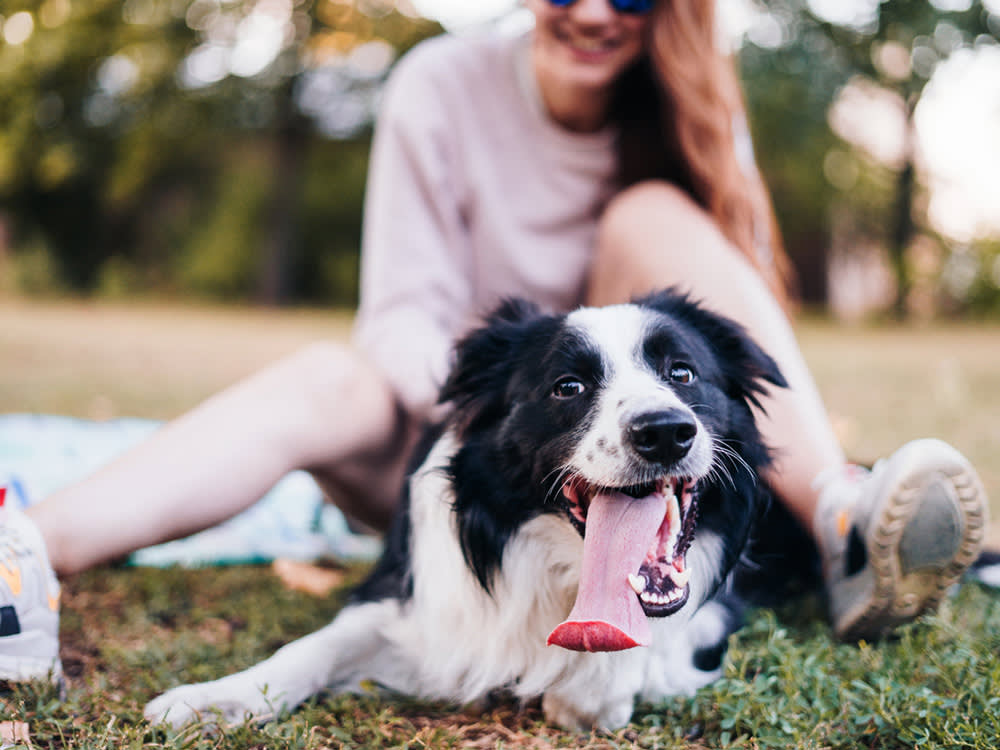
Watch a dog come off a hard run and you are watching a radiator work. Mouth open, tongue out wide, quick shallow breaths pulling air over every wet surface in the airway. It looks like joy. It is actually thermodynamics.
That is the frame worth keeping, because it answers almost every panting question people bring to a vet. Panting is not a symptom. It is a machine doing a job. Dogs do not sweat the way we do, so the airway is their cooling system, and it switches on whenever heat, effort, or adrenaline pushes their internal temperature up.
Which means the useful question is never “is my dog panting too much.” It is: does this panting have a job to do? A dog panting after twenty minutes of fetch on a July afternoon is a system working. A dog panting on the kitchen floor at 10 p.m. in an air-conditioned house, having done nothing, is a system running with no load on it. That second dog is the one to look at.
The jobs panting actually does
There are only a handful of legitimate reasons for the cooling system to be running.
Cooling. The core job. Body temperature starts to climb, panting starts, air moves fast over moist tissue, heat leaves. This is why hot days and warm rooms produce panting all on their own.
Exertion. Running, stairs, wrestling with another dog, a long walk. Effort raises body temperature, and panting brings it back down.
Emotion. Excitement, stress, fear, and nervousness all trigger panting through a rising heart rate and respiratory rate, not through heat. Nothing needs cooling here. The body is simply revved.
Pain. Pain drives up heart rate and respiratory rate too, and it does it quietly. A stoic dog with a sore hip may show you nothing except panting in a cool, quiet room.
Illness. Anything that causes a fever, plus conditions that raise steroid hormone levels such as Cushing’s disease, will push a dog to pant.
Medications. Sedatives, steroids, and some pain medications all list panting as an effect. If the panting started within days of a new prescription, that is not a coincidence.
Respiratory distress. Some dogs in trouble breathing will open their mouths and pant, though many do not. The company it keeps is what gives it away: loud breath noises, rapid breathing, extra effort with each breath, bluish gums or tongue. Any of those is an emergency, full stop.
The three questions that sort normal from not
Panting varies so much between dogs that there is no universal “too much.” There is, however, a reliable test. Ask three things.
Is there a reason? Heat, exercise, a thunderstorm, a car ride, a vet lobby. If a plausible trigger is right there, you are probably watching normal physiology.
Does it stop? Give your dog a cool, quiet spot and some water. Normal panting winds down and the dog settles. Panting that keeps going, at full intensity, in a cool room, after a reasonable rest, is not winding down because it cannot.
Is it alone? Panting by itself in a dog who is otherwise bright, eating, and behaving normally is usually just panting. Panting plus lethargy, a dropped appetite, vomiting, diarrhea, coughing, collapse, pale or blue gums, or visible effort to breathe is a different animal entirely.
And treat hard panting on a walk as data, not background noise. It means your dog is at the edge of what they can shed. Get to shade, get water into them, and stop.
Owners tend to watch the panting and miss the context around it. I would rather you tell me the room was cool, the dog had done nothing all evening, and they still could not settle. That sentence sends me looking for pain or a heart problem. ‘He panted a lot at the park’ sends me nowhere.
What we get wrong about overheating
Here is the part that surprised even a lot of vets when the data landed. When researchers looked at every case of heat-related illness in more than 900,000 UK dogs under primary veterinary care in a single year, the hot car, the thing every summer campaign is built around, was not the main event. Exertional heat illness, a dog simply doing too much in warm weather, accounted for 74.2% of cases. Dogs are overheating on walks, at the beach, in the yard, chasing a ball, and being carried into clinics far more often than they are dying in parked cars.
The follow-up work identified who is most at risk: flat-faced breeds, dogs carrying extra weight for their breed and sex, dogs over two years old, and very large dogs over 50 kg. Chow Chows, Bulldogs, and French Bulldogs sit near the top of the list. A brachycephalic dog is trying to run a cooling system through an airway that was bred smaller, which is why a Frenchie can be in real trouble on a day that feels merely warm to you.
So the practical upshot is not “don’t leave your dog in the car.” You already knew that. It is: the walk is the risk. Move exercise to the cool ends of the day, cut it short in heat, and take heavy panting on a warm afternoon as a stop sign rather than a sign of a good time.
Excessive panting: what a vet is actually ruling out
A dog who pants excessively deserves a real workup, because “excessive panting” is a symptom pointing at five different diseases.
Overheating is the most common cause, and it is not always about the weather. Obesity, respiratory disease, and a flat face all lower the threshold. A dog who cannot cool down promptly once in a cool room is on the road to heat stroke and needs a vet immediately.
Pain is the most missed cause, especially chronic pain like arthritis. Panting at rest, in a cool space, with no emotional trigger, is a pain presentation until proven otherwise.
Respiratory disease may or may not cause panting, but it brings friends: tiring quickly, fast breathing, extra effort to breathe, blue-tinged gums and tongue, coughing, collapse, loud breathing. Emergency.
Cardiovascular disease. Heart and lung problems are tangled together, and heart disease can produce the same picture, including that same list of red flags.
Behavioral causes. Excitement, anxiety, fear, and stress are real explanations, but they are the last box to tick, not the first. Rule out the medical causes first, then treat the anxiety properly, with behavior modification and, for some dogs, medication.
Home management, honestly
If your dog is panting and otherwise fine, keep them cool and calm: a quiet spot, water, out of the heat. After exercise or sun, you can speed the cooling along: soak the coat through with water that is cool but not icy, then park a fan on them. If the panting is fear-driven, get them somewhere quiet and low-stimulus; a pheromone diffuser or spray in that space can help take the edge off.
If your dog is panting excessively and has any other sign of illness or distress, do not manage it at home. The serious causes of excessive panting are genuine emergencies, and early intervention is the whole game.
For dogs with a known pattern (the fireworks dog, the vet-lobby dog, the travel dog), plan ahead with your vet. A training plan from a qualified behaviorist, sometimes paired with medication, works far better as prevention than as rescue.
When to call
Same day, no debating it, if panting comes with any of: blue or pale gums, effort to breathe, loud breathing, coughing, collapse, weakness, vomiting or diarrhea, or a dog who cannot settle in a cool room. Also call if your dog was out in heat and does not cool down quickly once inside. There is no home version of heat stroke care.
Everything else, the panting after the run, the panting in the car, the panting on the hot day, is the machine doing exactly what it was built for.
What’s new since this was written
The big shift in the last few years is where the danger actually lives. The VetCompass work out of the Royal Veterinary College showed that most heat-related illness in dogs comes from exercise, not from parked cars, and the follow-up study on severe and fatal cases mapped out exactly which dogs are most likely to die of it: flat-faced, heavy, older than two, or very large.
It has changed what a good summer conversation with your vet sounds like. It used to be a warning about the car. Now it is a question about your walk, and how honest you are willing to be about cutting it short.
References
- Hall, E. J., Carter, A. J., & O’Neill, D. G. (2020). Incidence and risk factors for heat-related illness (heatstroke) in UK dogs under primary veterinary care in 2016. Scientific Reports, 10, 9128.
- Hall, E. J., Carter, A. J., & O’Neill, D. G. (2020). Dogs Don’t Die Just in Hot Cars: Exertional Heat-Related Illness (Heatstroke) Is a Greater Threat to UK Dogs. Animals, 10(8), 1324.
- Hall, E. J., Carter, A. J., Bradbury, J., et al. (2022). Risk Factors for Severe and Fatal Heat-Related Illness in UK Dogs: A VetCompass Study. Veterinary Sciences, 9(5), 231.
- Goldberg, M. B., Langman, V. A., & Taylor, C. R. (1981). Panting in dogs: paths of air flow in response to heat and exercise. Respiration Physiology, 43(3), 327–338.
- Rishniw, M., Ljungvall, I., Porciello, F., et al. (2012). Sleeping respiratory rates in apparently healthy adult dogs. Research in Veterinary Science, 93(2), 965–969.
- Merck Veterinary Manual. Introduction to Respiratory Diseases of Dogs.
Not a substitute for your vet. Our guidance is educational. For urgent symptoms, contact a vet or emergency clinic right away. Editorial standards
Dr. Mehta is a board-certified veterinary nutritionist who evaluates pet food formulations, ingredient quality, and the science behind dietary trends. He writes and reviews all nutrition content at The Pet Times, including our food rankings and feeding guides.
Meet our experts ↗Keep reading
 Health & WellnessA Rabid Bat Turned Up in Pasadena. The Fix Is Almost Boring.Dr. Ravi Mehta · 5 min
 Health & WellnessA Dog Who Won't Drink Water Is a Clock, Not a QuirkDr. Lena Park · 7 min
 Health & WellnessA Warm, Dry Nose Tells You Nothing. Here's How to Actually Know Your Dog Has a Fever.Dr. Priya Nair · 6 min
 Health & WellnessThe 'Miracle' Antibiotic for the Mystery Dog Illness Isn't a Cure. It's a Last Resort.Dr. Lena Park · 6 min
 Health & WellnessThe 'Bloat Surgery' Doesn't Prevent Bloat. It Prevents the Part That Kills.Dr. Ravi Mehta · 4 min
 Health & WellnessHer Dog Collapsed on the Sidewalk. What Looked Like a Stroke Usually Isn't.Dr. Ravi Mehta · 8 min