


The Fleas on Your Dog Are 5% of the Problem. The Rest Is in Your Carpet
Everyone treats the dog and wonders why the fleas come back. The math is brutal: only about 1 in 20 fleas is on your pet at any moment. Here's how to win the fight where it actually happens, plus the popular home remedies that are useless or dangerous.

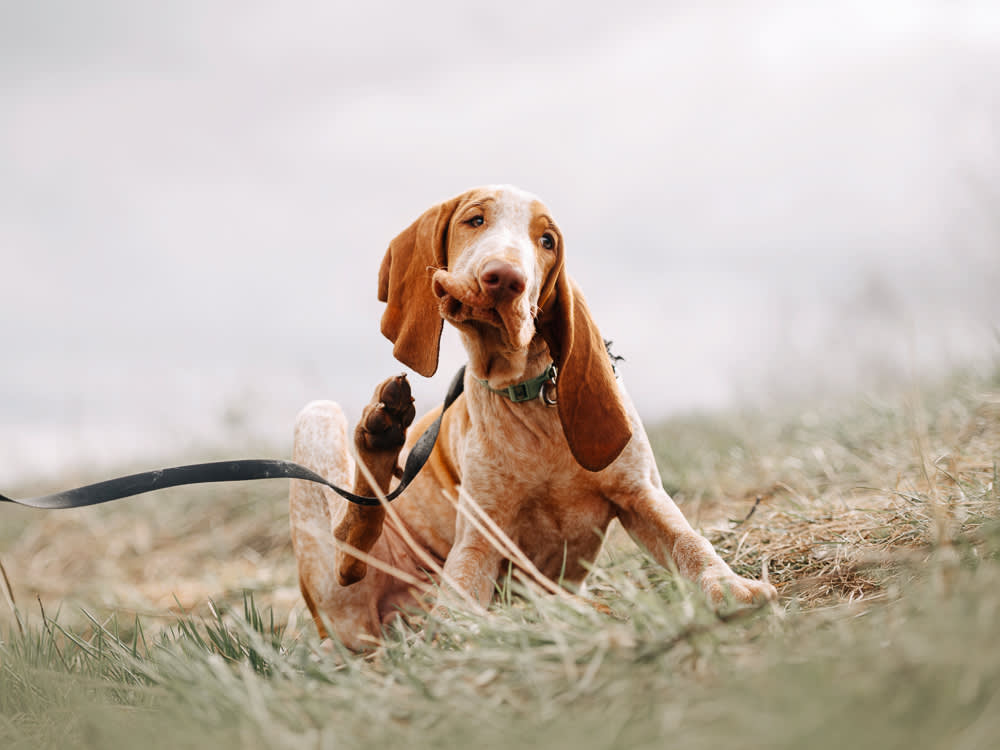
Here is the single fact that changes how you fight fleas: the fleas you can see on your dog are a tiny fraction of the fleas you actually have. Study after study puts adult fleas on the pet at around five percent of the total population. The other ninety-five percent, the eggs, larvae, and cocooned pupae, are in your carpet, your baseboards, the couch cushions, and the dog’s bed.
That one ratio explains the most common flea story I hear in practice. Someone bathes the dog, sees the fleas vanish, feels victorious, and then watches the itching come roaring back a week later. They did not fail. They just fought the visible five percent and left the breeding ninety-five percent untouched. If you take nothing else from this article, take this: you do not have a dog with fleas, you have a house with fleas, and the dog is where they come to feed.
People keep treating the animal and wondering why nothing sticks. I tell them to picture the fleas they can see as the tip of an iceberg. Handle only that tip and the rest of the iceberg just floats back up. Win in the environment and the dog gets easy almost by accident.
First, make sure it is actually fleas
Before you tear your home apart, confirm the culprit. The clearest tell is not the flea itself but flea dirt, which is digested blood the fleas leave behind. Part your dog’s fur and look at the skin around the base of the tail, behind the ears, and on the belly, the three spots fleas favor most. Flea dirt looks like specks of black pepper, one to two millimeters long, clinging to the hair shafts.
The trick that removes all doubt: comb some of those specks onto a damp paper towel. Ordinary dirt stays black. Flea dirt smears out reddish or rust-colored, because it is dried blood. That rust smear is your confirmation.
A few other clues point the same way. Flea bites on you appear as itchy clusters of small red bumps around the ankles or under snug clothing. Tapeworm segments in your dog’s stool, which look like grains of rice, mean your dog swallowed a flea while chewing at an itch. And a fine-toothed flea comb dragged through the coat, especially on a puppy too young for other products, will trap both fleas and dirt so you can see what you are dealing with.
Understanding the enemy’s schedule is what makes the rest of this work. A female flea lays 40 to 50 eggs a day. Those eggs slide off the dog into the environment and hatch into larvae, which feed on flea dirt in the carpet. Larvae spin cocoons and become pupae, and pupae are the villains of the story: they can lie dormant for up to a year, shielded from most sprays, waiting for the warmth and vibration of a passing host before they emerge. Any plan that ignores the pupae is a plan that fails in three weeks.
Win the house first: the ninety-five percent
Because most of the population lives in your home, this is where the real battle is fought, and almost none of it requires insecticide.
Vacuum like it is your job, daily. A vacuum pulls up adult fleas, eggs, larvae, and even coaxes some pupae out of dormancy with its vibration. Hit the carpets, rugs, upholstery, and the cracks where floor meets wall, then immediately empty the canister or seal and bin the bag outside. Vacuuming daily during an active infestation does more to shrink the population than any single spray, because it removes both the bugs and the flea dirt the larvae eat.
Wash all the soft stuff in hot water. Your dog’s bedding, blankets, and anything they sleep on goes through a hot wash every week or two, and yours too if your dog shares the bed. Heat kills every life stage.
Steam clean the carpets. Steam’s heat and moisture reach eggs and larvae that vacuuming misses, and it is a chemical-free way to knock down the deep population.
Take the fight to the yard, carefully. You will never sterilize a yard, but you can make it less hospitable. Keep the grass mowed, bushes trimmed, and leaf litter cleared, since fleas hide in cool, shaded, humid spots. For a biological option, beneficial nematodes, microscopic worms you water into the soil, hunt and kill flea larvae outdoors without touching your plants or pets. They are one of the few “natural” flea tools with a genuinely sound mechanism.
Then handle the dog: the visible five percent
Now, and only now, treat the animal, knowing the environment is already collapsing underneath the population.
A bath physically removes live fleas and flea dirt. A regular dog shampoo, or an oatmeal one to soothe itchy skin, is plenty; over-the-counter flea shampoos add little over a normal bath and, because they contain insecticides, must be used exactly per the label for age, species, and contact time. A bath buys immediate relief, but understand its limit: with a flea-filled home, new fleas hop aboard within hours of the towel-dry. That is not the bath failing, that is the ninety-five percent reasserting itself.
A flea comb is the gentlest tool and the best one for young puppies who cannot be bathed often or treated with standard products. Dip it in soapy water between strokes. It won’t clear every last flea from a big dog or a heavy coat, but it is a safe, useful supplement.
The part that makes all of this vastly easier: a modern, vet-recommended monthly flea preventive. Year-round preventive medication is the most reliable way to keep fleas off the dog and break the life cycle, because a flea that bites a treated dog dies before it can lay the next generation of eggs in your carpet. Home measures shine when you are digging out of an active infestation; prevention is what keeps you from ever fighting one again.
Popular remedies that are useless, and a few that are dangerous
The internet is full of “natural” flea cures. Some do nothing. Others can hurt your dog. Knowing the difference matters.
Diatomaceous earth is the tricky one, because its mechanism is real: the microscopic, jagged fossil edges scratch an insect’s waxy coat and dry it out. It has never been properly tested as a flea treatment on dogs, though, and the same abrasiveness that kills bugs irritates living tissue. Inhaled, it can dry out airways and trigger sneezing, coughing, or worse. I have seen pets develop serious respiratory problems after exposure. It is not a product to dust onto your dog or spread through your living space, though it may have a limited role in targeted outdoor pest control.
Essential oils like citronella, clove, peppermint, and ginger can kill fleas, but only at the high laboratory concentrations used in testing, concentrations you cannot safely maintain on a dog or in a room. The oils best at killing fleas are also the ones most likely to irritate skin, and many pets, cats especially, develop respiratory trouble around them. They lack both the safety margin and the lasting activity real control needs.
Dish soap drowns fleas in a single bath but offers zero residual protection and irritates dog skin with repeated use. A DIY flea trap, a shallow dish of soapy water set beneath a warm, glowing lamp, will snag a few fleas overnight but never enough to dent the population.
And a short list to simply avoid on your dog:
- Vinegar and apple cider vinegar do not kill fleas. The acidity dries and irritates skin, and the smell assaults a nose far more sensitive than yours.
- Rubbing alcohol kills fleas but is toxic to dogs, absorbing through the skin and causing systemic poisoning. Skip it entirely.
- Tea tree oil and cedar oil are both toxic to dogs. Never apply them or spread them in your dog’s environment.
When to bring in a professional
The best time to talk to your vet about fleas is before you have them, because year-round prevention spares you and your dog the entire ordeal. If fleas are already here, loop in your veterinarian, and for a heavy home infestation, a pest-control professional. Your vet protects the dog; the exterminator helps you clear the environment. Together they get you to a flea-free finish far faster than any solo effort with a spray bottle.
What newer research adds
The five-percent figure is not a slogan; it comes straight from how a flea population is built. Entomology sources consistently break a typical infestation into roughly 50 percent eggs, 35 percent larvae, 10 percent pupae, and only 5 percent adult fleas, which is why the U.S. Centers for Disease Control describes the same 95-percent-in-the-home reality. The practical lesson researchers keep emphasizing is that adult fleas on the pet are the smallest slice, so control that targets only them is doomed to a rebound.
The other thing worth knowing in 2026 is how much better the on-the-dog side has gotten. Modern prescription preventives in the isoxazoline family kill fleas quickly enough to stop egg-laying, which means a consistently treated dog becomes a dead end for the whole cycle. Paired with the environmental steps above, that combination is what finally ends the loop of bathing, relief, and relapse, rather than any single home remedy on its own.
References
- Farrell, Sean, et al. “Seasonality and other risk factors for flea infestations in domestic dogs and cats.” Medical and Veterinary Entomology, 9 Jan. 2023, doi.org/10.1111/mve.12636.
- Centers for Disease Control and Prevention. “About Flea Life Cycles.” cdc.gov/fleas/about/flea-lifecycles.html.
- Tadee, Phacharaporn, et al. “Essential oil pharmaceuticals for killing ectoparasites on dogs.” Journal of Veterinary Science, vol. 25, 2024, doi.org/10.4142/jvs.23189.
- U.S. EPA, OCSPP. “Controlling Fleas and Ticks Around Your Home.” epa.gov/pets/controlling-fleas-and-ticks-around-your-home.
- New York City Department of Health. “Fleas.” nyc.gov/site/doh/health/health-topics/fleas.page.
This article covers flea prevention and treatment for general education and is not a substitute for veterinary care. If your dog has a heavy infestation, skin infection, or flea allergy, see your veterinarian.
Common questions
What do flea eggs look like?
Tiny, white, oval specks about half a millimeter long. A single female lays roughly 40 to 50 a day, but they are smooth and slip off your dog quickly, which is exactly why they end up buried in carpet, bedding, and floor cracks rather than staying on the animal.
Does Dawn dish soap kill fleas?
It can drown fleas during a single bath because it strips the oils they rely on, but it has no lasting effect and does nothing about the eggs and larvae in your home. It is also not pH-balanced for dog skin, so repeated use causes irritation. Treat a Dawn bath as a one-time knockdown, never a control plan.
How long can fleas survive in an empty house?
Longer than most people expect. Pupae can stay dormant in their cocoons for up to a year, waiting for warmth, vibration, and carbon dioxide to signal that a host has returned. That is why a house can seem flea-free for months and then erupt when you come back from a trip.
Not a substitute for your vet. Our guidance is educational. For urgent symptoms, contact a vet or emergency clinic right away. Editorial standards
Dr. Mehta is a board-certified veterinary nutritionist who evaluates pet food formulations, ingredient quality, and the science behind dietary trends. He writes and reviews all nutrition content at The Pet Times, including our food rankings and feeding guides.
Meet our experts ↗Keep reading
 Health & WellnessNothing in Your Pantry Will Cure Your Dog's Itch. 11 Things Will Make Tonight Bearable.Dr. Nina Kohl · 8 min
 Health & WellnessBathing Your Dog More Won't Fix the Smell. Finding It Will.Dr. Priya Nair · 8 min
 Health & WellnessYour Dog Has Fleas Long Before You Ever See OneDr. Amara Solis · 8 min
 Health & WellnessOne Flea Bite Can Wreck an Allergic Dog. The Count Never Mattered.Dr. Priya Nair · 9 min
 Health & WellnessNo Fleas, Still Scratching? 7 Culprits, Ranked by How Likely They Are.Dr. Mara Chen · 14 min
 Health & WellnessEveryone Blames Allergies. Check the Parasites First.Dr. Nina Kohl · 7 min