


Your Dog Has a Real Personality. Their Breed Barely Explains It.
Science says your dog's personality is real and measurable, no anthropomorphism required. But the shortcut everyone reaches for, that breed predicts who a dog is, turns out to explain almost none of it.

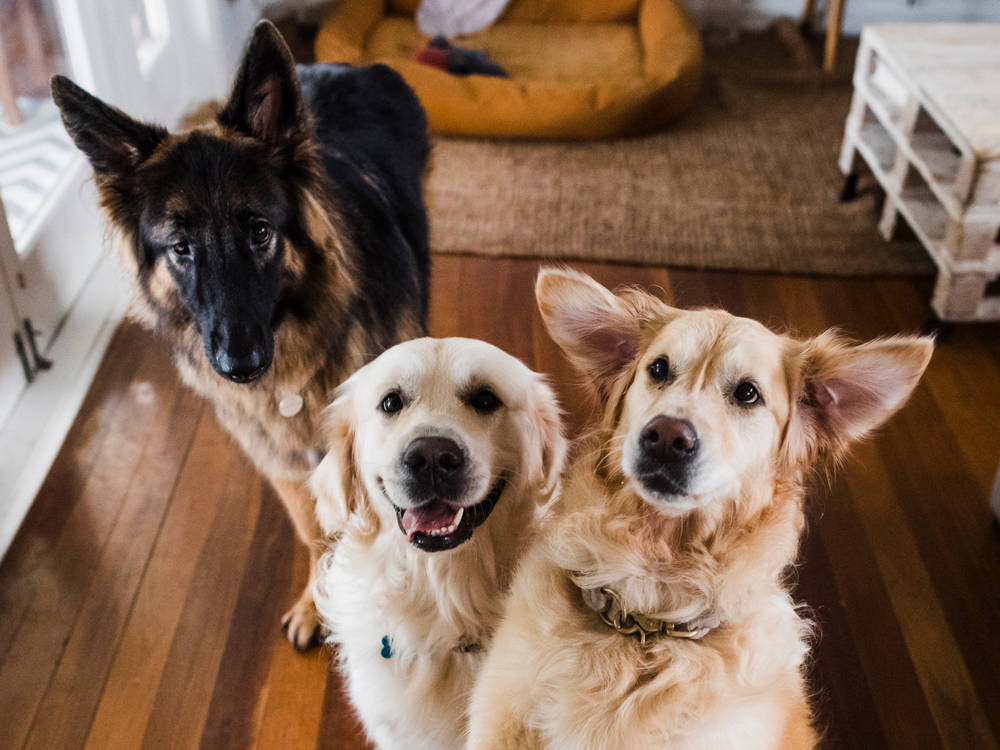
Every single day, your dog does some small thing that stamps them as unmistakably a specific someone. The theatrical sigh when the walk is late. The particular way they greet the vacuum, either with a shrug or with the conviction that it is a demon. The friend who’s a pushover for one houseguest and aloof with another. It’s tempting to wave this away as owners projecting, seeing a little person where there’s just a dog. The science says you’re not projecting. Dogs have personalities, real ones, and researchers can measure them.
What the science also says, and this is the part that upends a lot of assumptions, is that the first thing most of us reach for to explain a dog’s personality, its breed, barely explains it at all.
Personality is real, and it’s older news than you’d think
The idea that dogs differ as individuals isn’t a modern soft-hearted notion. Ivan Pavlov, of the bell and the salivating dogs, noticed it more than a century ago: some of his dogs were nervous and sensitive, some lively and active, some quiet and steady. He was describing personality before the field had a word for it in animals.
The word itself is worth pinning down. Personality describes an individual’s usual way of perceiving and responding to the world, a pattern that stays relatively stable across time and across situations. Picture a snowman appearing on the lawn overnight. One dog strolls past as if it had always been there. Another play-bows and dances at its new friend. A third freezes, tucks, and retreats. Show those same dogs the next novel thing, a parade, a flapping tarp, a stranger in a hat, and the unbothered one tends to stay unbothered while the wary one tends to stay wary. That consistency is the fingerprint of personality. It doesn’t mean a dog reacts identically every single time; dogs aren’t robots. It means there’s a recognizable through-line.
How you measure something that can’t fill out a form
Human personality is usually assessed with questionnaires. Dogs are notoriously bad at questionnaires, offering mostly slobber and paw prints. So researchers do the next best thing and have the humans who know the dog fill them out on the dog’s behalf.
That sounds shaky until you see how well it holds up. When several people who know a dog independently describe its behavior, they generally agree with each other, and that agreement is a hallmark of legitimate personality measurement. Even better, those questionnaire ratings line up with what researchers observe when they watch the dog directly. The most widely used tool, the Canine Behavioral Assessment and Research Questionnaire, or C-BARQ, asks owners to rate how their dog tends to respond across a long list of everyday situations. It’s been used for serious work, including studies of former commercial-breeding dogs, who scored as more fearful and anxious than typical pets, especially around strangers and stairs, and stayed that way for years after adoption. That’s exactly the kind of long-term, stable tendency personality research is built to detect.
Questionnaires aren’t bulletproof. A rater’s assumptions can leak in, like the bias that bigger dogs must be more aggressive, or that a fluffy, “perky-looking” breed must be friendly. But when questionnaire scores are checked against hands-on behavior tests, the two match up well enough that the method earns its keep.
The dog “Big Five”
Behavior tests take a different route. Rather than ask an owner, they present a dog with a controlled series of situations, novel people, sudden noises, a chance to play, someone in a strange costume, and record how it responds. One influential Swedish test battery, the Dog Mentality Assessment, boiled dogs’ responses down to five broad dimensions: sociability, playfulness, chase-proneness, aggressiveness, and curiosity versus fearfulness.
Those map loosely onto the human “Big Five” of extroversion, agreeableness, neuroticism, openness, and conscientiousness. Researchers are still refining the list, and different groups land on slightly different sets, but the core finding is robust: a dog’s behavior can be sorted into a small number of stable trait dimensions, the same basic way ours can.
Personality in a dog isn’t a cute story we tell, it’s something we can score and get the same answer twice. What surprises people is how little of it their dog’s breed accounts for. Breed sets a loose starting range. The individual dog fills it in.
What newer research adds: the breed myth takes a hit
For decades, the loudest debate was whether breed determines personality, and the recent evidence has been unusually clear.
In 2022, a landmark study in Science combined owner surveys of more than 18,000 dogs with DNA from over 2,000, drawing on the open Darwin’s Ark database. Its headline result: while behavior is heritable, breed explains only about 9 percent of the variation in a dog’s behavior. A few traits, like biddability, or how readily a dog takes direction, track with ancestry somewhat more, but the sweeping assumption that breed reliably predicts temperament simply didn’t hold. A 2025 follow-up in PNAS pushed the point further, finding that genetic testing predicts a dog’s appearance well but its behavior poorly.
This lines up with what careful observers suspected long before the genomics. Anthrozoologist John Bradshaw has noted that even in Scott and Fuller’s foundational mid-century work on dog genetics and behavior, breed mattered less to personality than expected. Breed characteristics are real and worth knowing, a Beagle’s nose and an Afghan Hound’s aloof cool aren’t nothing, but they are the starting conditions, not the verdict. Personalities vary widely within any single breed, shaped by each dog’s own history.
So what will your dog be like?
The most honest answer to “who will my puppy become” is a shrug and a “give it time.” Studies keep showing that early puppy assessments don’t reliably forecast how a dog turns out as an adult, in part because an eight-week-old has had almost no experience of the world yet, cognitively or otherwise. Personality measured in older dogs is much more stable, which is both why early tests disappoint and why the dog you meet at three years old is a far better guide than the one at eight weeks.
That’s not a disappointment, it’s a relief. It means the anxious puppy who’s terrified of the vacuum isn’t sentenced to a lifetime of it, and it means the single biggest force shaping who your dog becomes is the life you build with them. Genetics deals the hand. The years you spend together play it.
References
- Morrill, Kathleen, et al. “Ancestry-Inclusive Dog Genomics Challenges Popular Breed Stereotypes.” Science, vol. 376, no. 6592, 2022. https://www.science.org/doi/10.1126/science.abk0639
- Dutrow, Emily V., et al. “Genetic Testing Predicts Appearance but Not Behavior in Dogs.” PNAS, 2025. https://www.pnas.org/doi/10.1073/pnas.2421752122
- Hsu, Yuying, and James A. Serpell. “Development and Validation of a Questionnaire for Measuring Behavior and Temperament Traits in Pet Dogs (C-BARQ).” Journal of the American Veterinary Medical Association, vol. 223, no. 9, 2003, pp. 1293–1300. https://vetapps.vet.upenn.edu/cbarq/
- Svartberg, Kenth, and Björn Forkman. “Personality Traits in the Domestic Dog (Canis familiaris).” Applied Animal Behaviour Science, vol. 79, no. 2, 2002, pp. 133–155. https://www.sciencedirect.com/science/article/abs/pii/S0168159102001211
Common questions
Do dogs really have personalities, or are owners projecting?
They genuinely do. Personality here means a stable, individual pattern of behavior across time and situations, and it can be measured. When different people who know a dog rate its behavior, they tend to agree, and those ratings line up with what researchers see in direct behavior tests. That kind of independent agreement is exactly how personality is validated in humans.
Does breed predict my dog's personality?
Much less than people assume. A 2022 study of more than 18,000 dogs found breed explains only about 9 percent of the variation in behavior. Some tendencies, like biddability, track with ancestry a bit more, but for most traits an individual dog's personality is not well predicted by its breed.
Can a puppy test tell me who my dog will become?
Not reliably. Research finds puppy temperament tests have low predictive value for adult behavior, partly because an eight-week-old puppy has had so few life experiences. Personality assessed in older dogs is far more stable, so 'wait and see' is honest advice.
What's the difference between temperament and personality?
Many researchers use temperament for the biologically inherited baseline an animal is born with, and personality for what emerges once that baseline interacts with a lifetime of experience. Some fields use the words interchangeably, but the distinction is useful because it separates what's wired in from what life shapes.
Dr. Kohl is a board-certified veterinary dentist with a particular interest in preventive oral care. She reviews all dental health content at The Pet Times and contributes practical guides on home dental routines, professional cleaning, and oral disease prevention.
Meet our experts ↗Keep reading
 TrainingYour Dog Isn't Being Difficult on Walks. They're One of These 4 Types.Dr. Nina Kohl · 5 min
 LivingMost Dog Fights Happen at Home. Pick the Second Dog Accordingly.Dr. Mara Chen · 7 min
 TrainingLetting Your Dog Sleep in Your Bed Isn't Spoiling Them. The Science Sides With You.Dr. Lena Park · 7 min
 TrainingWhich Viral Dog Challenges Actually Burn Energy (and Which Are Just for the Camera)James Okafor · 6 min
 TrainingA Shelter Dog Predicted a Stranger's Seizure With No Training. How?Dr. Lena Park · 6 min
 Health & WellnessYour 'Hyper' Dog Might Just Be Exhausted. 7 Signs You're Reading It Wrong.Dr. Lena Park · 6 min