


Your Dog Isn't Being Difficult on Walks. They're One of These 4 Types.
The pulling, the endless sniffing, the lunging to say hi — it's not bad behavior. It's your dog telling you what the walk is for. Match the walk to the type and everything gets easier.

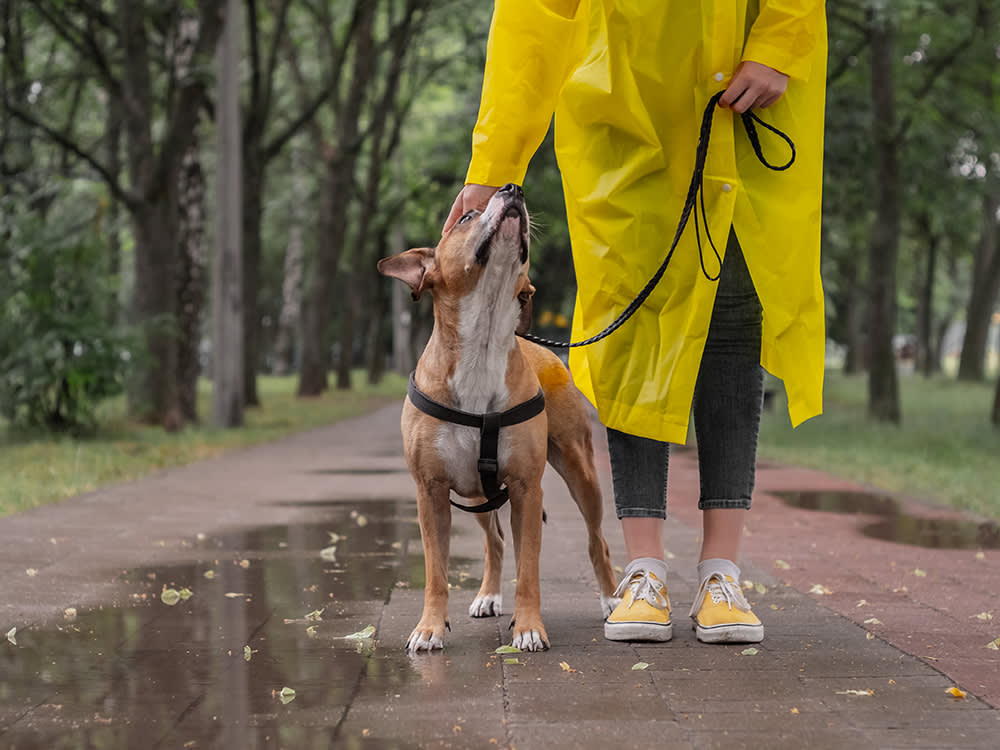
Here is the thing most of us get wrong about the daily walk: we treat it as our errand and the dog as a passenger. Then we get frustrated when the passenger pulls, freezes over a patch of grass, or drags us toward every stranger on the block. But a walk is one of the few parts of the day that genuinely belongs to your dog, and the “misbehavior” is almost always your dog telling you, in the only language they have, what they actually came outside to do.
Once you know which kind of walker you’re holding the leash for, the friction mostly disappears. You stop fighting your dog’s instincts and start building the walk around them. Nearly every dog falls into one of four types, and plenty are a blend of two.
The single biggest change I see in frustrated owners is when they stop asking the dog to want a different walk and start giving the dog the walk they clearly want. A pulling dog on a route with nothing to do isn’t stubborn. They’re under-served.
The Runner: the walk is a workout
Some dogs come outside to move, and they want to move now. These are the high-drive dogs who bolt off the porch, lean hard into the leash for the first block, and only settle once they’ve burned the top layer off their energy. The pulling isn’t defiance. It’s a body that has been waiting all day to do its job.
Fighting a Runner in the first five minutes is a losing game. What works better is letting them get the edge off in a way you can steer: a brisk pace you set, a stretch where a longer line is safe, or a few minutes of real trotting before you ask for polite leash manners. Once the endorphins kick in, most Runners become far more flexible about your pace. Give the exercise first, then ask for the manners.
The Sniffer: the walk is the internet
For the Sniffer, the good part isn’t the distance covered, it’s the information. Nose to the ground, they read a single fence post like a news feed, and a “boring” stretch of curb holds a dozen updates about who passed through and when. This is mental work, and it’s genuinely tiring in the best way.
The mistake here is treating sniffing as a delay to be managed. A walk where a Sniffer is constantly tugged off every scent is like being pulled away from a conversation mid-sentence, over and over. Build in “your turn” stretches where the leash goes loose and the dog picks the direction and the pace. You’ll often notice a Sniffer comes home calmer and more satisfied from a slow, scent-rich fifteen minutes than from a fast mile.
The Greeter: the walk is a party
The Greeter is a social animal on a mission. Their whole reason for being out is the chance to meet a dog, charm a stranger, or, in a real coup, get a cat to acknowledge them. They light up at the sight of anyone and can seem genuinely let down when the sidewalk is empty.
Greeters need a little more management, because not every dog or person wants to be greeted, and a bounding hello can go sideways fast. The move is to make greetings a reward you control rather than a free-for-all: a calm sit before an approach, a check-in with the other owner, and a clean release. Give your Greeter enough real social contact and they stop treating every passerby like a missed opportunity.
The Patroller: the walk is a job
The fourth type often hides inside the Greeter, but it deserves its own name. The Patroller isn’t out to make friends so much as to keep tabs. They mark deliberately, revisit the same posts, and carry themselves like they’re doing a security round of the neighborhood. For them, the walk is about knowing who has been here and reasserting that they belong.
Patrollers do best on consistent routes where the “beat” makes sense to them, with enough time to mark and check without being rushed. A Patroller yanked past their usual checkpoints tends to get more insistent, not less. Let the round happen and they relax into it.
Most dogs are a blend, and it changes
Plenty of dogs are a Runner who becomes a Sniffer once the edge is off, or a Greeter with a strong Patroller streak. Age shifts it too: a young dog may be pure Runner, then mellow into a Sniffer as they get older and their joints ask for a gentler outing. You already know your dog better than any list does. The point is simply to watch what they reach for first, and stop treating it as something to correct.
What newer research adds
There’s now real science behind the Sniffer’s slow, nose-down amble, and it reframes sniffing from a nuisance into a legitimate form of enrichment. Letting a dog sniff freely gives them a sense of agency over the walk, and behavior researchers have linked that kind of choice-rich, olfactory activity to a more optimistic, less stressed state. Trainers increasingly prescribe the “sniffari,” a walk where the dog leads and the human follows, as a low-effort way to tire out a dog mentally.
The practical takeaway is that pace and distance are not the only measures of a good walk. A shorter outing where your dog gets to do the thing their type is built for often does more for their body and brain than a long, brisk march where they weren’t allowed to be themselves. If you have ten minutes, spend them on your dog’s terms.
References
- Duranton, C., & Horowitz, A. (2019). “Let me sniff! Nosework induces positive judgment bias in pet dogs.” Applied Animal Behaviour Science, 211, 61–66. https://doi.org/10.1016/j.applanim.2018.12.009
- Horowitz, A. (2016). Being a Dog: Following the Dog Into a World of Smell. Scribner.
- ASPCA. “Dog Enrichment and Mental Stimulation.” https://www.aspca.org/pet-care/dog-care
Dr. Kohl is a board-certified veterinary dentist with a particular interest in preventive oral care. She reviews all dental health content at The Pet Times and contributes practical guides on home dental routines, professional cleaning, and oral disease prevention.
Meet our experts ↗Keep reading
 LivingMost Dog Fights Happen at Home. Pick the Second Dog Accordingly.Dr. Mara Chen · 7 min
 TrainingYour Dog Lying on Your Feet Is Not 'Dominance.' Stop Reading It That Way.Dr. Ravi Mehta · 7 min
 TrainingThe Daily Walk Is Optional. Your Dog's Enrichment Isn't.Dr. Nina Kohl · 6 min
 TrainingSending Your Dog to Its Crate as Punishment Ruins the One Room That's TheirsDr. Amara Solis · 7 min
 TrainingMore Dogs Isn't More Chaos, If You Know What Actually Starts the FightsDr. Mara Chen · 7 min
 TrainingThe Walk Isn't Cardio. 9 Myths That Ruin It.Dr. Nina Kohl · 8 min