


The Walk Isn't Cardio. 9 Myths That Ruin It.
Most bad dog-walking advice starts with one wrong assumption: that a walk is exercise. Here are nine myths worth dropping, and what to do instead.

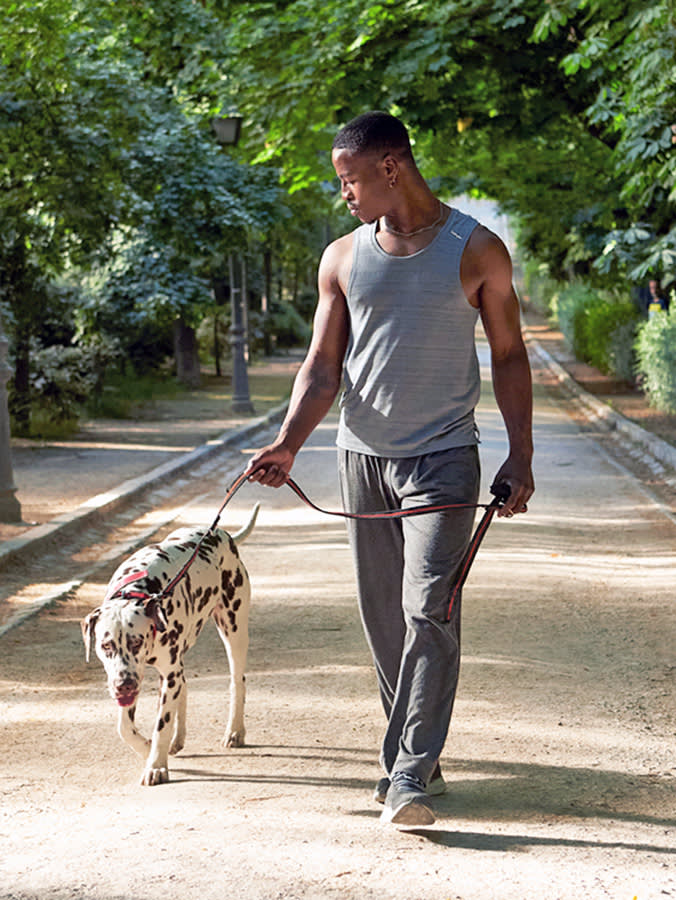
Ask ten people what a walk is for and nine will say some version of “burning energy.” That single assumption is the root of almost every piece of bad walking advice in circulation. It’s why people march their dogs around a fixed loop at a fixed pace, feel guilty when they skip a day, and quietly conclude that walks aren’t working because the dog still has beans at 9 p.m.
Here’s a better frame. A walk is mostly an information session. Your dog is reading the neighborhood the way you’d read a group chat you’ve been locked out of for eighteen hours: who came through, what they ate, who’s new, who’s stressed. The physical part is real, but it is the smallest part of what’s happening. Once you take that seriously, the standard rulebook falls apart fast.
Nine of those rules deserve to go.
1. “Skip a walk and you’ve failed your dog”
Somewhere along the way, the daily walk became a moral test. It isn’t one. Most dogs love going out, but “most” is not “all,” and the exceptions matter.
Some dogs find the street genuinely frightening. Traffic, garbage trucks, strangers looming over them, the accumulated noise of a city block — for a fearful dog, that’s not enrichment, it’s an hour of low-grade panic. Forcing it daily doesn’t build confidence. It builds dread.
The same goes for a dog who just arrived from a shelter or a transport van. A newly adopted dog is running on a nervous system that has not stopped bracing yet. Dragging them out to see the sights on day two is not generosity. Let them learn the apartment first. The block will still be there next week.
For those dogs, a yard, a hallway, a sniffing game on the living room rug, or a quiet cul-de-sac at 6 a.m. can be a better use of an afternoon than the walk you think you owe them.
2. “The leash is always required”
If it’s the law where you live, or the street is busy, or your dog’s recall evaporates the moment a squirrel appears — clip the leash. That is not up for debate.
But where off-leash is legal, safe, and appropriate for your particular dog, take it. The difference in what a dog can do with their body when nothing is attached to their neck is not subtle. They choose the route. They set the pace. They sprint at something and then abandon it halfway. They orbit back to you and then leave again. That autonomy is a big part of what makes the outing feel good to them.
If off-leash isn’t an option in your life, don’t spiral. A long line in an empty field, or simply a leash you’re willing to let go slack, gets you most of the way there.
The leash isn’t the problem, the tension in it is. A dog on six feet of slack line who’s allowed to lead is having a completely different experience than a dog being steered.
3. “A tired dog is a happy dog”
There’s a kernel of truth buried here, but it’s been mangled. The goal is not to drain the tank until nothing is left, the way you might march a restless kid up a mountain purely so they’ll sleep.
What exercise, and running in particular, actually does is shift brain chemistry. Aerobic movement drives the release of endocannabinoids, the body’s own calming compounds, which are associated with lower anxiety, better mood, and even reduced pain sensitivity. That’s a physiological change, not depletion.
So the loose, soft, sleepy dog on the rug after a good outing isn’t wrecked. They’re content. Those are different states, and only one of them is something to aim for.
4. “Keep them moving or it doesn’t count”
This is the myth that does the most quiet damage, because it’s the one that makes people yank the leash.
For a huge number of dogs, the best part of the walk is the meandering: stopping, doubling back, standing at one fence post for forty seconds working out a story you can’t perceive at all. Every time you hurry them past that, you’re not improving the walk. You’re deleting the point of it.
There’s good evidence behind this. In a study by Charlotte Duranton and Alexandra Horowitz, pet dogs who spent two weeks doing daily nose-based searching games, rather than heelwork, became measurably faster to approach an ambiguous stimulus afterward — a standard indicator of an optimistic mood state. Two weeks of sniffing shifted how the dogs read the world. Two weeks of walking neatly at heel did not.
Let it be a sniffari, not a forced march. A slow, ten-minute meander down one block, on a loose leash, with permission to investigate whatever they want, is worth more to most dogs than a brisk 45-minute lap.
5. “If they’re pulling, they need more exercise”
No. Pulling is not a fuel gauge.
Pulling is usually about arousal, habit, or frustration. The dog sees something, wants it, and the leash is the only thing between them and it. Plenty of very high-energy dogs walk beautifully because someone taught them how, and plenty of couch-potato dogs haul like sled teams because nobody ever did.
Energy level and leash manners are two separate variables. High-drive dogs may be quicker to hit the end of the line, sure, but every dog needs to be actively taught that a loose leash is what pays.
One practical fix if your dog is in permanent waterskiing mode: try an out-and-back route rather than a loop. Many dogs settle noticeably on the return leg, partly because the smells are old news and partly because they’re not racing to finish something they don’t want to end.
6. “Old dogs don’t need walks anymore”
They do. You just stop getting punished for skipping.
A young dog who misses their outing tells you about it — barking, pacing, whining, redecorating the couch. A twelve-year-old usually just lies down. That silence gets misread as consent.
But senior dogs still want to go see what’s out there, even if “out there” is the corner and back at a shuffle. Their quality of life still depends on novelty, and a slow sniff around the block is one of the last easy pleasures a stiff old dog has. The absence of a complaint is not the absence of a loss.
Shorten it. Slow it down. Pick soft ground. But go.
7. “The walk will tire them out”
Sometimes the walk is the warm-up.
You know how a brisk walk sometimes wakes you up instead of winding you down? Same principle. For a rocket-fueled adolescent Malinois, a twenty-minute stroll is roughly a stretch. They will come back looking at you expectantly, because in their view the day has now officially begun.
If genuine physical fatigue is the goal, the walk isn’t the tool. Fetch until your shoulder files a complaint, sprints in a fenced field, a real playdate with a dog who matches their style. The walk does other work. Don’t ask it to do this one.
8. “Don’t let them sniff where other dogs peed”
Understandable instinct. Also backwards.
Scent marks are the entire message board. A dog reading one is gathering information about who’s around, how recently, and what state they were in. Blocking that is like handing someone a newspaper and telling them they may only look at the photos.
The legitimate caveat is medical, not aesthetic. Puppies who aren’t fully vaccinated, and dogs who are immunocompromised, should stay off heavily trafficked ground where parvo can persist and away from standing water and puddles, which carry leptospirosis risk. That’s a real limit with a real reason. “It’s gross” is not.
9. “A walked dog doesn’t need anything else”
The walk is one outlet. It’s not all of them.
Dogs also need to chew, shred, forage, solve, and chase. A dog who gets a perfect hour outside and then spends the other twenty-three hours in an empty room with nothing to do is still underemployed, and will find their own job — usually your baseboards.
Think of the walk as one item on a menu that also includes a food puzzle, a snuffle mat, a frozen chew, a scatter-feed in the grass, and ten minutes of trick training. That mix is what actually settles a dog.
What newer research adds
The strongest recent shift in how behavior people talk about walks is the move away from distance and toward choice. Studies on sniffing and mood, including the Duranton and Horowitz work above, keep pointing the same direction: letting a dog use their nose and make their own decisions does more for their emotional state than moving them further.
That’s a relief for a lot of people, honestly. It means a bad-weather day, a short-on-time day, or a dog with a sore hip is not a write-off. A slow, sniffy, dog-led ten minutes counts. The stopwatch was never the point.
If you change one thing after reading this, make it the leash hand. Let it go soft, let them pick the direction for a stretch, and see what your dog does with the freedom. Most of them know exactly what to do with it.
References
- Duranton, C., & Horowitz, A. (2019). Let me sniff! Nosework induces positive judgment bias in pet dogs. Applied Animal Behaviour Science, 211, 61–66.
- Raichlen, D. A., Foster, A. D., Gerdeman, G. L., Seillier, A., & Giuffrida, A. (2012). Wired to run: exercise-induced endocannabinoid signaling in humans and cursorial mammals with implications for the ‘runner’s high’. Journal of Experimental Biology, 215(8), 1331–1336.
- American Veterinary Medical Association. Leptospirosis.
- American Animal Hospital Association. 2022 AAHA Canine Vaccination Guidelines.
Dr. Kohl is a board-certified veterinary dentist with a particular interest in preventive oral care. She reviews all dental health content at The Pet Times and contributes practical guides on home dental routines, professional cleaning, and oral disease prevention.
Meet our experts ↗Keep reading
 TrainingThe Play Bow Is the Clearest Word Your Dog Knows. Learn to Say It BackDr. Lena Park · 5 min
 TrainingYour Dog Isn't Being Dominant. You Trained It to Steal the Bed.Dr. Mara Chen · 7 min
 TrainingMore Dogs Isn't More Chaos, If You Know What Actually Starts the FightsDr. Mara Chen · 7 min
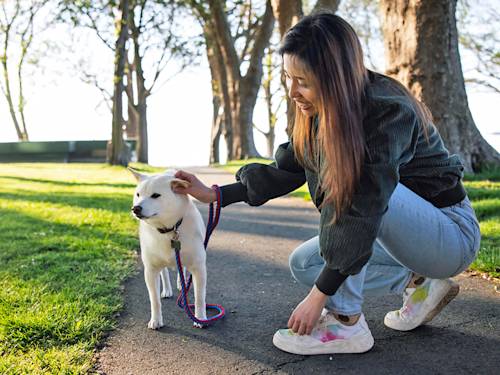 TrainingThe Daily Walk Is Optional. Your Dog's Enrichment Isn't.Dr. Nina Kohl · 6 min
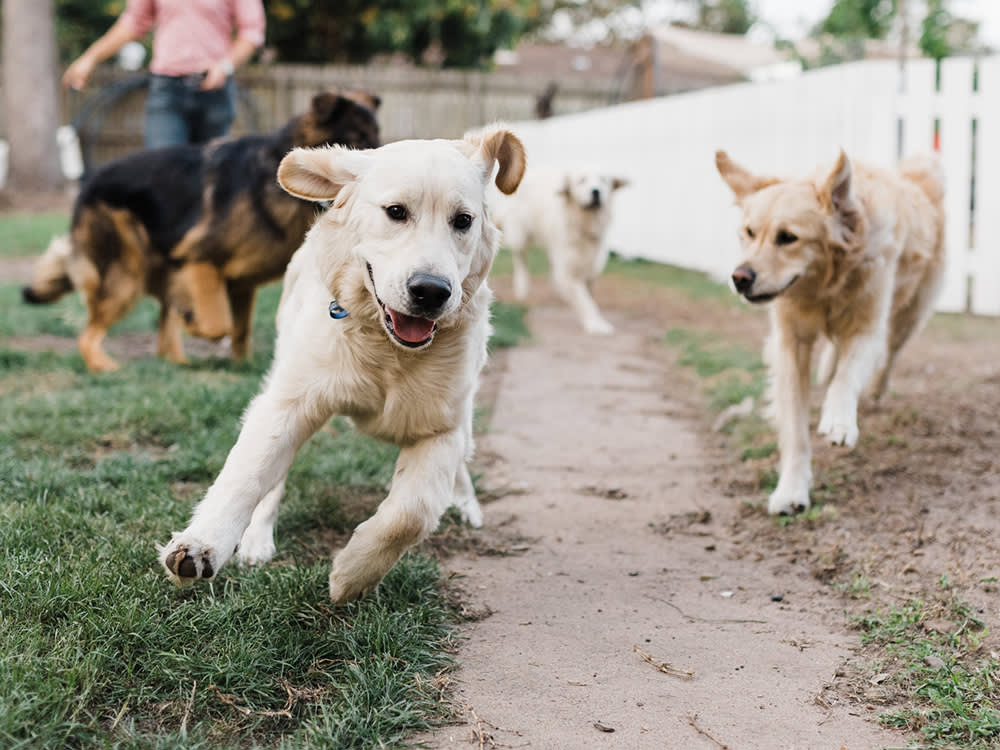 Living'All-Day Play' Is a Red Flag, Not a Selling PointJordan Ellis · 9 min
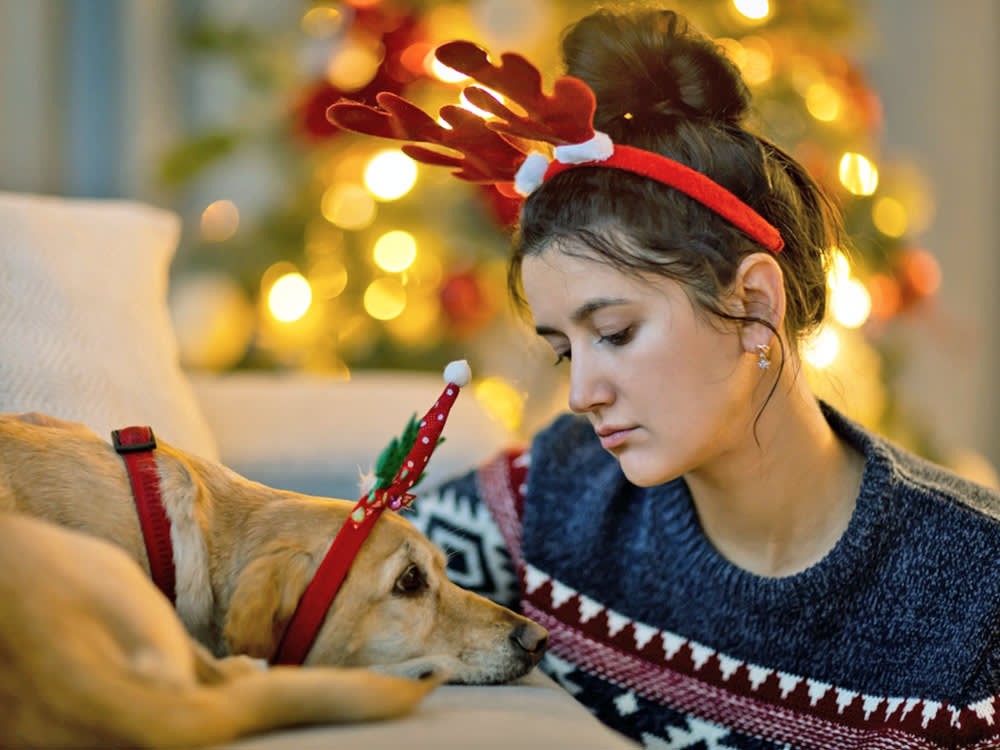 TrainingYour Dog Isn't Shy at Your Party. Six Signs They Want Out.Dr. Lena Park · 8 min