


Roses Won't Poison Your Dog. The Rose Garden Is a Different Story
True roses are non-toxic to dogs. The real risks are the thorns, the systemic rose food laced to attract dogs, and the toxic plants that borrow the rose name. Here is what to actually watch.

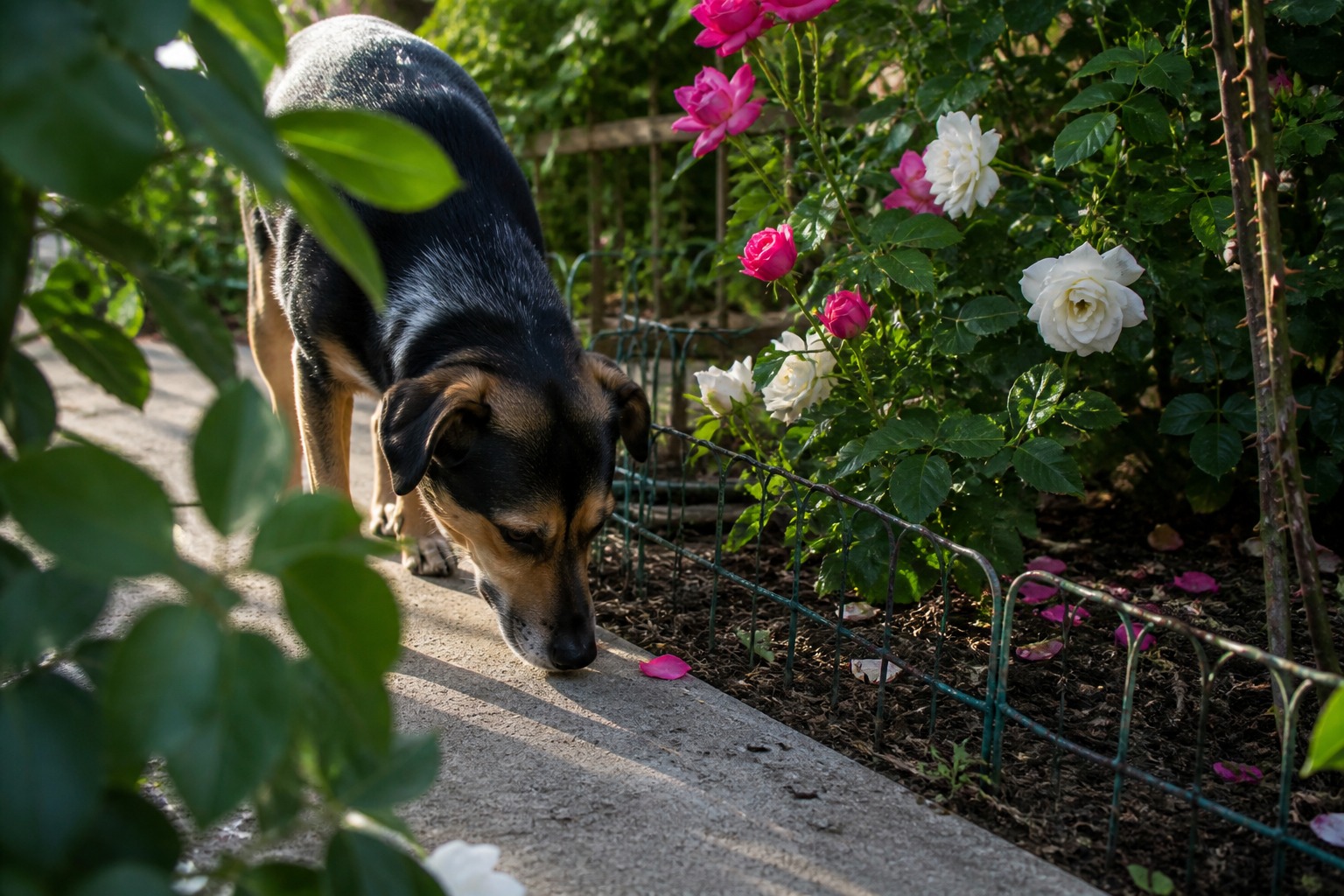
Here is the reassuring headline, the one that should lower your shoulders: a true rose will not poison your dog. The flower everyone worries about handing to a sniffing dog is, chemically, one of the safest in the garden. Rose petals are even edible, though there is no reason to garnish your dog’s dinner with them and some dogs will still throw one up.
But “the rose is safe” is only half a sentence, and the dangerous half is the rest of it. Dogs do get hurt around roses, just never by the petals. They get hurt by the thorns, by the insecticide gardeners feed the roots, and by the impostor plants that wear the rose name. So let’s spend almost no time on the flower, which is fine, and a lot of time on the rose garden, which is where the actual risks live.
The flower itself: a quick clean bill of health
Roses of the Rosa genus contain no compounds toxic to dogs. The worst a true rose does on its own is cause minor stomach irritation if a dog eats a bunch of petals, which may trigger a single bout of vomiting from the fibrous material, the same thing that happens when a dog eats grass. That is the entire toxicology of the flower. If your dog grabs a fallen bloom on a walk, you can relax.
With the flower cleared, the real work begins, because everything around a growing rose is a different question.
Risk one: the thorns (and what rides in on them)
Every rose has its thorn, and those thorns are not a cosmetic nuisance for a dog. A dog who tries to mouth a rose or who bolts and plays around a rose bush can puncture their lips, gums, tongue, paws, or skin. Mouth and paw punctures are painful, prone to infection, and easy to miss until they swell.
There is also a subtler hazard worth knowing: rose gardener’s disease, or sporotrichosis, a fungal infection. The fungus is a common soil contaminant, and it enters through any puncture wound, not specifically a thorn scratch. So a dog who digs in rose-bed soil and picks up a thorn jab, or any other break in the skin, can theoretically be inoculated. It is uncommon, but it is the kind of thing that explains a stubborn, non-healing wound after time around the bushes.
The practical move: if your dog takes a thorn, check the wound, clean it, and watch for swelling or discharge. A puncture to the mouth or eye, or a swallowed thorny stem, is a call-the-vet situation. Inducing vomiting after a dog swallows something sharp is generally not recommended, because of the damage a thorn can do coming back up, so let your vet direct the plan.
Risk two: the rose food, which may be designed to attract dogs
This is the hazard that genuinely worries veterinarians, and the one the pretty flower distracts from completely.
Many systemic “rose foods” and combination products contain insecticides, and historically the worst offender has been disulfoton, a potent organophosphate. Systemic means the chemical is drawn up by the roots into the whole plant, but the soil itself is where the danger concentrates, and here is the cruel twist: gardeners often mix disulfoton with bone meal and work it into the soil around the roses. To a dog, bone meal smells like food. The very thing meant to feed the roses becomes bait that lures a dog to eat poisoned soil.
Organophosphate poisoning is a true emergency. Signs can come on fast and include:
- Heavy, constant drooling
- A slowed heart rate
- Difficulty breathing
- Vomiting and diarrhea
- Muscle tremors
- Pinpoint or dilated pupils
- Abnormal body temperature
- Excessive tearing and urination
Disulfoton was cancelled by the EPA in 2009, so newer products are safer, but old stock lingers in garages and sheds, and other systemic insecticides carry related risks. The rule is simple and absolute: read every ingredient of anything you add to a garden a dog can reach, choose pet-safe products, and never use a bone-meal-plus-insecticide blend where a dog digs. If your dog eats treated soil, do not wait for symptoms, call your vet or animal poison control right away, because this toxidrome moves quickly and has a specific antidote.
Risk three: the plants that lie about being roses
The third trap is botanical. Several toxic plants carry “rose” in their common name without belonging to the Rosa genus at all, which is exactly why knowing a plant’s scientific name beats trusting its label.
- Christmas rose / Easter rose (Helleborus niger): not a rose. It can cause vomiting, diarrhea, drooling, and lethargy, and contains cardiac-active compounds.
- Moss rose (Portulaca oleracea): not a rose. These colorful succulents can cause oral irritation, drooling, and, in larger amounts, kidney effects and tremors.
- Rose of Sharon: a genuinely confusing name, because two different plants share it. One is a hibiscus that is non-toxic to dogs; the other is a relative of St. John’s Wort that can cause light sensitivity and skin irritation. The name alone cannot tell you which you have.
The takeaway is the same each time: a “rose” you cannot botanically identify is not automatically safe just because the word “rose” is in it. When in doubt, look up the Rosa-genus name or treat it as unknown.
What to do, depending on what your dog got into
The right response splits cleanly by category, which is the whole advantage of thinking about the garden instead of the flower.
- A true rose (petals or bloom): Watch and wait. Most dogs digest and pass petals without trouble; one bout of vomiting is unremarkable. Call your vet for repeated vomiting, signs of pain, or a swallowed thorny stem.
- A thorn injury: Clean the wound, check the mouth and paws, and see the vet for any puncture to the eye or mouth, a swallowed stem, or a wound that swells or will not heal.
- Rose-treated soil or rose food: Treat as an emergency. Call your vet or animal poison control immediately and bring the product label if you can. Do not wait for symptoms.
- A “false rose”: Call animal poison control or your vet, identify the plant as precisely as possible, and follow their guidance based on the species and amount.
When you do reach the vet, anything you can offer helps: a photo of the plant, the product label, the botanical name, or a sample. Plant poisonings are far easier to manage when the vet knows what they are treating.
Prevention: garden for the dog, not just the roses
You can absolutely keep roses with a dog. Garden with the dog in mind:
- Choose pet-safe fertilizers and pest control, and never store or use bone-meal-plus-insecticide products where a dog has access.
- Fence or border the rose bed if your dog likes to dig or barrel through it, both to spare the thorns and to keep them out of treated soil.
- Know your “roses.” Keep a list of what is actually planted, scientific names included, so you can tell a Rosa from a hellebore at a glance.
- Train a reliable “leave it,” which protects your dog around the garden and everywhere else they meet something they should not sample.
The bottom line
Roses are not poisonous to dogs, and you can enjoy them in a pet home with a clear conscience. Just keep your eye on the right targets: the thorns that puncture, the systemic rose food that can lure a dog into eating poisoned soil, and the toxic look-alikes that borrow the rose name. Make the garden dog-safe, not just the flower, and the rose becomes exactly what it looks like, harmless.
References
- “Rosa Species (Roses).” ASPCA Toxic and Non-Toxic Plants. https://www.aspca.org/pet-care/animal-poison-control/toxic-and-non-toxic-plants
- Gwaltney-Brant, Sharon. “Disulfoton: A Deadly Threat in Pets.” ASPCA Animal Poison Control Center. https://www.aspcapro.org/sites/default/files/o-toxbrief_0603.pdf
- “Disulfoton Facts.” U.S. Environmental Protection Agency. https://archive.epa.gov/pesticides/reregistration/web/html/disulfoton_fs.html
- “Helleborus” and “Portulaca oleracea.” ASPCA Toxic and Non-Toxic Plants. https://www.aspca.org/pet-care/animal-poison-control/toxic-and-non-toxic-plants
Common questions
If the rose is safe, what is the real danger?
Three things around the rose, not the flower itself. The thorns can puncture a dog's mouth, paws, or skin and even introduce a soil fungus. Systemic rose foods can contain organophosphate insecticides like disulfoton, sometimes mixed with bone meal that actively lures dogs to eat the treated soil. And several toxic plants carry 'rose' in their name despite not being true roses.
What are the 'false roses' I should know about?
Plants that borrow the rose name but are not in the Rosa genus and can be toxic: the Christmas or Easter rose (Helleborus niger), which causes vomiting, diarrhea, drooling, and lethargy; moss rose (Portulaca oleracea), linked to oral irritation and, in quantity, kidney effects; and one version of rose of Sharon (a St. John's Wort relative) that can cause light sensitivity and skin irritation. Knowing the botanical name is how you tell them apart.
What should I do if my dog eats a rose or rose-treated soil?
For a true rose, watch and wait; most dogs pass the petals fine, and you only need the vet for repeated vomiting or a swallowed thorny stem. If your dog ate soil treated with rose food, or a false rose, call your vet or animal poison control immediately, because systemic insecticide poisoning and some false roses are genuinely dangerous and treatment is time-sensitive.
Not a substitute for your vet. Our guidance is educational. For urgent symptoms, contact a vet or emergency clinic right away. Editorial standards
Dr. Solis is a board-certified veterinary dermatologist with over twelve years of clinical experience. She advises on skin conditions, allergies, and grooming practices that affect coat and skin health. All dermatology and allergy content at The Pet Times is reviewed by her team before publication.
Meet our experts ↗Keep reading
 Health & WellnessEvery Reason to Buy an Antler Chew Is the Reason Not ToDr. Mara Chen · 7 min
 TrainingYour Dog's Joy Sends 86,000 People to the ER Every YearDr. Nina Kohl · 8 min
 Health & WellnessHeartworm Treatment Is a Brutal, $3,000 Ordeal. Prevention Is a Chewable.Dr. Lena Park · 6 min
 Health & WellnessAn ER Vet on the Beloved Car Ritual They'll Never Allow Their Own DogDr. Ravi Mehta · 6 min
 Food"Dogs Are Basically Wolves" Is How Raw Chicken Gets Fed. Here's the Catch.Dr. Lena Park · 7 min
 TrainingYour Dog Hates These 8 Smells. Some of Them Can Actually Hurt Them.Dr. Amara Solis · 7 min