


An ER Vet on the Beloved Car Ritual They'll Never Allow Their Own Dog
The tongue out, the ears flapping, the blissed-out squint. It looks like pure joy. An emergency vet explains why it's also a highlight reel of injuries they've had to treat.

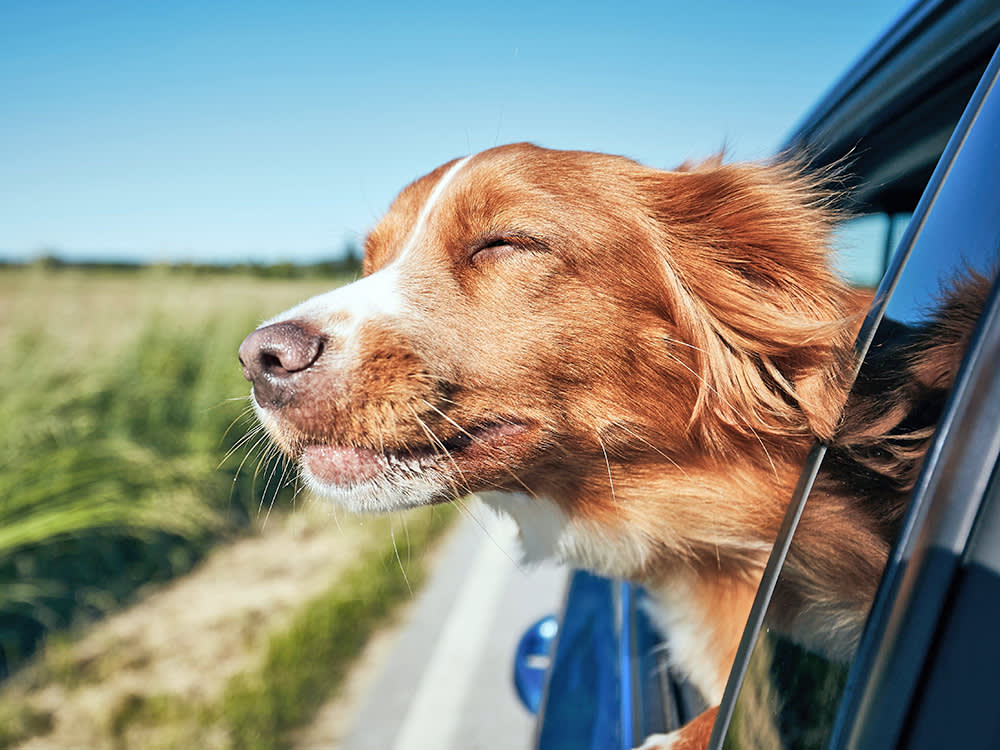
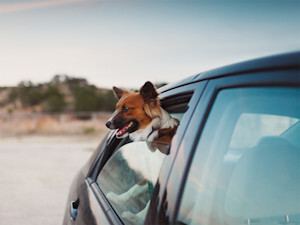
It genuinely looks like the best thing that has ever happened to a dog: tongue lolling, ears streaming backward, nose vacuuming up a thousand smells a second, eyes squinted into pure contentment as the world blurs by. So it might surprise you that plenty of emergency veterinarians, myself included, will never let their own dog do it. Not because we’re joyless, but because we’ve spent years cleaning up what happens when it goes wrong.
I’m not here to call you a bad owner. Loads of dogs ride with their heads out the window their whole lives and never get hurt. But “usually fine” is doing a lot of work in that sentence, and the failures I’ve seen in the ER aren’t minor. Here’s what’s actually on the table every time that window goes down, sorted from the dramatic to the sneaky.
The leap you don’t see coming
Dogs are not great at forecasting consequences. That’s why we spend so much of our lives saying “don’t eat that” and “leave the porcupine alone.” A car window is the same problem at 65 miles per hour. If the gap is wide enough for a head, it’s wide enough for a whole dog, and a dog will absolutely commit to launching out of a moving vehicle to greet a friend, chase a squirrel, or investigate a promising smell. Road rash, fractures, and worse never enter their calculation. I’ve treated the results, and I know of dogs who bolted after landing and were simply never found.
The crash you can’t control
Even a careful driver can’t control the other cars, and an open window turns an ordinary collision into a catastrophe. In a sudden stop or a low-speed fender bender, an unrestrained dog becomes a projectile, and an open window gives them a path to be thrown clear of the car entirely or to escape through it while their stunned owner is still processing what happened. Every one of those outcomes is worse than a dog buckled safely in the back seat.
The things flying at their face
Here’s the one people never picture. At road speed, the air outside the window is full of hazards moving fast enough to injure: low tree branches, a mirror on a passing truck, road signs, and airborne grit. Think about the little shower of gravel you hear pinging off your windshield behind a truck. Your dog catches that same shower with their eyes and nose. A pebble that would be a gentle bump at a walk becomes a real projectile at 60, and airborne debris can scratch the surface of the eye or, in the bad cases, penetrate it. The wind itself does slower damage: dried-out eyes, micro-abrasions on the cornea, and windburned, irritated skin after a long ride.
The window itself
This is the failure mode that makes owners feel sick, because it’s so ordinary. People reach for the wrong control and roll the window up on the dog’s neck. Dogs who like to perch on the armrest step on the button and trap themselves. Power windows have real force and no safety cutoff for a dog’s throat, and a panicking animal who feels the glass closing can injure their trachea in seconds. It’s easy to swear you’d never do it, right up until you’re distracted and pull the wrong button.
People assume the danger is exotic, some freak highway accident. Half of what I see is boringly preventable, a dog who stepped on the window switch, or a pebble that took an eye. Once you’ve stitched up a cornea from a two-dollar piece of gravel, the wind in the fur stops looking romantic.
What I do instead
None of this means your dog has to ride like cargo in a sensory-deprivation tank. It means moving the fun somewhere the odds are on your side.
The single biggest upgrade is restraint. A crash-tested harness or a secured crate keeps a dog in the car during a collision and out of the front seat where they can become a distraction or a projectile. Independent groups now crash-test pet restraints the way they do child seats, so you can buy one that’s actually been validated rather than one that just looks sturdy. If your dog is desperate to sample the passing world, crack the window a few inches. They still get the parade of smells; they just don’t get the room to leap or the exposure to debris.
And for the wind-in-the-fur craving specifically, give it to them somewhere safe. A trail hike, a beach run, a sniffy walk through an unfamiliar neighborhood, or ten minutes learning a new trick will light up a dog’s brain far more than a faceful of highway air. Enrichment is the real reward here; the car window is just the risky shortcut to it.
The honest bottom line
Could you be convinced otherwise? With some mellow dogs, on a quiet road, the risk is genuinely low. But the version of this I keep meeting in the ER is the dog who would launch after something interesting without a moment’s hesitation, and for that dog the math is easy: the payoff is a nice breeze, and the downside is a night in emergency surgery. Ever stuck your own head out a car window on the freeway? Bugs in the teeth, grit in the eyes, a red raw face. It’s not actually that great. Do your dog the same favor you’d do yourself and keep them inside.
References
Common questions
Is there any version of this that's safe?
Cracking the window a few inches lets a dog catch scents without room to get their head out or leap through. Pair that with a crash-tested harness or secured crate and you keep the fun without the exposure.
Not a substitute for your vet. Our guidance is educational. For urgent symptoms, contact a vet or emergency clinic right away. Editorial standards
Dr. Mehta is a board-certified veterinary nutritionist who evaluates pet food formulations, ingredient quality, and the science behind dietary trends. He writes and reviews all nutrition content at The Pet Times, including our food rankings and feeding guides.
Meet our experts ↗Keep reading
 LivingEvery Trail Closed to Dogs Was Closed Because of a Dog OwnerMarcus Webb · 8 min
 LivingThat Dog With Its Head Out the Window Is a 50-Pound Projectile Waiting to HappenMarcus Webb · 6 min
 LivingYou Buckle Up. In a Crash, an Unrestrained Dog Is a Projectile.Dr. Priya Nair · 7 min
 LivingFlorida Tried to Outlaw Dogs' Heads Out Car Windows. The Bill Died. The Danger Didn't.Jordan Ellis · 4 min
 LivingHalf the Dogs at the Beach Are Not Having Fun. Yours Might Be One.Dr. Mara Chen · 8 min
 LivingThe Kayak Isn't What Hurts Dogs. The Water Is.Dr. Ravi Mehta · 8 min