


Half the Dogs at the Beach Are Not Having Fun. Yours Might Be One.
Your dog cannot turn down the invitation, so you have to read the RSVP off their body. What a beach-happy dog looks like, what a miserable one looks like, and the pack list that keeps a good day from turning into an emergency.

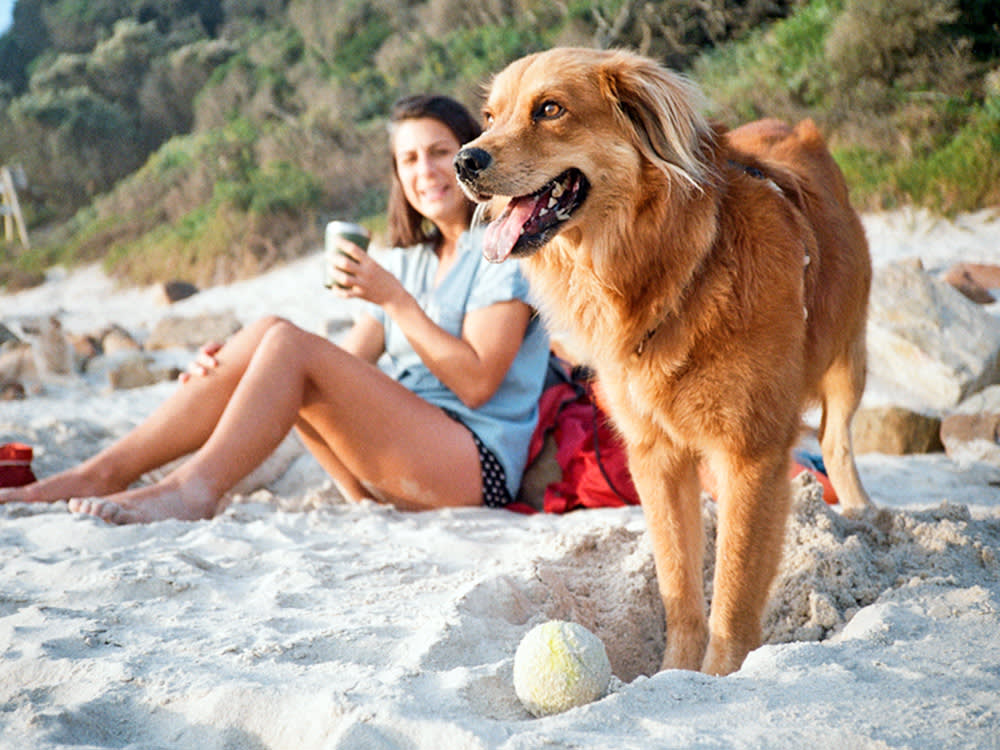
Your friends can text back “can’t, sorry” when you propose a beach day. Your dog cannot. They get loaded into the car, driven to a hot, loud, chaotic place full of strangers and strange dogs, and then watched hopefully by a person who has already decided this is a treat.
Some dogs love it. Plenty do not, and they are telling you so in a language most people never learned to read. Before the pack list, before the sunscreen, before the question of whether dogs are even allowed on your stretch of sand, this is the question worth answering: does your dog want to be here?
Read the RSVP
Dogs signal discomfort well before they escalate to anything you would call a problem. At the beach, those signals get lost, because everyone assumes the panting dog is a happy dog and the still dog is a relaxed dog.
Watch for:
- A stiff body, held tight rather than loose
- Rapid eye movement, scanning constantly
- “Whale eye,” where you can see the whites
- Excessive lip-licking
- Ears pinned back
- Raised hackles
- Growling or whimpering
- Tight lips, or baring teeth
A dog who is genuinely enjoying themselves is loose. The tail wag involves the hips. They initiate: they go to people, they come back to you, they choose to move toward the water rather than getting walked into it. A dog who is stiff, scanning, and pressed against your leg is not being shy. They are asking to leave.
There is also a common-sense test that requires no expertise at all. If your dog hates crowds, noise, and unpredictable strangers everywhere else in life, the beach will not be the place they suddenly love those things. A beach is just a loud, crowded, chaotic place with better scenery.
Owners tell me their dog is ‘fine’ at the beach, and then describe a dog who spent two hours pinned to their towel panting. Fine is not the same as happy, and the dogs who are quietly enduring it are the ones who end up scared of the car.
If you are unsure, run a trial. Go for twenty minutes, not four hours. Bring high-value treats and pay your dog for every good thing that happens: paws in the water, a calm sniff of a stranger, a wave that does not eat them. Leave while it is still going well. You are teaching them what this place is, and first impressions are stubborn.
Then check whether they are even allowed
Every beach makes its own rules, and plenty of them are dog-friendly, but “dog-friendly” hides a lot of variation. Some are on-leash only. Some allow dogs only in the off-season. Some restrict dogs to a section, charge a fee, or ban them entirely in summer. Read the beach’s own advisories before you load the car, not from the parking lot.
Make sure your dog is also current on vaccinations and preventatives before a day around unfamiliar animals, unfamiliar water, and whatever is buried in the sand.
The pack list
Nothing here is optional except the last item, and the last item is the one that saves lives.
- Portable water bowl or water bottle
- Fresh water, more than you think
- A towel
- A leash
- Treats
- Collar and ID tag with your contact information, worn the whole time
- Dog-waste bags
- Pet-friendly sunscreen for light-colored or hairless dogs
- An umbrella for shade
- A first-aid kit
- A dog life jacket, which is technically optional and genuinely a good idea
The swimming question, answered honestly
Most dogs can swim. Not all of them can, and the ones who cannot often do not find out until it is a problem.
Body shape decides a lot of this. Deep-chested, short-legged, heavy-headed, and flat-faced dogs work much harder to stay afloat than a leggy retriever does, and even strong swimmers get overwhelmed by waves, current, or plain exhaustion.
And the ocean is not a pool. A dog who paddles happily in a backyard pool or a still pond has no experience with surf, tide, or undertow. Small dogs face the most risk in open water, because the same wave is proportionally much bigger. Keep your dog on a leash near the water, and put a life jacket on them if there is any doubt at all, including on a boat, where the entry into the water is the part nobody plans for.
Watch them the entire time they are in or near the water. Not most of the time.
Heat is the danger you will underestimate
The water is cool, so the sun feels manageable. It is not.
Check the forecast before you go. On hot days, either keep the trip to a couple of hours or go early or late, when the sun is not at its worst. Take breaks in the shade before your dog looks like they need one, and keep fresh water available constantly. A dog with no access to clean water will drink salt water, and that is its own emergency.
Preventing overheating is dramatically easier than treating it. Bring cold water, even ice, to help cool them down.
Early signs of heat trouble are lethargy, heavy panting, and drooling. If it progresses, a dog may go quiet, then seem confused or stagger, develop bright red gums, lose interest in food, vomit, have diarrhea, and eventually collapse. Long-haired and dark-coated dogs overheat more readily, but every dog is vulnerable as the temperature climbs, especially in intense sun with no breeze. Older dogs, overweight dogs, and dogs with existing heart or lung disease carry the highest risk.
Sand and salt: the two things they will eat
Sand. Your dog is barefoot, and the sand is hot. Pack something for them to lie on, a towel or a blanket, and let them stand in the shallows to cool their feet. Most dogs will not eat sand deliberately, but a dog who digs with their face, chases a ball across the beach, or licks sand off their coat can swallow a surprising amount. A little is generally harmless. Enough of it can clump in the gut and cause real trouble. If your dog starts licking sand off themselves, walk them to the water for a rinse instead.
Salt water. This is the one people consistently underrate. Swallowing sea water pulls fresh water out of the bloodstream and into the gut, which dehydrates the dog further and wrecks their electrolyte balance. The clinical name is hypernatremia. Small amounts usually cause vomiting and diarrhea. Large amounts can shrink brain cells, cause seizures, and kill. Dogs also ingest salt by grooming a wet coat, which is why rinsing them off with fresh water is not a cosmetic step.
While you are down there, scan for what else is on the beach: glass, sharp shells, fishing hooks, garbage, and dead fish. Dogs eat dead fish. Dogs are famously willing to eat dead fish.
What’s new since this was written
The water itself has gotten less trustworthy, and that is the update that matters most.
Harmful algal blooms have been getting worse and more widespread. An ASPCA Animal Poison Control Center analysis of blue-green algae calls from 2010 to 2022 documented a clear increase over time, with strong seasonal and geographic patterns. In 2025, Long Island recorded some of its worst bloom outbreaks on record, with more than two dozen affected lakes. Blue-green algae, which is really cyanobacteria, thrives in warm, stagnant fresh water, and it can kill a dog within minutes to hours of a drink or a swim.
At the coast, that matters more than people realize, because a “beach day” often includes the brackish pond behind the dunes, the tidal lagoon, or the stagnant inlet where a tired dog goes to drink something that is not salty. That water is exactly the water to keep them out of.
Warm coastal water also carries Vibrio bacteria, which can cause severe infections through open wounds. A dog with a fresh cut, a hot spot, or a recent surgical incision should stay out of the water entirely.
The habit that covers most of this: bring more fresh water than you need, offer it constantly, and do not let your dog drink anything you did not carry to the beach yourself.
References
- Backer, L., et al. “Geographic Variability, Seasonality, and Increase in ASPCA Animal Poison Control Center Harmful Blue-Green Algae Calls: United States and Canada, 2010–2022.” PubMed Central. ncbi.nlm.nih.gov/pmc/articles/PMC10467101/
- “Harmful Algal Bloom–Associated Illnesses in Humans and Dogs Identified Through a Pilot Surveillance System, New York, 2015.” PubMed Central. ncbi.nlm.nih.gov/pmc/articles/PMC5689215/
- Cornell Richard P. Riney Canine Health Center. “Keeping Dogs Safe in and Around Water.” vet.cornell.edu/departments-centers-and-institutes/riney-canine-health-center
- CDC. “Harmful Algal Blooms and Your Pets.” cdc.gov/habs/pets.html
Common questions
How much salt water is dangerous?
Small amounts typically cause vomiting and diarrhea. Large amounts can injure the brain, kidneys, and other organs and can be life-threatening. Dogs also swallow salt water by grooming it off their coat, so rinse them if they start licking.
Is it bad if my dog eats sand?
A little is usually not a problem. A meaningful amount can clump in the gut and cause an obstruction. Dogs who lick sand off themselves or dig with their mouth are the ones to watch.
How long should a first beach trip be?
Short. Treat it like any new environment: twenty or thirty minutes, with treats, and leave while your dog still wants to stay.
Dr. Chen is a small-animal veterinarian who leads health and safety coverage at The Pet Times. She writes and reviews the bulk of our illness, condition, and safety content, translating clinical guidance into clear, practical advice owners can act on at home.
Meet our experts ↗Keep reading
 LivingFlorida Tried to Outlaw Dogs' Heads Out Car Windows. The Bill Died. The Danger Didn't.Jordan Ellis · 4 min
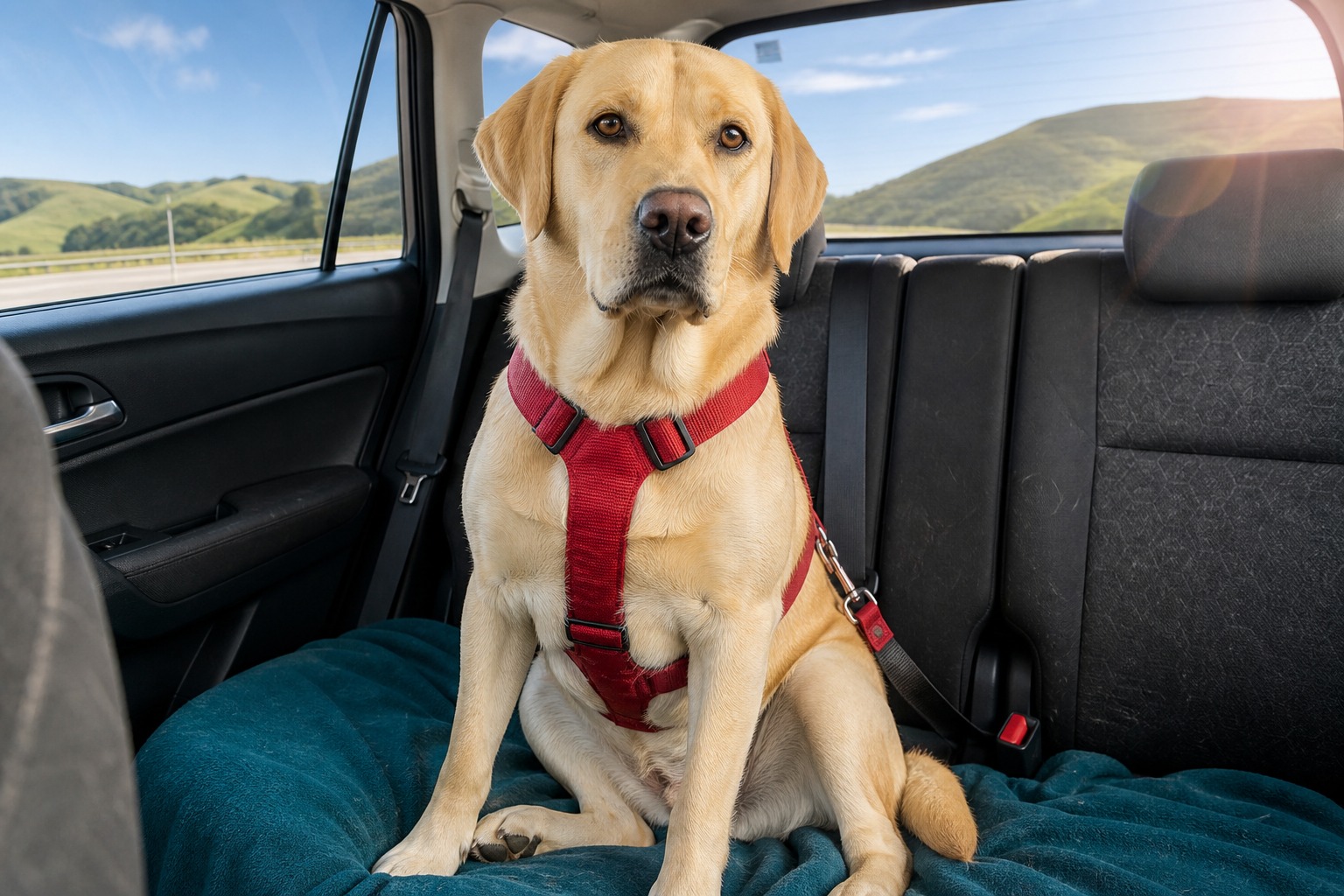 LivingYou Buckle Up. In a Crash, an Unrestrained Dog Is a Projectile.Dr. Priya Nair · 7 min
 LivingEvery Trail Closed to Dogs Was Closed Because of a Dog OwnerMarcus Webb · 8 min
 LivingA Woman Left Her Dog at the Airport. The Breed Ban That Set It Up Is the Real Story.Jordan Ellis · 4 min
 Health & WellnessThe Backseat Habits That Turn a Dog Road Trip DangerousDr. Ravi Mehta · 6 min
 LivingCharleston Is a Dog Town on a Clock. Miss the Hours and the Trip Falls Apart.Leila Torres · 10 min