


Every Reason to Buy an Antler Chew Is the Reason Not To
Long-lasting, tartar-scraping, all-natural: a vet explains why each antler selling point is the exact mechanism that cracks your dog's teeth, plus how to vet any chew in five seconds.

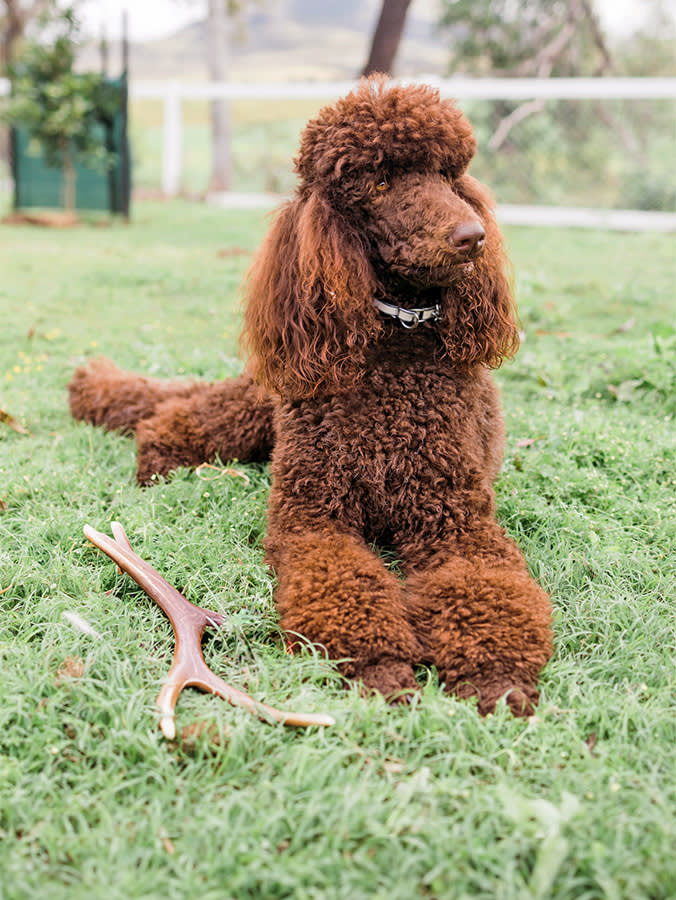
Pick up a package of antler chews and read the selling points. Long-lasting. All-natural. Scrapes away tartar as your dog chews. Every one of those sounds like a reason to buy. Here is the part the packaging will never tell you: each of those selling points is, mechanically, the exact reason an antler is one of the more dangerous things you can hand your dog. The hardness marketed as a virtue is the hazard. Once you see that the product’s best features and its biggest risks are the same physical fact, the whole “are antlers safe” question answers itself.
So instead of walking the usual pros-and-cons routine, let me take the marketing apart claim by claim, because the claims are where the danger hides.
Claim 1: “Long-lasting.” Translation: too hard to safely chew
An antler lasts for hours because it is essentially solid bone, the headgear a male deer grows to bludgeon rivals during fights over territory and mates. It is engineered by evolution to survive enormous impact. That durability is precisely the problem. A chew that outlasts your dog’s jaw is a chew your dog’s teeth lose to. Even the teeth of giant-breed dogs are no match for an antler.
How much force does it actually take to break a dog’s tooth? We have a real number. A 2019 cadaver study measured the force required to fracture the maxillary fourth premolar, the big carnassial tooth dogs use for serious chewing, and found it broke at a mean of about 1,281 newtons. That sounds like a lot until you realize a determined dog clamping down on an immovable object can generate forces in that neighborhood, and an antler does not give at all. The same study found that taller, narrower teeth fracture more easily, which is bad news for exactly the cusps dogs drive into a hard chew. “Long-lasting” is just another way of saying the antler will not yield, so something else has to, and that something is a tooth.
Claim 2: “Cleans teeth.” Translation: the same action that scrapes tartar cracks enamel
The pitch is that gnawing an antler mechanically chips tartar off the teeth. The uncomfortable truth is that the identical chewing action that is supposed to chip away tartar is what chips, or shatters, the tooth. The most common serious injury from antlers is a slab fracture: a chunk of tooth breaking off, often exposing the sensitive pulp inside.
These fractures are not minor. They are intensely painful, and they frequently lead to infection of the tooth root deep below the gumline. Treating one means a root canal or pulling the tooth entirely, real dental surgery, real anesthesia, real cost. You cannot get the claimed tartar benefit without running the fracture risk, because they are the same motion. There is no version of this product that scrapes safely.
Claim 3: “All-natural.” Translation: natural doesn’t mean safe to swallow
Antlers are natural and minimally processed, which is true and irrelevant to safety. A rock is natural too. The “natural” framing distracts from what happens when a dog does what dogs do and breaks off a piece. Swallowing fragments of deer or elk antler can cause:
- Oral injuries and infections. Rough or splintered edges can lacerate the mouth. Most cuts heal fast, but some get infected and need antibiotics or surgical repair.
- Choking. Irregular bone fragments are notorious for lodging where they shouldn’t. A piece stuck in the throat can block the airway; one stuck in the neck or chest can press on the windpipe.
- Intestinal obstruction. Bone does not digest easily. A large chunk can wedge in the small intestine, and sand-like bone debris can build up and cement in the colon, causing painful constipation. Obstructions are surgical emergencies.
- GI upset. Even bony material that passes all the way through can badly irritate the gut on the way, causing vomiting and diarrhea, sometimes bloody.
None of these risks are softened by the antler being natural. If anything, “natural” is doing public-relations work the product has not earned.
The 5-second test for any chew
Here is the genuinely useful tool, the one to keep after you have thrown out the antler. Veterinary dentist Dr. Fraser Hale popularized what is known as the Knee Cap Rule, and it cuts through every marketing claim instantly: if you would not want someone to hit you on the kneecap with the chew, do not give it to your dog. The small-dog version: if your dog would not want to be hit on the kneecap with it, skip it. Anything hard enough to hurt is too hard to chew on.
Run any candidate chew through three fast questions:
- Does it bend or give at all when you press it?
- Would you be willing to bite down on it yourself, flavor aside?
- Does it splinter when it breaks?
A safe chew gives a little, you would (grudgingly) bite it, and it does not splinter into sharp shards. An antler fails all three. So do most of the other “long-lasting” hard chews dogs love and dentists dread.
The other chews that fail the same test
Antlers are not alone. This whole category of rigid, jaw-defeating chews carries the same fracture and obstruction risks, and steering clear of all of them protects your dog’s teeth:
- Nylon bones
- Raw bones
- Cooked bones
- Bully sticks (hard, knotted ones especially)
- Dried cow hooves
- Dried pigs’ ears
- Yak milk chews (the rock-hard variety)
Puppies: even more reason to say no
It is tempting to hand a teething puppy an antler to buy yourself an hour of quiet. Don’t. Puppy teeth fracture even more readily than adult teeth, and puppies are worse at knowing their own limits, so they are likelier to gulp a broken-off piece and choke. The category of hard chews that is risky for adult dogs is outright dangerous for puppies.
What to give instead
Now that I have Fun-Policed away your dog’s favorite option, here is where to find good ones. If you specifically want to fight plaque and tartar, start with the Veterinary Oral Health Council (VOHC), a panel of veterinary dentists and scientists who review the actual safety-and-efficacy studies behind dental products and publish a list of ones that pass. Current VOHC-accepted options that are widely available include products in the Greenies, Purina Pro Plan Veterinary Diets / DentaLife, Virbac C.E.T. VEGGIEDENT, OraVet, and Whimzees lines, among others. Checking that list takes a minute and replaces guesswork with vetted evidence.
If your real goal is just to keep a busy dog occupied, reach for chews and toys that pass the bend-and-splinter test: natural rubber chew toys (often billed as indestructible, though some dogs would argue), rope toys, cloth toys, and food puzzles that make your dog work for a reward. Whatever you choose, supervise, you want to be there to take it away if your dog starts shredding off pieces, and rotate a variety of toys to keep things interesting.
The bottom line
You do not need to weigh antler chews on a balance of pros and cons, because the pros and the cons are the same trait viewed from two angles. Long-lasting means tooth-breaking. Tartar-scraping means enamel-cracking. All-natural means nothing about whether a swallowed shard will obstruct your dog’s gut. Skip the antler, keep the kneecap rule, lean on the VOHC list, and supervise whatever your dog chews. Your dog’s teeth, and your dental bill, will thank you.
References
- Soukup, Jason W., et al. “Fracture Limits of Maxillary Fourth Premolar Teeth in Domestic Dogs Under Applied Forces.” Frontiers in Veterinary Science, vol. 5, January 2019. https://www.frontiersin.org/articles/10.3389/fvets.2018.00339/full
- Veterinary Oral Health Council. “VOHC Accepted Products for Dogs.” https://vohc.org/accepted-products/
- Hale, Fraser A. “The Owner’s Guide to Dental Disease” (Knee Cap Rule). Hale Veterinary Clinic. https://www.haleveterinaryclinic.ca/site/educational-material-veterinary-guelph/2024/03/18/the-knee-cap-rule-endodontics
- Lewis, John R. “Treatment Options for Carnassial Tooth Fractures in Dogs.” Veterinary Practice News, 22 September 2021. https://www.veterinarypracticenews.com/treatment-options-for-carnassial-tooth-fractures-in-dogs/
Not a substitute for your vet. Our guidance is educational. For urgent symptoms, contact a vet or emergency clinic right away. Editorial standards
Dr. Chen is a small-animal veterinarian who leads health and safety coverage at The Pet Times. She writes and reviews the bulk of our illness, condition, and safety content, translating clinical guidance into clear, practical advice owners can act on at home.
Meet our experts ↗Keep reading
 Health & WellnessRawhide Is a Tannery Byproduct. Whether It Hurts Your Dog Is Up to You.Dr. Amara Solis · 10 min
 FoodSalmon Is Great for Your Dog. Raw Salmon Can Kill Them.Dr. Ravi Mehta · 7 min
 FoodSkittles Aren't the Candy That'll Send Your Dog to the ERDr. Lena Park · 6 min
 Health & WellnessThe Dog Treat Recall Where Nobody Got Sick, and Why That's the Good NewsDr. Priya Nair · 3 min
 Food"Dogs Are Basically Wolves" Is How Raw Chicken Gets Fed. Here's the Catch.Dr. Lena Park · 7 min
 FoodYour Meatloaf Could Hospitalize Your Dog. This One Won't.Dr. Lena Park · 7 min