


A Scruffy Rescue Named Chicken Taught Two Full-Speed Careers How to Chill
Jess King and Sophia Urista run at a hundred miles an hour. Then a neglected little terrier with a string of medical quirks walked into their lives and reset the tempo.

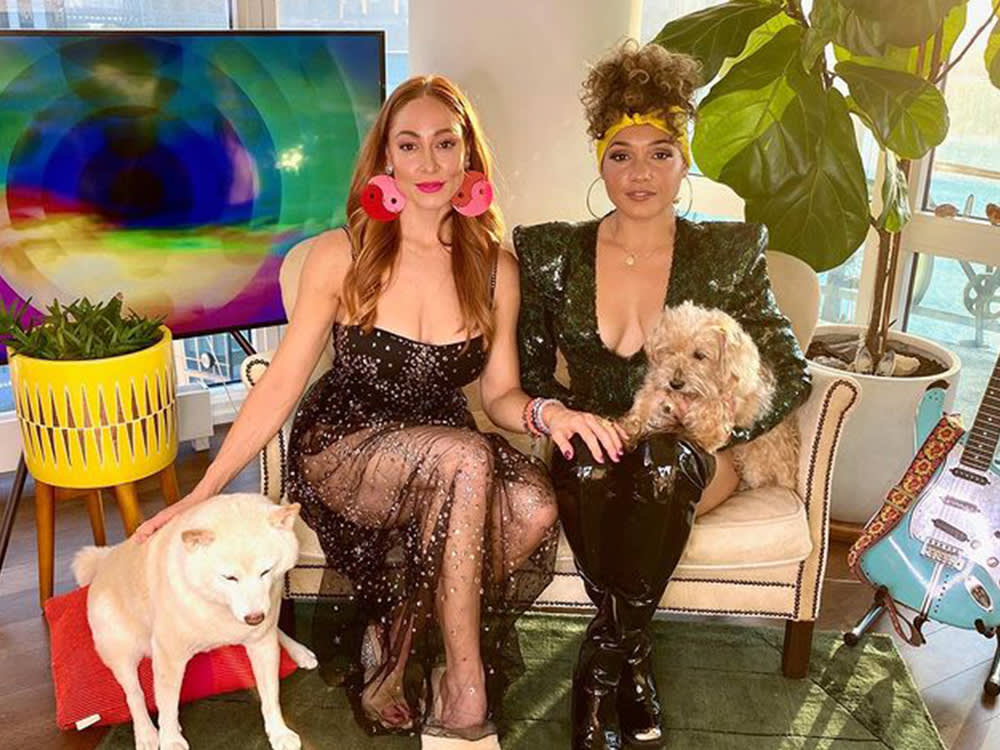
If you rode out any part of the pandemic clipped into a Peloton, Jess King needs little introduction. Her class, billed as more of a rolling dance party than a spin session, built a devoted following on sheer kinetic force. Off the bike, she and her partner, the musician Sophia Urista, brought that same high-wattage energy to a home cooking show. Two people, in other words, built for full throttle.
So it’s a little poetic that the creature who taught them to ease off the gas is a small, mellow, distinctly un-athletic terrier mix named Chicken.
Found in a park, and never given back
Chicken’s origin story is the kind that talks you into believing in fate. The couple first noticed a little dog wandering the park near their home. When it became clear she belonged to no one and had been badly neglected, they brought her inside for a bath and a meal. A vet visit the next day turned up a microchip, and the previous owners, when reached, explained that she’d bolted during fireworks and that the kindest thing now would be for the couple to keep her. So they did.
Her name came from her silhouette. Much of her coat had been kept short, and the fur across her midsection was worn and discolored, most likely from living in a sweater for long stretches. The rest of her, long, blonde, curly, and fluffy toward the back, gave her a distinctly poultry-adjacent waddle. Chicken it was.
Learning to care for a dog who came with an asterisk
Chicken didn’t arrive as a low-maintenance pet. By the couple’s account she doesn’t produce tears, so they regularly use artificial tears to keep her comfortable, and she runs “thirst-less,” meaning they dilute her food with water to make sure she stays hydrated. They also moved her onto a human-grade fresh diet, The Farmer’s Dog, and say her coat and overall condition improved markedly.
None of that is glamorous, and that’s the point. Adopting an animal with medical quirks means folding a set of small, unglamorous, non-negotiable rituals into a busy life, the eye drops, the watered-down meals, the watchful eye. What the couple describe is less a burden than a rhythm, and it’s a rhythm that rewarded them: as Chicken settled in and learned she was safe, she began to trust, and a real personality emerged. On cooking-show shoot days she cashes in on the perks, angling for unseasoned leftovers with a few well-timed tricks.
A dog who does not do fetch, and doesn’t apologize for it
Fitting an unhurried dog into two very hurried lives took some adjustment. Chicken travels with them, tags along on errands, and generally goes wherever she’s allowed. But she is emphatically not a play-and-fetch dog, and left to her own devices she will nap the entire day away. The couple compensate with longer walks and, charmingly, indoor “fun-runs” up and down the hallway, meeting the dog where she is rather than forcing her to become someone she isn’t.
That, in miniature, is the lesson Chicken keeps teaching. She is deeply chill, and being responsible for a deeply chill animal has a way of lowering your own resting speed.
The dog before, and the grief that shaped it
Chicken isn’t King’s first formative dog. Before her came Zeus, a Shiba Inu who was part of King’s life for nearly fifteen years and who came with his own health challenges, severe allergies among them, that turned her into an experienced, attentive caregiver long before Chicken. She’s shared small, tender details from his later years: as arthritis set in and his back feet started to drag, she’d slip a set of bright red booties onto his paws and keep him moving with water therapy, letting him swim and walk an aquatic treadmill with a trainer.
King has spoken candidly about losing Zeus as her first real experience of grief, and about the slow work of accepting that letting him go was itself an act of love. She’s described leaning hard on the people around her, still talking to him out loud, and finding comfort in the belief that he’s no longer struggling. Zeus, she’s said, was there through every formative chapter of her life and loved her even in the stretches when she found it hard to love herself.
Chicken arrived in the wake of that loss, and by King’s telling helped carry her through it. Being a dog parent, she’s reflected, taught her a particular kind of selflessness, the middle-of-the-night, needs-before-mine kind, and stretched her capacity to love. Our animals aren’t with us nearly long enough. Two high-speed careers and one very slow little dog make the same quiet case anyway: the love is worth it, and so are the memories that outlast the running.
Marcus Webb writes about the gear, gadgets, and everyday choices that make life with a pet easier. His coverage runs from product picks to training and the causes worth paying attention to, always with an eye on what actually earns a place in your home.
Meet our experts ↗Keep reading
 LivingAdopting a Look-Alike Dog Isn't the Risk. Expecting the Same Dog IsLeila Torres · 8 min
 LivingA Stranger Found Him Tied to a Bench in the Rain. A TikTok With 100 Followers Got Him Home.Nina Vasquez · 6 min
 LivingThat Adorable Valentine's Shelter Shoot Is a Targeted Adoption StrategyLeila Torres · 5 min
 LivingThis Illustrator Doesn't Draw Pets. She Draws Familiars.Leila Torres · 7 min
 LivingThey Came to Shoot a TV Show. They Left Having Saved 14 Dogs.Sara Lim · 6 min
 LivingSome States Once Banned Black Families From Owning Dogs. A Yale Scholar on Why That Still Echoes.Leila Torres · 6 min