


Adopting a Look-Alike Dog Isn't the Risk. Expecting the Same Dog Is
After losing a dog, it is natural to be drawn to a look-alike. The resemblance is not the problem. The hidden danger is asking a new dog to be a copy. Here is how to tell the difference.
When you lose a dog and find yourself scrolling adoption listings for one with the same face, the same coat, the same silhouette, you can feel slightly ashamed of the impulse, as if wanting a look-alike were a failure of love or a refusal to grieve. It is neither. The resemblance itself is harmless, even healing for many people. The thing that quietly wrecks the new relationship is something subtler and easy to miss: not the matching face, but the expectation hiding behind it. A look-alike adopted as a fresh companion tends to go beautifully. A look-alike adopted as a replacement, a do-over, a dog assigned the job of being the one who died, tends to go badly. Same dog, same face. Completely different outcome, decided entirely by what you ask of them.
Let me show you the difference through people who have lived both versions.
When the resemblance heals
For some people, finding a dog who echoes the one they lost is exactly what lets them breathe again, and there is nothing wrong with that.
In 2007, Hilary Reiter Azzaretti’s four-year-old black Lab mix, Buckley, died unexpectedly in his sleep. “He was my first dog as an adult, and the devastation was unbearable,” says Azzaretti, who lives in Park City, Utah. “I was hysterical and literally sick to my stomach.” What finally stopped the tears was a photo of a dog online who could have been Buckley’s double. That dog, Jackson, “rescued me more than I rescued him,” she says. He lived to 16. Crucially, she did not adopt Jackson to be Buckley. She took him as he came. Years later she put it plainly: “At the time, it must have mattered that he looked like Buckley, but in retrospect, any great dog would have helped me cope.”
Katy Brink knows the same heartbreak. When her dogs Norman and Sasha died within months of each other from cancer in 2023, she and her husband, Collin, were gutted. “Our entire marriage had been with this family of dogs,” says Brink, who lives in upstate New York. “To not have that, it was really kind of a scary and sad unknown. It just felt very empty.” A Jindo puppy on a walk reminded her of Norman; soon after, she spotted an adoptable dog named Jake who reminded them both of him, 800 miles away in Atlanta. They were all in. And here is the tell that it worked: once Jake came home, they discovered he and Norman shared more than a look. “Norman used to go out in the middle of the yard and just sit perfectly still and look, and Jake does the exact same thing,” Brink says. They later added Lola, a tan Pit Bull like Sasha, to honor her. Brink had braced not to love the new dogs as much. She was wrong.
“You definitely are not going to replace all their little quirks that you’ve come to love over the years, but then you get to discover the new things about them,” Brink says. “You can have more than one soul dog.”
Notice what these stories have in common. The new dog resembled the old one, and the person let the new dog be themselves. The resemblance was a comfort, not a contract.
Why the brain reaches for the familiar
There is a reason the look-alike pull is so strong, and understanding it helps you use it well instead of being used by it.
“The grief after losing a pet can be as intense and substantial as losing a human family member,” says Dr. Amara Solis, a veterinarian who counsels families through end-of-life care. “I see people struggling with sleep, appetite, concentration, and waves of guilt and sadness. It’s a completely natural response to losing a significant bond.” Under that kind of stress, the mind gravitates toward what it already knows. Reaching for a familiar face is not weakness; it is the brain seeking a known comfort in the middle of chaos, which is why it makes real psychological sense.
The catch is that the brain’s shortcut can write a check the new dog cannot cash. “It’s natural to feel drawn to an animal who resembles a pet who felt like a soul mate,” says Dr. Ravi Mehta, a veterinarian who works with newly adopted dogs. “The real question is whether you’re ready to accept a look-alike who will almost certainly act differently.” Trouble starts, he says, when the new dog behaves nothing like the old one. “Someone may lose a calm senior dog and then bring home a puppy who looks similar but delivers nonstop zoomies. The mismatch creates frustration, not because the new dog is wrong, but because grief shaped expectations the person didn’t even realize they had.”
Where the look-alike turns into a trap
The failure mode is consistent, and it always comes down to expectation rather than appearance.
Dr. Solis once worked with a family member of a client who adopted a near-twin of her previous dog about a month after losing him. “Under stress, our brains seek what’s familiar, so it made psychological sense,” Dr. Solis says. But instead of relief, the woman felt angry about her loss and guilty for adopting so soon, and she spent the early weeks constantly comparing. “With time and support, she set up a small memorial to the first dog and started describing the new dog as a different friend, not a replacement. Her bond with the new dog only developed after that shift.” The face never changed. The expectation did, and that was what unlocked the bond.
The most extreme version of the trap is paying to manufacture a copy. People who clone a dog expecting a true duplicate get a stranger instead, because cloning reproduces physical traits but not the quirks, history, or temperament that made the original who they were. It costs thousands of dollars, does nothing for the millions of adoptable dogs already waiting, and sets up the cruelest expectation of all. As one longtime rescue director has seen firsthand, assigning a new pet the job of being the old one “puts an impossible job on an innocent animal,” and it can muddle the good memories of the dog who passed rather than honor them.
And sometimes the trap shows up as ignoring the obvious. Rescue workers describe adopters so set on a look-alike that they override clear warning signs, like a resident dog who plainly dislikes the new candidate, because grief makes them unwilling to see or hear that the match does not work. When the look matters more than the dog, everyone loses, especially the dog.
A grief preference is fine. A grief assignment is not.
It is worth saying clearly that simply preferring a type of dog is healthy and common, and not the same thing as the trap.
Plenty of people love a particular breed and adopt it again and again, Golden Retriever after Golden Retriever, because they love that specific lifestyle and temperament. That is a preference, not a replacement, and almost every breed and type, including purebreds and so-called hypoallergenic dogs, turns up in shelters and rescues. There is even a gentle, eccentric version of the look-alike life: one rescue helped a senior man who had kept a string of female yellow Labs his whole life, every one named Amy. He was not expecting Amy number six or seven to behave like the last. He simply held a collective memory of one beloved dog, with the best of each folded into the idea. Unusual, sure, but it never got in the way of his loving and caring for the dog in front of him. That is the line: a preference or a fond tradition is fine; assigning a living dog the identity of a dead one is the problem.
How to know you are adopting the healthy way
So before you bring a look-alike home, run a short, honest self-check. It is less about timing than about framing.
The “ready” signal is a sentence you can say and mean: this is a new relationship. If you can think of your late dog with fond memories alongside the sadness, and you can hold the new dog as their own animal, you are likely ready, and that framing protects both you and the dog. There is no universal “too soon,” either. If you are seriously picturing a new family member, there is a decent chance you are ready. Then, before the new dog arrives, think through what traits genuinely matter to your life, energy level, social needs, lifestyle fit, and resolve to meet the new dog with a beginner’s mind. Let their personality unfold with no comparison running in the background. That space is what lets an authentic bond form, and it protects the new dog from the unfair pressure of being someone else.
And give yourself permission to keep grieving. Missing your old dog does not betray the new one. The healthiest adopters mourn the dog they lost and celebrate the dog they have, at the same time, and let those two feelings coexist.
For Azzaretti, adopting again is what let her heal. “Jackson rescued me in the sense that bringing him home stopped the tears and relieved the pit in my stomach,” she says. The face helped at first. The healing came from letting him be Jackson.
Pet loss is a real and significant grief, and it can hit hard. If you are struggling, you do not have to navigate it alone. Pet-loss support lines and grief counselors exist specifically for this, and reaching out is a sign of how much the bond mattered. If you would like, I can help you find pet-loss grief resources in your area.
References
Leila Torres leads our Living coverage, from home life and travel to the products and rescue stories that come with sharing a life with animals. She edits and writes across the section, with a soft spot for pieces about the bond between people and their pets.
Meet our experts ↗Keep reading
 LivingThe 'Best Family Dog Breed' Is a Myth. Here's What Actually Predicts a Great OneClaire Sutton · 6 min
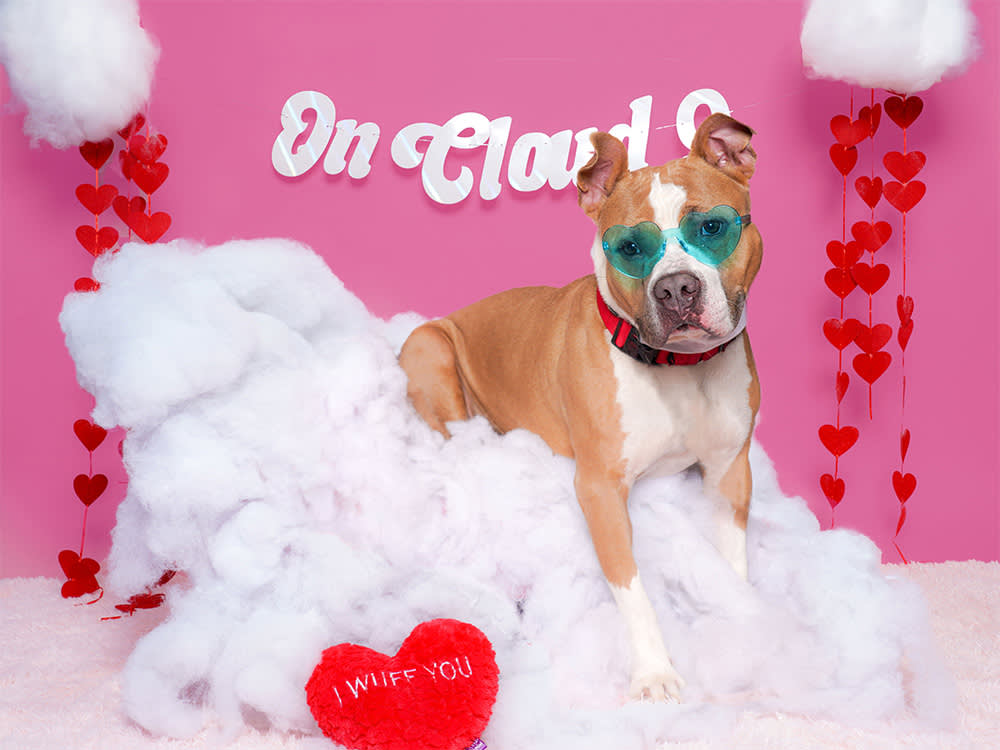 LivingThat Adorable Valentine's Shelter Shoot Is a Targeted Adoption StrategyLeila Torres · 5 min
 LivingA Terrified Street Dog From Sochi Ended Up on an Album CoverSasha Ford · 6 min
 LivingA Layoff, a Pregnant Street Dog, and 4,500 Rescues LaterLeila Torres · 5 min
 Living"I'm Too Busy for a Dog" Is Almost Never TrueLeila Torres · 6 min
 LivingA Movie Star Posted a Photo of His Dead Dog. Millions of People Understood Exactly Why.Jordan Ellis · 5 min