


Your Dog's Pinned-Back Ears Aren't One Message. Here's How to Read Them.
Flat ears can mean fear, a friendly hello, sharp listening, or nothing at all. A vet explains how to tell the difference by reading the rest of the dog.

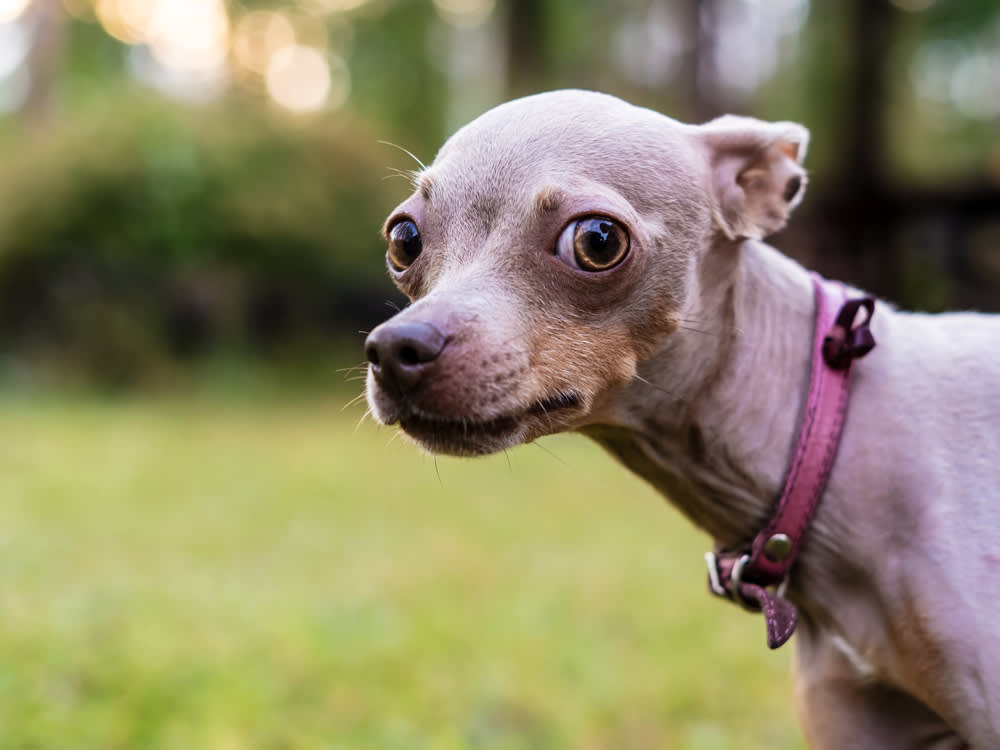
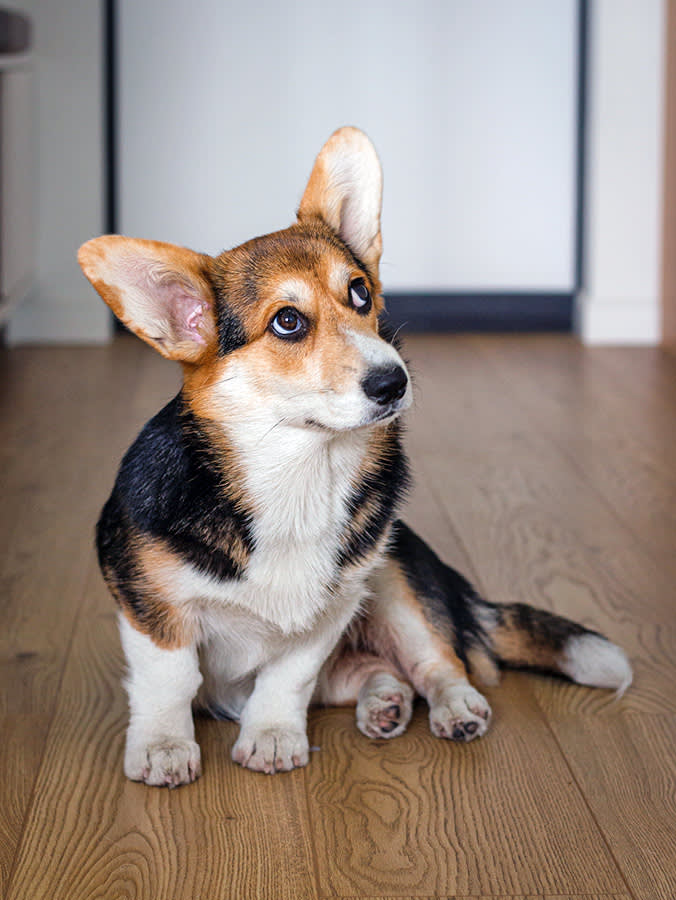
Humans are stuck with the ears we’re born with, more or less bolted in place. Dogs are not. A dog has roughly three times as many muscles controlling each ear as you do, and if you actually watch your dog’s ears for a minute, you’ll notice they almost never stop moving. That mobility is doing two jobs at once: aiming their remarkable hearing, and broadcasting a running commentary on how they feel.
Which is exactly why “ears back” is one of the most misread signals in all of dog body language. The same flat-against-the-head position can mean a dog is terrified, a dog is delighted to see you, or a dog is simply locked onto a faraway sound. There is no single translation. The trick isn’t memorizing what pinned ears “mean,” it’s learning to read them in context, against the rest of the dog.
The ears are a headline, not the whole story. I tell owners to treat pinned ears as a question, not an answer. The question is always the same: what is the rest of this dog’s body saying at the same moment?
A quick caveat before the list: breed and ear shape change the picture. A dog with naturally upright, mobile ears can pull them into a dramatic flat position, while a floppy-eared or heavily cropped dog shows the same emotions more subtly. Learn your own dog’s neutral, resting ear set first. Everything below is a read against that baseline.
The stress signals: fear, anxiety, and the low, flat “shutdown”
By far the most common reason a dog pins their ears is that they feel unsafe. When ears go back and the rest of the body follows suit, you’re usually looking at fear or anxiety. The tells that travel with it are a hunched or lowered body, a tucked tail, panting or fast breathing, dilated pupils, whale eye (the whites showing at the corners), lip-licking, frequent yawning, trembling, or a dog who keeps looking away and won’t hold your gaze.
Owners sometimes describe a version of this that looks like sadness, and the label isn’t wrong so much as incomplete. A dog who’s lost a companion, or who’s being asked to do something they’d rather not, may hold their ears low and flat in a way that reads as low mood. Underneath, it usually overlaps with the same anxiety and unease. The response is the same either way: lower the pressure, give the dog room, and remove or soften whatever is worrying them.
The clear warning: flat back, stiff, and hard
There’s a specific, high-stakes version of ears-back that you never want to miss. A dog who feels cornered, threatened, or aggressive may drag their ears very far back, nearly flat and flush against the skull, and this time the body is not shrinking, it’s bracing. Look for a stiff, still posture, a hard direct stare, a closed or snarling mouth, raised hackles, and low growling or sharp barking. Sometimes the dog freezes before anything else happens.
This is the one configuration where a fast, correct read matters most. Flat ears plus a rigid, forward-loaded body is a dog saying “back off” as plainly as they can. Do not push, reach in, or try to reassure with touch. Create distance and let the dog de-escalate.
The friendly pull-back: appeasement and greetings
Now the plot twist that trips people up. Dogs also pull their ears back when they’re being friendly. As two dogs approach each other or move into play, a slight backward tilt of the ears is an appeasement gesture, a little “I mean no harm.” The difference from the stress version is written all over the rest of the body: a loose, wiggly frame, a soft relaxed face, a broad low tail wag, maybe a play bow. Same ears, opposite meaning, and the body is what tells them apart.
A courting dog shows a related version. A male approaching a female he’s interested in may flatten his ears as part of a whole suite of non-threatening, “I’m safe” signals. Again, it rides alongside soft, unthreatening body language rather than tension.
The non-emotional ones: listening, resting, and pain
Sometimes ears back isn’t about feelings at all. A dog swiveling their ears backward may simply be aiming those big sound-funnels at something behind or far away; think of the outer ear as a dish that concentrates faint noise. Paired with an otherwise neutral, alert body, backward-rotated ears often just mean your dog heard something you didn’t.
For some dogs, a pulled-back set is just their resting default, whether that’s breed conformation or the result of an old injury or scarring (an aural hematoma, for instance, can permanently change an ear’s shape). Learn what “neutral” looks like on your specific dog so you don’t read a personality into anatomy.
Finally, and importantly, dogs in pain or feeling sick often hold their ears back, sometimes from the anxiety that comes with not feeling well. If pinned ears show up with other signs of discomfort — reluctance to move, a hunched back, changes in appetite, whimpering, or guarding part of the body — treat it as a health flag, not a mood, and check in with your vet.
Read the whole dog, every time
If there’s one habit to build, it’s this: never take the ears in isolation. Scan the whole body and let the signals vote.
- Posture: Loose and wiggly reads relaxed. Tense and still, or hunched and low, reads worried or on guard. Raised hackles mean high arousal.
- Eyes: A soft gaze is calm. A hard, fixed stare is a warning. Whale eye and big dilated pupils signal fear.
- Mouth: A slightly open, loose mouth is at ease. A tightly closed mouth, a grimace, or bared teeth signals tension or a threat.
- Tail: Not just wag-or-no-wag. A loose, sweeping wag with a wiggly body is friendly; a high, stiff tail with a fast little flick at the tip is high arousal; a tucked tail is fear.
When the ears, eyes, mouth, tail, and situation all point the same direction, you can trust your read. When they conflict, believe the tension. It costs nothing to give a dog space, and it’s the single best habit for staying safe and building trust.
References
- Boneh-Shitrit, T., et al. (2022). “Explainable automated recognition of emotional states from canine facial expressions: the case of positive anticipation and frustration.” Scientific Reports, 12, 22611. https://doi.org/10.1038/s41598-022-27079-w
- Bremhorst, A., et al. (2021). “Evaluating the accuracy of facial expressions as emotion indicators across contexts in dogs.” Animal Cognition, 25, 121–136. https://doi.org/10.1007/s10071-021-01532-1
- Gähwiler, S., et al. (2020). “Fear expressions of dogs during New Year fireworks: a video analysis.” Scientific Reports, 10, 16035. https://doi.org/10.1038/s41598-020-72841-7
- Hasegawa, M., et al. (2014). “Dogs’ body language relevant to learning achievement.” Animals, 4(1), 45–58. https://doi.org/10.3390/ani4010045
- Mota-Rojas, D., et al. (2021). “Current advances in assessment of dog’s emotions, facial expressions, and their use for clinical recognition of pain.” Animals, 11(11), 3334. https://doi.org/10.3390/ani11113334
- Walsh, E. A., et al. (2024). “Human-dog communication: how body language and non-verbal cues are key to clarity in dog-directed play, petting and hugging behaviour by humans.” Applied Animal Behaviour Science, 272, 106206. https://doi.org/10.1016/j.applanim.2024.106206
Common questions
Should I be cautious approaching a dog whose ears are pinned back?
Yes, until you've read the rest of the dog. Ears back can be friendly or fearful, so look at the whole body. If you also see a stiff posture, a hard stare, a tucked tail, lifted hackles, or a closed, tense mouth, give the dog space. If the body is loose and wiggly, it's likely a relaxed or friendly signal.
What does it mean when my dog has one ear up and one ear down?
Usually nothing emotional. One ear that sits differently is often just a matter of cartilage or muscle strength, and it's especially common in puppies. If an ear that normally stands suddenly drops and stays down, or the ear looks painful, swollen, or smells off, have your vet check it.
My dog's ears fold backward sometimes. Is that a mood?
No. Ears that get physically flipped or folded during play or a head shake are just stuck that way for a moment. There's no emotional message, and a gentle shake or a quick fix from you resets them.
Can I read my dog's mood from their ears alone?
Not reliably. Ear position is one channel out of several. Read it together with the eyes, mouth, tail, overall posture, and the situation. The more signals point the same way, the more confident you can be about what your dog is feeling.
Dr. Chen is a small-animal veterinarian who leads health and safety coverage at The Pet Times. She writes and reviews the bulk of our illness, condition, and safety content, translating clinical guidance into clear, practical advice owners can act on at home.
Meet our experts ↗Keep reading
 TrainingYour Tears Stress Your Dog Out. A Pet Pig Wouldn't Care.Dr. Nina Kohl · 5 min
 First DaysStop Counting Your Puppy's Sleep Hours. Watch for the Change.Dr. Amara Solis · 8 min
 TrainingThat 'Guilty Look' Isn't Guilt. It's a Read on You.Dr. Nina Kohl · 7 min
 TrainingFreezing While Your Dog Dawdles? Stop Begging and Set the SceneJordan Ellis · 8 min
 TrainingYour Dog's Ears Are Talking All Day. Here's the Translation.Dr. Nina Kohl · 6 min
 TrainingThat Study Said Dogs Ignore Your Bad Advice. Newer Research Says the Opposite.Dr. Ravi Mehta · 6 min