


Freezing While Your Dog Dawdles? Stop Begging and Set the Scene
Standing in the cold pleading with your dog to hurry up does nothing, they don't understand the assignment. A dog trainer's guide to speeding up winter potty breaks by engineering the walk, using the right rewards, and why 'go on cue' is a summer project.
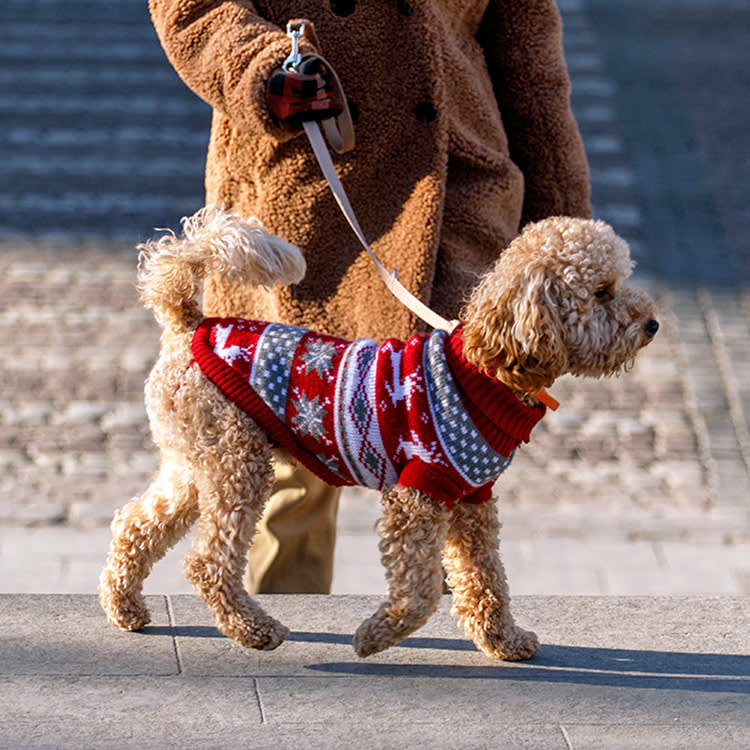
You know the scene because you’ve suffered through it. Late, dark, and painfully cold. You’re bundled past the point of dignity, hood cinched, one hand jammed in a pocket because the gloves are still on the counter where you left them. Meanwhile your dog, insulated by both a sweater and a full winter coat of their own fur, has decided this is the perfect night to conduct a leisurely scent survey of the entire block. You’re begging. Pleading. Your dog is contemplating a frozen shrub like it holds the secrets of the universe.
Here’s the thing that will save you: the begging is useless. Your dog does not understand “please hurry up so I can feel my toes.” What your dog does understand is where the good spots are and whether going potty pays off. So the way to speed up a freezing-cold potty break isn’t to rush your dog, it’s to engineer the outing so that going is the fast, obvious, rewarding choice. You set the scene; the dog does the rest.
Owners think their dog is being stubborn out there, and it’s almost never that. The dog just doesn’t share your goal. My whole job is making the dog’s goal and yours line up, walk to the spot that already smells like business, hold still, and pay up the second they finish. Do that and the dog gets faster because it’s suddenly in their interest to.
First, a reality check on rushing
Is it even okay to hurry your dog? Occasionally, sure. If you’ve got somewhere to be or just can’t do a long cold walk, speeding things up now and then is fine. But if your dog genuinely wants some outdoor time, constantly rushing them in and out isn’t the best approach, so grant them the fresh air when you reasonably can.
Your dog’s own feelings about the cold actually help you here. A dog who hates the cold will usually handle their business and beeline for the door on their own. A snow-lover is the harder case, and counterintuitively, rushing that dog can make them take longer: if finishing means the fun ends and they’re marched inside, they learn to stall. So part of the game plan starts before you even go out, dress warmly no matter how quick you expect the trip to be, so that if things drag, your own shivering impatience doesn’t sabotage the outing.
The quick fixes: make the spot do the work
If it’s already freezing and you just need results tonight, guide your dog to the places that trigger going, rather than letting them wander aimlessly.
- Aim for spots other dogs have used. Yes, that means yellow snow. Unglamorous, but a spot that already carries another dog’s scent tends to invite a fresh deposit, from males and females alike. Whatever works.
- Use vertical targets. Just like on a summer afternoon, lots of dogs (especially males) prefer something to aim at. Snowbanks, bushes, and signposts make good targets, and quiet intersections where scents cross can be especially appealing.
- Head for tall vegetation. Given a choice of surfaces, many dogs gravitate to overgrown, brushy patches. If a clump of tall grass is poking up through the snow, that’s often where your dog finally squats.
- Don’t interrupt them. When your numb hands are begging for this to be over and your dog finally starts to go, resist the urge to celebrate. Moving or crying out in excitement can interrupt the job. Keep your body still and your excitement quiet until they’re done.
- Bring rewards that matter. Positive reinforcement works wonders here. The moment your dog finishes, mark it with a cheerful “Yes!” and deliver a treat immediately. Making the outcome you want more rewarding than what would happen naturally is the whole trick to changing a dog’s behavior.
After the treat, your next move depends on the dog. If yours loves the cold, steel yourself and tolerate a few more minutes outside, because if going potty always triggers an instant trip back indoors, that dog will drag things out longer and longer. If yours hates the cold, do the opposite: make going back inside the reward, turn the dash back to the warm house into a party the instant they finish, with a treat on top.
The real fix: train “go” on cue (but do it in July)
The most efficient long-term solution is teaching your dog to eliminate on cue, but timing matters. This is a warm-weather, plenty-of-time project, not something to attempt during a January cold snap. One pro tip before you start: plenty of dogs pick up a pee cue but ignore it for pooping, so it’s often worth teaching a distinct word for each job.
Here’s the sequence:
- Choose your cue. Pick one short, simple prompt and stick with it. Short phrases like “Go potty” or “Get busy” work well because they’re easy to say the same way every time.
- Wait. Don’t try to force it. In the beginning, you’re simply waiting for your dog to go on their own.
- Say the cue as they go. Once you can predict the pre-potty routine, say the word a beat or two before they actually go, and say it just once. (If it’s cold when you’re starting out, just reward the behavior all winter without adding the word, then introduce the cue once the weather warms and you’re better at reading their signals.)
- Reward immediately. The instant they wrap up, give a treat and enthusiastic praise.
- Repeat and stay consistent. Reinforcement builds the habit. Keep your cue word and your rewards consistent until your dog responds to the cue. Older dogs may take longer to catch on, but they can absolutely learn it.
What newer research adds
The principle underneath all of this, that you change behavior by making the desired action more rewarding than the alternatives, is exactly what modern, reward-based training rests on. It’s why “make going potty pay, immediately” outperforms every version of nagging, and why the science of dog training keeps steering owners away from frustration-based tactics and toward reinforcement.
One thing the winter version of this deserves that the original playbook skips: paw care. Cold sidewalks are often treated with de-icing salt and chemical melts that irritate and even burn paw pads, and ice can ball up between the toes. That discomfort can itself make a dog reluctant to stand still and go. Protect the feet, well-fitted booties if your dog tolerates them, or a quick wipe of the paws when you get inside to remove salt before your dog licks it off, and consider a pet-safe de-icer for your own walkways. A dog whose feet don’t hurt is a dog far more willing to get the job done, which means both of you get back to the warm slippers faster.
References
- American Veterinary Society of Animal Behavior. “Position Statement on Humane Dog Training.” avsab.org.
- American Society for the Prevention of Cruelty to Animals. “Cold Weather Safety Tips.” aspca.org.
This article is for general education. If your dog suddenly struggles to urinate, strains, or has accidents, that can signal a medical problem, contact your veterinarian.
Common questions
Is it OK to rush my dog's walk in the cold?
Occasionally, yes. If you have somewhere to be or genuinely can't face a long walk, speeding things up now and then is fine. But constant rushing isn't fair to a dog who wants outdoor time, and it can backfire: if going potty always ends the fun, some dogs learn to stall even longer. Read your individual dog, some hate the cold and want in, others want to linger.
How do I get my dog to pee faster right now?
Walk them straight to enticing spots rather than wandering, vertical targets like posts and snowbanks, patches of long grass poking through the snow, and places other dogs have already gone, since many dogs prefer to go where others have. Then stay still and quiet while they go, and reward the instant they finish so the behavior pays off.
Can I train my dog to potty on cue?
Yes, and it's the best long-term fix, but train it when you have time and mild weather, not in a January emergency. Pick a short cue, wait for your dog to go, and pair the word with the act, then reward immediately. Many dogs benefit from two separate cues, one for peeing and one for pooping.
Jordan Ellis is a certified professional dog trainer with a decade of experience working with rescue organisations and private clients. They specialise in anxiety, reactivity, and positive reinforcement methods, and review all training and behaviour content at The Pet Times.
Meet our experts ↗Keep reading
 TrainingYour Dog Isn't Done Becoming Themselves. Age Six Is the Turning Point.Dr. Nina Kohl · 5 min
 TrainingTeaching Your Dog 'Shake' Does Something Bigger Than You ThinkDr. Mara Chen · 5 min
 TrainingYour Second Dog Is Copying Your First. That's the Risk, Not the Perk.Dr. Ravi Mehta · 6 min
 TrainingNever Introduce Two Dogs Face-to-FaceDr. Mara Chen · 7 min
 TrainingYour Dog Isn't Stubborn. Your House Has Six Sets of Rules.Dr. Priya Nair · 7 min
 TrainingThe Wagging Tail Lie: Why Reading One Dog Signal Gets People BittenTom Hadley · 8 min