


Never Introduce Two Dogs Face-to-Face
The nose-to-nose meeting is exactly how dog introductions go wrong. A vet-backed method built on neutral ground and parallel walking, plus how to read whether two dogs are actually hitting it off.

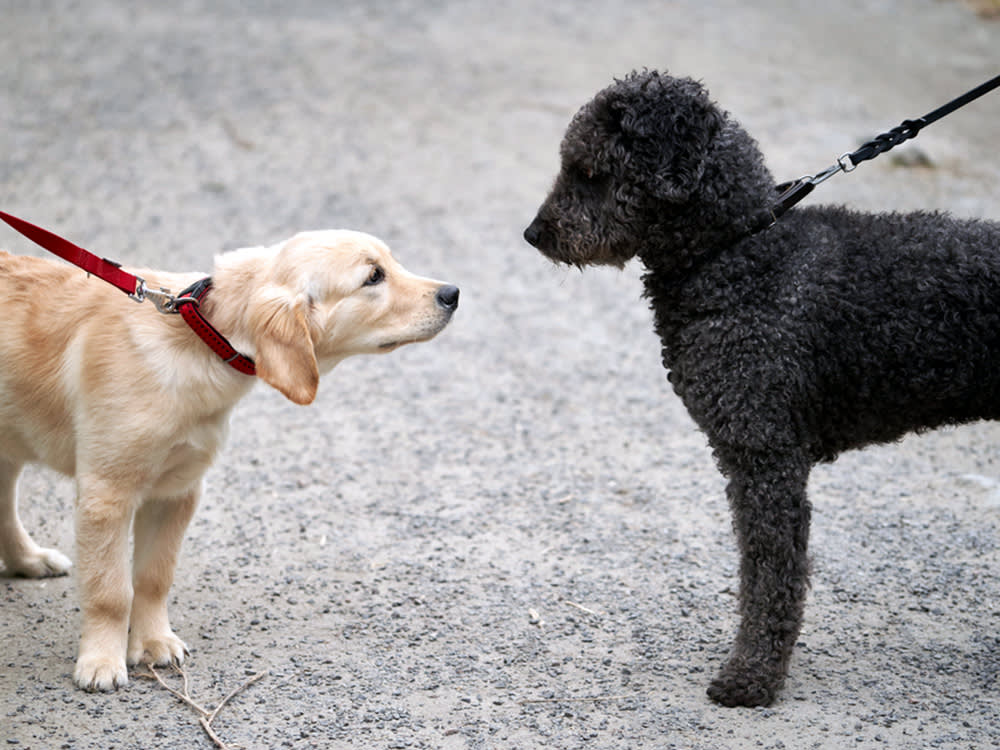
First impressions stick, and dogs get exactly one shot at them just like we do. The catch is that they can’t manage that moment themselves; they’re relying on us to set it up well. And the single most common way pet parents get it wrong is the instinct to walk two dogs straight up to each other, nose to nose, and hope for the best.
That head-on meeting is a setup for tension. It’s confrontational, it gives neither dog an exit, and it forces intimacy before either has decided they’re comfortable. The better approach treats a first meeting as something you build toward gradually, on neutral ground, with the dogs walking together long before they ever touch. Here’s how to do it, and how to read whether it’s working.
Why the setup matters more than the meeting
Whether a second dog is joining your home or your dog is meeting a friend’s, the outcome is largely decided by the conditions you create, not by the dogs’ raw chemistry. Go slowly and be ready to back off the instant either dog’s body language tightens.
Keep the early exposures short and take frequent breaks. A first meeting isn’t a marathon. Brief, positive, and over before anyone gets overwhelmed is exactly what you’re after.
Step one: get prepared
Before the dogs are anywhere near each other, both handlers need to be ready. You’ll want:
- Two standard leashes, four to six feet, nylon or leather. Skip retractable leashes, which give you no real control.
- High-value treats, each dog’s absolute favorite.
- A neutral, roomy space, ideally outdoors.
Crucially, each dog needs their own handler, so you can separate the pair easily and read each dog’s signals independently.
Step two: pick genuinely neutral ground
The goal is to keep either dog from feeling like they’re defending turf, so choose an open outdoor area neither dog considers theirs, a park or a wide field. Begin with each dog at opposite edges of the area, both walking the same way. They can see each other but can’t close the gap. Every time your dog looks at the other, hand over a treat, so the mere sight of the other dog starts to predict good things.
Step three: close the distance slowly
Once both dogs have stopped locking onto each other, tighten the gap to somewhere around three to five feet, still moving in parallel. Keep going only as long as your dog stays more tuned in to you than to the other pair.
Mark and reward each time your dog glances at the other one. That reward tends to produce a little head-turn back toward you, which naturally breaks any building fixation. From there you can keep narrowing the distance until both humans are walking side by side with the dogs on the outside.
Step four: allow a brief sniff
When the dogs are walking comfortably close, and this may take several separate walks to reach, let them circle and sniff each other for just a few seconds, then guide them apart again. Repeat this a number of times, watching for anything uneasy, like tucked tails. After several meetings where both stay relaxed, you can try letting them loose together in a securely fenced space to get acquainted up close.
Introducing a new puppy to your resident dog
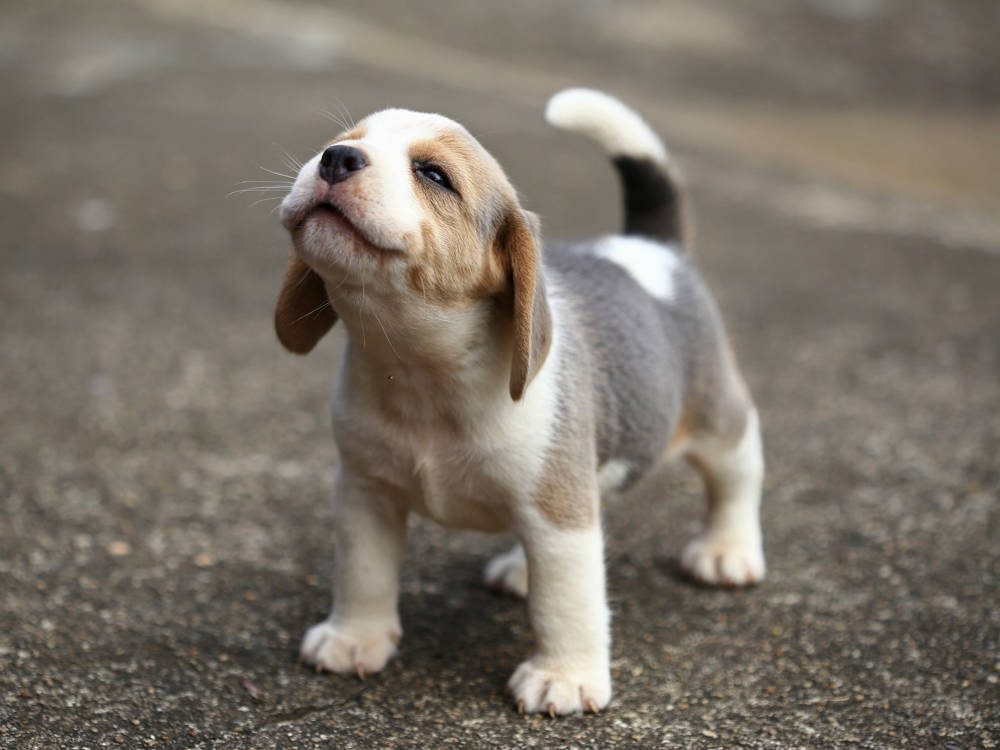
The parallel-walk logic still applies, but puppies add a wrinkle. Always start outside before anyone comes indoors, and keep both dogs leashed so you stay in control.
With a puppy, be extra deliberate about keeping it short and upbeat. The hard part is that puppies haven’t learned dog-to-dog manners yet, and that can genuinely overwhelm an adult dog. Puppies just want to play and blow right past everyone’s need for a break, so break up the play often and let each dog retreat somewhere quiet to reset.
Once they seem at ease outside, move to the living area, but first remove toys and food bowls your resident dog might guard from the newcomer. Keep the two separated when you’re not home until they’re fully comfortable together and the puppy is reliably housetrained.
On timing: vets recommend keeping puppies away from unfamiliar dogs until they’ve completed their vaccinations, so save the dog park for later. A resident adult dog is different, your puppy is fine to mingle with them provided that adult dog is current on their shots.
Reading whether it’s actually going well
Body language tells you everything, and dogs are usually honest about it. The signs of trouble to watch for include:
- Prolonged, hard stares
- Stiff bodies and legs
- Raised hackles
- Snarling or growling
What you want to see instead is loose, wiggly, relaxed movement and genuine mutual curiosity, without intense staring or tucked tails.
If either dog growls, snarls, fixes the other with a hard stare, or throws off warning signals that keep ramping up, force an extended break, no debate.
If you’re unsure how to interpret what you’re seeing, bring in a professional trainer who can guide the process and keep it safe.
Helping two dogs learn to get along
If your dog seems to want nothing to do with the new arrival, don’t panic; adjusting to each other can take time. A few things genuinely help:
- Do first meetings on neutral ground.
- Introduce in gradual stages rather than all at once.
- Feed the dogs in separate spots so neither one guards a bowl.
- Get both dogs spayed or neutered.
- Keep up obedience and basic-cue training.
- Bring in a professional behaviorist or trainer if you’re stuck.
Ultimately, getting two dogs to like each other is less about clever tricks than about patience and close attention to body language, making sure both dogs have the room they need to feel safe.
References
- González-Ramírez, M. T., et al. Expanding families: Preparing for and introducing dogs and cats to infants, children, and new pets. Veterinary Clinics: Small Animal Practice.
- Power, E. R. Dogs and practices of community and neighboring. Anthrozoös.
- Howell, T. J., et al. Puppy parties and beyond: the role of early age socialization practices on adult dog behavior. Veterinary Medicine: Research and Reports.
Common questions
When can my new puppy meet other dogs?
Vets generally recommend keeping puppies away from unknown dogs until they've had their full round of vaccinations, so hold off on the dog park. The exception is a resident adult dog in your own home: your puppy is fine to mingle with them, provided that adult dog is fully current on their shots.
How can I tell if two dogs like each other?
Watch the bodies. You want loose, relaxed, wiggly movement and mutual interest without intense staring. Warning signs point the other way: prolonged hard stares, stiff bodies and legs, raised hackles, and any snarling or growling. If you see those, calmly separate the dogs and give them a real break.
How do I introduce a dog to a cat?
Dog-and-cat introductions take more care than two dogs. Keep them fully separated at first, let them get used to each other's scent before any face-to-face, and only then allow a controlled meeting. Expect it to move slower, and let the cat set the pace.
Dr. Chen is a small-animal veterinarian who leads health and safety coverage at The Pet Times. She writes and reviews the bulk of our illness, condition, and safety content, translating clinical guidance into clear, practical advice owners can act on at home.
Meet our experts ↗Keep reading
 TrainingYour Dog Isn't Blowing You Off. Six Cues Are Just Broken.Jordan Ellis · 7 min
 TrainingYour Dog Understands Words. Just Not the Way You Think.Dr. Priya Nair · 9 min
 TrainingYour Dog Isn't Reading Your Face. They're Reading Your Hand on the Leash.Dr. Lena Park · 8 min
 TrainingExcited Isn't the Same as Happy. 8 Signs Your Dog Is Over Threshold.Dr. Nina Kohl · 8 min
 TrainingYour Dog Doesn't Know Its Name. It Knows What the Name Predicts.Dr. Amara Solis · 6 min
 First DaysThe Only Puppy in the Litter Missed a Class. It Shows Up Years Later as a Bite.Dr. Nina Kohl · 9 min