


Your Dog Isn't Blowing You Off. Six Cues Are Just Broken.
When a dog ignores a cue, it's usually because the cue itself is unclear, not because the dog is stubborn. Here are six everyday cues dogs routinely misread, sorted by why they break.
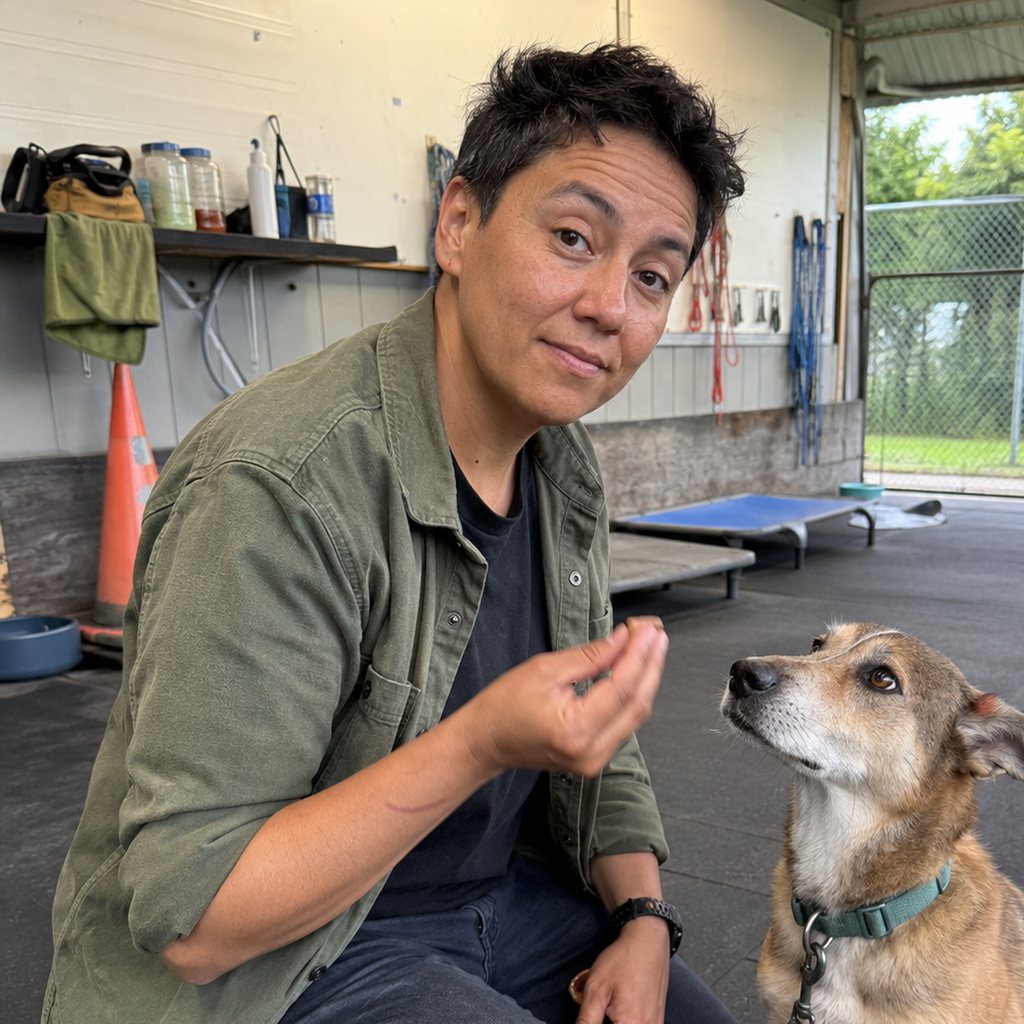

Here is the reframe that changes everything about training: when your dog ignores a cue, they are almost never being stubborn. They are being confused. A cue is a contract, and half the cues we use every day have a hole in the contract. The dog reads the hole, fills it in with their own logic, and does something we did not intend. Then we call them difficult.
Fix the cue, not the dog. Below are six of the most commonly broken ones, grouped by the specific way they fail. Once you can see the failure, the fix is usually obvious.
When the payoff is in the wrong place
The first family of broken cues share a problem: from the dog’s point of view, doing the opposite is more rewarding.
“Come.” You want an instant sprint toward you. Your dog does the math: leave this fascinating stick, this patch of incredible smells, this friend, because a human said a word? The word by itself is not a reason. “Come” only works when it has reliably meant “whatever you’ve got over there, I’ve got something better over here” — many, many times over. Call your dog and hand them a limp pat on the head, and you are teaching them that coming when called is a bad trade. Call them and deliver something genuinely great, every time in training, and you build a dog who wheels around the instant they hear it.
“Drop it.” You mean “release that.” Your dog, mid-grab of some forbidden treasure, hears “the chase game starts now.” Your next move is to lunge; their next move is to bolt, because being chased is a fantastic time. You have accidentally taught them that “Drop it” is the starting whistle for keep-away. The repair is to train it long before the high-stakes moment, using trades rather than grabs (see the step-by-step above). Done right, “Drop it” comes to mean “let go and something better appears,” which is a contract a dog will happily sign.
When there’s no defined ending
The second family breaks because we give the dog a beginning without an end. Imagine someone told you to freeze and then never told you to unfreeze. How long would you hold it?
“Stay.” Dogs can grasp “keep sitting where you are.” What they cannot guess is for how long. Until you look away? Until a squirrel appears? Until they get bored? “Stay” is only half a cue. It needs a release word — “OK,” “free,” “break,” whatever you like — that clearly says the job is done. Without the second half, your dog improvises the ending, and you cannot really blame them for getting up when they feel like it.
“Down.” This one carries a second, sneakier ambiguity. You use “down” to mean “lie down.” You also use “down” to mean “get off the couch” and “stop jumping on Grandma.” That is three completely different requests wearing the same word. The dog cannot possibly know which one you mean in the moment. Pick one meaning for “down” and choose different words for the others — “off” for the couch and the jumping — and the confusion evaporates.
When it’s all tone and no meaning
“No.” When we say “No,” we mean “stop that immediately.” What the dog hears is pure emotion with no instruction attached: You sound upset. I don’t know why. Am I in trouble? “No” is all tone and no context. If you want it to mean something, you have to teach it specifically, the same way you taught “sit” — mark and reward the moment your dog pauses and disengages. Plenty of trainers skip “No” entirely and teach “stop” or a specific redirect instead, because it is easier to reward a clear behavior than a vague vibe.
Owners think their dog is defying them when really the dog has no idea what the word is supposed to produce. The dogs that look ‘stubborn’ to me are almost always dogs who were handed a fuzzy cue and are doing their honest best to guess. Sharpen the cue and the stubbornness disappears overnight.
When the cue may not be worth teaching at all
“Heel.” You picture a dog gliding at your side like a show competitor. Your dog is thinking, Can I sniff now? Now? Why are we walking this slowly? A precise competition heel is a real skill, but for the vast majority of us it is about as necessary as a curtsy. Unless you are headed into the obedience ring, what you actually want is a loose leash and a dog who is not dragging you down the block. Train that, skip the formal heel, and you have removed a whole category of confusion by not creating it in the first place.
The point behind all six
There are no bad guys here. Your dog is not sabotaging you, and you are not failing them. You are two species trying to communicate across a real gap, and misunderstandings are baked in. The good news is that every one of these breaks the same way and mends the same way: figure out where the contract has a hole, close it, and reward your dog for the version of the behavior you actually meant. Less confusion means a calmer dog, a calmer you, and a relationship that runs on clarity instead of frustration.
Jordan Ellis is a certified professional dog trainer with a decade of experience working with rescue organisations and private clients. They specialise in anxiety, reactivity, and positive reinforcement methods, and review all training and behaviour content at The Pet Times.
Meet our experts ↗Keep reading
 TrainingYour Second Dog Is Copying Your First. That's the Risk, Not the Perk.Dr. Ravi Mehta · 6 min
 TrainingYour Dog Doesn't Know Its Name. It Knows What the Name Predicts.Dr. Amara Solis · 6 min
 TrainingTeaching Your Dog to 'Talk' With Buttons, Without Fooling YourselfDr. Nina Kohl · 8 min
 First DaysThe Only Puppy in the Litter Missed a Class. It Shows Up Years Later as a Bite.Dr. Nina Kohl · 9 min
 TrainingYour Dog Isn't Done Becoming Themselves. Age Six Is the Turning Point.Dr. Nina Kohl · 5 min
 TrainingYour Dog Pictures the Ball When You Say 'Ball.' There's Now Proof.Dr. Ravi Mehta · 5 min