


Your Dog Doesn't Know Its Name. It Knows What the Name Predicts.
When your dog whips around at 'Buddy!', it feels like proof they know who they are. The science says something humbler and more useful, and it changes how you should say their name.

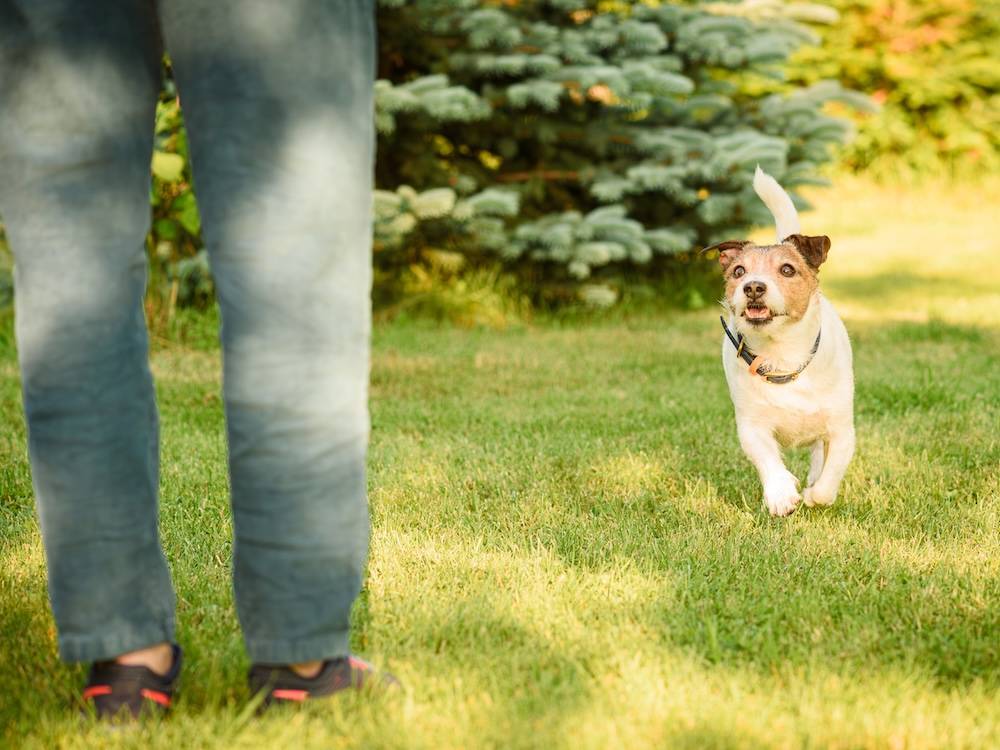
At any dog park, you can watch the same small miracle on repeat. Someone calls “Buddy!” and a dog three hundred feet away wheels around and comes barreling back, and the owner turns to no one in particular and says, “He knows his own name.” It is a lovely thing to believe. It is also, almost certainly, not what is happening.
The question of whether a dog truly knows its name is deceptively deep. It runs straight into how dogs learn, what they understand about words, and whether they carry any sense of “me” at all. The short answer is that your dog responds to their name beautifully and probably has no idea it refers to them. The longer answer is more useful, because it tells you how to say the name so it keeps working.
What a name is to a dog
Start with the self. Classic work on the mirror test, where researchers see whether an animal recognizes its own reflection, suggests dogs do not process a mirror image as themselves. They tend to treat the dog in the glass as another dog entirely, barking at it, posturing, or trying to play. The animals that have clearly passed the mirror test are a short list, elephants, great apes, and a few birds, and dogs are not on it. Dogs may recognize themselves by scent, which is its own fascinating story, but they do not appear to carry the kind of name-anchored self-concept humans take for granted.
So if the name is not a label for a self your dog experiences, what is it? A prediction. Early on, “Buddy” is just noise. But said over and over in the presence of good things, treats, praise, dinner, a walk, the sound stops being noise and starts being a reliable signal that something worth attending to is about to happen. Your dog learns to orient to it the same way they learn “sit” or “leash,” through plain association and repetition. And crucially, the exact same mechanism lets a dog learn other names: the neighbor, the other dog at the park, “Grandma.” Say a word consistently right before a particular person or dog shows up, and a pattern-hungry animal will connect them. That is not knowledge of identity. It is very good bookkeeping about what predicts what.
People hear their dog respond to its name and understandably read it as self-recognition, but the dog is doing something different and honestly more elegant. The name is a promise. Over hundreds of repetitions it comes to mean ‘good things are near, and it’s worth turning toward the person who said it.’ The dog isn’t answering to who they are. They’re answering to what tends to follow.
Why this isn’t a knock on your dog
It would be easy to read all this as “your dog is not as smart as you thought.” It is closer to the opposite. Dogs can attach specific meanings to a startling number of words. The famous cases make the point: a border collie named Chaser was documented understanding the individual names of more than a thousand objects, and could distinguish an object’s name from the action she was being asked to perform on it. Dogs clearly can build rich, specific vocabularies. They just do it as pattern and consequence, not as the abstract “this word stands for that identity” leap that comes so naturally to us. Your dog is an elite associative learner. That is a superpower, not a shortfall.
The practical payoff: protect the name
Here is where the science stops being trivia and starts saving your recall. If your dog’s name is really a “pay attention, good stuff incoming” signal, then every time you use it, you are teaching your dog what that signal predicts. Use it warmly and back it with rewards, and the name stays sharp and reliable. Use it as a scold, hollering “Buddy!” every time they raid the trash, and you slowly convert the signal into a warning. Do that enough and many dogs quietly learn that their name means “No,” and start bracing or avoiding instead of turning toward you.
Trainers have a name for the wreckage this causes when it bleeds into recall: poisoning the cue. If “Buddy” sometimes means dinner and sometimes means you are in trouble, the word becomes ambiguous, and an ambiguous cue is one a dog learns to ignore. The fix is to keep the jobs separate. Let the name be one clean thing, a marker that means “look at me, wait for what’s next”, and reward attention when you get it. Then use a distinct word like “come” for actual recall, and guard it just as carefully. Never call your dog to you and then do something they hate.
A simple way to keep the name strong: say it, and the instant your dog looks at you, mark it with a treat or a happy word. Early on, reward every single time. As the response gets solid, shift to rewarding intermittently, every few times, which actually makes the behavior more durable, not less. Experiment with treat size and frequency until you find what keeps your particular dog eager.
The reframe worth carrying out of the dog park is this: your dog does not need to understand that “Buddy” is their name for the name to work. They need “Buddy” to reliably mean that turning toward you is a good idea. Keep that promise, and you will have a dog who spins around from three hundred feet every time, not because they know who they are, but because you have made their name the best sound in the world.
Common questions
Does my dog know that its name refers to itself?
Probably not in the way you do. Dogs do not appear to hold a sense of self tied to a name. They learn that the sound predicts something worth paying attention to, and they respond to that prediction.
Can dogs learn the names of people and other dogs?
Yes. Through the same association, dogs can reliably link a spoken name to a specific person or dog who tends to appear when that word is said. It is pattern learning, not an understanding of identity.
Should I use my dog's name to call them to me?
It is better to keep the name as a simple 'pay attention' marker and use a separate word like 'come' for recall. Overloading the name, especially in frustration, teaches the dog to tune it out.
Dr. Solis is a board-certified veterinary dermatologist with over twelve years of clinical experience. She advises on skin conditions, allergies, and grooming practices that affect coat and skin health. All dermatology and allergy content at The Pet Times is reviewed by her team before publication.
Meet our experts ↗Keep reading
 TrainingYour Dog Already Knows Your Name. This Game Makes Them Prove It.Dr. Mara Chen · 6 min
 TrainingStop Punishing Your Puppy. It's Backfiring.Dr. Amara Solis · 9 min
 TrainingStop Steering. The Walk Is the One Thing Your Dog Should Get to Decide.Dr. Lena Park · 7 min
 TrainingYour 'Dominant' Puppy Is Just a TeenagerDr. Nina Kohl · 5 min
 TrainingYour Dog Isn't Stubborn. Your House Has Six Sets of Rules.Dr. Priya Nair · 7 min
 Training'Gentle Parenting' Your Dog Isn't Permissive. That's the Part People Get Wrong.Dr. Nina Kohl · 9 min