


The Wagging Tail Lie: Why Reading One Dog Signal Gets People Bitten
A wagging tail is the most misread signal in the dog world, and trusting it alone is how a friendly-looking greeting turns into a bite. Dogs speak in full sentences of body, sound, and scent. Here's how to read the sentence, not the word.

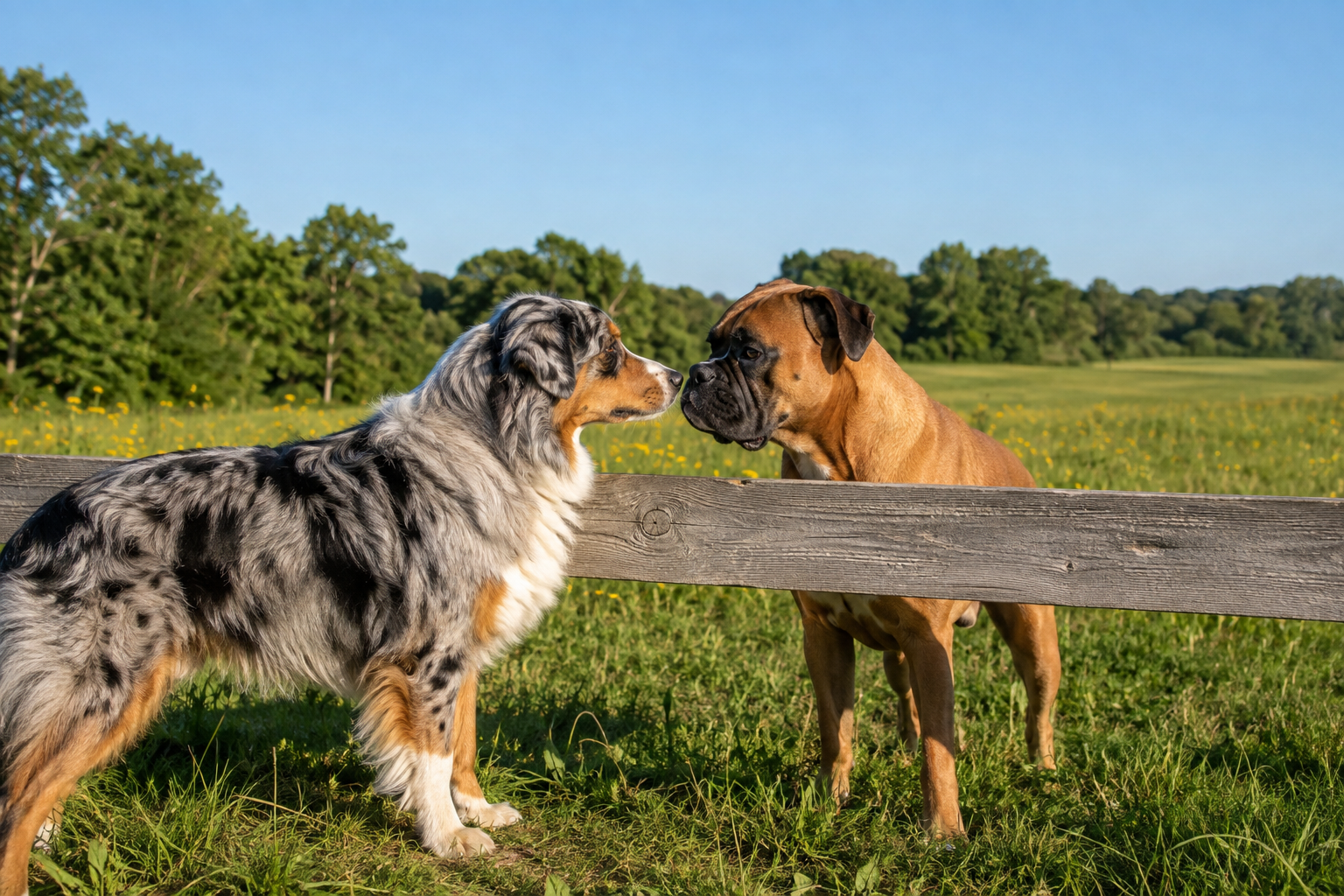
Here is the mistake that gets people hurt: they see a wagging tail, decide the dog is friendly, and walk right up. The tail is the single most misread signal in the entire canine vocabulary, and reading it in isolation, the way most people do, is exactly how a “friendly” greeting turns into a snap. A wag is not a smile. It is one word in a sentence, and the sentence can say the opposite of what the word alone implies.
Dogs are running a rich, constant conversation through their bodies, voices, and even their scent. Your dog is fluent in a language you were not born speaking, but it is learnable, and learning it is one of the fastest ways to deepen your bond and, more urgently, to keep everyone safe. The core skill is not memorizing signals. It is refusing to trust any one of them alone.
The tail, decoded properly
Start with the offender. Tail position and movement together form one of the richest signals a dog has, and the wag itself is only half the story.
Position first:
- Held high: alert and aroused, maybe delighted to see a friend, maybe locked onto a squirrel, maybe issuing a warning. High is not the same as happy.
- Straight out, level with the back: neutral, or intently investigating.
- Tucked low: worry, often reading as anxious or appeasing.
Now layer the wag. A fast wag means high arousal, and big, loose, sweeping strokes on a relaxed body usually do mean a genuinely happy dog. But a slow wag suggests uncertainty, and a low, very slow wag points to stress. The trap is the stiff high wag: a tense body with a high, fast, tight wag is a completely different message than a loose, wiggly body with the same wag speed. Same tail, opposite meaning, decided entirely by the rest of the dog.
People grab the one cue they recognize, usually the tail, and stop there. But a stiff body with a high, fast wag is a completely different message than a loose, wiggly body with the same wag. The dog is giving you a whole sentence. Read the sentence, not a single word.
And it turns out the tail carries even more than we long assumed. Researchers have found wagging is lateralized: dogs tend to wag more to the right side of the body when they encounter something positive, like their owner, and more to the left when facing something they want to withdraw from. Other dogs notice, when dogs watched footage of a fellow dog wagging predominantly to the left, they showed elevated heart rates and more anxious behavior than when the wag leaned right. One gesture, layers of meaning.
The rest of the sentence: the signals you must read with it
If the tail cannot be trusted alone, what do you read it against? Everything else, all at once.
The eyes
The eyes are quietly the most honest part. Soft eyes with slow blinking during contact signal a calm, content dog. A hard, fixed stare is rude in dog language and can escalate toward a fight. And watch for “whale eye,” when a dog shows the whites of their eyes, usually a sign of worry or stress. Whale eye alongside other tense cues is a clear message to give that dog room.
The ears
Ears are in near-constant motion and carry more than most people notice, whether the dog is pointy-eared or floppy. Pinned flat or pulled far back signals fear. Up and forward usually means alert, curious engagement with the world.
The face and mouth
Has your dog ever seemed to smile? A relaxed dog with a loose wag may “smile” from genuine ease, but a frightened dog can pull the same shape, so, again, check the body. A lifted or curled lip is a request for space. A loose, open, relaxed mouth generally reads as a comfortable dog.
Body tension itself
This is the master variable, the one that flips every other signal. A stiff, frozen dog is uncomfortable, full stop; stiffness is one of the clearest signs a dog is not okay with what is happening. A loose, wiggly dog is relaxed and open to play. When you are unsure what a tail or an ear means, read the overall tension first and let it interpret the rest.
The soundtrack: what dogs say out loud
Dogs also talk, and the tone carries the meaning.
Barking at another dog can signal excitement, a request for space, or frustration. Playful barks tend to run higher and bouncier; distance-demanding or frustrated barks land deeper.
Growling is most often a warning, a dog saying I don’t like this, please stop. When the other dog listens, a growl does its job perfectly and prevents escalation, which is the whole reason it exists. But some dogs are theatrical players who growl straight through a wrestling match, so knowing your individual dog matters. Whining usually means a dog wants something, food, water, a bathroom break. Howling, not universal across breeds, can signal excitement or serve as an alert.
Then the small sounds. A mid-play sneeze signals happy, friendly energy, a “this is all in fun” punctuation mark (or, sometimes, just a tickle in the nose). A snort is often a bid for attention or a small grumble. And the air snap is a big statement: a dog snapping at the air near another dog is saying, in no uncertain terms, that they are deeply uncomfortable, usually after gentler signals were ignored. If it is still ignored, an air snap can tip into a real bite. Treat it as a serious cue, never a bluff.
Scent: the channel you’ll never read
This is where dogs leave us completely behind. Using urine and the scent glands in their paws, dogs post messages wherever they go, broadcasting sex, age, whether they have been spayed or neutered, and even something about health and emotional state. Marking is part of this, a dog announcing I was here, and sometimes signaling frustration or anxiety. (Spayed and neutered dogs are often less driven to mark.) You cannot read this layer, but it is worth remembering it exists: a dog frozen over a scent mark is receiving information you will never have access to.
Breed quirks worth knowing
Not every dog carries the same toolkit. Howling is more breed-specific than universal. Some breeds produce distinctive barks others simply cannot make. And a few breeds with ancient or wolf-adjacent lineages, the Basenji, the Chow Chow, the Shar-Pei, are famously quiet and rarely bark, while many hunting breeds use a very particular bark to make their point. Knowing your breed’s defaults keeps you from misreading silence as sadness or a working bark as alarm.
The one rule that ties it together
Read the whole dog, in the whole situation. A single signal, viewed alone, will mislead you, and the tail will mislead you most of all. Take in the environment plus every channel at once, the voice, the posture, the tail, the ears, the eyes, the mouth, and the overall tension, and the picture snaps into focus. That is not just satisfying. It is how you head off a scuffle before it starts and how you help a nervous dog feel safe.
The science keeps reinforcing it, too. Beyond the tail-lateralization research, there is a growing wave of work decoding barks and vocalizations, including early machine-learning efforts to sort dog sounds by likely emotional context. None of it replaces plain observation. All of it underlines what good trainers have said for years: your dog is telling you far more than most people bother to read.
FAQs
Does a wagging tail mean a dog is friendly?
Not on its own. A high, fast, stiff wag on a tense body can be a warning. Dogs even wag more to the right for positive feelings and left when they want to withdraw. Read the tail with the ears, eyes, mouth, and body tension.
Are my dogs arguing with each other?
Maybe, and it is not always alarming. Well-socialized dogs disagree, exchange body language, and resolve it by giving each other space. Trouble comes when one dog ignores the other’s cues, turning a minor moment into a fight.
Does a growl mean my dog is aggressive?
Usually not. A growl is information meant to prevent escalation. The danger is when it is ignored. Punishing a growl is risky because it silences the warning.
What do “stiff” and “loose” mean?
A stiff, frozen dog is uncomfortable, one of the clearest warning signs. A loose, wiggly dog is relaxed and open to play.
What does it mean when a dog’s hackles are up?
Raised hackles, the strip of hair along the spine standing up, can mean defensiveness, excitement, fear, uncertainty, or startle. Read it in context with the rest of the body.
References
- Siniscalchi, Marcello, et al. “Seeing Left- or Right-Asymmetric Tail Wagging Produces Different Emotional Responses in Dogs.” Current Biology, vol. 23, no. 22, 2013. https://www.sciencedirect.com/science/article/pii/S0960982213011433
- “How to Read Dog Body Language.” American Kennel Club. https://www.akc.org/expert-advice/training/how-to-read-dog-body-language/
- “Recognizing the Signs of Fear and Anxiety in Your Pet.” American Veterinary Medical Association. https://www.avma.org/resources-tools/pet-owners/petcare/recognizing-signs-fear-and-anxiety-your-pet
Tom Hadley writes about training and behavior, helping owners understand what their pets are trying to tell them. His work covers everyday manners, decoding common behaviors, and the small changes at home that make dogs and cats easier to live with.
Meet our experts ↗Keep reading
 TrainingNo Dog Is "Untrainable." Some People Just Quit.Dr. Nina Kohl · 8 min
 TrainingYour Dog Isn't Reading Your Face. They're Reading Your Hand on the Leash.Dr. Lena Park · 8 min
 TrainingTeaching Your Dog to 'Talk' With Buttons, Without Fooling YourselfDr. Nina Kohl · 8 min
 TrainingYour Dog Isn't Blowing You Off. Six Cues Are Just Broken.Jordan Ellis · 7 min
 First DaysThe Only Puppy in the Litter Missed a Class. It Shows Up Years Later as a Bite.Dr. Nina Kohl · 9 min
 TrainingYour Dog Is Listening to Your Tone, Not Your WordsSasha Ford · 6 min