


Baby Powder on Dogs: A Pinch-Hitter That's Mostly Been Replaced
Talc-free baby powder won't hurt most dogs in small amounts, but the real question is whether you should reach for it at all. Here's where it still earns a spot, and where better tools have taken over.

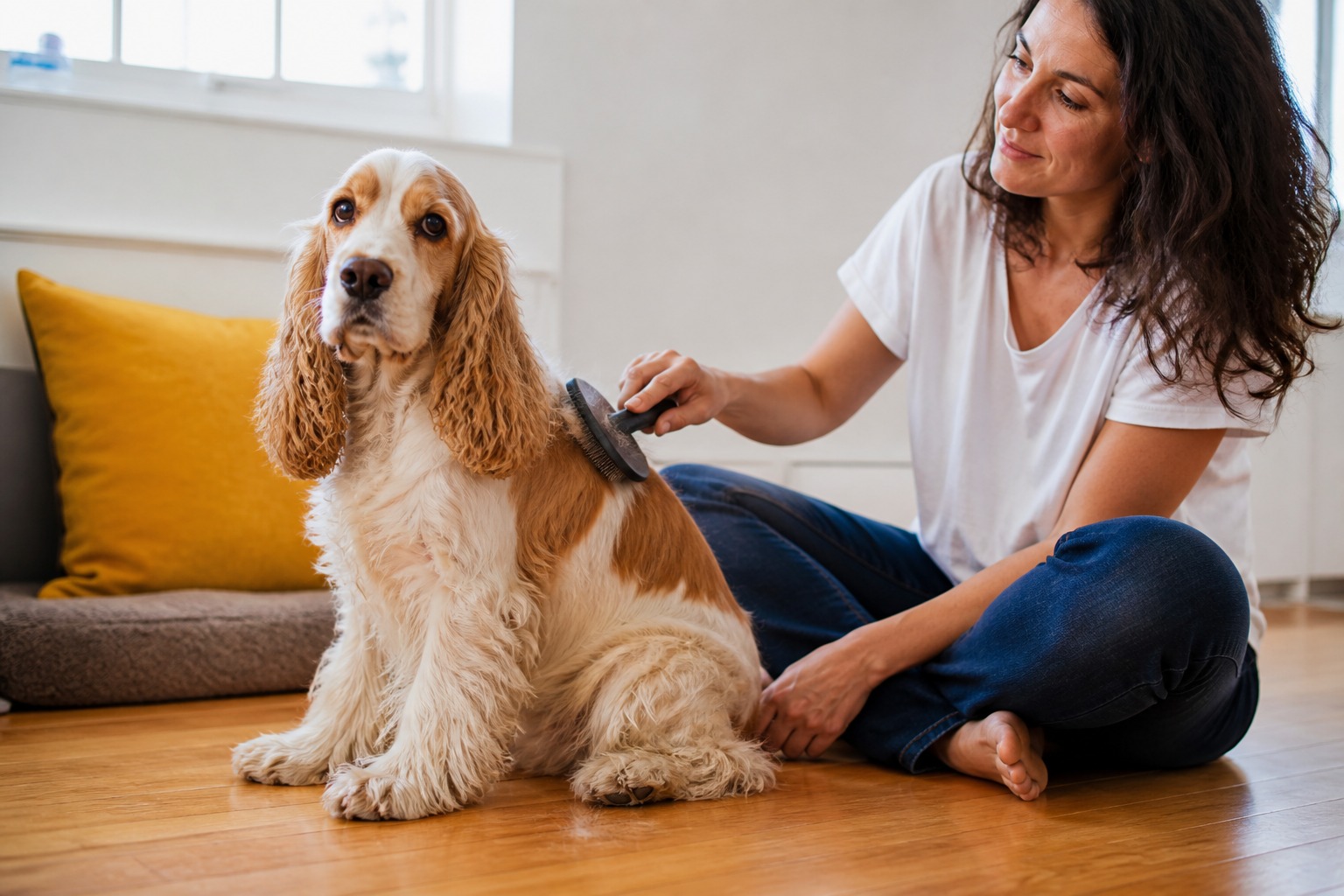
Baby powder sits in that awkward category of human products we reach for on instinct: it is cheap, it is in the cabinet, and “gentle enough for a baby” feels like it should clear the bar for a dog. Most “can you use baby powder on dogs” articles answer the literal question, yes, in moderation, talc-free, and stop there. That answer is correct and not very helpful, because the more useful question is whether you should reach for it at all when the shelf next to it is full of products built for exactly this.
So here is the honest framing. Baby powder is a legitimate pinch-hitter for two or three small grooming jobs. It is also a tool that purpose-made dog products have quietly replaced for almost everyone. Knowing which jobs it still does well, and the one ingredient line you must not cross, is the whole game.
The one rule that isn’t optional: talc-free only
Before any discussion of how to use it, the ingredient question settles everything. There are two kinds of “baby powder,” and only one of them belongs anywhere near a dog.
Talc is a mined mineral, and that is the problem. Because talc and asbestos form in the same geological deposits, talc can be contaminated with asbestos, a known carcinogen when inhaled. This is not a fringe worry. Johnson & Johnson discontinued its talc-based baby powder in the U.S. in 2020 amid tens of thousands of lawsuits, the FDA proposed a rule in December 2024 to require asbestos testing in talc cosmetics, and the European Union has moved to ban talc from cosmetics entirely by 2027. The regulatory ground here is actively shifting, and the direction is away from talc. A dog’s airways are no place to test the question.
Cornstarch, by contrast, is a plant starch with none of the asbestos issue. The modern “baby-safe” powders are almost all cornstarch-based, and this is the only type you should consider for a dog, and even then, in moderation.
If the label says talc, it is the wrong product for your dog. There is no “small amount” exception worth making with a mined mineral and a dog’s lungs.
What it’s genuinely good for
Used talc-free and sparingly, baby powder does three jobs competently. None of them replace grooming or veterinary care; all of them are short-term comfort measures.
A quick odor fix between baths
Dogs get a little ripe between baths, and cornstarch powder absorbs the skin oils that carry the smell, buying you short-term freshness. The technique matters: sprinkle a small amount onto your hands, rub them together, then massage it into the coat, and brush out any excess so it does not build up. Never shake the bottle directly over your dog, which sends a cloud of fine powder straight toward the nose.
Drying out a damp skin fold
Minor irritation from moisture, heat, or friction, the kind that crops up in skin folds, armpits, or the groin, can settle down when the area is kept dry, and cornstarch helps wick that moisture from spots where yeast and bacteria like to set up shop. The caveat is a firm one: if the irritation lasts more than a day or two, or you see a rash, redness, or persistent itching, that is no longer a moisture problem. It is a sign to see your vet for a possible infection, allergy, or parasite.
Easing out a tangle
For long-haired or curly-coated dogs, a little powder worked into a mat reduces static and friction so the comb glides instead of yanking. Work a small amount through with your fingers before brushing, and clear all residue afterward, since leftover powder traps dirt and dries the coat.
Where it falls short, and the risks
The benefits are real but narrow, and overuse or misuse turns them into problems:
- Respiratory irritation. This is the headline risk for any powder, talc-free included. Inhaled particles cause coughing and sneezing and, in the worst case, respiratory distress, a particular danger for brachycephalic (flat-faced) breeds like Pugs and Bulldogs, and for any dog with existing airway issues.
- Skin reactions. Dogs with sensitive skin or allergies may react to fragrances or additives, which is why unscented matters.
- Stomach upset from licking. Dogs groom themselves, so whatever is on the coat ends up swallowed. A dusting won’t poison them, but a heavy application can cause GI upset.
- Masking the real problem. This is the subtle one. Powdering away odor from an ear infection or a skin condition can hide the very signal that would have sent you to the vet, delaying a diagnosis. Comfort that conceals is not always a favor.
Signs your dog is reacting to it
Stop using the powder, bathe your dog with a gentle fragrance-free shampoo, and call your vet if you see:
- Red or inflamed skin
- Persistent sneezing or watery eyes
- Bumps or hives
- Hair loss in the treated area
- Excessive scratching or licking
If you do use it, do it this way
With your vet’s okay, the safe method is small and deliberate:
- Use only talc-free, unscented powder made for sensitive skin.
- Never apply it directly to your dog. Put a little on your hands and rub it in, so nothing goes airborne.
- Massage gently in circular motions, focusing on damp or smelly spots like the neck, belly, and paws.
- Keep it well away from the face, eyes, ears, and genitals.
- Brush thoroughly to remove excess and prevent buildup.
- Watch afterward for any coughing or skin reaction.
- Use it occasionally, not on a schedule.
The alternatives that have mostly replaced it
Here is why baby powder has drifted toward pinch-hitter status: nearly every job it does, a dog-specific product does at least as well, without the inhalation worry or the human-formula guesswork.
- Pet dry shampoo: Made for dogs, these non-toxic powders and foams clean the coat without water and are designed to be brushed out cleanly.
- Plain cornstarch: Pure, additive-free, and fragrance-free, it absorbs oil and moisture safely and is essentially baby powder without the marketing.
- Oatmeal-based pet powders: Oatmeal soothes itchy skin and has a calming, low-irritation scent.
- Grooming wipes and sprays: Hypoallergenic wipes freshen a dog with no airborne powder and no residue at all, which sidesteps the single biggest baby-powder risk.
And the thing none of these replace: a regular bath every few weeks remains the actual answer to odor and skin health. Powder of any kind is a bridge to the next bath, not a substitute for it.
Should you ask your vet first?
For a one-off dusting on a healthy dog, talc-free and sparing, you are likely fine. But check with your vet before making it a habit, and especially before using it on a dog with allergies, chronic skin issues, or any respiratory condition. Dog and human skin differ in pH and chemistry, and what soothes a baby may not suit your dog. Your vet can also tell you when the right tool is not powder at all but a medicated shampoo, a prescription cream, or an antifungal spray.
The bottom line
Talc-free, unscented baby powder, used rarely and rubbed in by hand, won’t hurt most dogs and can handle a quick odor, a damp fold, or a stubborn tangle in a pinch. But “won’t hurt” is a low bar, and the more honest takeaway is that dog-specific products now do those same jobs more safely. Keep talc off your dog entirely, keep cornstarch powder for emergencies, and let a proper bath and the right pet product do the everyday work.
References
- U.S. Food and Drug Administration. “Talc.” FDA Cosmetics Ingredients.
- U.S. Food and Drug Administration. “Testing Methods for Detecting and Identifying Asbestos in Talc-Containing Cosmetic Products.” Proposed rule, December 2024.
- Almugren, K. S., et al. “The Presence of NORMs and Toxic Heavy Metals in Talcum Baby Powder.” Journal of Radiation Research and Applied Sciences, vol. 16, no. 4, 2023, p. 100660.
- Moon, Min-Chaul, et al. “Risk Assessment of Baby Powder Exposure Through Inhalation.” Toxicological Research, vol. 27, no. 3, 2011, pp. 137-141.
Common questions
What's the difference between talc and cornstarch baby powder?
Talc is a mineral that can be contaminated with asbestos and carries real inhalation concerns, which is why major brands moved away from it. Cornstarch is a plant starch with none of the asbestos issue, making it the only kind you should consider for a dog.
How often can I use baby powder on my dog?
Only occasionally, no more than once every few weeks. Overuse dries out the skin, clogs pores, and risks masking a problem you should be treating instead.
Are there better options than baby powder for dogs?
Usually, yes. Pet dry shampoo, plain cornstarch, oatmeal-based pet powders, and grooming wipes do the same jobs while being formulated for dogs, which is why baby powder has become more of a pinch-hitter than a staple.
Not a substitute for your vet. Our guidance is educational. For urgent symptoms, contact a vet or emergency clinic right away. Editorial standards
Dr. Chen is a small-animal veterinarian who leads health and safety coverage at The Pet Times. She writes and reviews the bulk of our illness, condition, and safety content, translating clinical guidance into clear, practical advice owners can act on at home.
Meet our experts ↗Keep reading
 Health & WellnessYour Dog Broke a Nail: The 30-Second Triage for Home vs. VetDr. Priya Nair · 8 min
 Health & WellnessYes, You Can Dye Your Dog for Halloween. No, Not Like That.Sasha Ford · 7 min
 LivingConan's Cohost Let Her Husband Cut the Dog's Hair. Once.Leila Torres · 8 min
 Health & WellnessNobody Licenses Your Dog's Groomer. Ask About the Dryer.Dr. Mara Chen · 7 min
 Health & WellnessHumanity Over Vanity: What Groomers to the Stars Learn From Their Worst DaysLeila Torres · 6 min
 Product PicksThis $59 Board Lets Your Dog File Their Own NailsLeila Torres · 5 min