


Humanity Over Vanity: What Groomers to the Stars Learn From Their Worst Days
A blue Pomeranian, a puppy born on the table, and a diva client standoff. The wildest stories from celebrity dog groomers all teach the same lesson, and it is the one that should change how you book your next appointment.

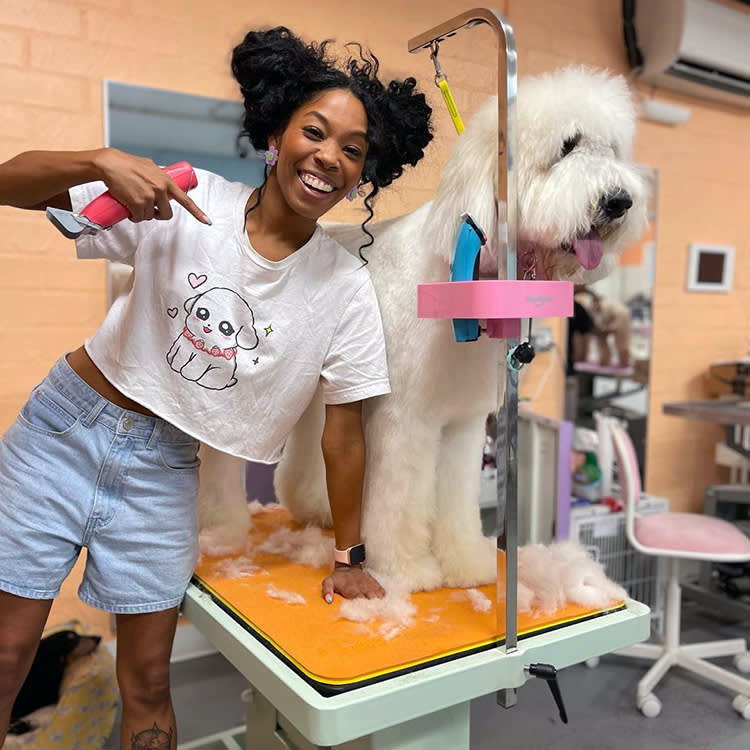
The polished before-and-afters you scroll past hide a truer, messier job. Behind every immaculate poof is a groomer who has been sprayed with worse than you want to imagine, talked down at least one furious VIP, and learned, usually the hard way, where the real priority lies. Pet Times sat down with three veteran groomers who work on famous clients and their dogs. We agreed to keep their names out of it so they could talk freely. The stories are wild. But listen closely and they all point at one idea the pros repeat like a mantra: humanity over vanity. Here is what that means, told through the days it was earned.
Lesson one: the coat you have is not the coat in the photo
Start with the disaster that taught it. “I once dyed a celebrity’s dog the wrong shade of blue,” one groomer admits. “Not a little wrong. Smurf wrong.” A well-known beauty personality had asked for soft pastel blue on his Pomeranian; she gambled on a darker dye and a short sit time. “In theory it could have worked. But this was over a decade ago, before the gentler tools existed. Just a mistake on my part.” The worse part was the physiology: Pomeranian coats do not regenerate like other breeds’, so the bold blue was going to take two years to grow out. The client, mercifully, was gracious about it.
That same coat-is-destiny truth drives the single most common conflict groomers describe: the inspiration photo of the wrong dog. “Someone brings in a Yorkie and shows me a Standard Poodle,” one groomer laughs. “I’m like, ‘You have a Yorkie.’” It happens constantly, with Maltese owners wanting Poodle fluff, and it is not stubbornness on the groomer’s part. A dog’s hair type, length, and growth pattern set hard limits. The pro’s job is to find what actually translates, a rounder head, a softer muzzle, and gently rule out what does not.
What it means for you: bring inspiration, but bring it for your breed. Ask your groomer what your dog’s coat can realistically do before you fall in love with a look it can’t hold.
Lesson two: a good “no” is a professional skill
The most instructive story is a standoff. One groomer’s most famous regular is delightful, a retired pro athlete who “came in with his son and shut the whole place down. No security, coolest guy ever, saying hi to everyone.” But another VIP taught the harder lesson. She arrived an hour late with a badly matted dog and demanded to be seen at once. Matted coats take extra, careful time, and there were other clients waiting.
“Standing up for myself in that moment was one of the boldest things I’ve done professionally,” the groomer says. She explained the only humane option that day was to shave the dog and let the coat restart. The client refused and pushed. “I could feel myself getting angry, so I calmed down and said, ‘You’re absolutely right. I am not going to shave your dog. We’re rescheduling you.’” You could hear a pin drop. The client ultimately took the shave-down anyway.
That refusal was not attitude. It was welfare. Which is why the pros wish more owners understood the phrase they all use.
“I wish pet parents understood that because we want the dog to have a good experience, there are things we simply cannot do,” one groomer says. “Your dog might not get the perfect haircut, but a good experience is worth more than that. We say it all the time: it’s humanity or vanity. Beauty isn’t a haircut. It’s the wellbeing of the dog.”
What it means for you: when a good groomer refuses a request, that is the groomer protecting your dog, not upselling you. The right response is trust, not a one-star review.
Lesson three: grooming is a team sport, and it takes real time
The serene show dogs on your feed are professionals; they are used to standing patiently through hours of work. A typical pet dog is not, and that is where the entitlement problem bites. “The worst part of the job is clients who don’t understand grooming is not a 30-minute thing,” one groomer says. “It takes hours to prep and groom a dog, and it requires the dog’s cooperation. It’s a team effort between the groomer and the dog.” Rush that, and you get bloopers.
Like the forgotten clipper comb. “I took the comb off to change lengths, stepped away for a minute” (the dog was never left alone, a colleague stayed with it) “came back, ran the clipper down the dog’s back, and shaved a big bare patch right down the spine.” Or the aunt’s dog who wanted a heart shaved at the base of the tail; from the front, on a long-bodied dog, the heart read as unmistakably anatomical. Dyeing it pink, she admits, did not help.
What it means for you: book realistically, drop off on time, and build in patience. The dog sets the pace, and a calm, unhurried appointment is a safer one.
Lesson four: the job is gloriously, humblingly gross
No highlight reel shows this part. “I’ve had full-on projectile diarrhea hit me while I’m blow-drying a dog,” one groomer says flatly. The high-powered force dryers turn an accident into a spray situation, and anal glands, she notes, splash too. Her colleague confirms dogs regularly pee on the table mid-dry, startled by the sound, and the dryer flings it up the wall. “People need to know this is what we deal with all the time, the stuff we never post.”
Then the story that stands alone. A groomer had worked with one client’s dog for years. The client mentioned, casually, on arrival, that the dog was pregnant, and said it was early, so grooming proceeded. Mid-groom, another groomer walked by: “‘What is that?’” It was a puppy. The dog had given birth on the table, utterly calm, no panting, no distress. After a careful check for stragglers, mother and pup went to the vet and were fine. “From that day on,” the groomer says, “I don’t take pregnant dogs.”
What it means for you: tell your groomer everything, pregnancy, health issues, anxiety, past bites, before the appointment, not on the table. It keeps your dog and the person handling them safe.
Four disasters, one lesson. Every story a good groomer tells against themselves circles back to the same place: the dog’s experience matters more than the photo. Book with someone who lives by that, and a slightly imperfect haircut on a calm, unstressed dog is exactly the outcome you should be hoping for.
References
- American Kennel Club. “How Often Should You Groom Your Dog?” https://www.akc.org/expert-advice/grooming/how-often-should-you-groom-your-dog/
- Fear Free Pets. “Cooperative Care and Low-Stress Grooming.” https://fearfreepets.com/
Not a substitute for your vet. Our guidance is educational. For urgent symptoms, contact a vet or emergency clinic right away. Editorial standards
Leila Torres leads our Living coverage, from home life and travel to the products and rescue stories that come with sharing a life with animals. She edits and writes across the section, with a soft spot for pieces about the bond between people and their pets.
Meet our experts ↗Keep reading
 Health & WellnessThe Haircut Is the Easy Part. The Best Groomers Are Reading Your Dog.Leila Torres · 7 min
 Health & WellnessThe Hardest Part of Dog Grooming Isn't the Clippers. It's Vetting the Groomer.Dr. Ravi Mehta · 8 min
 Health & WellnessThe Best-Selling Dog Brush in America Is the Wrong One for Your DogSasha Ford · 7 min
 Health & WellnessStop Shaving Your Dog for Summer. Here's What It Actually Does.Dr. Nina Kohl · 5 min
 Health & WellnessPut Down the Q-Tip: How to Actually Clean Your Dog's EarsDr. Ravi Mehta · 6 min
 Health & WellnessBathing Your Dog More Won't Fix the Smell. Finding It Will.Dr. Priya Nair · 8 min