


The Haircut Is the Easy Part. The Best Groomers Are Reading Your Dog.
Jess Rona built a celebrity grooming empire on slow-motion hair flips. The skill underneath the videos is quieter: catching the wince before the nail clip, and knowing what to do about it.

Affiliate disclosure. This article contains affiliate links. We may earn a small commission if you buy through a link, at no extra cost to you. How we handle recommendations.
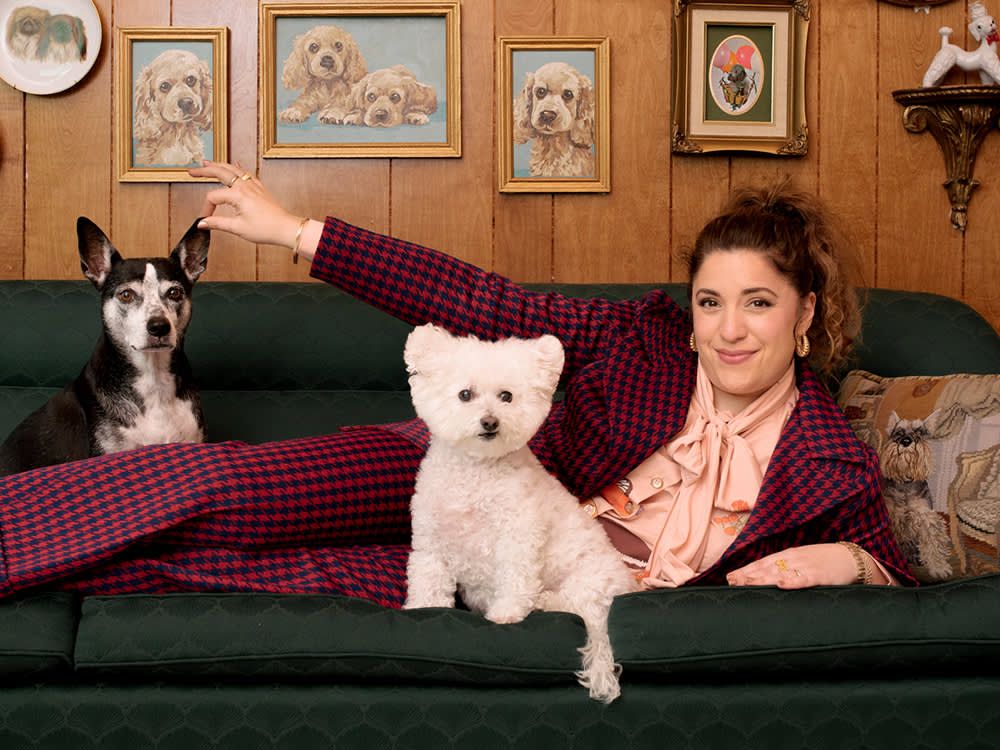
You have almost certainly seen the videos even if you never learned the name attached to them. A freshly styled dog stares down the lens, the beat drops, everything slows, and the coat lifts and falls like a shampoo commercial from 1974. Jess Rona built a following in the hundreds of thousands and a client list that runs through Katy Perry’s dog, Tegan and Sara’s pups, and Taylor Schilling’s Frenchie on the strength of that gag.
The gag is not the craft. Watch what Rona actually describes doing at the table and the job turns out to be something closer to behavior work with scissors in hand. The haircut is the deliverable. Reading the dog is the skill.
That distinction matters to you, because you are not hiring a stylist for a photo shoot. You are handing an anxious animal to a stranger with clippers, and the thing that determines how that goes is not artistic. It is handling.
The career was a plan B that turned into the plan
Rona wanted to be an actress. Grooming was the side income, a leftover skill from washing dogs at PetSmart in high school, meant to cover rent between auditions. After a long stretch on the New York improv circuit at Upright Citizens Brigade, with the auditions drying up, she pivoted hard into the thing that was already paying her: classes, seminars, competition circuits including SuperZoo in Las Vegas, an obsessive push to simply get good.
She posted her first grooming video from her garage in 2014. Clients reposted it, then friends, then actors and comedians. What followed was a book, Groomed (2018), the HBO Max series Haute Dog (2020), a self-titled grooming course, acting credits, and commercial directing work. The PetSmart floor, where she bathed big dogs on the tile with wet feet and no idea what she was doing, is a long way back.
She is candid that she was a worse dog person then, and not because her scissoring was worse. She did not prioritize her first dog’s teeth, a Spaniel mix named Lucky who came to her when a client moved away and never came back for him, and by the time he was in his mid-teens his mouth was past saving. She did not know that dogs read energy. She did not know how to keep herself calm, which is the prerequisite for keeping anyone else calm.
What “reading the dog” actually means at the table
Here is the part worth stealing.
A dog about to have a nail trimmed will usually tell you before it goes wrong. There is a flinch, a bracing, a small tightening as the clipper comes toward the paw. The untrained response is to move faster and get it over with. Rona’s response is the opposite: put the clipper down, touch the paw, acknowledge it, and let the dog register that the wince was received.
That is not sentimentality. It is the same mechanism behind every modern low-stress handling protocol in veterinary medicine. When an animal signals discomfort and the pressure keeps coming anyway, they learn the signal is useless and escalate to something louder next time, a snap, a scramble, a full meltdown at the door of the salon. When the signal works, when it reliably buys a pause, the animal keeps using the small version and stays under threshold.
Rona calibrates the touch to the dog: gentler for the insecure ones who do not trust her yet, firmer and bigger for the overconfident brat who is testing what he can get away with, then softened again. Groomers who have been at a table for twenty years all develop some version of this vocabulary. The good ones can tell you what they are doing and why.
“The dogs who bite in a grooming salon almost never bite out of nowhere. They bite after every quieter thing they tried got ignored,” says Dr. Nina Kohl. “A groomer who stops when a dog braces isn’t being soft. They are keeping the whole appointment out of the red zone.”
What you can control before the appointment
Three things, and none of them are cosmetic.
Bring the right energy to drop-off. Rona’s biggest instruction to clients is to keep drop-off and pickup deliberately low-key. The long, mournful goodbye, the anxious reassurance, the “it’s okay, it’s okay” delivered in a rising voice, all of it tells a dog that something worth being scared of is about to happen. Treating dogs exactly like human children is precisely how people manufacture salon anxiety. Hand over the leash, say a flat goodbye, leave.
Bring a reference photo that is physically possible. A useful picture shows a dog whose breed matches yours and, more importantly, whose coat type does. Puppy coats are a different material than adult coats, and the way a puppy’s hair tapers at the ends cannot be recreated with a blunt cut on a grown dog. You can be inspired by the puppy photo. You cannot be given it back. And a show dog’s coat is the product of years of conditioning and genetics, not a haircut. Nobody can make a bald Maltipoo into a Westminster winner.
Start young and go often. The dog who has been to a groomer a dozen times before anything difficult happened is a fundamentally different client than the dog whose first visit comes at three years old, matted, with a stranger holding a clipper.
What newer practice adds
The industry has quietly caught up to what the best groomers were already doing at the table. Low-stress and fear-free handling certifications now exist for groomers as well as veterinary staff, and the core content is exactly the loop above: watch for the early signal, stop when you see it, let the animal opt back in, and grade the difficulty up slowly rather than muscling through.
The practical version for you is a filter. When you interview a groomer, skip the portfolio and ask one question: what do you do when a dog pulls their paw away? If the answer is a hold, a muzzle, and a faster clip, keep looking. If the answer involves stopping, you have found someone who understands that a grooming appointment is a behavior appointment that happens to end with a good haircut.
References
- Rona, Jess. Groomed: A Book About Dogs and Their People. 2018. https://www.amazon.com/Jess-Ronas-Groomed-Rona/dp/168349072X?tag=tpt281408-20
- Fear Free Pets. “Fear Free Certification for Groomers.” https://fearfreepets.com/
- American Animal Hospital Association. “AAHA Canine and Feline Behavior Management Guidelines.” https://www.aaha.org/aaha-guidelines/behavior-management/behavior-management-home/
Not a substitute for your vet. Our guidance is educational. For urgent symptoms, contact a vet or emergency clinic right away. Editorial standards
Leila Torres leads our Living coverage, from home life and travel to the products and rescue stories that come with sharing a life with animals. She edits and writes across the section, with a soft spot for pieces about the bond between people and their pets.
Meet our experts ↗Keep reading
 Health & WellnessYour Dog Isn't Scared of Your Relatives. He's Scared of the Schedule.Dr. Nina Kohl · 8 min
 TrainingAggression Is Not Dominance. It's a Request for Distance That You Missed.Dr. Mara Chen · 11 min
 TrainingYour Dog Doesn't Need a Muzzle. Train Them for One Anyway.Dr. Mara Chen · 7 min
 Health & WellnessThe 'Vagus Nerve Reset' for Anxious Dogs Is a Myth. The Nerve Is Not.Dr. Lena Park · 6 min
 TrainingYes, Dogs Wake Up Grumpy. The Morning Growl Is Information, Not Attitude.Dr. Ravi Mehta · 6 min
 Health & WellnessThe Hot Car Isn't What Gets Most Dogs. The Walk Is.Dr. Priya Nair · 9 min