


The 8-Week Puppy Bath Rule Has Nothing to Do With Germs
Everyone repeats the number and almost nobody knows why. The real reason is thermal, not infectious, and once you know that, every other bathing rule stops being arbitrary.

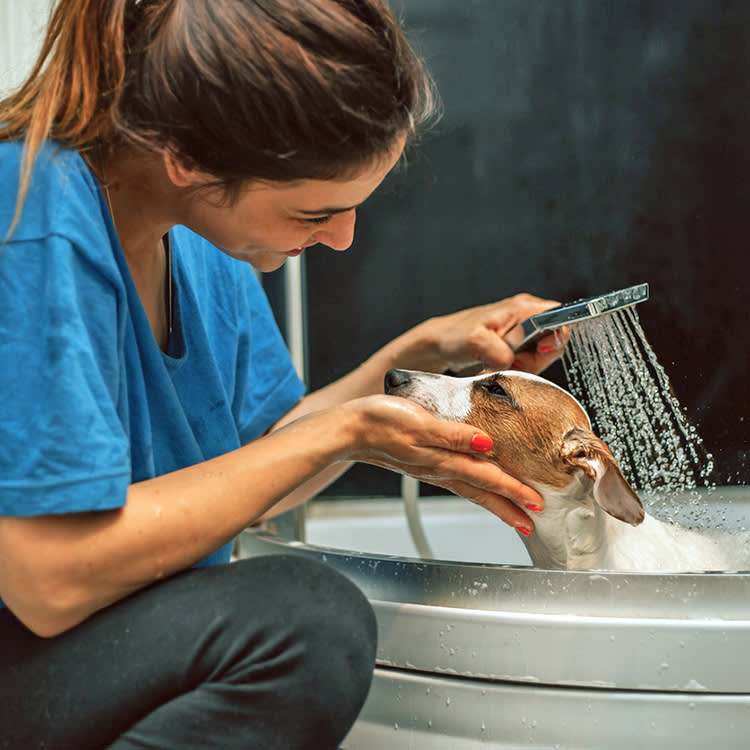
Everyone knows the number. Eight weeks. It is the answer you will get from a breeder, a forum, a groomer, and the first four search results.
Almost nobody can tell you why, and the guesses are usually wrong. It is not about germs. It is not about vaccines. It is not about “delicate skin,” at least not primarily.
It is about body temperature.
Puppies cannot reliably regulate their own body heat until around eight weeks. Before that, they are dependent on their mother and the warm pile of littermates to stay in range. Now soak one in water and stand them in a room. A wet, small, poorly insulated body loses heat astonishingly fast, and hypothermia in a neonate is not a discomfort, it is an emergency. (The reverse is also possible if you overcorrect with heat.) The bath is not risky because of what is in the water. It is risky because of what leaves the puppy.
Once that clicks, the rest of puppy bathing stops being a list of arbitrary rules and becomes a single coherent idea: the whole job is managing heat and the skin barrier, in that order. Every step below is one of those two things.
The vaccine question, answered properly
The other rule you will hear is “wait until they are fully vaccinated.” This one gets repeated as though it applies to your bathtub, and it does not.
Full vaccination means the complete series of core puppy vaccines: multiple boosters of DAPP (distemper, adenovirus, parainfluenza, parvovirus) plus rabies. Your vet may add others, such as Bordetella, depending on where your puppy goes.
The reason that matters for bathing has nothing to do with water and everything to do with other dogs. A professional groomer’s salon or a public self-wash station is a shared surface where a lot of dogs have stood. That is an exposure risk for an unvaccinated puppy, and it is why the rule exists.
So: your own tub, eight weeks. Somebody else’s tub, fully vaccinated. Two different rules answering two different questions, and conflating them is why people keep filthy puppies unwashed for months for no reason.
Before eight weeks: spot-clean, do not bathe
Puppies get into things. If a young one needs cleaning before eight weeks, do not run a bath.
Dampen a soft cloth with warm water and gently clean only the dirty part. No soap. Towel dry promptly and thoroughly, and keep the puppy somewhere warm afterward. That is the whole protocol, and notice that every step of it is about limiting how much of the puppy gets wet and how long they stay that way.
One exception that is a vet call rather than a cleaning job: if the reason a young puppy is filthy is diarrhea that will not stop, or something living in the coat, the mess is a symptom and washing it off treats nothing. Call your vet and treat the cause.
How often: less than you think
Plan on once a month or less, and treat that as a ceiling rather than a schedule. Coat type, coat length, and lifestyle set the real number. A long-coated dog who spends their days launching into wet grass will need more baths than a short-coated dog who is a professional sofa occupant. If there is no reason to bathe, do not bathe.
The reason is the barrier. Bathing too frequently strips protective oils, leaving skin and coat dry and flaky, and a dry, disrupted skin barrier is not a cosmetic problem. It is the thing standing between your dog and bacteria, allergens, and parasites.
The exception, and it is a real one: a puppy with a skin condition may be prescribed the opposite regimen, frequent baths with a medicated shampoo, as treatment for a bacterial infection or a parasite. Skin lesions are a vet visit, full stop. And when a medicated shampoo is prescribed, follow the label exactly, contact time included. That kind of bathing is a drug delivery method, not a wash.
Why human shampoo is genuinely a bad idea
This one gets dismissed as fussiness. It is not.
Canine skin is meaningfully different from ours: thinner stratum corneum, different surface pH, different hair follicle density. Products formulated for human skin are formulated against human numbers. On a dog, those active ingredients can irritate and dry the skin, and, worse, break down the barrier that is supposed to be keeping bacteria and parasites on the outside of your dog.
Veterinary dermatology takes shampoo formulation seriously precisely because the skin barrier is a treatment target, not just a surface. Use a shampoo made for dogs, and where possible one made for puppies, which are typically milder than adult formulas.
The supply list
Gather it all before anything is wet. This is not neatness, it is safety: you cannot leave a puppy unattended in a tub to go find the towels.
- A safe location. A bathtub or a large sink with a spray nozzle, where you control both the puppy and the water. Add a non-slip mat if the surface is slick.
- Puppy shampoo. Dog-formulated, ideally puppy-formulated.
- Two soft, absorbent towels.
- Cotton balls (not swabs) for drying inside the ears.
- Treats. A lot of them.
- A washcloth for the face.
- A brush (optional, but useful for most coats).
- A blow dryer (optional, low and warm only).
The bath itself
The full sequence is in the steps above, but three points carry most of the weight.
Go slow, and pay for it in treats. New sensations produce fear in puppies, and fear at eight weeks tends to persist. A puppy who learns that the tub is a place where good things happen is a dog you can bathe for the next fifteen years without a wrestling match. Introduce the empty tub with treats, days before you ever turn the tap on.
Do the toes. Get between them. It cleans the dirtiest part of the dog, and it teaches a puppy that a person can hold a paw without anything bad happening, which is the single most useful thing you can bank ahead of a lifetime of nail trims and vet exams.
Dry like it is the point, because it is. Towel briskly, immediately. Blow dryer on low, warm, several inches away, constantly moving so you never park warm air on one patch of skin. If the noise stresses your puppy, abandon the dryer; a stressed puppy is worse than a slightly damp one, and a calming cap can help if you plan to use a dryer long-term. Never let a puppy air dry, even in summer. A wet puppy in a warm room is still a puppy losing heat, and we are back at the reason the eight-week rule exists in the first place.
The don’ts
- Don’t use human shampoo. Covered above.
- Don’t let them air dry. Ever.
- Don’t use cotton swabs in the ears. Inserting a swab into the ear canal risks trauma to the eardrum. Cotton balls, at the opening, only.
- Don’t leave your puppy unattended. Puppies fall, inhale water, and eat shampoo.
- Don’t bathe multiple dogs at once. One at a time. Safer, calmer, faster in the end.
The bath that goes wrong is almost never the one where the shampoo was wrong. It is the one where the puppy got scared, or got cold. Warm water, a fast towel, and a lot of treats will fix more problems than any product on the shelf.
What newer research adds
Two things have shifted in veterinary dermatology, and both push in the same direction: stop thinking of a bath as cleaning, and start thinking of it as skin care.
The first is what happens after the rinse. Water rehydrates the stratum corneum, but the effect is temporary and largely lost as the coat dries. Current dermatology practice is to apply a leave-on rinse, crème, or spray while the skin is still wet, to hold that moisture in and support the barrier. For a healthy puppy with normal skin, this is optional. For a dog with any barrier dysfunction, atopic or allergic skin, it is arguably more important than the shampoo.
The second is that contact time is a real variable. For therapeutic bathing, medicated shampoos are typically used with a ten-minute contact time, two to three times weekly until an infection resolves, then every one to two weeks as maintenance. Meanwhile, mild-surfactant shampoos and cool water are used one to two times weekly on allergic dogs specifically to rinse allergens and microbes off the skin surface. If your vet ever prescribes a medicated shampoo, the ten minutes are the medicine. Lathering and rinsing straight off is the equivalent of spitting out a pill.
None of that applies to your ordinary once-a-month puppy bath. But it explains why the frequency advice sounds contradictory out in the world: a healthy puppy and an allergic dog are receiving two different interventions that happen to share a bathtub.
References
- Carlotti, D. N. The Art of Shampoos in Veterinary Dermatology. WSAVA World Congress Proceedings.
- Kwochka, K. W. Defective Skin Barrier in Canine Atopic Dermatitis. Oregon Veterinary Medical Association.
- Taguchi, N., et al. (2024). Preliminary evaluation of a commercial shampoo and fine bubble bathing in the treatment of canine atopic dermatitis: A single-blinded, randomised, controlled study. Veterinary Dermatology.
- American Animal Hospital Association. 2022 AAHA Canine Vaccination Guidelines.
Common questions
Does my puppy need to be fully vaccinated before a bath?
Not for a bath in your own tub. Full vaccination matters for professional groomers and shared self-wash stations, where the risk is the other dogs, not the water.
How often should I bathe a puppy?
Once a month or less, unless there is a reason. Over-bathing strips protective oils and leaves skin dry and flaky. Coat type and lifestyle move the number, not a calendar.
Can I use my own shampoo on my puppy?
No. Canine skin differs from human skin in stratum corneum thickness, pH, and follicle density. Human shampoo can irritate, dry, and disrupt the skin barrier.
What if my puppy gets filthy before eight weeks?
Spot-clean. Dampen a cloth with warm water, wipe only the dirty area, towel dry immediately, and keep them somewhere warm. No soap, no submersion. Persistent diarrhea or parasites means calling a vet, not running a bath.
Not a substitute for your vet. Our guidance is educational. For urgent symptoms, contact a vet or emergency clinic right away. Editorial standards
Dr. Chen is a small-animal veterinarian who leads health and safety coverage at The Pet Times. She writes and reviews the bulk of our illness, condition, and safety content, translating clinical guidance into clear, practical advice owners can act on at home.
Meet our experts ↗Keep reading
 Health & WellnessStop Watching Your Puppy Breathe. Start Counting.Dr. Lena Park · 8 min
 TrainingThe Puddle on Your Bed Has a Size. That's Half the Diagnosis.Dr. Lena Park · 8 min
 Health & WellnessYour Puppy's Poop Looks Like Soft Serve. Here's When to Shrug and When to Call.Dr. Ravi Mehta · 6 min
 First DaysEight Weeks Isn't a Feeding Milestone. It's a Behavior Deadline.Dr. Priya Nair · 9 min
 Health & WellnessYour Puppy Was Probably Born With Worms. Here's the Schedule That Clears Them.Dr. Priya Nair · 6 min
 First DaysYour Puppy's First Vet Visit Is Won Before You Leave the HouseDr. Ravi Mehta · 8 min