


The Dog Food Brand Betting That Your Pup Doesn't Actually Need Meat
Petaluma makes plant-based, oven-baked dog food with more protein than many best-sellers, baked in a solar-powered facility. Here's the thinking behind it, and the vet questions worth asking before you switch.

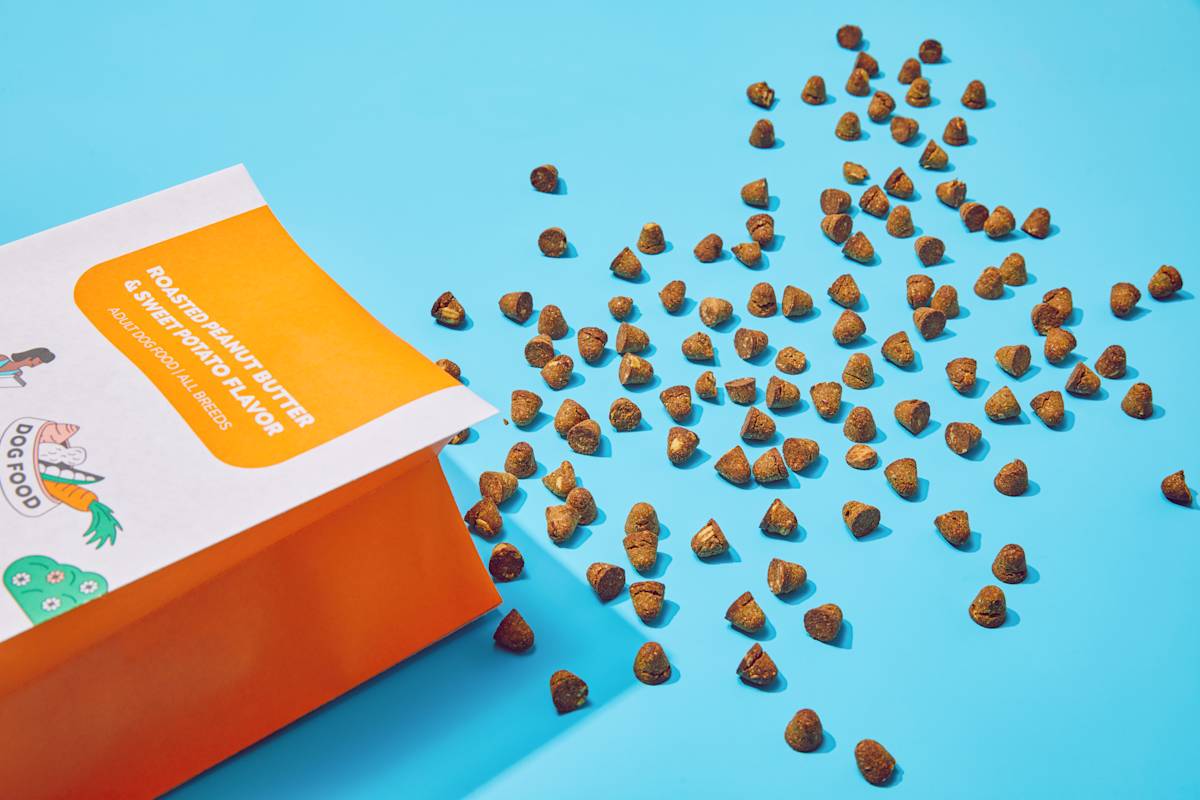
Most of us will happily interrogate the sourcing of our own groceries and then scoop out a bowl of dog food without a second thought about where the meat in it came from. That blind spot is exactly the one Petaluma, a plant-based dog food company, was built to poke at. The pitch is simple and a little provocative: what if a big chunk of a dog’s environmental footprint could be shrunk by rethinking the one aisle we never question?
From a hobby farm to a business plan
Petaluma grew out of a couple’s own lifestyle changes. Co-founders Caroline Buck and Garrett Wymore had cut back on meat to lighten their footprint, and once they started questioning one habit, others followed, including what they were feeding their dogs. Wymore, who had been working in the pet-care industry, had already spotted real potential for alternative and plant-derived proteins in the category, but suspected it would take a dedicated company to do it right.
The name came from a real moment. On a visit to a small hobby farm in Petaluma, a picturesque agricultural town in California’s Sonoma County, their dog assimilated completely into the farm-animal crowd, and it crystallized something: they had never really reckoned with the environmental weight of what they bought their dog every single month. They founded the company in 2019 to close that gap.
The environmental argument, in plain terms
Petaluma’s case rests on how conventional dog food actually gets made. The overwhelming majority of the animal protein in pet food comes from factory farming, part of the same industrial agriculture system responsible for a large share of food-related emissions. There is a long-standing counterargument, that pet food historically used the parts of animals humans don’t eat, effectively upcycling waste. Buck’s response is that the industry has moved: the fast-growing “fresh” pet-food category leans on higher-quality, human-grade cuts, which increases demand for animal agriculture rather than repurposing its leftovers. Shipping that fresh food to doorsteps in dry ice every month, she notes, carries its own footprint.
Their alternative is organic, oven-baked food formulated with veterinary input to hit the protein, vitamin, and fiber targets of traditional options, in fact, the company says its food carries more protein than a lot of top-selling conventional recipes, plus eco-conscious treats like dehydrated sweet potato. The sustainability push runs through the whole operation: the food is baked using solar power, the treat packaging is fully compostable, and while the dog-food bags still contain some plastic, Buck is candid that truly compostable packaging for heavier bags does not exist yet at the weights involved.
What’s new since the brand launched
Petaluma has grown up considerably. It is now based in Oakland and has stacked up the kind of third-party credentials that separate genuine sustainability claims from greenwashing: it is a Certified B Corp, Climate Neutral Certified, and a member of 1% for the Planet. The company estimates that each bowl of its kibble, versus conventional food, conserves thousands of gallons of freshwater and avoids meaningful CO2 emissions.
The product line has expanded, too. The senior formula the founders once described as still in taste-testing has launched, a Baked Pumpkin and Peanut Butter recipe aimed at aging dogs, built with functional ingredients like algae-derived DHA omega-3, curcumin from turmeric, pumpkin fiber, and plant-based glucosamine to support mobility and cognition. The brand has also added a dehydrated whole-food mixer that can serve as a topper or a meal. For a company that started with two founders shipping free samples themselves, only to find their own dogs had shredded the packages on the doorstep, it is a notable leap in scale.
The vet questions worth asking first
Enthusiasm aside, a plant-based diet is a real nutritional decision, not a lifestyle accessory, and it deserves a careful conversation with your veterinarian before you switch. Dogs are omnivores and can, in principle, meet their needs on a well-formulated plant-based diet, but “well-formulated” is doing a lot of work in that sentence. A few things to confirm:
- Complete and balanced. Look for an AAFCO statement confirming the food is complete and balanced for your dog’s life stage, ideally backed by feeding trials, not just formulation.
- The taurine and heart question. Veterinary nutritionists continue to study links between certain non-traditional diets and a heart condition called dilated cardiomyopathy. Ask your vet whether your individual dog, especially certain breeds, warrants extra monitoring.
- Your specific dog. Puppies, seniors, and dogs with existing medical conditions have different requirements. What is fine for a healthy adult may not suit them.
Petaluma’s own products are formulated with veterinary input, which is the right starting point. The rule of thumb still holds: loop in your vet before any major diet change, and watch your dog’s energy, coat, weight, and bloodwork after a switch.
The bigger idea the company is selling is worth sitting with regardless of what you feed. The food we buy for our dogs, month after month for a decade or more, adds up to a real environmental choice, and it is one most of us have simply never stopped to make on purpose.
References
- Petaluma. “Vet-Designed Plant-Based Dog Food.” www.feedpetaluma.com
- Pet Food Processing. “Petaluma Launches Its First Life Stage-Specific Formula.” www.petfoodprocessing.net
- U.S. Food and Drug Administration. “FDA Investigation Into Potential Link Between Certain Diets and Canine Dilated Cardiomyopathy.” www.fda.gov
- Association of American Feed Control Officials. “Understanding Pet Food Labels.” www.aafco.org
This article covers pet nutrition and is for general information only. Consult your veterinarian before making significant changes to your dog’s diet.
Not a substitute for your vet. Our guidance is educational. For urgent symptoms, contact a vet or emergency clinic right away. Editorial standards
Dr. Nair is a veterinarian focused on diet and feeding. She covers everyday nutrition, treats, and the many "can they eat this?" questions owners ask, grounding each answer in what is actually safe and sensible for dogs and cats.
Meet our experts ↗Keep reading
 Food'Fish' on the Label Isn't One Thing. Some Is Greener Than Beef, Some Is Worse.Dr. Ravi Mehta · 8 min
 FoodBugs Are Officially Dog Food Now. Are Cricket Treats Worth It?Dr. Priya Nair · 6 min
 FoodYour Dog's Next Treat Could Help Wipe Out an Invasive Species. That's the Whole Idea.Marcus Webb · 7 min
 FoodThe Puppy-Food Mistake Everyone Makes Isn't About Adult Food. It's About CalciumDr. Lena Park · 7 min
 FoodWeaning a Puppy Too Fast Backfires. Here's the Timeline That WorksDr. Amara Solis · 8 min
 FoodStop Asking What Time to Feed Your Dog. Ask How Many Meals, and WhyDr. Lena Park · 9 min