


'Fish' on the Label Isn't One Thing. Some Is Greener Than Beef, Some Is Worse.
Seafood could shrink your pet's carbon pawprint, but only certain fish caught certain ways, and the pet-food aisle mostly blurs the difference. Here's what the science says about fish for cats and dogs, and how to choose the kind that's actually good for them and the planet.

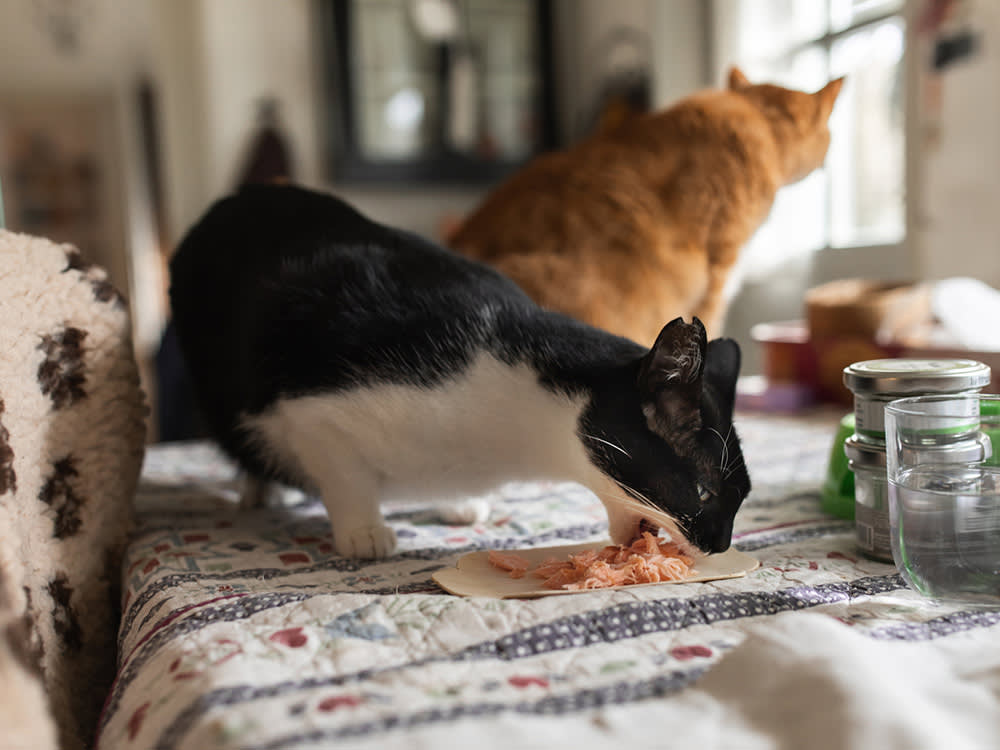
Feeding a pet has quietly become an ethical decision. Somewhere between worrying about whether the food is healthy and whether your dog is itchy again, a newer question has crept in: is what is in the bowl good for the planet, too? Fish gets floated as the eco-friendly answer, and there is real science behind the idea. But “fish” turns out to be one of the most misleading words on a pet-food label, because the sustainability gap between one fish and another is enormous, and the pet-food industry mostly papers over it.
Start with why pet food has a footprint at all. No farms raise animals just for kibble; the meat proteins in pet food are the leftover cuts and by-products of livestock farming aimed at human plates. And raising that livestock at industrial scale weighs heavily on the climate, accounting for something like 14.5 percent of the greenhouse gases humans emit. Our pets, by extension, share in that footprint. It is not their fault, they are perfect, but it is real, and it is why the search for lower-impact proteins has reached the pet aisle.
What the research actually found about seafood
For people, the standard climate advice is to eat less meat and more plants; a widely cited 2019 Oxford analysis made that case forcefully. Pets complicate it. Cats are obligate carnivores who need meat, and while dogs can eat vegetables, they still depend on nutrients from animal protein. Plants alone will not do.
That is where seafood enters. A study in the journal Communications Earth & Environment assessed the nutritional value and greenhouse-gas emissions of major seafood sources and found that the environmental math depends heavily on how the seafood is produced. Wild-caught small pelagic fish and salmon, along with farmed bivalves like mussels and oysters, delivered the highest nutritional benefit at the lowest emissions. Farmed and wild-caught shrimp and lobster sat at the other end, fewer health benefits, higher-than-average climate cost. Just as industrial livestock farming strains ecosystems, so does badly managed industrial aquaculture, which is linked to ocean-ecosystem damage. The overall lesson: skip the highest-impact terrestrial proteins where you can and lean into genuinely sustainable aquaculture.
So can fish feed our pets well without leaning on beef, pork, or chicken? Yes, in many ways, provided you choose the right fish and prepare it safely.
Why fish is genuinely good for cats and dogs
Fish earns its place nutritionally, not just environmentally.
It is high-quality, digestible protein. For both cats and dogs, protein is the macronutrient that matters most, though the reasons differ by species. Fish digests easily and comes loaded with essential amino acids. Of the 22 amino acids a dog needs, roughly half its body can make; the remainder have to arrive through the diet, and they drive skin and coat health, tissue repair, muscle, immunity, and energy. Cats depend on protein even more heavily: where humans run mainly on carbohydrates, a cat burns protein as its primary fuel, alongside the usual jobs of maintaining the body and healing wounds.
It delivers omega-3 fatty acids. Salmon and pelagic fish are rich in omega-3s, which do a lot: provide energy, lower inflammation, support heart, immune, and neural health, and help calm skin allergies. Research points to omega-3s being especially valuable for older cats and dogs coping with achy joints or arthritis. Plenty of commercial diets already fold them in, yet some pets, particularly those wrestling with skin or joint trouble, do better with an extra source.
Fish is one of my favorite proteins to recommend, but I always steer owners toward the sourcing and the dose, because that’s where it goes right or wrong. If you’re supplementing with fish oil, choose one screened for heavy metals from a reputable maker, because fish oil turns rancid easily, and don’t assume more is better. Too much omega-3 can cause stomach upset, clotting problems, even immune effects. How much to add is a conversation to have with your vet or a veterinary nutritionist.
Where it gets complicated: too much of a good thing
Fish is not a free pass. Grabbing a raw fillet from the grocery case and handing it over is a mistake. Uncooked fish can harbor foodborne pathogens, salmonella and listeria among them, that make both you and your pet ill, and it carries an enzyme, thiaminase, that breaks down thiamine (vitamin B1), which cats especially rely on. The safe move is to cook it through and comb it carefully for small bones before any goes in the bowl.
Allergies are the other wrinkle. Because fish is a protein, some pets develop food allergies or intolerances to certain types of it. Watch for the signs, itchy skin, rashes, and digestive trouble, and introduce any new fish slowly. For the majority of pets, though, fish remains a tasty, high-quality addition to the diet.
How to actually choose a sustainable fish for your pet
Here is the practical framework the source studies imply but the pet-food shelf rarely spells out. Sustainability lives in the details, not the word “fish.”
Favor the low-impact, high-nutrition winners the research identified: small pelagic fish like sardines and anchovies, wild-caught salmon, and farmed mussels or oysters. Be skeptical of shrimp- and lobster-based products, which carry a worse ratio of benefit to footprint. When you shop, look for third-party certification, the Marine Stewardship Council (MSC) label for wild-caught and the Aquaculture Stewardship Council (ASC) label for farmed, and consult a seafood-sustainability guide such as Monterey Bay Aquarium’s Seafood Watch to check a species and its origin. And treat sustainable fish as a smart occasional protein rather than an everyday default, since the pet-food market does not automatically hold itself to these standards, and the most realistic approach is choosing the right fish sometimes rather than assuming any fish is green.
What newer research adds
It is worth being precise about the numbers, because they are striking. The seafood analysis found that roughly half of the species studied were both more nutrient-dense and lower-emission than beef, pork, and chicken. The standout is small wild-caught pelagic fish: they deliver key nutrients at a greenhouse-gas footprint reported to be about 60 times smaller than beef. That is not a rounding error, it is the difference between a protein that helps the climate math and one that hurts it.
On the horizon, some companies are developing cell-cultured pet food, real animal protein grown in a bioreactor rather than raised on a factory farm, which could sidestep much of this tradeoff. It will likely be a while before it reaches your pet’s bowl. For now, the honest takeaway is the one the science keeps pointing to: fish can absolutely be a healthier, greener protein for cats and dogs, but only if you cook it safely, dose the omega-3s sensibly, and choose the specific, well-sourced fish that earns the “sustainable” label, rather than trusting the word alone.
References
- Bianchi, Marta, et al. “Assessing Seafood Nutritional Diversity Together With Climate Impacts Informs More Comprehensive Dietary Advice.” Communications Earth & Environment, vol. 3, 2022.
- Poore, Joseph, and Thomas Nemecek. “Reducing Food’s Environmental Impacts Through Producers and Consumers.” Science, vol. 360, 2018–2019.
- American Kennel Club. “Can Dogs Eat Fish?”
- Monterey Bay Aquarium. “Seafood Watch: Consumer Guides.”
Common questions
Can I feed my pet fish from the grocery store?
Not raw. Uncooked fish can harbor pathogens such as salmonella and listeria, and it contains thiaminase, an enzyme that breaks down vitamin B1, which cats especially rely on. Cook it through and check for small bones before sharing.
Which fish is the most sustainable choice?
Research points to wild-caught small pelagic fish and salmon, plus farmed mussels and oysters, as high-nutrition, low-emission options. Shrimp and lobster tend to be the opposite. Look for certification labels and a seafood-sustainability guide when you shop.
Not a substitute for your vet. Our guidance is educational. For urgent symptoms, contact a vet or emergency clinic right away. Editorial standards
Dr. Mehta is a board-certified veterinary nutritionist who evaluates pet food formulations, ingredient quality, and the science behind dietary trends. He writes and reviews all nutrition content at The Pet Times, including our food rankings and feeding guides.
Meet our experts ↗Keep reading
 FoodThe Dog Food Brand Betting That Your Pup Doesn't Actually Need MeatDr. Priya Nair · 7 min
 LivingYour Dog's Food Bag Isn't Recyclable. That Doesn't Mean It's Trash.Leila Torres · 5 min
 LivingMost 'Green' Pet Swaps Are Theater. These 7 Actually Move the Needle.Tom Hadley · 8 min
 Health & WellnessA Raw-Food Recall, Decoded: What Blue Ridge Beef's Salmonella Scare MeansDr. Ravi Mehta · 6 min
 FoodSalmonella and Listeria in Darwin's Raw Pet Food: The Exact Lots to TossDr. Amara Solis · 4 min
 FoodYour Vet Prescribed a $140 Bag of Food. Will Insurance Touch It?Sara Lim · 7 min