


Your Dog's Food Bag Isn't Recyclable. That Doesn't Mean It's Trash.
That empty kibble bag almost certainly can't go in your curbside bin, no matter how much you want it to. Here are four ways to keep it out of the landfill anyway.

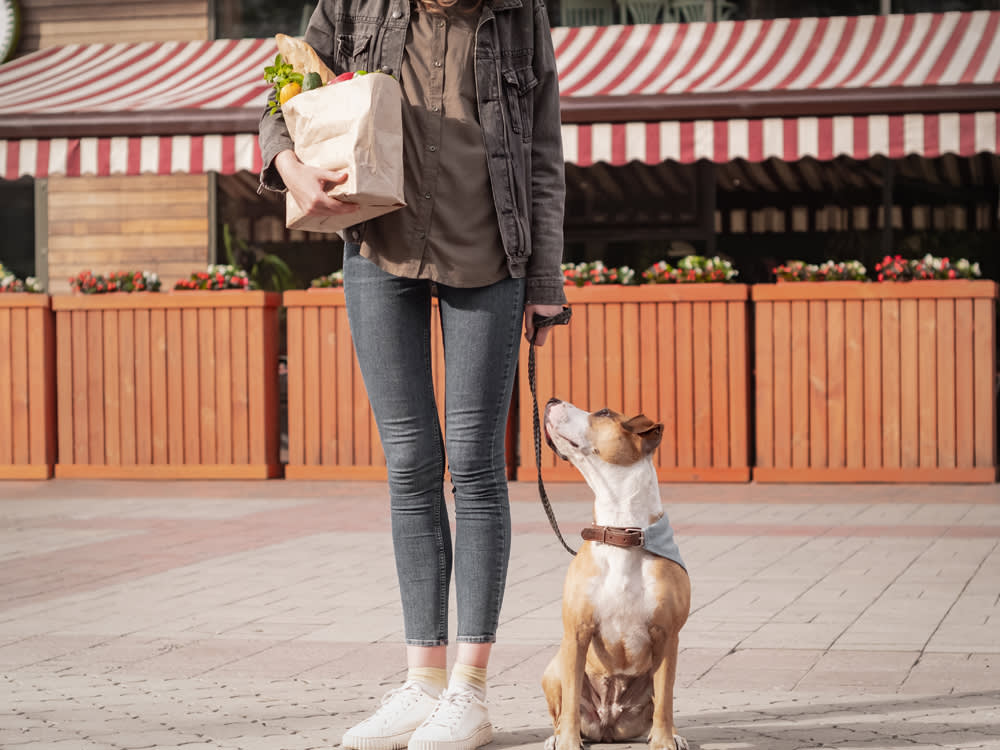
Your pet burns through food faster than anyone else in the house, which means you are forever rinsing out cans and flattening empty bags, tossing them in the blue bin with a small glow of virtue. Here is the uncomfortable truth: a lot of what you are putting in there does not actually get recycled, and the kibble bag is the worst offender.
The good news is that “not curbside recyclable” is not the same as “garbage.” With a little know-how, that bag can still get a second life. Here are four ways to make it happen.
First, why the bag is such a problem
Cans are the easy part. Your pet’s food and treat cans can usually go straight into curbside recycling. The bag is where it falls apart.
Pet food bags occupy a frustrating middle ground between plastic and metal, which is why so many of us stand paralyzed between the trash and the recycling, empty bag in hand. Most bags are built from several fused layers, typically a mix of aluminum and plastic, and that construction is the whole issue. To recover the material, a recycler would have to peel those layers apart and process each one separately, which is far too slow and expensive for the average curbside program to bother with. So into the trash they usually go.
That is exactly the gap companies like TerraCycle set out to fill. The waste-management firm built its business around recycling things ordinary programs reject, your dog’s or cat’s dry-food bag included. By partnering with brands, businesses, and communities to absorb the cost, it has kept an enormous amount of material out of landfills, turning hundreds of thousands of pounds of used packaging into things like park benches, picnic tables, and playground equipment.
1. Let the brand foot the bill
This is the easiest route, and often the cheapest, because it can be free. Several pet food brands sponsor send-back programs through TerraCycle, covering the shipping so you do not have to.
Two programs are reliably active and worth knowing:
- Royal Canin’s free recycling program accepts Royal Canin and Eukanuba packaging. You sign up, request a prepaid shipping label or QR code, and send in your clean, dry empties at no cost.
- Open Farm’s free recycling program works the same way for Open Farm packaging, with its own prepaid labels.
Other pet food brands have run similar TerraCycle send-back programs over the years, so it is always worth checking your own brand’s website or its TerraCycle brand page to see whether one is currently live. Because these programs come and go, confirm the details before you start bagging up empties.
2. Find a public drop-off point
Some brands set up staffed drop-off locations instead of, or alongside, mail-in programs. TerraCycle’s brand pages include maps showing public collection points, which tend to live inside pet-supply or pet-food stores. If there is one near you, it turns recycling into an errand you were probably running anyway.
3. Buy a box and share the cost
If your food brand has no TerraCycle relationship at all, you can still recycle your empties, you just have to pay to do it. TerraCycle sells a Pet Food Packaging Zero Waste Box that you can fill with any clean, empty bag, box, or container, then ship back once it is full.
These boxes are not cheap; the smallest starts around $110. But the cost drops fast when you split it. A Zero Waste Box does not have to be a solo project. Your apartment building, your office, your kid’s school, or a group of neighbors can all chip in and fill one together, then drop it at a shipping location once it is packed.
4. Choose smarter packaging in the first place
The most sustainable bag is the one you never have to wrestle over. A growing number of pet food makers are moving toward single-material packaging or bags marked for store drop-off recycling, which are far easier to divert than the fused-layer standard. When you are choosing a food, it is worth glancing at the bag itself: recycling labels on the package will tell you whether it belongs in a store film-collection bin or a special program rather than your curbside cart. Buying the recyclable option from the start saves you the whole dilemma later.
The bottom line
With a kibble bag, “wishcycling,” dropping something in the bin and crossing your fingers, usually just contaminates the whole batch. A better move is to route those bags through a program actually built to handle them, or to choose easier-to-recycle packaging before it ever reaches your bin. Either way, your pet’s dinner does not have to leave a trail of landfill behind it.
References
- TerraCycle. “Royal Canin Free Recycling Program.” terracycle.com/en-US/brigades/royalcanin.
- TerraCycle. “Open Farm Free Recycling Program.” terracycle.com/en-US/brigades/openfarmpet.
- U.S. Environmental Protection Agency. “Plastics: Material-Specific Data.” epa.gov.
Leila Torres leads our Living coverage, from home life and travel to the products and rescue stories that come with sharing a life with animals. She edits and writes across the section, with a soft spot for pieces about the bond between people and their pets.
Meet our experts ↗Keep reading
 Food'Fish' on the Label Isn't One Thing. Some Is Greener Than Beef, Some Is Worse.Dr. Ravi Mehta · 8 min
 FoodBugs Are Officially Dog Food Now. Are Cricket Treats Worth It?Dr. Priya Nair · 6 min
 FoodA Food Truck for Dogs Sounds Like a Gimmick. The Argument Behind It Isn't.Nina Vasquez · 7 min
 LivingDon't Vacuum Up That Fur. It Can Soak Up an Oil Spill.Leila Torres · 6 min
 LivingYour Pet Has a Carbon Pawprint. Don't Let It Wreck Your Peace.Leila Torres · 6 min
 Product Picks'Pet-Safe' Bug Spray Isn't Pet Spray. Read That Before You Buy.Sara Lim · 7 min