


Stop Asking What Time to Feed Your Dog. Ask How Many Meals, and Why
The clock matters far less than the number of meals, and the right number is set by your dog's size, age, and health risks, not by a magic hour. Here's how to build the schedule around the things that can actually hurt your dog.
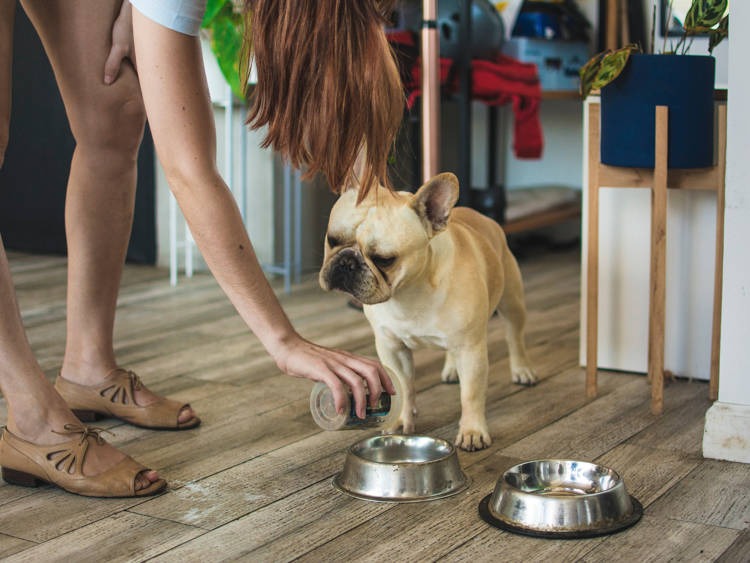
Owners obsess over the wrong question. “What time should I feed my dog?” gets asked constantly, and the truthful answer is anticlimactic: there’s no magic hour, and your dog doesn’t care whether breakfast is at 7 or 7:30. What your dog’s body cares about, sometimes urgently, is how many meals land in a day and how those meals fit their size, age, and health. Get the frequency right and the clock sorts itself out. Get it wrong and, for some dogs, the stakes are genuinely high.
So let’s flip the usual order. Instead of starting with a schedule and adjusting for exceptions, start with what can hurt your dog, and build the schedule backward from there.
The risks that should set the schedule
For most dogs, the default is two meals a day, roughly eight to 10 hours apart, with the daily calories split between them. That’s not arbitrary, it’s the spacing that heads off two real problems.
The first is bilious vomiting. When a dog goes too long with an empty stomach, bile can build up and irritate it, and they bring up yellow foam, often in the long gap between an early breakfast and a late dinner. A second meal closes that gap.
The second is far more serious and applies mainly to large and giant breeds: gastric dilatation and volvulus, or bloat. In GDV the stomach distends with gas and then rotates on itself, trapping the gas with nowhere to escape, over-stretching the stomach and choking off its own blood supply. It is a true surgical emergency, and the warning signs, unproductive retching, restlessness, a hard swollen belly, mean get to a vet now. Several studies have linked once-daily feeding in big breeds to higher GDV risk, which is exactly why a Great Dane or Doberman should never get its whole day’s food in a single sitting.
The owners who get into trouble are usually the ones optimizing for their own convenience, one big meal, food left out all day, without realizing those choices carry specific medical risks for their specific dog. The schedule should follow the dog, not the calendar.
The one place once-a-day might earn its keep
There’s a fascinating exception, and it’s recent. The Dog Aging Project, a large long-term study of canine aging, found that senior dogs fed once daily tended to show less cognitive dysfunction and fewer of certain age-related health problems than dogs fed more often. It’s a genuinely interesting signal, and worth knowing. But read it carefully: this is a correlation, not a proven cause. It is not license to switch a healthy adult, let alone a bloat-prone breed, to one meal a day. If you have an older dog and the idea appeals, raise the study with your vet and decide together.
Why free-feeding usually backfires
Leaving a full bowl out all day feels generous and low-effort, and it’s the wrong move for most dogs. Few have the self-restraint to graze sensibly, so free-feeding slides toward obesity. It also hides one of the most useful early warnings you have: a dog going off its food is often the first sign something’s wrong, and you’ll never notice if the bowl is always full. In multi-pet homes it gets worse, with one dog inhaling everything while another goes hungry, and the standing food invites pests. Portioned meals fix all of it.
Match the frequency to the life stage
Puppies need more, not less. Newborns nurse every two to four hours, and pups up to about six months should get three or four meals a day. Resist free-feeding them too: puppies are poor self-regulators, so a constant bowl breeds obesity and bad habits, and set mealtimes make potty training dramatically easier, since pups need to go shortly after eating.
Toy breeds can have a medical reason to eat often. Chihuahuas, Yorkies, and Maltese run fast metabolisms and, especially as puppies, are prone to hypoglycemia, low blood sugar that can cause lethargy, weakness, and even seizures. Toy-breed puppies often need five to six small meals a day to stay stable, and some adults still need more than two. This is the case where “how many meals” is not a preference but a safety question.
Large and giant breeds need their food split. Their growth period can run up to two years, they’re prone to orthopedic problems, and overfeeding a big puppy can make those problems worse, so portion control during growth matters. As adults, their GDV risk is the clinching reason to divide the day’s food into at least two meals.
Health conditions that rewrite the rules
Once a dog has a medical condition, the schedule often has to bend to it. A few common ones:
- Weight loss: several small meals usually feel more satisfying than two skimpy ones, so a dieting dog copes better split up.
- Diabetes mellitus: insulin and food are tightly coupled. A diabetic dog on insulin needs very controlled meals, little to no snacking between, and must eat before insulin to avoid going hypoglycemic.
- GI recovery: small, frequent meals are gentler on a gut healing from illness or surgery.
- Megaesophagus: with an enlarged esophagus that can’t move food down well, small upright-position meals reduce dangerous regurgitation.
- Pregnancy: late term, energy needs spike while belly room shrinks, so multiple small meals deliver nutrients without discomfort.
- Anesthetic procedures: you’ll be told to adjust or fast before dentals and surgeries, because fasting lowers the risk of aspiration under anesthesia.
- Separation anxiety: a food puzzle can occupy an anxious dog while you’re out, just subtract that food from the day’s portion so you don’t overfeed.
So, what time?
After all that, the clock is the easy part. Whatever number of meals your dog needs, serve the first soon after the day starts and the last about two to three hours before bed (so there’s time to digest and take a final potty break, and you’re not up at midnight). Keep the times roughly consistent day to day, because dogs genuinely settle into a predictable rhythm. And whenever a feeding question feels medical, weight, diabetes, a giant breed, a senior dog, that’s the moment to bring your vet in. The best schedule isn’t the one in any article. It’s the one that fits your dog’s body and your real life together.
References
- Bray, Emily E., et al. “Once-Daily Feeding Is Associated with Better Health in Companion Dogs: Results from the Dog Aging Project.” GeroScience, vol. 44, no. 3, 2022, pp. 1779–1790. doi:10.1007/s11357-022-00575-7.
- Bell, Jerold S. “Inherited and Predisposing Factors in the Development of Gastric Dilatation Volvulus in Dogs.” Topics in Companion Animal Medicine, vol. 29, no. 3, 2014, pp. 60–63. doi:10.1053/j.tcam.2014.09.002.
- MSD/Merck Veterinary Manual. “Dilatation of the Esophagus in Small Animals (Megaesophagus).”
- American Animal Hospital Association. “Nutritional Assessment and Feeding Guidelines for Dogs.”
Common questions
Is it okay to feed a dog just once a day?
For most dogs, no. Long gaps can trigger bilious vomiting (yellow bile on an empty stomach), and in large and giant breeds, once-daily feeding is linked to a higher risk of bloat (GDV), a surgical emergency. The interesting exception is senior dogs: Dog Aging Project data found older dogs fed once a day had less cognitive dysfunction, though that's a correlation, not proof, so it's a conversation for your vet, not a default to adopt.
Is free-feeding (leaving food out all day) a good idea?
Rarely. Most dogs lack the self-control to graze sensibly, so free-feeding tends toward obesity, it hides appetite changes that can be an early illness sign, it causes uneven intake or squabbling in multi-pet homes, and a standing bowl attracts pests. Portioned meals solve all four problems.
How long can a healthy adult dog safely go without eating?
A healthy adult dog can skip a day without major harm, and larger breeds tolerate gaps better than tiny ones. But comfort is the point: most dogs are happier on two meals a day, and toy breeds or puppies need more, sometimes far more, to keep blood sugar stable.
Not a substitute for your vet. Our guidance is educational. For urgent symptoms, contact a vet or emergency clinic right away. Editorial standards
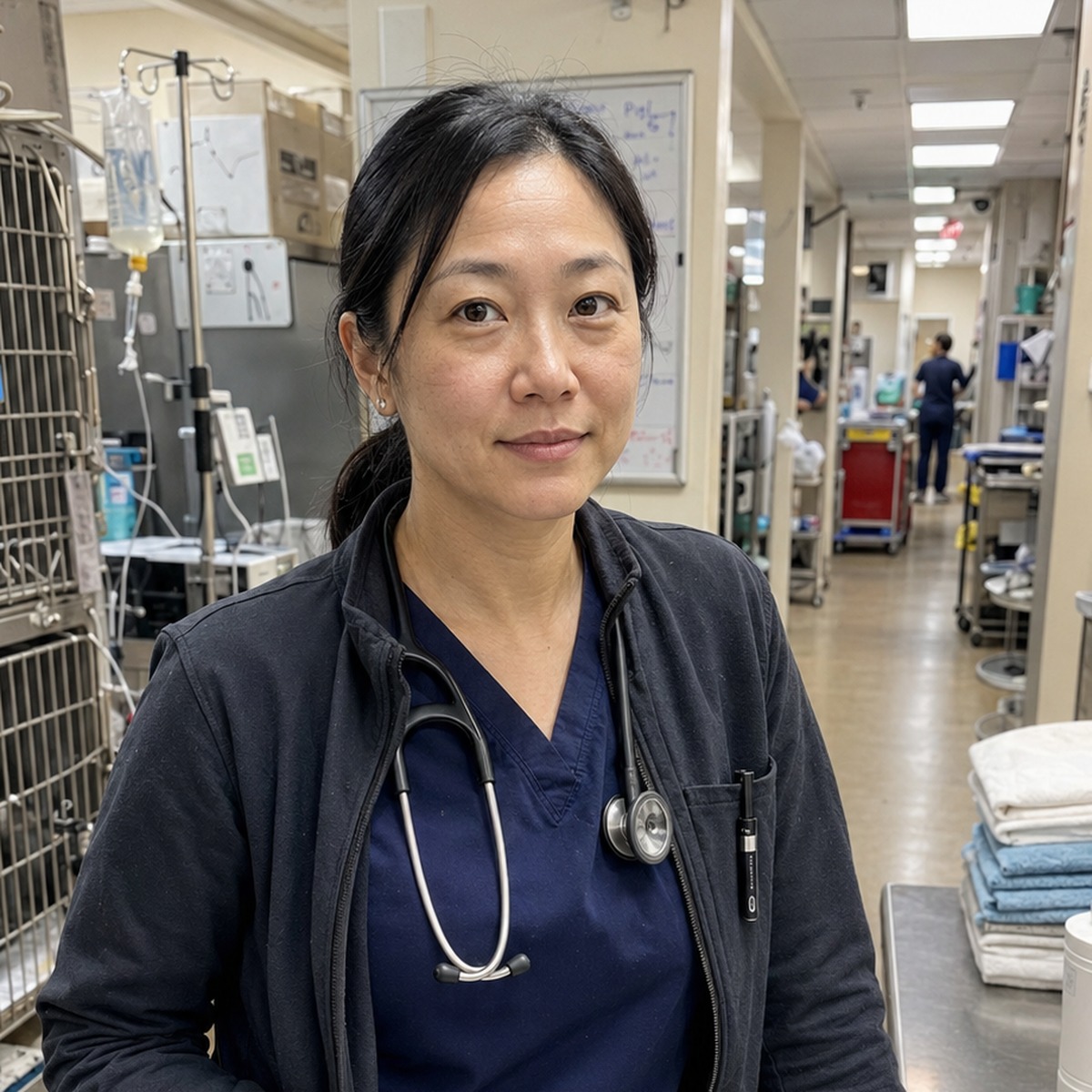
Dr. Park is a board-certified emergency and critical care specialist. She reviews our health and safety content for clinical accuracy and contributes guides on recognising urgent conditions. Her focus is helping owners act quickly and correctly when it matters most.
Meet our experts ↗Keep reading
 FoodBaby Food Is a Sick-Day Tool for Dogs, Not a Treat. Read the Jar Like OneDr. Mara Chen · 6 min
 FoodPeas Are a Fine Snack for Dogs. As a Diet Staple, It's Complicated.Dr. Ravi Mehta · 7 min
 Health & WellnessDon't Fast a Dog With Diarrhea. The Advice Flipped, and Here's What to Feed Instead.Dr. Lena Park · 7 min
 Health & WellnessYour Dog Becomes an Adult Three Separate TimesDr. Ravi Mehta · 9 min
 FoodFor a Small-Breed Puppy, the Feeding Schedule Matters More Than the BrandDr. Priya Nair · 10 min
 Food9 Human Superfoods Worth Adding to Your New Dog's BowlLeila Torres · 6 min