


For a Small-Breed Puppy, the Feeding Schedule Matters More Than the Brand
Owners obsess over which small-breed puppy food is best, but the bigger risk for a tiny puppy is going too long between meals. A vet on the schedule that prevents hypoglycemia, what to look for on the label, and the picks worth trying.

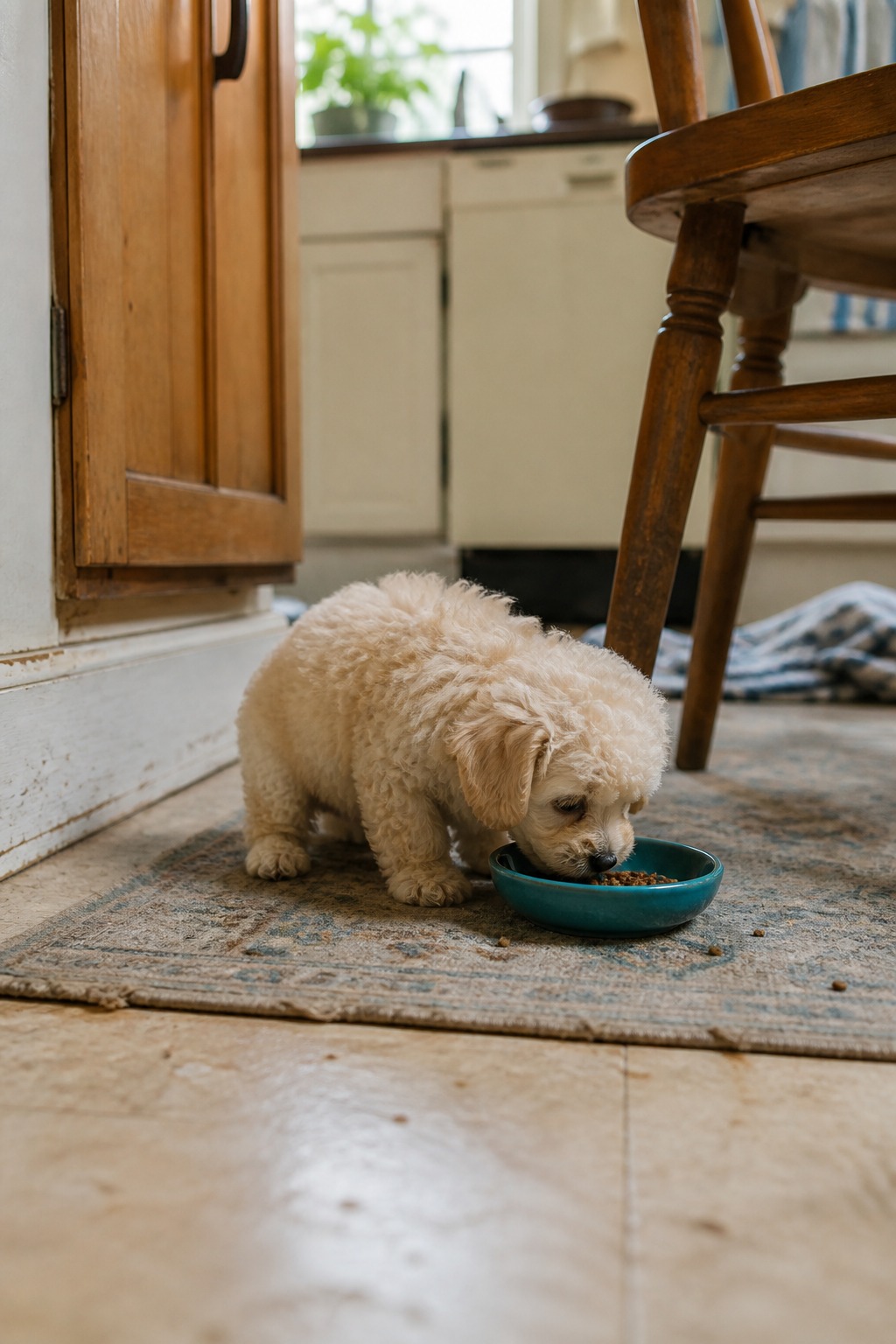
Most new owners of a small-breed puppy pour their energy into one question: which food is the best one to buy. It is the wrong place to start. For a tiny puppy, the single most important nutrition decision is not the brand on the bag, it is how often the bowl gets filled. Toy and small-breed puppies run fast metabolisms in very small bodies, and if they go too long between meals their blood sugar can crash into hypoglycemia, a real and sometimes dangerous problem that no premium kibble prevents on its own. Get the schedule right and a perfectly good mid-priced food will raise a thriving puppy. Get the schedule wrong and the fanciest food in the store will not save you.
So this guide leads with the schedule, then covers what actually matters on a label, then the picks, then the health issues to watch. In that order, because that is the order of what will affect your puppy most.
Start with the schedule: feed small, feed often
A small-breed puppy’s stomach is tiny and their energy demands are enormous, which is exactly the combination that leads to low blood sugar if meals are spaced too far apart. The fix is frequency.
“For the first three months, I want toy and small-breed puppies eating four to six small meals a day, and not going more than about four hours without food,” says Dr. Lena Park, a Pet Times veterinary contributor. “From three to six months you can usually settle into three to four meals, and after six months most do fine on two. The breeds people forget about here are the truly tiny ones, Chihuahuas, Yorkies, Maltese, where a skipped meal isn’t a minor thing, it can tip into hypoglycemia.”
The warning signs of low blood sugar are worth memorizing before you ever need them: lethargy, wobbliness or weakness, muscle tremors, a glazed or unfocused look, and in severe cases collapse or seizures. If you see them, a small amount of a sugar source like corn syrup rubbed on the gums can buy time, but it is an emergency, call your vet immediately. Regular, balanced meals plus routine checkups head most of this off before it starts.
What actually matters on the label
Once the schedule is set, the food itself needs to clear a few real bars. Skip the marketing on the front and look for these.
A complete and balanced statement for “growth” or “all life stages,” meeting AAFCO nutrient profiles, is non-negotiable, it is your assurance the food has everything a growing puppy needs. From there, you want adequate, high-quality protein and fat to fuel a body that runs circles around you, and the essential vitamins and minerals a puppy needs: vitamin A for vision and skin, D for bone development, E and C for antioxidant and immune support, B vitamins for energy and red blood cell production, plus calcium, magnesium, and iron. Smaller kibble sized for tiny mouths makes eating easier and choking less likely. “The most important thing is simply that whatever you feed is complete, balanced, and vet-approved for growth,” says Dr. Lena Park. “Brand loyalty matters far less than that statement on the back.”
A note on portions: small dogs need significantly fewer calories than their energy suggests, and human-food treats should stay under about 10 percent of daily calories, often just a teaspoon or two. Overfeeding a small breed is genuinely easy, more on why that matters below.
The picks worth trying
There is no single “best,” but these are solid, widely available, complete-and-balanced choices across budgets. Puppies can start on dry food once they are eating solids, around four to six weeks.
Best overall: Open Farm Salmon and Ancient Grains Puppy is a well-formulated, transparently sourced option that suits most small-breed puppies once they are on solids.
Best widely available dry food: Royal Canin X-Small Puppy is built specifically for tiny dogs, with kibble sized and shaped for small mouths. The brand’s wet slices in gravy make an occasional topper if your vet okays it.
Best premium / fresh option: A fresh-food subscription delivers pre-portioned, gently cooked meals, helpful since pre-portioning fights the overfeeding problem. Costs vary with your dog’s size and the plan, and new customers often get a first-box discount; just keep portions vet-guided rather than eyeballed.
Best budget pick: Iams Proactive Health Small Breed Puppy is a dependable, affordable, easy-to-find complete diet that covers the basics well.
Best raw-alternative: Stella & Chewy’s SuperBlends is “raw-coated” rather than truly raw, a reasonable middle ground for owners drawn to raw who want to skip the food-safety risks of actual raw feeding.
For all of them, match the amount to your vet’s guidance, not the bag, and split the day’s total across the meal schedule above.
The health issues nutrition can make or break
Choosing a good food is only half the job; how you feed shapes your puppy’s long-term health as much as what you feed.
Hypoglycemia is the short-term risk the schedule above is designed to prevent, most associated with toy breeds and rare in healthy small-breed adults, but a genuine concern in the first months.
Obesity is the long game, and it is the second most common disease in dogs. “The feeding guidelines printed on small-breed bags tend to run high for the average dog, so it is easy to overfeed without realizing it,” says Dr. Lena Park. The downstream costs are real: extra weight raises the risk of arthritis, diabetes, and tracheal collapse (itself more common in small breeds), and owners of overweight dogs end up spending meaningfully more on healthcare and medications over a lifetime.
Periodontal disease is the most common disease in small-breed dogs, with dogs under about 14 pounds far more prone to it than large breeds. Diet plays in here too, soft-food-only diets contribute, while daily tooth brushing, dental chews, and appropriately textured dry food all help. Start dental care early; it is far easier than reversing advanced gum disease later.
The bottom line
Feed your small-breed puppy a complete, balanced, vet-approved food, there are many good ones, and stop agonizing over which single brand is “best.” Then put your real attention where it counts: a frequent, regular meal schedule that keeps blood sugar steady, portions that prevent creeping weight gain, and early dental habits. The schedule is the part that protects your puppy day to day. The brand is just the vehicle for it.
References
- Association of American Feed Control Officials. “AAFCO Methods for Substantiating Nutritional Adequacy of Dog and Cat Foods.” aafco.org.
- WSAVA Global Nutrition Committee. “Nutritional Assessment Guidelines.” wsava.org.
- Association for Pet Obesity Prevention. “Pet Caloric Needs Calculator.” petobesityprevention.org.
- American Veterinary Medical Association. “Hypoglycemia in Toy-Breed Puppies.” avma.org.
Common questions
What's the real danger if I get small-breed puppy feeding wrong?
Two things. Short term, hypoglycemia (low blood sugar) from going too long between meals, which can cause lethargy, weakness, tremors, and even seizures in toy breeds. Long term, obesity from overfeeding, because the guidelines on the bag often run high for small dogs. Periodontal disease is also unusually common in small breeds, so dental care matters early.
Can I make my small-breed puppy's food at home?
Use real caution. Home-cooked recipes found online are frequently missing essential nutrients, which can harm a growing puppy. If you want to cook for your dog, work with a board-certified veterinary nutritionist (DACVIM-Nutrition) who can balance the diet, and ask your vet whether a complete commercial puppy food is the safer choice in the first place.
How much should my small-breed puppy eat per day?
It depends on breed, age, activity level, and the food's calorie density, and treats count toward the total (keep them under about 10 percent of daily calories). Ask your vet for a specific amount, and use a calorie calculator like the one from the Association for Pet Obesity Prevention as a starting point, not a final answer.
Not a substitute for your vet. Our guidance is educational. For urgent symptoms, contact a vet or emergency clinic right away. Editorial standards
Dr. Nair is a veterinarian focused on diet and feeding. She covers everyday nutrition, treats, and the many "can they eat this?" questions owners ask, grounding each answer in what is actually safe and sensible for dogs and cats.
Meet our experts ↗Keep reading
 FoodYour Puppy Can Eat More of Your Food Than You Think. Two Things Can Still Hurt Them.Dr. Mara Chen · 5 min
 FoodBones and Puppies: The Real Problem Isn't Choking, It's ChemistryDr. Mara Chen · 8 min
 FoodSkip the Supplement Aisle. Your Dog Gets These From Real Food.Dr. Amara Solis · 6 min
 FoodCan Dogs Eat Black Pepper? Why It's Safe to Skip the ShakerDr. Ravi Mehta · 5 min
 Food"Lactose Intolerant" Is the Wrong Question About Your Dog and DairyDr. Ravi Mehta · 7 min
 FoodThe Dog Food Brand Betting That Your Pup Doesn't Actually Need MeatDr. Priya Nair · 7 min