


Bones and Puppies: The Real Problem Isn't Choking, It's Chemistry
The bone-for-puppies debate fixates on splinters and choking. But for a growing puppy, the bigger risk is the way bones can throw off the calcium-to-phosphorus balance a developing skeleton depends on. Here's the full picture, plus safer chews.

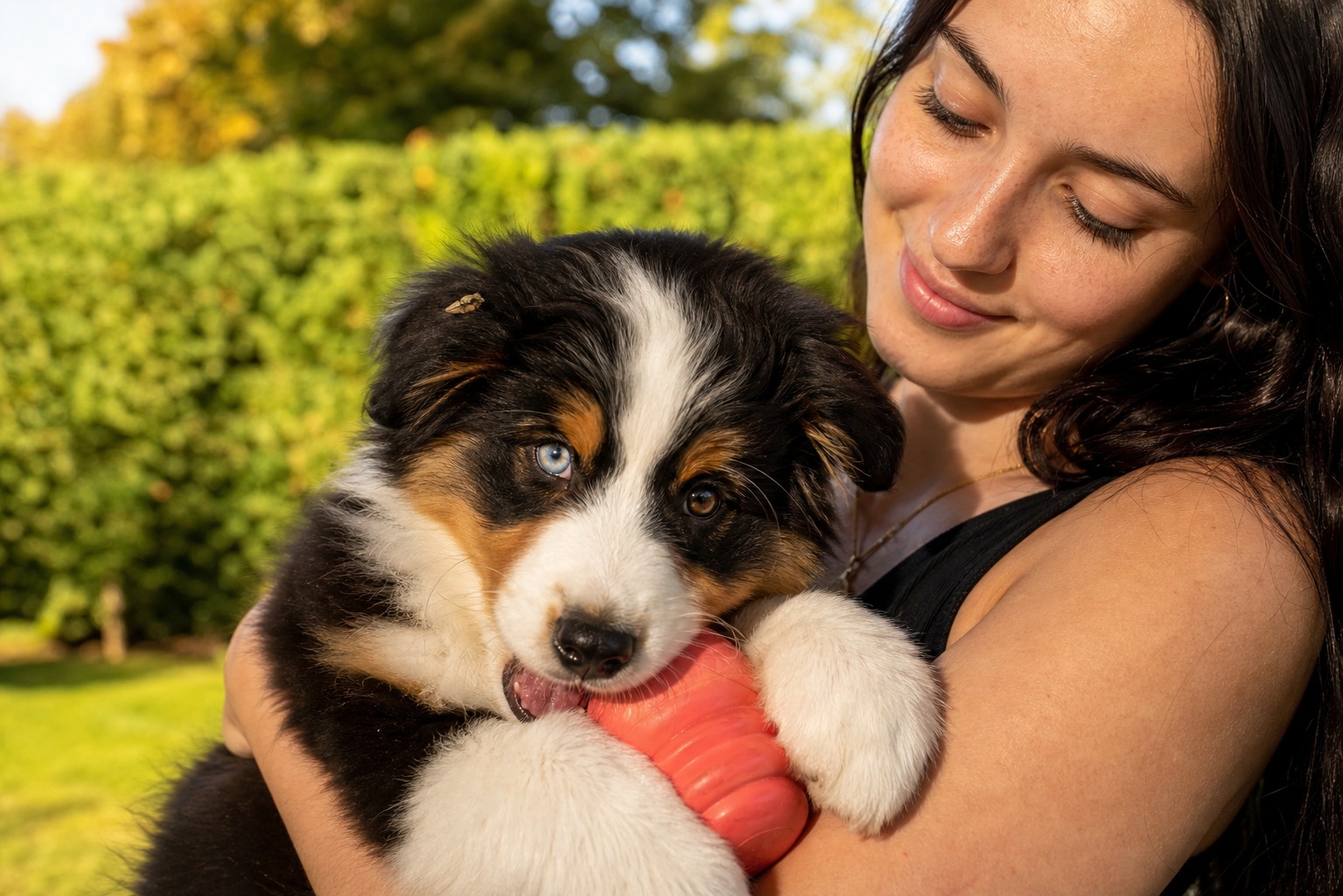
A puppy gnawing happily on a bone feels like one of dog ownership’s timeless images, which is why it surprises new puppy parents to hear vets are wary of the combination. The usual warnings, splinters, choking, a cracked tooth, are all real. But they skip the risk that’s most specific to a puppy: a growing skeleton runs on a precise mineral ratio, and bones can quietly throw that math off at the exact moment it matters most. Get that piece, and the whole bones-for-puppies question comes into focus.
The overlooked risk: a growing skeleton’s mineral math
Puppies aren’t just small dogs. They’re building bone at a remarkable rate, and that process depends on getting calcium and phosphorus in the right proportion, not just the right amount. The target ratio sits close to 1.2 parts calcium to 1 part phosphorus, and a complete puppy food is formulated to hit it. Bones are essentially concentrated calcium and phosphorus, so tossing them into a balanced diet is like adding an unmeasured scoop to a recipe that was already dialed in.
This matters most for large and giant breeds. Excess calcium is a documented risk factor for developmental orthopedic disease, including osteochondrosis, in fast-growing large-breed puppies, whose skeletons are especially sensitive to over-supplementation. The imbalance can run the other way too: a diet heavy on bone that ends up high in phosphorus and low in usable calcium can trigger nutritional secondary hyperparathyroidism, where the body pulls calcium from the bones themselves, and there are veterinary case reports of raw-fed puppies developing exactly this, with weakened bones and even compression fractures. In short, the bone that looks like a wholesome calcium source can undermine the careful balance a growing puppy needs.
I’d hold off on any real bone until a puppy has a complete set of adult teeth, and I’m just as concerned about what bones do to a growing puppy’s nutrition. These dogs are built on a carefully balanced diet, and free-feeding bones is an easy way to tip the calcium and phosphorus out of range right when the skeleton is forming.
At what age can a puppy have a bone?
The short version: wait until the adult teeth are fully in. Baby teeth fracture far more easily than adult teeth, and a teething puppy handed something as hard as a bone is a cracked tooth waiting to happen, on top of the nutritional concerns above.
Do bones offer any real benefit?
Nutritionally, not for a puppy already eating a complete formula, for the reasons above. Fatty marrow bones in particular can do more harm than good.
Behaviorally, there’s a point in their favor. Dogs are natural chewers, doubly so when teething, and working the jaws on something firm (that isn’t your hand) can ease the ache of erupting teeth and give a bored puppy a job that settles the mind. The catch is that bones aren’t the only thing that does this, and purpose-built puppy toys deliver the same payoff without the danger.
The physical hazards
Bones stack up more risks than rewards for a puppy:
- Choking. A small swallowed bone can lodge in the throat, a medical emergency needing immediate care.
- Broken teeth. Puppy teeth fracture far more easily than adult teeth, especially against something bone-hard.
- Mouth injuries. Splintered or sharp-edged bones can slice gums, tongue, or the roof of the mouth.
- GI upset. Fatty, protein-rich bones can overwhelm a puppy’s stomach, causing vomiting, diarrhea, or constipation.
- Digestive blockages. A swallowed whole bone or fragments can jam the intestinal tract, sometimes requiring emergency surgery.
Can puppies even digest bones?
A grown dog’s digestive system is reasonably equipped to break bone down, though even then, undigested pieces can pile into a blockage. Puppies are different: smaller, more sensitive stomachs make GI upset and blockages more likely, and their tracts simply aren’t mature enough for most bones. A few puppies manage a small bone fine, but it’s not a gamble worth taking with most.
Cooked bones vs. raw bones
Once a bone is cooked it turns brittle, which makes it far more prone to splintering and causing harm than a raw one. Of the two, raw is the safer thing for a puppy to gnaw on, but they’re not risk-free. They’re hard enough that a puppy who really bears down can crack a tooth on them.
Dr. Amara Solis, Pet Times veterinarian
So even on the “safer” side of the comparison, supervision and judgment matter.
If you allow a bone, do it safely
Should you let your puppy enjoy a bone, a few precautions make a real difference. Choose an appropriately large raw bone, so nothing is small enough to swallow whole or choke on. Knuckle bones are a smart pick: no hole for a jaw to get stuck in, and they don’t fragment as readily. Keep sessions short, a brief treat rather than a fixture, and supervise the entire time. And don’t add bones to meals or make them a regular snack, which is where the calcium-phosphorus and GI problems compound.
The best (and worst) chews for a puppy
For a teething puppy, purpose-built puppy toys are the safest chew by a wide margin, made from softer, pliable material precisely because puppy teeth aren’t durable. Stuffable toys are another great option: pack a puppy-sized rubber toy with plain yogurt or canned puppy food and freeze it overnight, so it lasts longer and the cold soothes sore gums.
On the danger list:
- Small poultry bones splinter into sharp shards that damage the mouth or get swallowed.
- Cooked bones of any kind lose nutrients and turn thin and brittle, shattering under a determined chomp.
- Rawhide brings its own problems, potential toxins, poor digestibility, and choking risk, that outweigh any plaque benefit.
If your puppy is choking on a bone
If you can see a bone in the throat, you may be able to remove it with your fingers. If you can’t see it, you can perform the Heimlich maneuver for dogs. Either way, call your vet immediately, and if you can’t dislodge it, get emergency care without delay.
Safer alternatives to bones
There’s a whole market of safer chews: rubber chew toys, nylon bones, natural chews like pig ears or (for older puppies with adult teeth) bully sticks, and puppy-specific toys. All are soft enough not to wreck a puppy’s mouth and aren’t meant to be swallowed. When unsure, your vet or a trainer can point you to good options.
What’s new since this was written
Recent veterinary work keeps reinforcing the cautious approach on both fronts. Studies on bone foreign bodies confirm that esophageal and gastric obstructions remain a common emergency in dogs, often requiring endoscopic or surgical removal, with the best outcomes when caught early. And nutritionists continue to warn that bones and calcium supplements disrupt the calcium-to-phosphorus balance that fast-growing large-breed puppies depend on, tying diet directly to skeletal health.
The consensus hasn’t shifted: skip real bones during puppyhood, lean on softer purpose-built chews while the adult teeth come in, and run any bone idea past your vet first. If your puppy does swallow a bone or fragment and starts retching, drooling, refusing food, or straining to defecate, treat it as an urgent visit, not something to monitor at home.
References
- American Kennel Club: How to “Chews” the Best Dog Chew Toys. https://www.akc.org/expert-advice/nutrition/best-dog-chew-toys/
- Canadian Veterinary Journal: Dietary Imbalances in a Large-Breed Puppy Leading to Compression Fractures, Vitamin D Deficiency, and Suspected Nutritional Secondary Hyperparathyroidism. https://pmc.ncbi.nlm.nih.gov/articles/PMC5731398/
- Journal of the American Animal Hospital Association: Outcomes of Esophageal and Gastric Bone Foreign Bodies in Dogs. https://pmc.ncbi.nlm.nih.gov/articles/PMC8965252/
- VCA Animal Hospitals: Nutritional Considerations for Large and Giant Breed Dogs. https://vcahospitals.com/know-your-pet/nutritional-considerations-for-large-and-giant-breed-dogs
Common questions
Why are bones especially risky for large-breed puppies?
Fast-growing large and giant breeds need a tightly controlled calcium-to-phosphorus ratio, close to 1.2 to 1. Bones can skew that balance and have been linked to developmental orthopedic disease. Excess calcium from bones or supplements is a documented risk factor for skeletal problems in these puppies.
Are raw bones safer than cooked for puppies?
Somewhat. Cooked bones turn brittle and splinter, so they're more dangerous. Raw bones are the safer of the two but still hard enough to crack a puppy's tooth, so supervision and good judgment still matter.
Not a substitute for your vet. Our guidance is educational. For urgent symptoms, contact a vet or emergency clinic right away. Editorial standards
Dr. Chen is a small-animal veterinarian who leads health and safety coverage at The Pet Times. She writes and reviews the bulk of our illness, condition, and safety content, translating clinical guidance into clear, practical advice owners can act on at home.
Meet our experts ↗Keep reading
 First DaysYou Don't Give a Puppy Water. You Wean Them Into It.Dr. Ravi Mehta · 9 min
 FoodThe Puppy-Food Mistake Everyone Makes Isn't About Adult Food. It's About CalciumDr. Lena Park · 7 min
 FoodThe 4-Ingredient Frozen Dog Treat (Check the Label First)Sara Lim · 5 min
 FoodBaked Sourdough Is a Fine Dog Snack. Raw Dough Is a 911 Call.Dr. Amara Solis · 6 min
 FoodCinnamon Isn't the Problem for Your Dog. What's Next to It IsDr. Lena Park · 5 min
 FoodThe Potato Is Fine for Your Dog. Everything You Do to It Isn't.Dr. Mara Chen · 7 min