


The Potato Is Fine for Your Dog. Everything You Do to It Isn't.
Plain cooked potato is a safe occasional treat for dogs. The real risks are raw and green potatoes, the butter-and-salt version off your plate, and treating a starchy vegetable like a health food.

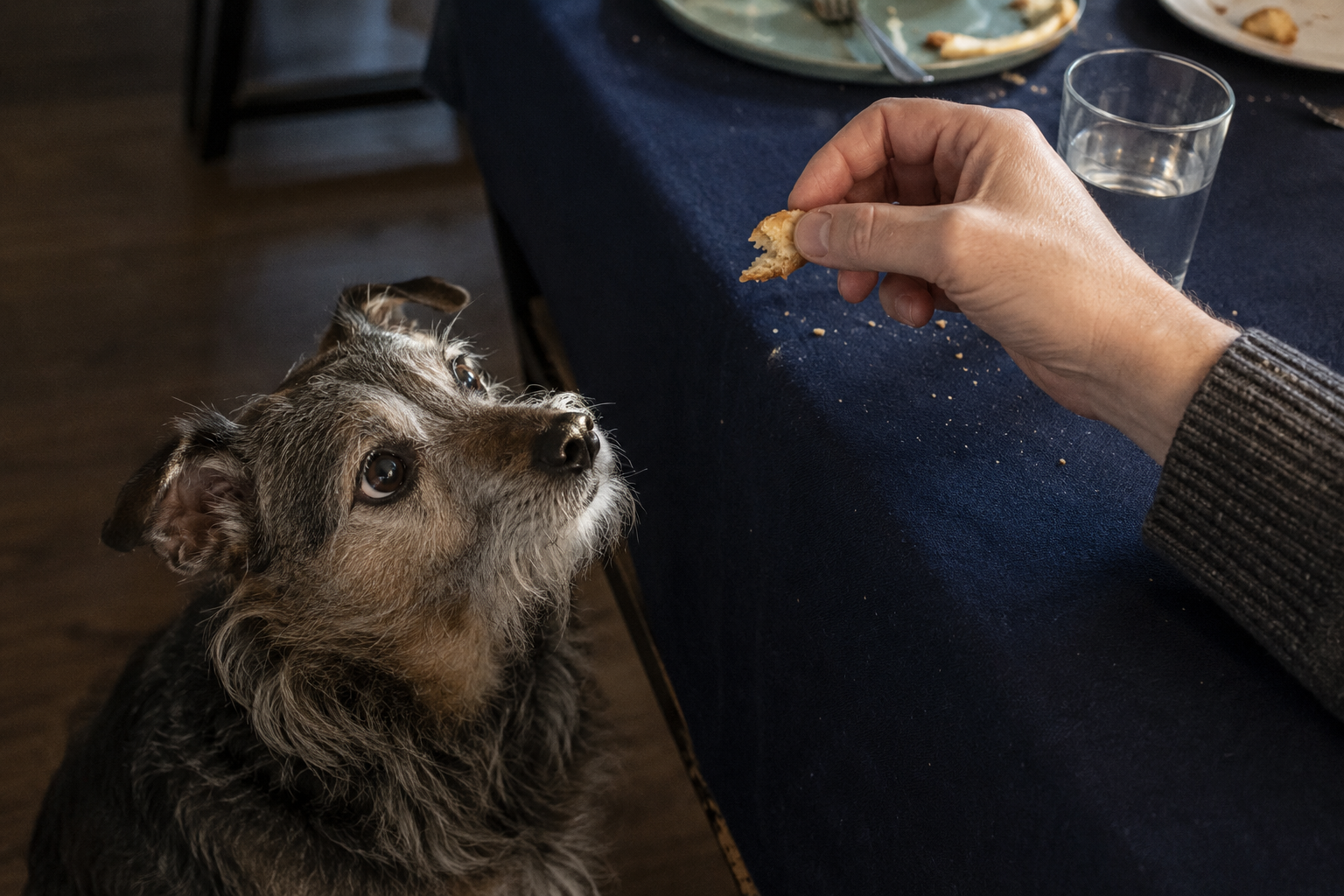
Potatoes get a bad rap they only half deserve. The potato itself is not toxic to dogs, and a little plain cooked potato is a fine treat. What causes almost every real potato problem is not the vegetable, it is what happens to it: served raw or green, drowned in butter and salt, fried in oil, or handed over so often that a carb-heavy starch starts crowding out actual nutrition. Once you separate the potato from its packaging, the rules get simple.
What a potato is, and what it gives your dog
Potatoes are the starchy underground tubers of the Solanum tuberosum plant, and they come in endless varieties, from russets to Yukon golds to red and even purple ones. Nutritionally they are usually grouped with the starchy vegetables, though some newer guidelines treat them more like grains because they are so heavy on carbohydrate and light on the other nutrients vegetables usually bring.
Cooked plain, a potato does offer a few useful things to a dog. There is starch, a carbohydrate dogs can burn for energy even though they have no strict dietary requirement for carbs. There is potassium, a mineral that supports muscle contractions, blood pressure, and fluid balance. There is vitamin B6, which matters for heart health, brain function, and the immune system. And there is fiber, both soluble and insoluble, which helps firm up stool, feeds the good bacteria in the gut, and helps a dog feel full. A lot of those nutrients, especially potassium and fiber, live in the skin, so leaving clean skin on plain cooked potato adds value rather than taking it away.
Raw and green: the part that is actually dangerous
Dogs should not eat raw potatoes, and the reasons stack up. Raw potato is tough to chew and swallow, which makes it a choking risk, and it is hard to digest, so it tends to cause gas, bloating, nausea, and diarrhea. Large chunks can, in rare cases, lodge in the stomach or intestines.
The bigger concern is solanine. This is a glycoalkaloid found throughout the nightshade family, which also includes tomatoes and eggplant, and it concentrates in raw potatoes, potato plants, and especially any potato that has turned green or started to sprout. In most cases eating solanine causes drooling and stomach upset. In severe cases, when a dog eats a large amount, it can cause neurological signs like disorientation, weakness, sedation, and dilated pupils. The rule that follows is easy: no raw potato, and throw out anything green or sprouting rather than cooking around it.
The green tinge on a potato isn’t a cosmetic thing, it’s the plant telling you solanine has built up. I tell clients if they wouldn’t want to eat that part themselves, it definitely shouldn’t go to the dog. Cook it, keep it plain, and toss anything that’s gone green or grown eyes.
Cooked and plain is the whole trick
Cooked, plain potato is safe for dogs in moderation, and the word doing the heavy lifting is plain. The way most of us eat potatoes is the problem. Fried potatoes add oil and heat-formed compounds. Heavily salted potatoes push sodium. Mashed potatoes usually mean butter, cream, cheese, or sour cream, all high in fat that can trigger digestive upset or, in susceptible dogs, pancreatitis. And any potato dish seasoned with garlic or onion crosses into genuinely toxic territory, because both are poisonous to dogs.
The clean workaround is to set aside a little plain baked or boiled potato for your dog before you add a single thing to your own. If you want to give the treat a small upgrade, plain cooked sweet potato brings more nutrition for the same effort.
Keep the portion honest
Because potato is a carb-heavy food, it should be a small, occasional treat rather than a regular topper. Too much starch means excess calories, weight gain over time, and blood-sugar spikes, which matter most for dogs who are already overweight, have joint pain, or are diabetic. The ten-percent guideline is the guardrail here: treats and scraps together should stay under ten percent of your dog’s daily calories, with the rest coming from a complete and balanced food built to meet AAFCO nutrient profiles. Potato is a nice extra. It is not a meal, and it does not need to be a habit.
What’s new since this was written
The conversation that has moved most around potatoes is not toxicity, it is the grain-free diet question, and it is worth knowing where it stands. Over the past several years the FDA has investigated a possible link between certain grain-free dog foods, many of which lean on potatoes, sweet potatoes, peas, and legumes as the main carbohydrate, and cases of a serious heart condition called dilated cardiomyopathy. As of the most recent updates the science is still not settled, and a direct cause has not been proven, but the association was strong enough that many veterinary cardiologists now steer owners away from boutique grain-free diets unless there is a specific medical reason for one.
For a treat-sized piece of plain potato, none of this applies, and there is nothing to worry about. The takeaway is narrower: if potatoes or sweet potatoes are near the top of your dog’s main food ingredient list, that is worth a conversation with your vet, separate from the occasional bite off your plate.
References
- U.S. Food and Drug Administration: “Complete and Balanced” Pet Food
- U.S. Food and Drug Administration: FDA Investigation into Potential Link between Certain Diets and Canine Dilated Cardiomyopathy
- ASPCA Animal Poison Control: People Foods to Avoid Feeding Your Pets
- Harvard T.H. Chan School of Public Health: Potatoes
- Tufts University Cummings Veterinary Medical Center, Petfoodology: Carbohydrates and Pet Food
Common questions
Is cooked potato safe for dogs?
Plain cooked potato is safe in small amounts. Bake or boil it with no butter, salt, oil, cheese, garlic, or onion, and keep the portion small because potato is high in carbohydrates.
Can dogs eat mashed potatoes or fries?
Not the way we make them. Mashed potatoes are usually loaded with butter, cream, salt, and sometimes garlic, and fries add oil and salt. Both can cause stomach upset, and garlic and onion are toxic to dogs. Set aside plain potato before you season.
How much potato can a dog have?
Keep it to a small treat. All treats and table scraps together should stay under ten percent of your dog's daily calories, and potato is carb-heavy, so it should be an occasional extra, not a staple.
Not a substitute for your vet. Our guidance is educational. For urgent symptoms, contact a vet or emergency clinic right away. Editorial standards
Dr. Chen is a small-animal veterinarian who leads health and safety coverage at The Pet Times. She writes and reviews the bulk of our illness, condition, and safety content, translating clinical guidance into clear, practical advice owners can act on at home.
Meet our experts ↗Keep reading
 FoodPretzels and Dogs: The Number That Matters Isn't One BiteDr. Priya Nair · 5 min
 FoodThe Persimmon Rule for Dogs: Flesh Yes, Everything Else NoDr. Priya Nair · 7 min
 FoodIt's Not the Chip That Should Worry You. It's the Dust.Dr. Mara Chen · 6 min
 FoodBeef Jerky and Dogs: The Word Tells You Nothing, the Label Tells You EverythingDr. Mara Chen · 7 min
 FoodThe Carrot Is the Rare Treat You Can Feed Freely. AlmostDr. Priya Nair · 5 min
 FoodCoconut Won't Poison Your Dog. Its Fat Is the Real Catch.Dr. Ravi Mehta · 5 min