


Weaning a Puppy Too Fast Backfires. Here's the Timeline That Works
Puppies start solid food around three to four weeks, but weaning is a weeks-long fade from milk to kibble, not a switch you flip. Rushing it harms health and behavior. A vet lays out the readiness signs, the gruel-to-solids method, and how to pick the right food.
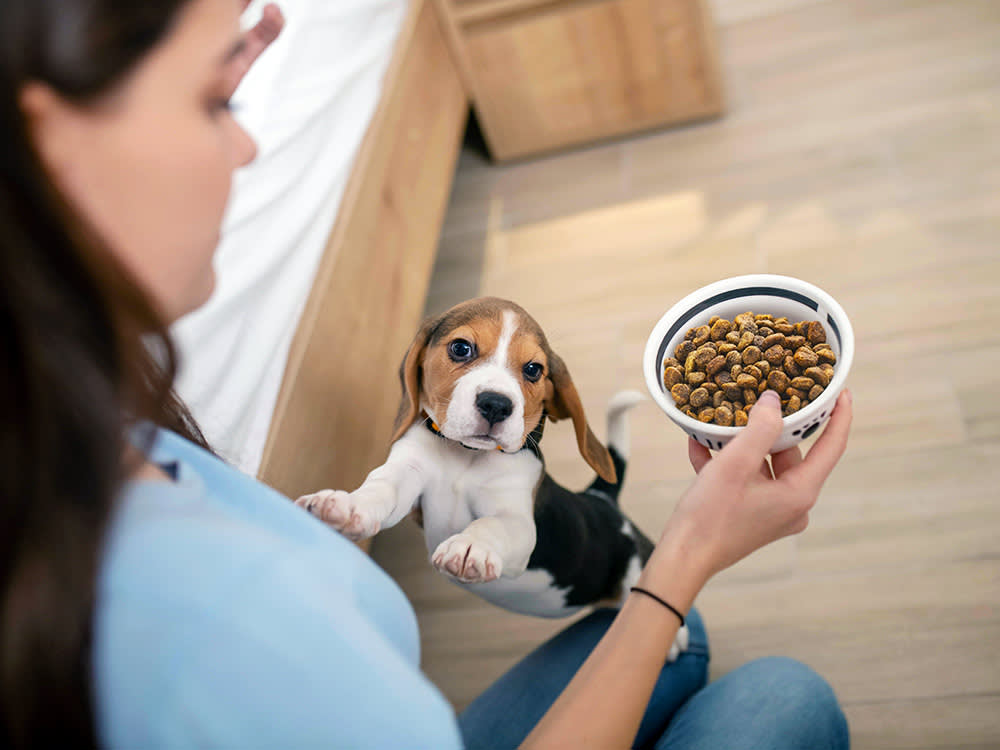
The first time a puppy meets solid food is peak cuteness: more of it ends up on their paws, their face, and the floor than in their mouth. It is also one of the moments where good intentions go wrong, because the instinct is to treat weaning like an event, one day on milk, the next day on kibble. It is not an event. It is a fade, spread over weeks, and the single biggest mistake people make is doing it too fast.
Getting the pace right matters more than most new caretakers realize, and not only for the puppy’s stomach. So here is the timeline that actually works, why the slow version protects both health and behavior, and how to read whether a puppy is even ready to begin.
Slow is the whole point
Puppies can be introduced to solids around three to four weeks old, but that is the start of a transition, not the end of nursing. Newborns get everything they need from their mother’s milk, which delivers not just complete nutrition but important immune factors that shield them until their own immune systems mature. So even as solids enter the picture, milk needs to keep flowing for a while.
There is a behavioral reason to go slow, too, and it is easy to overlook. The weeks a puppy spends nursing are also the weeks they spend learning to be a dog. Their mother teaches them, and their littermates give them their earliest social lessons, how to play, how to read canine body language, how to not bite too hard. Pull a puppy off that too early and you risk both physical and behavioral harm: many studies confirm that sudden or early weaning has negative effects on health and long-term behavior. Whenever circumstances allow, puppies should be weaned gradually from about four weeks old until roughly eight to ten weeks.
For orphaned puppies who cannot nurse, the same philosophy applies with a substitution: they get nothing but a specialized puppy formula from a bottle for those first four weeks of life, then move to solids the same slow way, trading a little formula for a little food over many weeks.
How to tell a puppy is ready
If you do not know a puppy’s exact age, do not rely on the scale, since breeds grow at wildly different rates and weight is a poor guide. Read their development instead. Puppies are born toothless with eyes and ears sealed shut, and they hit a predictable series of milestones: eyes usually open between 10 and 14 days, the ears unseal at roughly 12 to 14 days, and by about three weeks they are wobbling around learning to crawl and walk. The one that matters most for feeding is teeth, which start erupting between three and five weeks. Once a puppy has some baby teeth, they are set to sample their first tastes of very mushy solid food.
The weaning method, week by week
The mechanics are simple, and the whole game is patience. In the opening week or two of solids, turn the food into a very loose, liquidy gruel by blending it with a little warm water or puppy formula, something they can lap up easily. Set out little servings in a low, shallow dish they can reach without tumbling in. Expect the early sessions to be more about exploring, standing in, and spilling the food than actually eating it. That is normal and part of how they learn, and during this stretch the bulk of their nutrition still comes from nursing or the bottle.
As the puppies start eating in earnest, gradually reduce the liquid so the food firms up, giving them practice chewing and getting used to normal texture. Even at six to eight weeks, hard kibble can be too tough for a young puppy to manage, so keep it softened with a splash of warm water until they can handle it. The through-line is gradual: less milk, thicker food, more of it, over weeks, not days.
Choosing the right food
Once your puppy is eating solids, the food itself needs to match a puppy’s unique demands. Choose a product made specifically for puppies, or marked for “growth and reproduction,” which guarantees it packs more calories and denser nutrition to fuel rapid growth. Feed the highest-quality puppy diet you can find, and lean on commercial foods formulated for puppies rather than improvising, because their nutritional needs are genuinely specific. Pet food labels are confusing, so check with your vet if you cannot tell which food fits.
Size changes the math in both directions. Large and giant-breed puppies go through intense growth over a long stretch, and a diet that is not properly balanced for them can drive both rapid weight gain and abnormal bone development. They should eat a food formulated specifically for large-breed puppies, which typically restricts calcium and phosphorus, and some breeds keep growing until 18 to 24 months, versus about a year for smaller dogs. Small-breed puppies have the opposite challenge: tiny stomachs that hold little at a sitting, so they need more frequent feedings to avoid dangerous drops in blood sugar (hypoglycemia), plus a calorie-dense food and a small kibble that is easy to chew, softened with water at first. Whenever your puppy finally stops growing, switch to an adult food, since staying on high-calorie puppy food past that point invites weight gain.
Monitor closely, and call the vet early
Even under ideal conditions, weaning is a stressful stretch of a puppy’s development, so keep a close eye on things. Weigh puppies daily, a small gram or baby scale is worth it, because steady weight gain is the most reliable proof they are getting enough. Watch their enthusiasm for the food and stay alert for adverse effects like vomiting or diarrhea, and contact your vet if anything worries you.
A few troubleshooting habits help. With a whole litter to wean, split the puppies up for short stretches around feeding time so you can see who is eating well and stop the pushy ones from crowding out their littermates. And do not wait on problems: any puppy who is not gaining weight, or who shows vomiting, diarrhea, or lethargy, needs to be seen right away, because at this age they are especially at risk of dehydration, blood-sugar crashes, and other fast-moving complications.
What’s new since this was written
Reading pet-food labels for a large-breed puppy used to require decoding calcium percentages yourself. Not anymore. A revised AAFCO rule now requires dog food labels to state whether the food is appropriate for the growth of large-size dogs, meaning those expected to exceed 70 pounds as adults. In practice, the nutritional-adequacy statement will now either include or explicitly exclude “growth of large size dogs (70 lbs or more as an adult),” which hinges on whether the food’s maximum calcium stays at or below 1.8 percent. The science behind that line is real: excess calcium during a big puppy’s growth is linked to developmental orthopedic problems like osteochondrosis and hip dysplasia. So if you have a puppy headed for the large end, that one sentence on the bag is now the easiest way to confirm the food is built for them.
References
- Tufts University Cummings School of Veterinary Medicine. “Confused About What to Feed Your Large-Breed Puppy? New Rules May Help.” Tufts Petfoodology.
- Association of American Feed Control Officials. “Large-Size Dog Growth and Calcium Labeling Requirements.” AAFCO.
- Veterinary Partner. “Nutrition and Exercise for Growing Puppies.” Veterinary Partner, VIN.
- Veterinary Practice News. “Study: Early Separation From Litter Increases Chances of Behavioral Problems.” Veterinary Practice News.
Common questions
How do I wean a puppy to solid food?
Slowly, over several weeks. Start by mixing puppy food with warm water or puppy formula into a very loose gruel they can lap from a shallow dish, while they keep nursing. Over the following weeks, gradually make the food thicker and offer more of it as nursing tapers off, until they are eating solids by around eight to ten weeks.
What is the best puppy food for firm stools?
It varies from puppy to puppy, so you may need to try a couple. Always transition foods gradually, and if a puppy has ongoing soft stool or diarrhea, talk to your vet about other possible causes rather than just switching foods again.
Why does a large-breed puppy need special food?
Large and giant breeds grow intensely over a long period, and a diet with the wrong calcium and phosphorus balance can cause abnormal bone development. Large-breed puppy foods have controlled calcium levels to prevent that, and AAFCO now requires labels to state whether a food is suitable for puppies expected to top 70 pounds as adults.
Not a substitute for your vet. Our guidance is educational. For urgent symptoms, contact a vet or emergency clinic right away. Editorial standards
Dr. Solis is a board-certified veterinary dermatologist with over twelve years of clinical experience. She advises on skin conditions, allergies, and grooming practices that affect coat and skin health. All dermatology and allergy content at The Pet Times is reviewed by her team before publication.
Meet our experts ↗Keep reading
 FoodDump-and-Go Crockpot Dog Dinner: Chicken, Rice, and Almost No EffortDr. Priya Nair · 4 min
 Health & WellnessBlue Ridge Beef Keeps Getting Recalled. Here's How to Read a Raw-Food RecallDr. Mara Chen · 4 min
 FoodFiber for Dogs Isn't One Thing. That's Why It Backfires.Dr. Priya Nair · 7 min
 Health & WellnessYour Dog Pukes Every Morning? It's Probably the Clock, Not a Disease.Dr. Lena Park · 6 min
 Health & WellnessThere's a Number for 'Drinking Too Much.' Most Dog Owners Don't Know It.Dr. Lena Park · 8 min
 Food5 Reasons to Cook for Your Dog. Just Don't Cook All of It.Dr. Priya Nair · 6 min