


You're the One With Separation Anxiety. Here's the Way Out.
Nearly half of dog owners feel real anxiety leaving their pets, and almost nobody talks about it. The surprising fix for your own worry turns out to be the same thing that helps your dog.

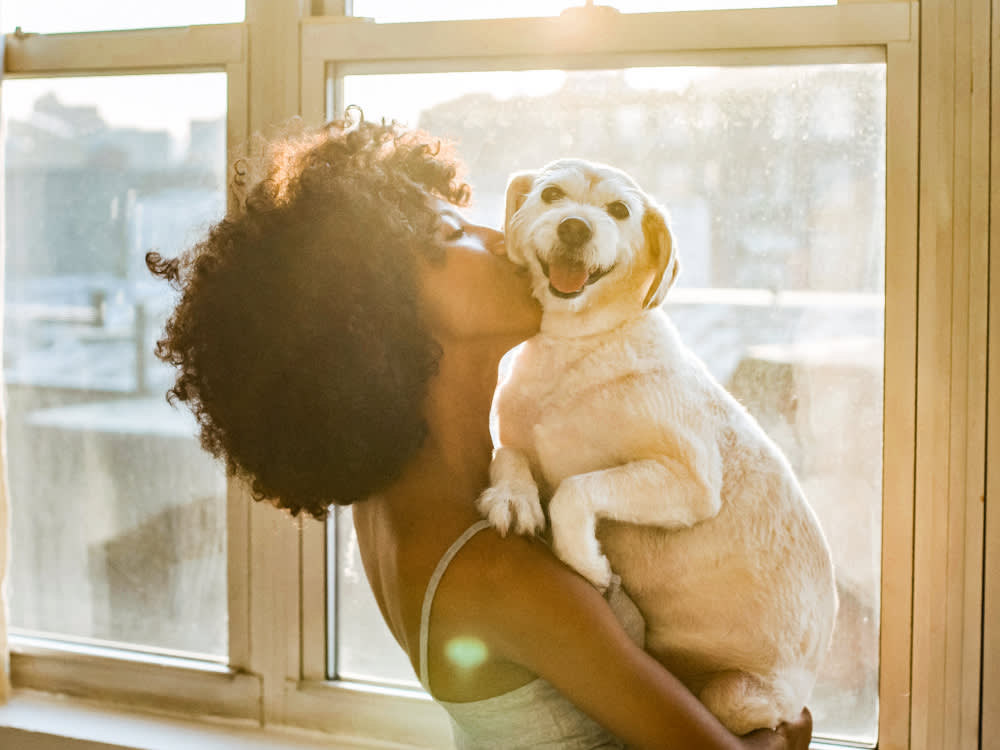
We spend a lot of words on dogs who fall apart when their people leave. We spend almost none on the people who fall apart when they leave their dogs. But that version is real, it is common, and if it describes you, you are in a much bigger crowd than you think. A CertaPet survey found that 47 percent of dog parents experience separation anxiety when they are away from their pets. Nearly half. So let us talk about the anxiety on the human end of the leash for once.
It shows up on a spectrum. For some people it is a low hum of guilt when they run errands. For others it is a hard ceiling on their life: no overnight trips, no vacations, a job scaled back to part-time so the dog is never alone too long. Wherever you land on that range, the point of this piece is not to shame you out of loving your dog intensely. It is to show you the exit, which is quieter and more counterintuitive than “just go on the trip.”
The instinct is to fix your own anxiety by never leaving, but that actually feeds it. The durable fix is to aim the work at your dog instead. Every bit of independence and resilience you build in them chips away at your own fear, because now you are leaving a dog you know can cope. You steady yourself by steadying them.
What it actually looks like in people
There is no single template. Talk to enough owners and every situation is its own thing, shaped by the person, the household, and the particular dog. But one pattern surfaces again and again: one thing goes badly while the owner is out, a dog falls ill at a boarding facility, a sitter never turns up, and the mind fixates on it. From that one bad experience grows a rule: I can never leave again. The anxiety is not irrational. It is a scar.
For others, the tether is the dog’s history. Adopt a dog with a rough past and it is easy to feel you owe them your constant presence, that a promise of the best possible life means never going anywhere without them. That is a loving impulse. It can also quietly shrink your world down to the size of your living room, and it does not necessarily serve the dog either.
The reframe that changes everything
Here is the pivot. You cannot undo whatever happened to your dog before you, and you cannot guarantee nothing will ever go wrong while you are out. What you can do is make your dog more able to handle both. A dog that has been helped toward confidence and flexibility, one that can bend instead of break when the routine wobbles, is a dog you can leave without the same dread.
That is why the most effective thing you can do for your own separation anxiety is not aimed at you at all. Teaching a dog to stand on its own is one of the real kindnesses of good pet ownership. It is also, not coincidentally, the thing that lets you breathe when you close the door. Your calm and your dog’s competence are the same project.
How to actually work on it
Start the day the dog arrives. The moment a dog joins your home, gentle preparation for time apart should begin, for the dog and for you. Short, low-drama absences that steadily lengthen teach a dog that you leaving is boring and reliable rather than a catastrophe. They teach you the same thing.
Don’t pour your feelings into your dog. People who love animals deeply tend to read their own emotions onto them, to assume the dog feels the sadness we feel at the door. Sometimes that is true and sometimes it is pure projection. It is worth checking honestly which one you are dealing with, because a perfectly content dog does not need you to grieve on their behalf, and doing so mostly amplifies your own distress.
Use a departure that has a payoff. A useful first trip away from your dog is one where you gain something that makes leaving feel justified, like attending a training seminar or workshop about dogs. You get to leave for a reason you believe in, your dog gets a normal day at home, and you come back to a happy dog, which is exactly the evidence your anxious brain needs to loosen its grip and try again.
Line up care you actually trust. A lot of the fear lives in the handoff. Vetting a sitter or boarding option thoroughly, and doing a couple of short trial runs first, replaces imagination with data. Once you have seen your dog do fine in someone else’s hands for an afternoon, an overnight stops feeling impossible.
When it is still hard, and that’s okay
Even when you know your dog can handle your absence and is well cared for, saying goodbye can still sting. That does not mean you have failed the assignment. Missing your dog is not a disorder; it is the flip side of a real bond. The goal was never to stop feeling it. The goal was to stop letting it run your life.
If the anxiety is genuinely limiting you, turning down travel, straining your work, keeping you from things you want, it is worth treating with the same seriousness you would treat your dog’s anxiety. That can mean leaning on a professional, whether a behavior consultant to build your dog’s independence or a therapist to work on your side of it. There is no prize for suffering through it alone.
And on the rough days, borrow a trick from the behavior world and be kind to yourself in the most literal way. One renowned trainer, only half joking, swears by a square of chocolate when the missing-them feeling hits hardest. Never underestimate a small comfort. The bigger comfort, though, is the one you build over time: a dog who is fine without you, and a version of you who finally believes it.
Dr. Kohl is a board-certified veterinary dentist with a particular interest in preventive oral care. She reviews all dental health content at The Pet Times and contributes practical guides on home dental routines, professional cleaning, and oral disease prevention.
Meet our experts ↗Keep reading
 Health & WellnessDog Saliva Isn't Dirty. It's Just Brutal on Your Face.Dr. Nina Kohl · 7 min
 LivingThe Kelces Lost Two Wolfhounds in Two Years. That's the Deal With Giant Dogs.Sasha Ford · 6 min
 LivingStare Into Your Dog's Eyes and Your Brains Literally Sync. There's a Catch.Dr. Priya Nair · 5 min
 LivingHer Anxious Dog Became the Best Mental-Health Teacher She Ever HadClaire Sutton · 6 min
 LivingYour Dog Probably Has a Better Social Life Than You. Science Says That's Great for Them.Nina Vasquez · 5 min
 LivingService Dog or Therapy Dog? Almost Everyone Gets This Backwards.Dr. Mara Chen · 7 min