


Your Dog Probably Has a Better Social Life Than You. Science Says That's Great for Them.
A 2025 survey found most people think their dog hangs out with friends more than they do. It sounds like a joke, until you look at the research showing that a dog's social circle may matter more to their health than your income does.
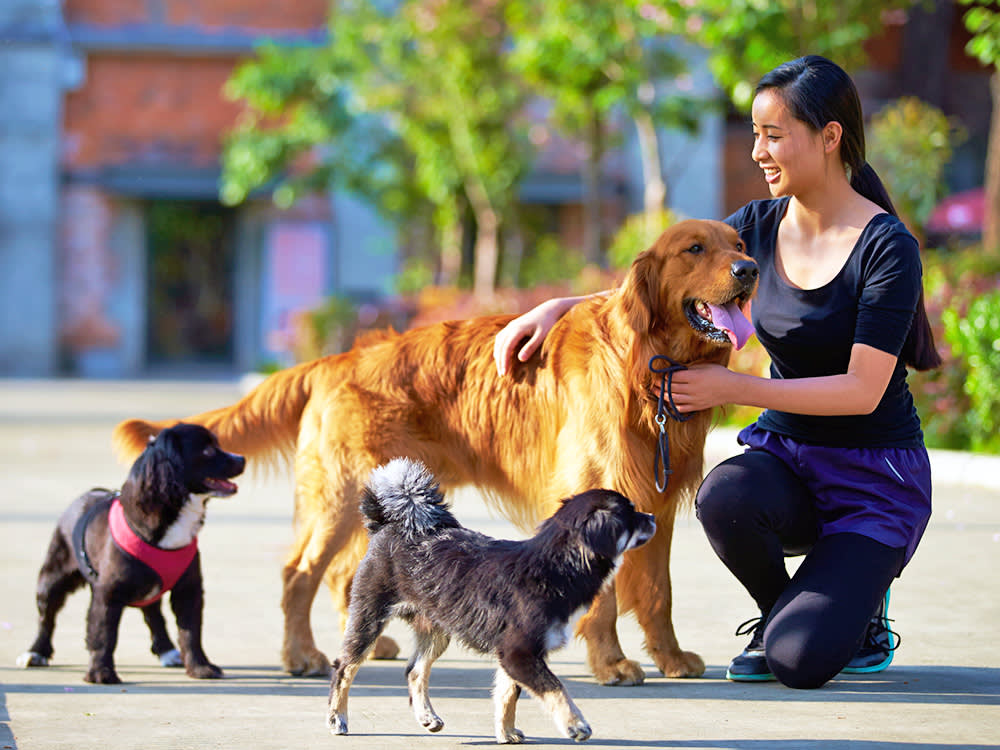
You already suspected it, and now there is a survey to confirm the humbling truth: your dog is more popular than you are. In 2025, a poll conducted by Talker Research found that 63 percent of dog owners think their dog spends more time hanging out with their dog friends than the owner spends with their own human friends. Somewhere between the group walks, the daycare regulars, and the neighbor’s Lab, your dog has quietly built a busier calendar than you have.
It gets more specific, and more charming. In the same survey, 54 percent of owners said they believe their dog has a distinct friend group, and 69 percent said their dog has an actual best friend. This is easy to laugh off as pet parents projecting their own social hopes onto their animals. But the funny part and the serious part are the same part, because it turns out these friendships are not just in our heads, and they are not trivial. They may be some of the most protective things in your dog’s life.
The friendships are real, and so are the benefits
Trainers who watch dogs interact all day will tell you these bonds are genuine. Some dogs form tighter attachments to a specific outside friend than to the dog they actually live with, choosing that buddy, lighting up when they meet, and clearly missing them when they are apart. That is not a person’s imagination. It is a relationship.
And owners feel the payoff secondhand. In the survey, 55 percent said their dog seemed happier for having a social group, 45 percent felt the friendships raised their dog’s overall quality of life, and another 46 percent credited social time with lifting their pet’s wellbeing. The emotional loop runs both ways, too: 83 percent of respondents felt a sense of accomplishment watching their dog make a new friend, and 80 percent felt straight-up joy. Your dog’s social win is your social win.
“People assume dog friendships are cute but basically decorative, and that is exactly backwards,” says Dr. Ravi Mehta. “A dog with a steady social life tends to be a more resilient, better-regulated animal. I would put a couple of good dog friendships in the same category as good sleep and regular exercise, not as a luxury, but as part of a healthy life.”
The part that isn’t a joke: friends may help dogs live longer
Here is where the meme turns into medicine. A dog’s social environment is emerging as one of the strongest predictors of how well they age. Research from the Dog Aging Project, a large community-science study following tens of thousands of dogs, found that a dog’s social connections were associated with better health, and strikingly, that social support appeared to be several times more influential than factors like household income or the owner’s age.
That reframes a walk to the dog park from “nice outing” to “preventive care.” Social connectedness, meaning the quality and quantity of an animal’s relationships, is part of the same web of factors that shapes health in many social species, humans very much included. Dogs are social animals to their core. Isolation is a genuine stressor for them, and companionship is a genuine buffer. The dogs with fuller social lives, the research suggests, tend to be the healthier ones.
What to actually do with this
None of it means your dog needs a packed calendar or an extrovert’s temperament. The goal is not maximum socializing; it is the right amount for your specific dog.
For a social butterfly, protect the friendships they already have. Keep up the regular meetups with the buddy they clearly adore, prioritize walks where they get to greet familiar faces, and treat a trusted daycare or a standing playdate as part of their wellness routine rather than an indulgence. For a shy or introverted dog, resist the urge to force it. A single reliable friend and calm, low-pressure encounters do far more good than a chaotic dog park that leaves them overwhelmed. A dog who would rather people-watch from a bench is not failing at friendship; they just have a smaller circle, and that is completely fine.
The takeaway is oddly freeing. The next time you feel a flicker of guilt that your dog seems to have a livelier social life than you do, let it go. That full little calendar is not a knock on you. It is one of the best things you have given them, and, if the science holds, it may be helping them stick around longer to enjoy it.
What newer research adds
The longevity findings keep getting sharper. The Dog Aging Project analysis, drawing on surveys of more than 21,000 dogs, identified a cluster of social factors, including how much time a dog spends with other animals, that together tracked closely with wellbeing, and it found social support to be a far bigger lever than money. One counterintuitive wrinkle from the same work: households with more children were associated with slightly worse dog health, while dogs living with adults tended to fare better, a reminder that “social life” for a dog means calm, positive companionship, not just a busy, noisy house. As always, if your dog seems newly withdrawn, anxious around other dogs, or off in any way, that is worth a check-in with your vet rather than a trip to a crowded park.
References
- Dog Aging Project. “Social determinants of health and disease in companion dogs: a cohort study from the Dog Aging Project.” Evolution, Medicine, and Public Health, 2023.
- Arizona State University. “For pet dogs, ‘running with the pack’ may be key to healthier living.” ASU News.
Nina Vasquez writes about life at home with pets and the relationships at the heart of it. Her work covers day-to-day living, people-and-pet stories, and the products that fit into a real household, with a warm, grounded take on everyday pet ownership.
Meet our experts ↗Keep reading
 Health & WellnessHer Dog Collapsed on the Sidewalk. What Looked Like a Stroke Usually Isn't.Dr. Ravi Mehta · 8 min
 Health & WellnessMoney Doesn't Keep Your Dog Healthy. Company Does.Dr. Mara Chen · 6 min
 Health & WellnessThe Hardest Part of Your Vet's Job Isn't the Medicine. It's Everything Else.Dr. Amara Solis · 5 min
 Health & WellnessWhether Pet Insurance Covers the Vet Depends on One Question: Why Are You There?Leila Torres · 7 min
 Health & Wellness'You'll Just Know' Is the Cruelest Advice in Pet Care. Ask These 12 Questions Instead.Dr. Lena Park · 10 min
 LivingCharlotte's Two Dogs Are the Most Damning Thing in "Sex and the City"Nina Vasquez · 6 min