
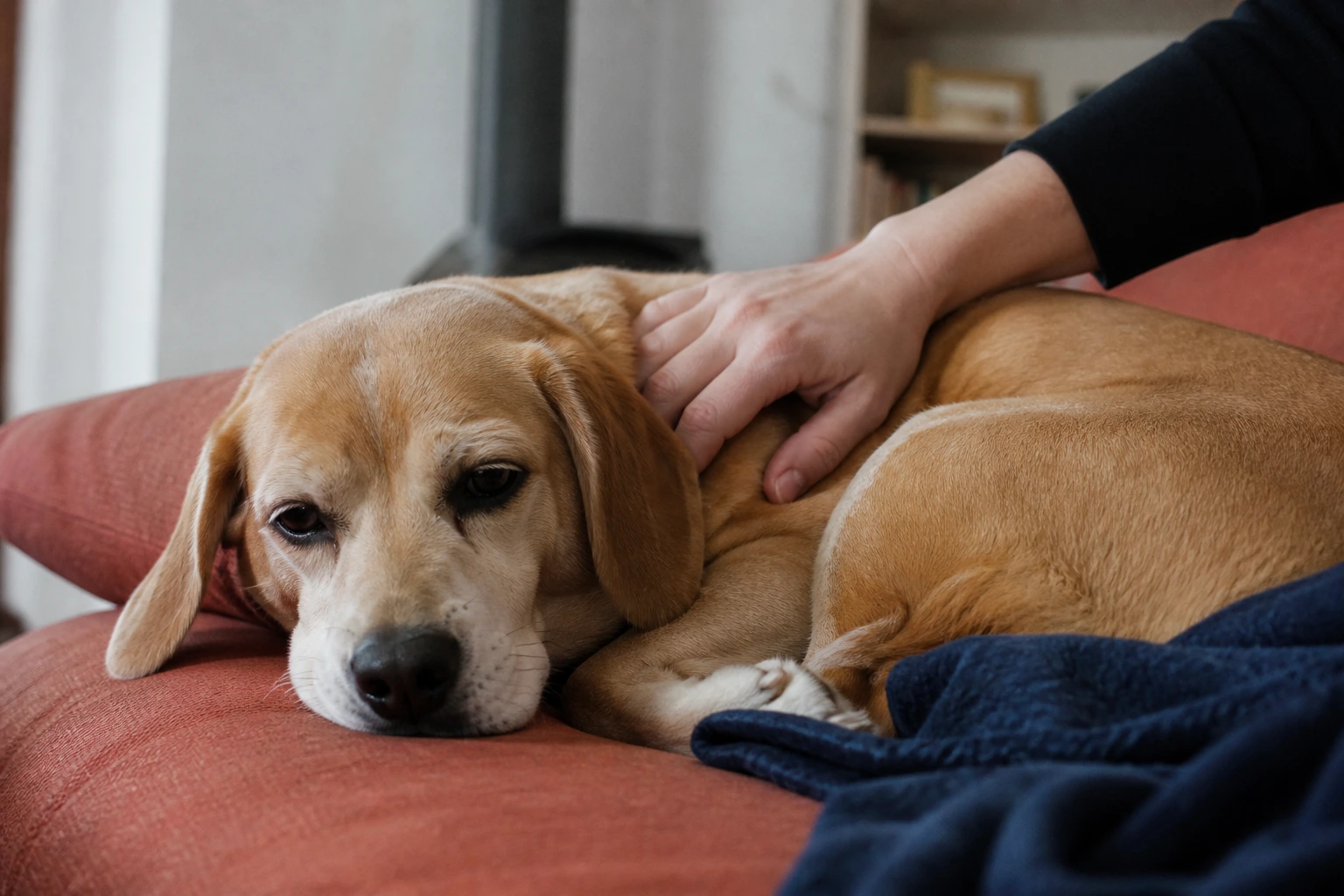
Pepto-Bismol feels harmless because it’s harmless to us. It sits in the cabinet next to the bandages, treats the same upset stomach a dog gets, and comes in a friendly pink. So reaching for it when your dog looks queasy seems reasonable. It isn’t, and the reason is hidden in the ingredient list rather than on the front of the box: Pepto-Bismol contains a close cousin of aspirin, and a dog’s body handles that compound very differently from ours.
That’s the real story here, and it’s worth understanding rather than just memorizing “don’t.” The active ingredient is bismuth subsalicylate. The bismuth part is relatively benign. The subsalicylate part breaks down into salicylic acid, the aspirin-family compound, and that’s where the trouble lives. So the answer to “can I give my dog Pepto-Bismol” is no, don’t do it on your own, and here’s exactly what it does and what to reach for instead.
What the salicylate does inside a dog
Salicylate compounds show up in a lot of human products, aspirin, some topical pain rubs, acne treatments, oil of wintergreen, and the more concentrated they are, the more toxic they are to dogs. In Pepto-Bismol, the salicylic acid can hit a dog on several fronts at once.
It increases the acidity of the blood, a state called acidosis that can cause problems throughout the body, including the brain. It interferes with platelets clumping together, a necessary step in clotting, which raises the risk of bleeding in general. It injures the lining of the stomach and intestines, which can lead to ulcers and bleeding in the digestive tract. And at the severe end, it can damage the liver, causing death of liver cells and serious tissue damage. None of that is a risk you want to take voluntarily to settle a mild stomachache.
The sneaky problem: it hides the very thing it can cause
Here’s the part that makes Pepto-Bismol especially poorly suited to dogs, beyond the toxicity itself. It muddies the picture for your vet.
Bismuth temporarily turns a dog’s tongue and stool black. On its own that’s harmless, if alarming to see. But black, tarry stool is also a classic sign of bleeding in the digestive tract, exactly the complication salicylate can trigger. So if your dog develops a real GI bleed after Pepto-Bismol, the drug may have already blackened the stool, making it hard to tell a dangerous bleed from a harmless color change without extra testing. On top of that, bismuth shows up on an X-ray looking like a metal foreign object, so if your vet needs imaging to find the cause of vomiting or diarrhea, Pepto-Bismol can obscure the read. It can also interact badly with other medications a dog may be on, including certain antibiotics, blood thinners, and antacids like omeprazole.
“The reason I steer owners away from it isn’t only the salicylate, it’s that the drug erases the clues I need,” says Dr. Ravi Mehta. “It paints the stool black and lights up like metal on an X-ray. So even when a dose doesn’t hurt the dog directly, it can cost us the diagnosis when things go sideways.”
How much is too much
There’s no clean universal number, because it depends on the dog’s weight and how much was consumed, and smaller dogs react to much smaller amounts. As a sobering benchmark, a single 262 mg tablet can be enough to cause side effects in a 10-pound dog. The effect is also cumulative: even a low, “safe” dose given for several days running can let the toxins build to a level that causes problems. Because that buildup is hard to predict, the cleanest choice is to skip Pepto-Bismol at home entirely and use safer options.
There is a narrow exception. Vets do sometimes prescribe bismuth subsalicylate for specific conditions, like certain bacterial infections of the digestive tract, at a carefully calculated dose and under supervision. That’s a different situation from you dosing it from the medicine cabinet. And it is never appropriate for pregnant or nursing dogs or young puppies, where the salicylate toxins can accumulate and harm the developing or nursing young.
What actually helps at home
For a mild upset, an active dog that’s still eating and generally acting fine, several gentle steps beat the pink bottle.
Try a bland diet. Plain, skinless white-meat chicken with boiled white rice, no butter, oil, salt, or seasoning, is easy on the gut. Start with small meals, about a quarter of the normal portion, spread through the day, and skip treats, chews, and table scraps. If things improve over a day or two, gradually mix the regular food back in. Add a probiotic your vet recommends to help restore healthy gut bacteria, quality varies a lot between products, so ask rather than guessing. And if you can, bring a stool sample to your vet to check for intestinal parasites, a simple, non-invasive test that often explains a stubborn case.
These are for mild cases only. If your dog isn’t eating, is lethargic, or shows any other unusual signs, head to the vet, delaying is risky when a pet is already sick, and dogs that stop eating can dehydrate quickly, which snowballs into bigger problems.
If your dog already got into it
If your dog has had a few doses, or chewed through a box or bottle, contact a pet poison hotline and your veterinarian right away, they’ll help calculate whether the amount is toxic for your dog’s weight. If you catch your dog in the act of eating a large amount or within minutes of swallowing it, go straight to an emergency clinic so treatment can start immediately.
What’s new since this was written
Veterinary opinion has drifted further from Pepto-Bismol, not toward it. As recently as late 2025, the American Kennel Club’s chief veterinary officer said he rarely recommends it for dogs, singling out the same two problems that make it a poor home remedy: the salicylate’s bleeding risk, and the way bismuth-blackened stool can mask a gastric bleed and delay its detection. That’s the mainstream position now, not a cautious outlier.
There’s also more clarity on the alternatives. For dogs that genuinely need a bismuth product, a veterinary-formulated and labeled option (such as Corrective Suspension) exists so dosing isn’t guesswork, and for acid-related stomach issues, vets may reach for a drug like famotidine (Pepcid) under guidance rather than the human pink bottle. The theme is consistent: if a dog’s stomach needs medicating, it should be a vet’s call and a vet’s product, and the first line at home is still food rest, a bland diet, and a probiotic.
This piece covers a medication safety topic. It’s general information, not a substitute for your veterinarian, who can weigh your specific dog’s size, history, and other medications.