


I Thought I Was Caring for My Cat. Lockdown Showed Me It Was the Other Way
During the pandemic, my orange cat turned into a mama's boy and I turned into a 6 a.m. person. Somewhere in that quiet year I realized which of us had actually been doing the caretaking.
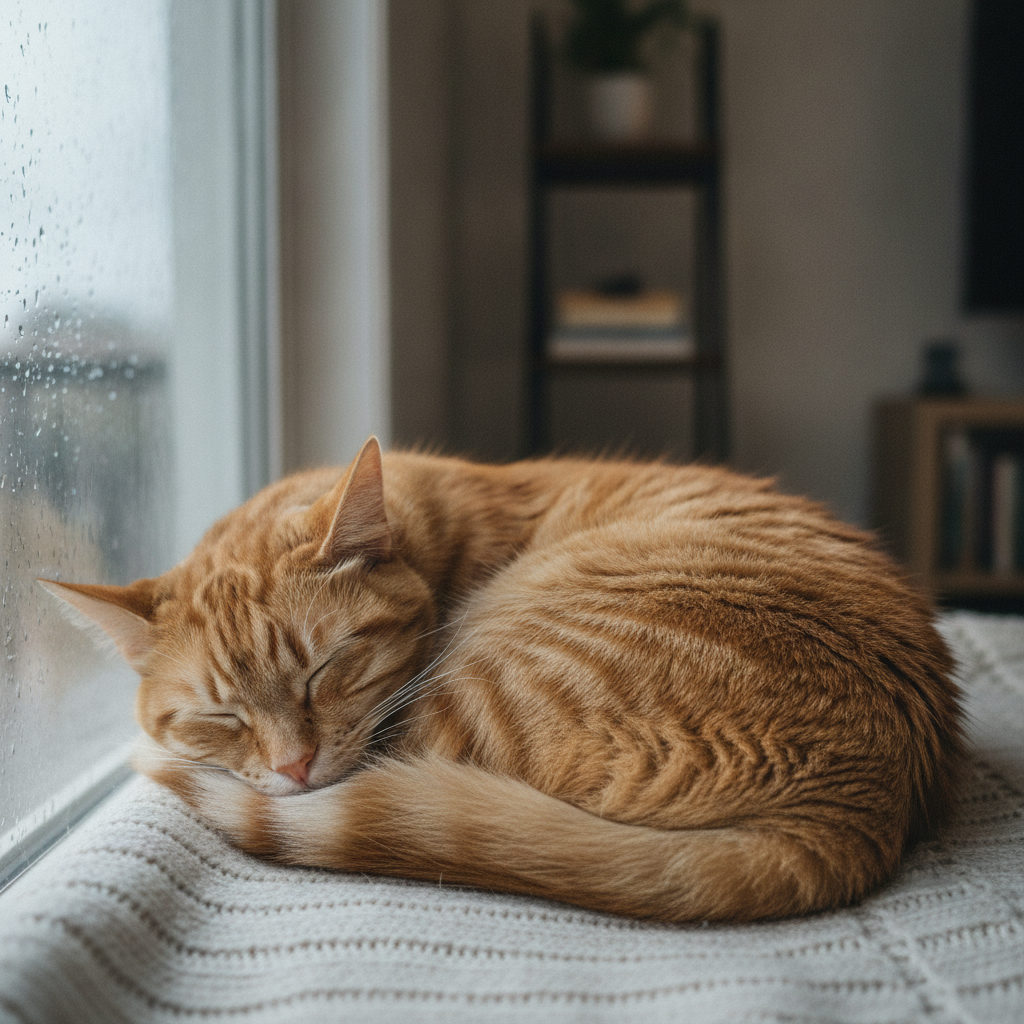
For most of the years I lived with my orange cat, I thought of myself as the caretaker. I bought the food, cleaned the box, booked the vet visits, did all the visible, dutiful things you do for an animal who cannot do them for himself. Then the world shut down, my apartment went silent, and in that stillness I finally noticed the current running the other direction. He had been taking care of me the whole time. Lockdown did not create that. It just cleared away everything that had been hiding it.
The thing I mistook for him needing me
It started with the mornings. Somewhere in late 2020 I became a genuinely early riser, the kind who feels a faint, absurd moral superiority about watching the sun come up. I still cannot fully explain how 6 a.m. became normal, except that my cat was involved.
He seemed to sense consciousness returning to me before I had opened an eye. He would be sitting on my side of the bed in his regal pose, tail curled around his paws, inches from my face, and then I would feel his paw settle on my cheek, my nose, my mouth, nudging me toward the day. If I cracked my eyes open I could see the paw trembling as it neared me, as though the softness of it took more control than an ordinary swipe would.
For years I read that as a demand. He wants breakfast. He wants me up. And sure, he wanted breakfast. But what I did not clock until the apartment emptied out was what came after the wake-up: he would follow me to the kitchen, settle at my feet on the window seat while I drank my coffee in the quiet, and simply stay. That was not a cat collecting a service. That was a cat keeping me company through the loneliest hour of a lonely year. I had been calling it “he needs me” when it was closer to “he is here for me.”
What the quiet revealed
Strip away commutes, offices, plans, and other people, which is exactly what 2020 did, and you are left alone with whoever is actually in the room with you. For me that was a cat, and with nothing else competing for my attention, I started seeing him clearly.
I saw that when the living room became my de facto office, he installed himself as a deeply unproductive coworker, draping along the back of the couch directly behind my neck until I leaned back without looking and rested my head on him. I saw that in every genuinely bad moment of that year, a spike of anxiety, a wave of grief, a stretch of illness, he was somehow already within arm’s reach, as if he had gotten there first. I used to wonder whether he could feel my pandemic dread and was trying to blunt it, or whether he was just angling for nap-time pets. I have stopped needing the question answered. The effect was the same either way: his presence was regulating me.
None of this is unique to me, which is part of why it is worth saying out loud. The lockdown years produced a wave of people discovering, or rediscovering, how much their animals were holding them together, and researchers who studied pet owners through that period kept finding the same thing, that for many people companion animals were a real source of emotional support and a buffer against isolation during the pandemic. I had assumed I was the sturdy one in our little household. The evidence, in my apartment and apparently in a lot of others, said the sturdiness ran both ways.
The mama’s-boy turn
There is a small comedy to how our roles rearranged. I had always half-joked that my cat preferred my husband, that he was, frankly, a little sexist about it. But with the three of us suddenly home all the time and the days blurred into one long shared shift, he became, unmistakably, a mama’s boy. As I crept earlier and earlier into the mornings and my husband drifted later into the nights, the cat became the connective tissue between our schedules, the shared third roommate we both narrated and doted on.
He earned his place as the center of every inside joke. Dancing in the living room one day, I learned that to him those motions were indistinguishable from a threat; he meowed at me in frantic alarm, and that is how we determined, with total confidence, that my cat hates dancing. He was perpetually camera-ready, forever trying to out-cute himself, which made him ideal material for the posts that, for a while, felt like our only thread to the world outside the door. He was not just tolerating the strange year. He was, in his way, hosting it.
The math I finally did
At some point that year we crossed a milestone that only means something from a human vantage point: he turned five, which works out to roughly 36 in cat-to-human math. Just like that, the little guy we had adopted from a rescue was, technically, older than us. I turned that over a lot as the days shortened and we rode out wave after wave, because being that close to him, constantly, for months, made me do a kind of arithmetic I had always avoided. If he was aging in years I could count on one hand, then the caretaking he had been quietly doing for me had an expiration date I would almost certainly outlive.
I can picture the specific absences already. Leaning my head back against the couch and finding no warm weight there. Catching the first light of a silent morning with no soft snore beside me as its soundtrack. Wondering whether I will still wake at dawn at all, once the reason for it is gone.
And then I remember the reframe this whole strange year handed me. I spent years thinking of myself as the one taking care of him. It turns out the truer version, the one lockdown finally made me see, is that we were taking care of each other, and that he may have been better at it than I was. That is not a sad thought, exactly. It is a grateful one. In a year when nearly everything felt out of place, the one steady thing was a cat who had been looking after me all along, and who let me finally notice.
Nina Vasquez writes about life at home with pets and the relationships at the heart of it. Her work covers day-to-day living, people-and-pet stories, and the products that fit into a real household, with a warm, grounded take on everyday pet ownership.
Meet our experts ↗Keep reading
 LivingA Video Game Studied Cats Harder Than Most Cat Owners DoSasha Ford · 6 min
 LivingCan Cats Sense When Death Is Near? Inside the Mystery of Oscar the CatTom Hadley · 7 min
 LivingShe's Cut Her Cat Into 37 Surreal Portraits. He Couldn't Care Less.Claire Sutton · 5 min
 LivingYour Cat Picks the Foot of the Bed on Purpose. Here's the LogicClaire Sutton · 6 min
 LivingHow Many Cats Is Too Many? Vets Say You're Asking the Wrong Question.Nina Vasquez · 7 min
 LivingHer Cat Has a Meow for Everything. It Rewired How She Makes Music.Jordan Ellis · 4 min