


Your First Instinct Will Lose Your Lost Dog. Do This Instead.
When your dog goes missing, every nerve tells you to run out and chase. That's the mistake. A rescue expert's playbook for the first frantic hours, built around how a lost dog's brain actually works.

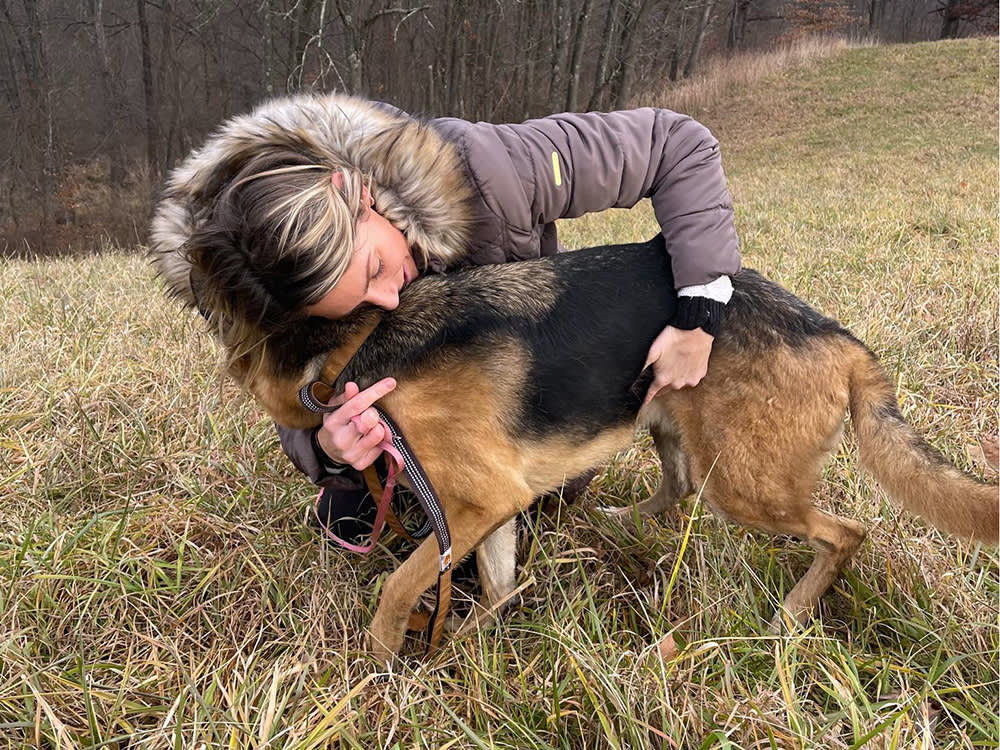
A missing dog triggers pure panic, and panic wants you to do one thing: grab your shoes and go tear through the neighborhood shouting their name. Almost everything about that instinct is wrong. Lost dogs, especially frightened or newly adopted ones, drop into survival mode, and a pack of well-meaning humans crashing through the bushes reads to a survival-mode dog as a threat to flee, not a rescue to run toward. The dogs who get home fastest belong to owners who stay calm, work a system, and fight the urge to chase.
Below is that system, adapted from the search-and-recovery pros who do this for a living. Move fast, but move smart.
The 10 steps to take the moment your dog goes missing
1. Act immediately, and drop the assumptions. The sooner you start, the better your odds. Stay calm and focused, and resist two panic-conclusions that waste time: do not assume your dog will simply wander home on their own, and do not assume they were stolen. Both send you down the wrong path.
2. Search your own property thoroughly first. Before you cover the neighborhood, rule out that your dog is hiding nearby, frightened and silent. Check bushes, the garage, under the car, and any den-like nook. Carry a leash and treats while you look. If your dog bolted through an electric fence, switch the fence off so they can cross back into the yard safely.
3. Recruit your neighbors as eyes, not searchers. Ask them to check their own yards, porches, and garages, and, crucially, to review any home security or doorbell-camera footage. A Ring clip can pin down a direction of travel in seconds.
4. Tell those neighbors not to go out hunting. This is the counterintuitive core of the whole plan. Well-meaning searchers roaming the streets tend to frighten a lost dog further into hiding or drive them farther away. The job is not to find the dog by force. It is to get sighting calls coming in so you can track the dog’s movements. If someone does spot your dog, they should crouch or sit still, look away rather than at the dog, and gently lob a few treats off to one side to coax it closer, never chase.
5. Make a flyer that works. Use large type and print at least 250 copies in color to start. Include a clear, full-body photo, plus your phone number and the words “Do Not Chase” in bold type. Post them within about two or three miles of the spot where your dog vanished, facing the direction of traffic, stapled at all four corners, and slipped into plastic sleeves against the rain. Turn your car into a moving billboard with posters on the windows. Blanket pet stores, groomers, dog parks, daycares, transit stops, schools, gas stations, and parking lots, and hand flyers directly to parks staff. One legal note: never put flyers inside mailboxes, that is a federal offense. Go door to door or use newspaper boxes instead.
6. Alert the authorities in a wide radius. Call animal control, police, vets, and shelters within about a 20-mile radius, then visit in person with flyers. Give them your dog’s microchip number and ask them to scan and verify any dog matching your description. Call highway departments in nearby towns too; if the worst happens and a dog is struck by a car, road crews are often the ones dispatched, so they may have information.
7. Bait the escape point with something irresistible. Leave familiar items, bedding, a favorite blanket, food and water bowls, near where your dog got out, along with strong-smelling food. Think hot dogs. A scent trail toward home helps a dog choose to stay close during those critical first 48 hours.
8. Keep your phone on you, 24/7. Sighting calls can come at any hour, and a dog wearing an ID tag or carrying a microchip may get you one quickly. Keep a notebook handy to log every call with the date, time, exact location, and direction of travel.
9. Post everywhere online, with a photo. Facebook, Nextdoor, your local Ring neighborhood feed, and lost-pet alert services all multiply your reach. Always include a clear photo. Paid alert services like Lost My Doggie can push emergency notifications to your area.
10. Run your dog’s face through Petco Love Lost. This is the modern step the old playbooks miss, and it belongs near the top of your list. Petco Love Lost is a free national database that uses facial-recognition technology to match a photo of your missing dog against found-pet and shelter listings across the country. Upload one clear photo and it scans automatically, so you are not manually calling every shelter in the region. (More on why this one matters below.)
When the sighting calls come in
Every call is data. Write each one in your log book with the caller’s name and number, then ask simple, specific questions: Where exactly did you see the dog, or what landmark were they near? When? Can you describe them, and if there was a collar, what color? What was the dog doing, running down a road, playing, lying down? Were they in the road, a yard, or moving in a particular direction, and if so, coming from where and headed where? After each call, plot the sighting on a map, paper or satellite, so you can read the dog’s direction of travel over time.
When you actually see your dog
Here is the part that breaks every owner’s heart and instinct: do not expect your dog to recognize you, and do not run to them. A lost dog in survival mode, particularly a newly adopted rescue, often does not recognize their own person. Sprinting toward them to scoop them up is the surest way to send them bolting again.
“When people finally spot their lost dog, the love takes over and they run, and that is exactly when they lose them for a second time,” says Dr. Lena Park. “A frightened dog isn’t being stubborn, they’re in survival mode, running on instinct. Get low, look away, and toss treats to the side. Let the dog come close enough to smell you and remember who you are. Do not reach for them until you’re certain you can clip a leash without a chase.”
Should they accept the treats, they may not recognize you until they are close enough to catch your scent, so hold still and wait until you are completely sure you can clip a leash before you move. For a newly adopted dog that does not yet trust you, the right call is to bring in a professional trapper working in your area rather than risk driving them off.
What’s new since this was written
The single biggest change in finding lost pets is technology that did not exist for most of the era these tips were written in. Petco Love Lost launched its free, facial-recognition-powered national database in 2021, and it has since helped reunite more than 250,000 pets with their families, one reunion roughly every four minutes. The software compares your uploaded photo against found and shelter listings by size, color, coat, and facial features, dramatically compressing the days of manual shelter-checking the classic playbook relies on. It costs nothing, works from your phone, and should be one of the very first things you do, right alongside searching your own yard. Pair it with the low-tech fundamentals above, flyers, sighting logs, and the discipline not to chase, and you have given yourself the best possible shot at a happy ending.
References
- Petco Love Lost. “Report and Search Lost and Found Pets.” petcolove.org
- American Society for the Prevention of Cruelty to Animals. “Five Tips to Find a Lost Pet.” www.aspca.org
- American Veterinary Medical Association. “Microchipping of Animals.” www.avma.org
Not a substitute for your vet. Our guidance is educational. For urgent symptoms, contact a vet or emergency clinic right away. Editorial standards
Marcus Webb writes about the gear, gadgets, and everyday choices that make life with a pet easier. His coverage runs from product picks to training and the causes worth paying attention to, always with an eye on what actually earns a place in your home.
Meet our experts ↗Keep reading
 TrainingYour Dog Is Dreading Halloween. 8 Reasons Why (and How to Help)Dr. Amara Solis · 8 min
 Health & WellnessImodium for Dogs: The Risks, the Dosing, and Why Vets HesitateDr. Ravi Mehta · 6 min
 Health & WellnessIt's Not the Dog Kiss That's Risky. It's What's on the Tongue and Who's Getting Licked.Dr. Nina Kohl · 5 min
 TrainingYour Dog Hates These 8 Smells. Some of Them Can Actually Hurt Them.Dr. Amara Solis · 7 min
 Health & WellnessYou Can't Fix a Bleeding Dog at Home. You Can Win Them the Drive to the Vet.Dr. Ravi Mehta · 6 min
 Health & WellnessThe Underwear Isn't the Joke. The Surgery Is.Dr. Lena Park · 7 min