


Imodium for Dogs: The Risks, the Dosing, and Why Vets Hesitate
Imodium is a go-to for human diarrhea, but is it safe for dogs? Learn the breed risks, side effects, weight-based dosing, and when a vet might actually prescribe it.

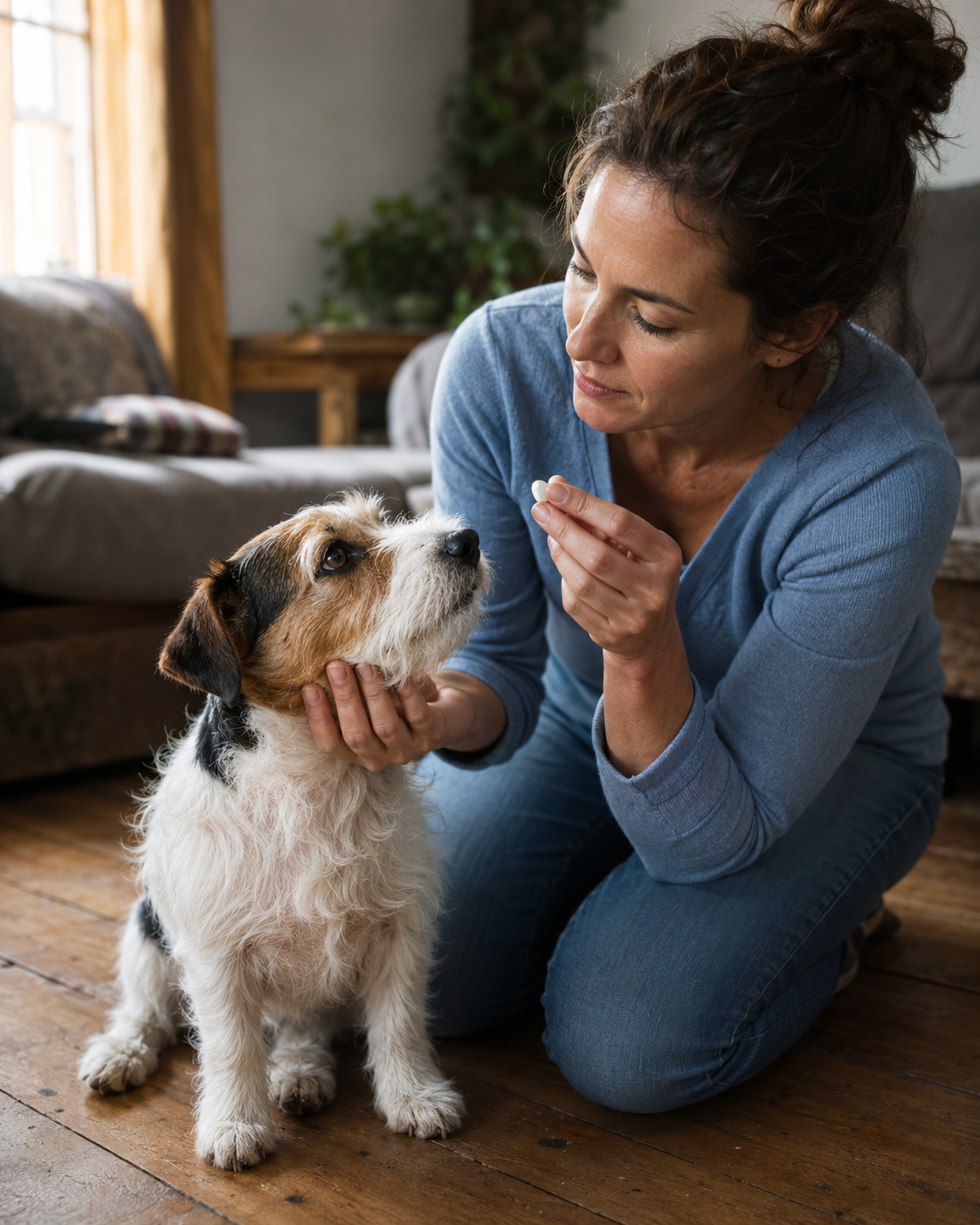
Diarrhea is one of the most common reasons dogs end up in the exam room, and right behind it comes one of the most common questions owners ask: “Can I just give my dog Imodium?” Imodium is a household staple for occasional diarrhea in people, along with the gas and abdominal cramping that come with it. But whether it’s safe for a dog is genuinely a case-by-case matter, and the answer is often no. Here’s what to weigh on risks, dosing, and when a vet might actually reach for it.
What Imodium is
Imodium (loperamide) is the brand name for an over-the-counter drug that treats diarrhea in people. It works by slowing movement through the gut, which reduces intestinal contractions. With things moving more slowly, the body absorbs more liquid and nutrients, so stool firms up and trips to the bathroom drop off.
Is Imodium safe for dogs?
In general, loperamide is not the first drug most veterinarians reach for when a dog has diarrhea, and there are good reasons for that caution.
The risks and side effects
Acute diarrhea in dogs has many possible causes: dietary indiscretion (raiding the garbage or eating some mystery substance off the sidewalk), parasites, viral or bacterial infections, and food sensitivities or allergies, to name a few. That variety matters, because with certain infections, Imodium can actually make things worse by trapping the offending organism and prolonging the illness. This is exactly why it’s worth investigating the cause with your vet before reaching for a bottle.
There’s also a serious genetic concern. Some breeds carry a mutation in the MDR1 gene that can cause severe or even life-threatening reactions to common drugs, including Imodium. The breeds most affected are Collie types and other herding dogs, such as Australian Shepherds.
In dogs that can take it, the most common side effects are salivation, constipation, bloating, and sedation. The recurring theme: check with your vet before giving any over-the-counter medication.
Toxicity and the breeds to avoid
Dogs with MDR1 gene mutations (Collies and herding breeds) should avoid this drug entirely. Even setting that aside, Imodium isn’t commonly prescribed for acute canine diarrhea, given both the breed risk and the side-effect profile.
When a vet might actually prescribe it
There are specific scenarios where Imodium has a role. It’s sometimes used to manage chemotherapy-induced diarrhea in dogs, and it may help with non-infectious, intractable diarrhea, meaning diarrhea that hasn’t responded to diet changes or other approved therapies.
Is Imodium AD safe for dogs? Imodium AD (loperamide) can be used in healthy dogs with intractable, noninfectious diarrhea, though again, it’s not the first choice. Often diarrhea responds to a probiotic and a short-term switch to bland food. Imodium AD carries the same risks as regular Imodium, including sedation, bloating, constipation, and hypersalivation, and the same serious sensitivity in certain Collie and herding breeds.
Is baby Imodium safe for dogs? Baby Imodium (loperamide) should be avoided because of its artificial flavors and coloring. It occasionally contains artificial sweeteners, which can be toxic to dogs even in small amounts.
Is Imodium safe for pregnant dogs? Safety in pregnancy hasn’t been established, so it should not be used, or used only with significant caution. Loperamide passes into human breast milk in small amounts, so it should be avoided or used cautiously in nursing dogs and their puppies.
Loperamide isn’t a villain, but it’s a blunt instrument. Slowing the gut down is the last thing you want if an infection or toxin is the real problem, and in a herding breed it can be dangerous outright. That’s why I’d rather find the cause first.
Using Imodium for dogs
For a dog with acute diarrhea, a dog-specific probiotic and a bland diet make a sensible first line of treatment. Keep in mind that bland diets aren’t nutritionally balanced and shouldn’t be fed for more than a couple of meals. Often that alone is enough to clear up acute, passing diarrhea.
If your dog has diarrhea plus other signs of illness, such as vomiting, loss of appetite, blood in the stool, or bloating, see your vet to track down the cause. If your dog is otherwise healthy and home treatment hasn’t worked, Imodium can be used short-term for one to two doses to try to reduce the frequency of diarrhea.
Which Imodium is safest?
Plain Imodium (loperamide) is the safest version, but it should still be used with caution. Certain breeds, including Collies and herding breeds, should not use it at all due to their potential sensitivity.
Imodium dosage for dogs by weight
Always consult your veterinarian before giving any over-the-counter drug. Note that these are not FDA-approved doses, and you should avoid them, or use extreme caution, in Collies and herding breeds (such as Australian Shepherds).
- 9.9 to 25 pounds: one milligram
- 26 to 40 pounds: two milligrams
Administer one dose every eight hours for temporary relief of diarrhea. Do not exceed three doses in a 24-hour period, or more than three days of treatment.
Dogs undergoing heartworm treatment
There’s no known information on using Imodium in dogs undergoing heartworm treatment, so consult your vet before giving it.
Monitoring during treatment
Imodium should not be used for more than three days. If clinical signs don’t improve, or they get worse during treatment, call your vet. If your dog develops other signs, such as loss of appetite, vomiting, blood in the stool, bloating, or severe lethargy, seek veterinary care immediately.
What newer research adds
For everyday cases of acute diarrhea in otherwise healthy dogs, current veterinary thinking has moved further toward supportive care rather than reaching for anti-diarrheal drugs at all. Updated practice guidance emphasizes that most uncomplicated cases resolve on their own with a bland diet, probiotics, and fluids, and that routinely “stopping” diarrhea can backfire by keeping pathogens in the gut longer. There’s also broader awareness of MDR1 sensitivity, and inexpensive cheek-swab genetic tests now let owners of herding breeds find out in advance whether their dog carries the mutation that makes drugs like loperamide risky. If you have a Collie, Aussie, or related breed, that test is worth asking your vet about.
Frequently asked questions
Can I give my dog Imodium without consulting a vet?
It’s always wise to check with your vet first. Many practices now offer telemedicine consults if you can’t get your dog in quickly. Imodium can be used safely in some dogs, but in certain breeds it can cause serious or life-threatening side effects.
How long does Imodium take to work in dogs?
Imodium should start working one to two hours after it’s given.
Is it safe to give my dog Imodium for diarrhea?
Although Imodium is safe for some dogs, it’s not the first medication vets reach for. It’s best to consult your veterinarian if your dog has diarrhea, or before giving any over-the-counter medication.
References
- FDA: Loperamide (Imodium) Drug Information
- Merck Veterinary Manual: Pharmacogenomics and the MDR1 (ABCB1) Gene in Dogs
Not a substitute for your vet. Our guidance is educational. For urgent symptoms, contact a vet or emergency clinic right away. Editorial standards
Dr. Mehta is a board-certified veterinary nutritionist who evaluates pet food formulations, ingredient quality, and the science behind dietary trends. He writes and reviews all nutrition content at The Pet Times, including our food rankings and feeding guides.
Meet our experts ↗Keep reading
 Health & WellnessThe Dog-Killing Liver Fluke Just Crossed Into California. The Map Is the Real StoryDr. Ravi Mehta · 5 min
 Health & WellnessYour Dog Drinks From Puddles. There's a Parasite Waiting in Them.Dr. Priya Nair · 7 min
 Health & WellnessThe Most Dangerous Vomit Is the One That Never Comes UpDr. Mara Chen · 8 min
 Health & WellnessThere's an Actual Number for 'My Dog Drinks Too Much Water'Dr. Lena Park · 7 min
 Health & WellnessTylenol Is the 'Gentle' Painkiller That Quietly Wrecks a Dog's LiverDr. Amara Solis · 8 min
 Health & WellnessDistemper Was Nearly Beaten by a Vaccine. It's Creeping BackDr. Priya Nair · 10 min