


The Dog-Killing Liver Fluke Just Crossed Into California. The Map Is the Real Story
A parasite once confined to Texas and the South has reached the Colorado River, and it isn't stopping. Here's why 'this only lives in the South' is no longer a safe assumption, and the freshwater rule that protects your dog anywhere.

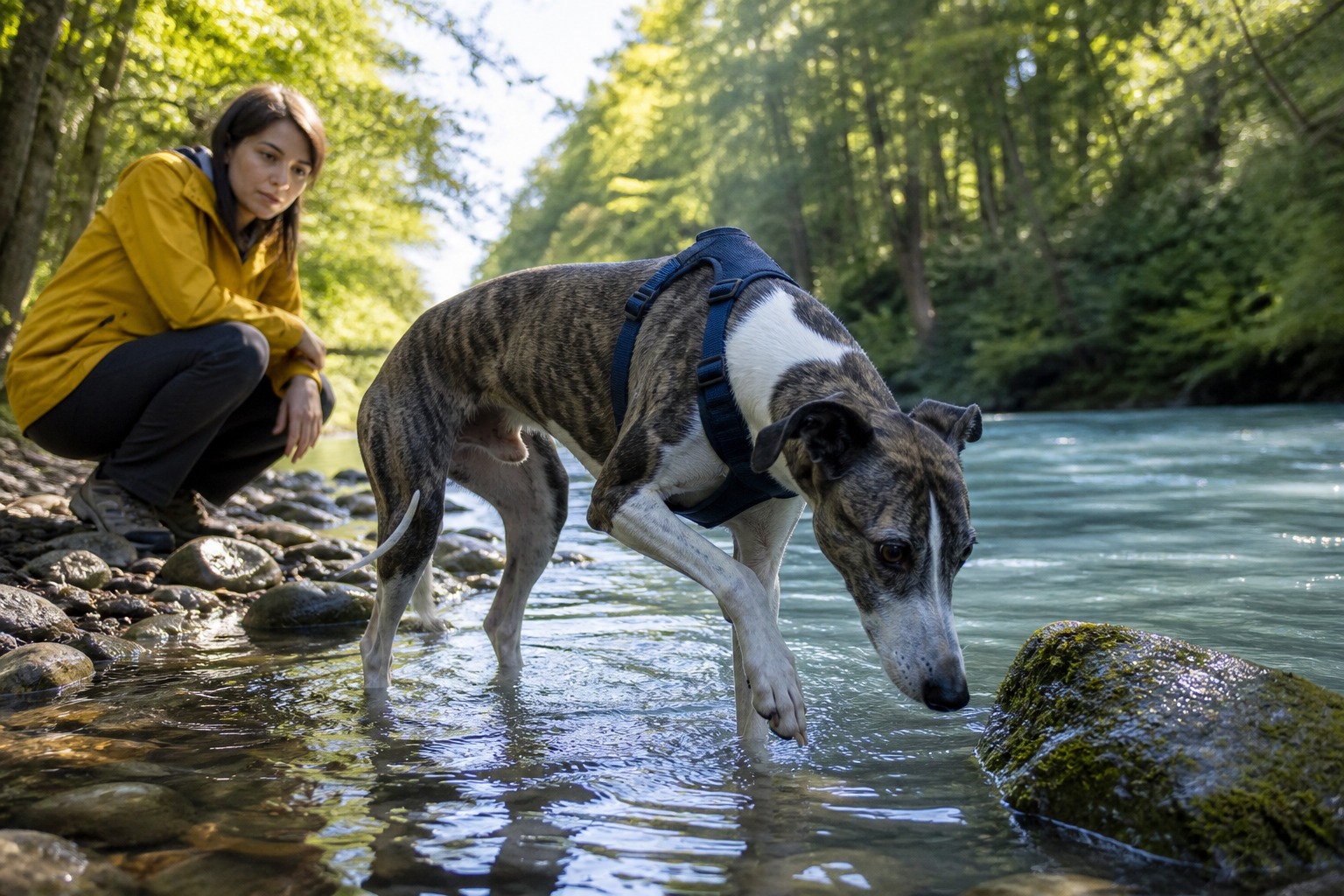
The headline most people saw was local: a deadly dog parasite turned up in California’s Colorado River. The more important story is not the where, it is the trend line. Heterobilharzia americana, commonly called the liver fluke, was for decades a Gulf Coast and Deep South problem. Over the last few years it has been documented marching outward, and the California confirmation, after at least ten Southern California dogs got sick and one died, is the clearest sign yet that its range is no longer where the textbooks say. For dog owners, that reframes the takeaway entirely. This is not advice about one river. It is a reason to rethink how you treat slow, warm fresh water anywhere the parasite is spreading.
What Is H. americana?
The liver fluke is a parasite “endemic to the Gulf Coast and South Atlantic region of North America,” wrote lead author Anil Baniya in a new report published in Pathogens. In recent years, though, researchers have found it in new states, including Indiana, Tennessee, and Utah. The parasite is transmitted by snails and can infect dogs as well as wildlife like raccoons, bobcats, and rabbits. Once inside a dog, it reaches the intestines and releases thousands of eggs, triggering a range of dangerous reactions in the dog’s organs.
“Veterinarians consistently emphasize that H. americana is frequently overlooked in diagnoses and is becoming a growing concern,” Baniya wrote.
Between 2018 and 2023, 11 cases of schistosomiasis, the disease caused by the liver fluke, were reported across three Southern California counties. Five of the dogs showed symptoms including vomiting, weight loss, and diarrhea, according to a report by the LA County Department of Public Health. One of the dogs died.
“Travel history of the infected dogs indicated that before their diagnosis, all 11 dogs had been in the Colorado River,” Baniya wrote.
Based on that, researchers collected over 2,000 snails from the riverbanks and determined that this is likely where the dogs contracted the disease.
Adler R. Dillman, an expert in parasitology, was part of the team that found the flatworm.
“I was super excited to finally provide an answer as to what was happening with those dogs,” Dillman told the LA Times. “We suspected it was this parasite, but once we finally confirmed it, I was jumping up and down with excitement.”
What Pet Parents Should Watch For
Symptoms of schistosomiasis include vomiting, diarrhea, weight loss, increased thirst, and yellowish eyes.
“If your dog has these symptoms after swimming in the Colorado River, it’s a good precaution to ask your veterinarian for a simple fecal test,” Emily Beeler, a veterinarian for the Los Angeles County Department of Public Health, told the LA Times.
The disease cannot spread between dogs and humans or from dog to dog, so unless your dog has direct contact with freshwater sources, there is little cause for concern. Humans can “develop a self-limiting rash after contact with contaminated water sources,” said Sara Strongin, chief veterinarian at the Riverside County Department of Animal Services.
The parasite can be detected through fecal exams or liver biopsies, and if caught early, it can be treated with antiparasitic drugs. According to Strongin, the best prevention is keeping dogs away from freshwater sources like rivers and lakes, and steering clear of the Colorado River in particular for now.
The bigger picture: a parasite on the move
The reason this discovery matters beyond one river is that H. americana is not staying put. Long considered a Gulf Coast and South Atlantic problem, it has in recent years been documented in Indiana, Tennessee, Oklahoma, Arkansas, and Utah, and the California finding pushed it firmly onto the West Coast. The spread did not stop at the state line, either: veterinarians and rescue groups around Parker, Arizona, further up the Colorado River, have since reported infected dogs, confirming the parasite is established along a stretch of the river, not at a single point.
Researchers think a warming climate and the movement of host snails are widening the map. A telling example came out of Utah, where scientists documented the fluke adopting a brand-new species of intermediate snail host, a sign the parasite can adapt to local water systems rather than depending on the single snail species it relied on in the South. The Companion Animal Parasite Council, which tracks parasite risk for veterinarians nationally, now lists canine schistosomiasis as an emerging concern beyond its historic range. The practical lesson is not about one river in one state. It is that “this lives only in the South” is no longer a safe assumption, and dog owners well outside the traditional range should treat slow-moving fresh water with more caution than they used to.
A simple freshwater rule
Since you cannot see the parasite and most clinics do not screen for it by default, the protective move is behavioral. In or near any region where the fluke has been reported, discourage your dog from wading in, swimming in, or drinking from rivers, ponds, marshes, and other slow fresh water, particularly warm, snail-friendly stretches in summer. Carry clean water on hikes so your dog is not tempted to drink from a stream, and rinse a dog that does get into questionable water. The fluke needs that freshwater-and-snail step to complete its life cycle, so denying the exposure is the most reliable prevention there is.
When to call your vet
Because schistosomiasis is so often missed, knowing the threshold for a call helps. Treat it as a same-day vet question if, in the weeks after your dog swims, wades, or drinks from a river, lake, or pond, especially in or near an affected region, you notice any of the following:
- Persistent vomiting or diarrhea that does not resolve in a day
- Noticeable weight loss or a dog who is suddenly drinking and urinating much more
- Lethargy, loss of appetite, or a yellowish tint to the eyes or gums
- Any combination of the above following recent freshwater exposure
“The hard part with this parasite is that the early signs look like a dozen ordinary stomach upsets, so the freshwater history is the clue that should change the conversation,” says emergency veterinarian Dr. Mara Chen. “If you tell your vet the dog was in a river before getting sick, ask specifically whether a fecal test for Heterobilharzia makes sense, because it is not something most clinics screen for by default.” Caught early, the infection is treatable; left to run, it can do permanent organ damage, so the freshwater detail is worth volunteering even if you have to bring it up yourself.
References
- Baniya, Anil, et al. “Canine Schistosomiasis in the West Coast: Heterobilharzia americana in Two Natural Intermediate Hosts Found in the Colorado River, California.” Pathogens, vol. 13, no. 3, 2024. https://www.ncbi.nlm.nih.gov/pmc/articles/PMC10975932/. Accessed June 2026.
- University of California, Riverside, College of Natural and Agricultural Sciences. “Dog-Killing Flatworm Parasite Discovered in New State as Scientists Warn of Spread West.” 14 Mar. 2024. https://cnas.ucr.edu/media/2024/03/14/dog-killing-flatworm-parasite-discovered-new-state-scientists-warn-spread-west. Accessed June 2026.
- Los Angeles County Department of Public Health, Veterinary Public Health. “Heterobilharzia americana in 11 Dogs.” https://publichealth.lacounty.gov/vet/docs/AHAN/AHAN_Heterobilharzia11dogs_04192023.pdf. Accessed June 2026.
- Companion Animal Parasite Council. “Schistosomiasis (Heterobilharzia americana).” https://capcvet.org/guidelines/schistosomiasis/. Accessed June 2026.
- Rodriguez, J.Y., et al. “An outbreak of canine schistosomiasis in Utah: Acquisition of a new snail host (Galba humilis) by Heterobilharzia americana.” Current Research in Parasitology & Vector-Borne Diseases, 2021. https://www.ncbi.nlm.nih.gov/pmc/articles/PMC8254006/. Accessed June 2026.
Not a substitute for your vet. Our guidance is educational. For urgent symptoms, contact a vet or emergency clinic right away. Editorial standards
Dr. Mehta is a board-certified veterinary nutritionist who evaluates pet food formulations, ingredient quality, and the science behind dietary trends. He writes and reviews all nutrition content at The Pet Times, including our food rankings and feeding guides.
Meet our experts ↗Keep reading
 Health & WellnessThere's an Actual Number for 'My Dog Drinks Too Much Water'Dr. Lena Park · 7 min
 Health & WellnessOne Raw Fish Can Kill a Dog in Two Weeks. Most Owners Have Never Heard of It.Dr. Ravi Mehta · 6 min
 Health & WellnessWhat Bit My Dog? Read the Map Before You Reach for the CreamDr. Lena Park · 7 min
 Health & WellnessCooked Salmon Is a Gift. Raw Fish From a Lake Can Kill Your Dog.Dr. Priya Nair · 5 min
 Health & WellnessMud Won't Hurt Your Dog. What's Living In It Might.Dr. Priya Nair · 6 min
 Health & WellnessThe Cutest Thing About Your Flat-Faced Dog Is the Thing That's Suffocating ItDr. Ravi Mehta · 7 min