


Cooked Salmon Is a Gift. Raw Fish From a Lake Can Kill Your Dog.
A parasite-borne infection called salmon poisoning disease is fatal in most untreated dogs, and the risk zone is creeping south out of the Pacific Northwest into stocked California lakes.

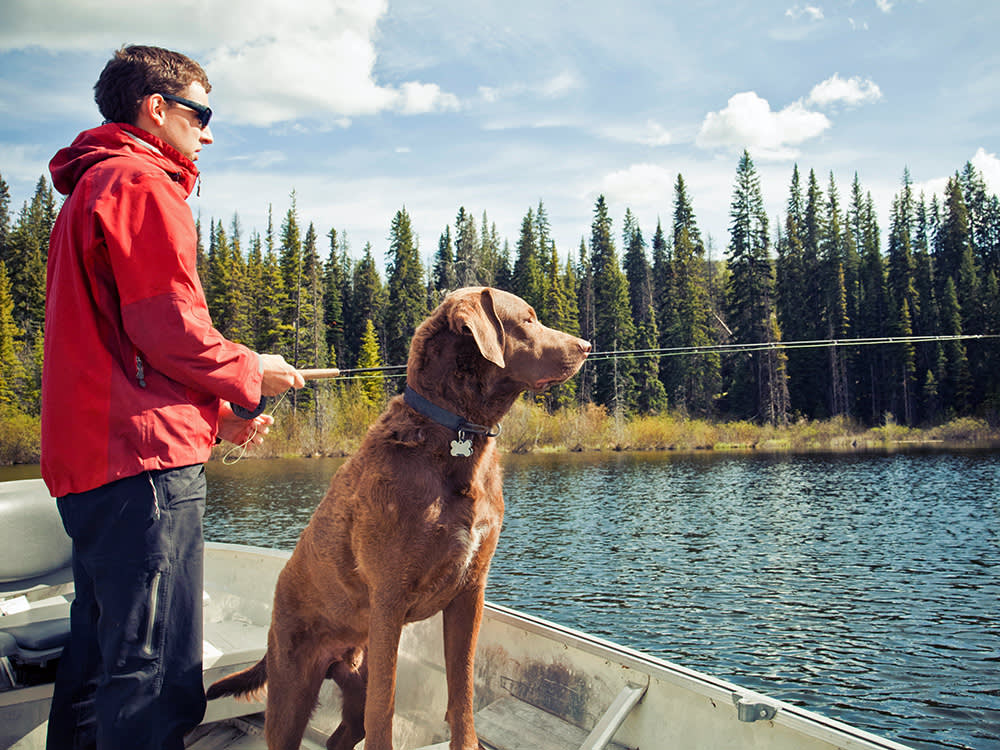
Fish is one of the best proteins you can share with a dog. It is lean, rich in the omega-3 fatty acids that support skin, coat, and joints, and most dogs love it. But there is one preparation that turns a wholesome food into a genuine killer, and the gap between the safe version and the deadly one is nothing more than a hot pan. Cooked salmon is a gift. Raw fish pulled from certain lakes and rivers can be fatal.
The illness in question is salmon poisoning disease, and its name is doubly misleading. It is not a poison, and it is often not even salmon.
What salmon poisoning disease actually is
Despite the name, SPD is an infection, not a toxin. It is caused by a bacterium, Neorickettsia helminthoeca, which hitches a ride inside a parasitic fluke called Nanophyetus salmincola. That fluke lives in salmonid fish, salmon, trout, steelhead, and their relatives, across the Pacific Northwest and its river systems. When a dog eats raw or undercooked infected fish, it swallows the fluke, the fluke delivers the bacteria, and the bacteria trigger a whole-body illness that, left untreated, kills between roughly half and ninety percent of affected dogs within about a week.
Cooking is the entire defense. Heat destroys the parasite and the bacteria it carries, which is why the cooked fish in your dog’s bowl is perfectly safe and the raw fish on a riverbank is not.
It’s mostly trout, and it’s moving south
Here is the part that catches people off guard. In much of California, the culprit is not salmon at all, it is trout, and specifically the trout stocked into local lakes for sport fishing. Those fish are frequently raised on Pacific Northwest fish farms, where the parasite is endemic, and they carry the risk with them into waters where owners don’t expect it.
The clearest recent illustration came in the spring of 2024. In March of that year, an emergency veterinary practice in Pasadena reported four dogs that had become seriously ill with salmon poisoning disease. Each had been exposed to raw fish taken from lakes in Los Angeles, Orange, and San Bernardino counties, well south of the region people traditionally associate with the disease. All four dogs were hospitalized, and all four survived, but the cluster was a warning: the risk zone is not staying politely in the northwest corner of the map. Los Angeles County public health officials issued an advisory urging owners never to feed dogs raw fish caught while sport fishing.
The ways dogs actually get exposed
Eating a whole raw fish is the obvious route, but it is not the only one, and some of the others are easy to miss on a normal day outdoors. Dogs have contracted SPD by:
- eating raw trout or salmon directly, including scraps left by anglers
- digging up and eating raw fish that had been buried as garden fertilizer
- licking or mouthing raw fish
- drinking from a puddle or bucket where raw fish had been rinsed
That last one matters because it means your dog does not have to actually eat a fish to be exposed. Contaminated rinse water is enough.
What it looks like, and why speed matters
Symptoms typically appear five to seven days after exposure and include vomiting, diarrhea, lethargy, fever, and enlarged lymph nodes. Because that window is a week or so, owners often don’t connect a sick dog on Saturday with a fishing trip the previous weekend, which is exactly why this is worth knowing in advance.
The dangerous thing about salmon poisoning is the delay. By the time a dog is clearly ill, several days have passed, and people rarely link it back to a lake. If your dog has been anywhere near raw fish and then develops a fever with vomiting and diarrhea, tell your vet about the fish. That one detail can point us straight at the right treatment.
The good news is that treated promptly, SPD is very survivable. Veterinarians typically pair an antibiotic to clear the bacterial infection with a dewormer to kill the fluke that delivered it, alongside supportive care such as IV fluids and close monitoring. The four Southern California dogs are proof the outcome is usually good, if the dog gets care in time.
The one rule that prevents all of it
You do not need to keep your dog away from water, or fish, or fishing trips. You need one habit: never let your dog eat raw fish caught during sport fishing, and keep them away from discarded fish, fish scraps, and the water used to rinse a catch. Cook any fish you share all the way through. Do that, and salmon stays exactly what it should be, one of the better things you can put in your dog’s bowl.
References
Common questions
What are the symptoms of salmon poisoning disease in dogs?
Vomiting, diarrhea, lethargy, fever, and swollen lymph nodes, usually starting five to seven days after a dog eats infected raw fish. It is a veterinary emergency; untreated, it kills most dogs within about a week.
Is salmon poisoning disease treatable?
Yes, and dogs generally recover well when treated in time. Veterinarians use antibiotics to clear the bacterial infection, a dewormer to kill the fluke carrying it, and supportive care like IV fluids. The key is getting to a vet quickly once symptoms appear.
Not a substitute for your vet. Our guidance is educational. For urgent symptoms, contact a vet or emergency clinic right away. Editorial standards
Dr. Nair is a veterinarian focused on diet and feeding. She covers everyday nutrition, treats, and the many "can they eat this?" questions owners ask, grounding each answer in what is actually safe and sensible for dogs and cats.
Meet our experts ↗Keep reading
 Health & WellnessOne Raw Fish Can Kill a Dog in Two Weeks. Most Owners Have Never Heard of It.Dr. Ravi Mehta · 6 min
 Health & WellnessThe Most Dangerous Vomit Is the One That Never Comes UpDr. Mara Chen · 8 min
 Health & WellnessYour Dog's Cough Has a Sound. Learn to Read It Before You Panic.Dr. Ravi Mehta · 9 min
 Health & WellnessThe CBD-for-Seizures Pitch Is Way Ahead of the ScienceDr. Ravi Mehta · 7 min
 Health & WellnessA Warm, Dry Nose Tells You Nothing. Here's How to Actually Know Your Dog Has a Fever.Dr. Priya Nair · 6 min
 Health & Wellness"The Great Pretender": How Addison's Disease Hides in DogsDr. Ravi Mehta · 8 min