


You Can't Fix a Bleeding Dog at Home. You Can Win Them the Drive to the Vet.
First aid for a bleeding dog isn't about healing the wound. It's about controlling blood loss long enough to get to the people who can. Here's how to do both jobs right.

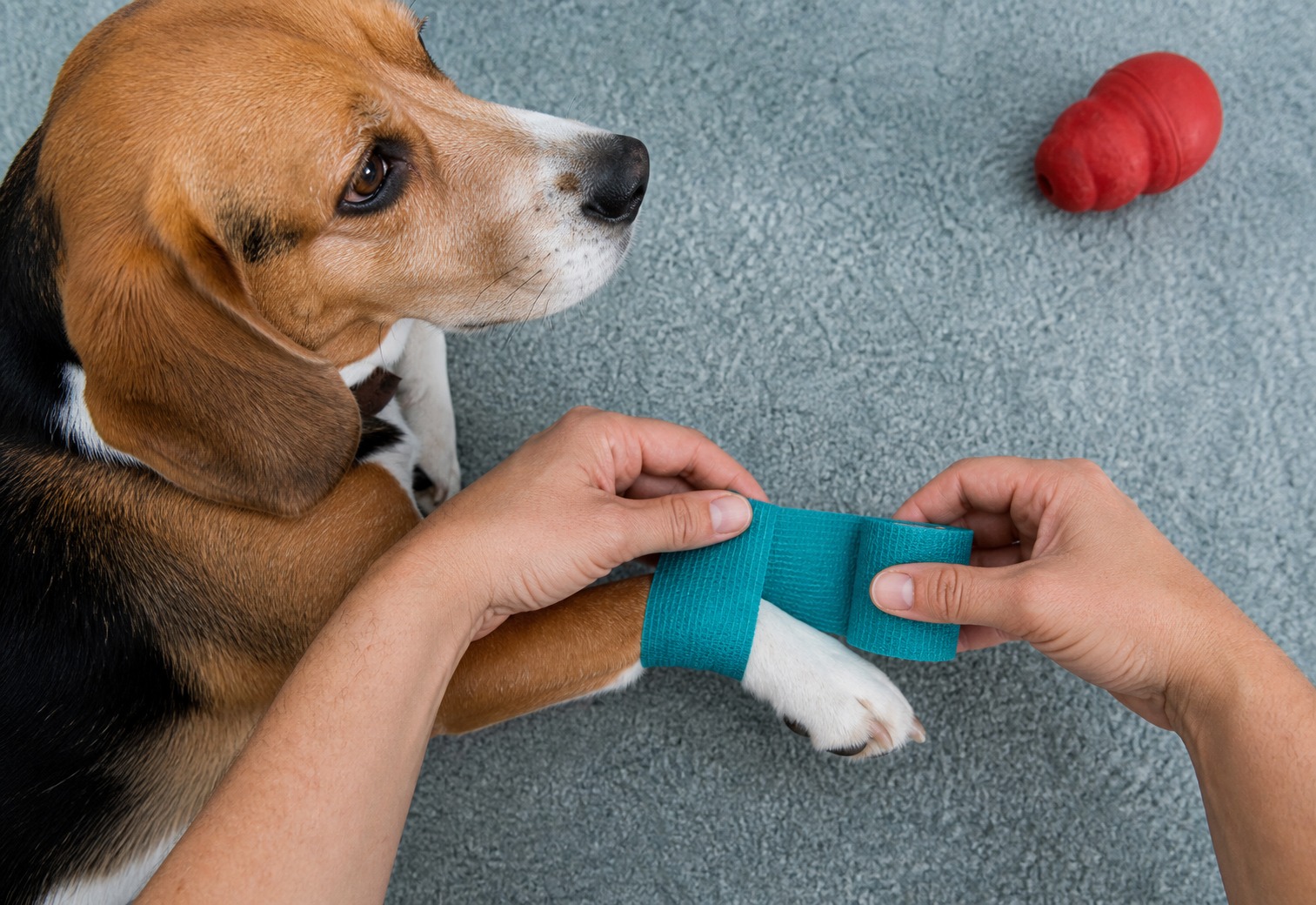
The instinct when you see blood on your dog is to fix it. Stop the bleeding, clean it up, make the red go away. That instinct is half right, and the wrong half can cost you time you do not have.
Here is the reframe that matters. At home, your job is not to heal the wound. Your job is to control blood loss and keep your dog safe long enough to reach someone who can actually diagnose and repair the problem. The blood you can see is often the least of it. Underneath a visible cut there may be broken bones, internal injuries, or a bleeding disorder, and none of that gets solved with a bandage. So think of first aid as buying your dog a safe drive to the vet, not as the treatment itself.
Before you touch the wound: protect yourself
This sounds cold when your dog is hurt and you just want to help. It is the opposite. A dog who cannot get to the vet because their owner got bitten and is now bleeding too is worse off, not better.
Get to a quiet, safe location first. If your dog was hit by a car or attacked, move both of you out of danger before anything else. Put the collar and leash on so a scared, hurting dog cannot bolt into traffic. And be honest about the bite risk. Pain and fear make even the gentlest dog more likely to snap, so if the injury is serious, use a muzzle. If you do not have one, a soft strip of fabric, a tie, or a leash can serve as a makeshift muzzle, as long as it leaves room for normal breathing and panting and you take it off once the moment passes. If your dog is losing blood fast and lunging to bite, do not waste minutes fighting with fabric. Confine them in a crate or wrap them in a thick blanket and get to the clinic, where there are proper tools.
The mistake I see most is a loving owner spending twenty minutes at the kitchen sink trying to make a wound perfect while the real problem goes untreated. Slow the bleeding, keep everyone safe, and drive. We would rather see your dog dripping than see them an hour too late.
Reading the bleeding: how urgent is this?
Not every drop is a crisis, but you need to sort a scrape from a shock situation quickly.
A dog who is up, moving around, wagging, eating, and has bubblegum-pink gums is not in immediate danger from blood loss, and you have a little time to figure out what is going on. A dog who is weak, breathing fast, has a racing heart, pale gums, or who collapses has lost a significant amount of blood and needs emergency care now. Those signs point toward shock, which happens when there is not enough circulating blood to carry oxygen to the brain, kidneys, and gut. Left unchecked, it leads to organ failure. If you see them, skip every other step and drive.
If your dog seems stable but you are finding blood around the house and cannot locate the source, do a calm head-to-toe check. Common places bleeding hides:
- Paws: cut pads, torn or broken nails, and burns.
- Mouth and gums: broken teeth, splinters from chewing sticks, dental disease, or gums that bleed on their own with a clotting disorder.
- Rear end: blood in the stool can smear around the anus and look like the butt itself is bleeding, and a ruptured anal gland abscess can bleed there too.
- Torso: bite wounds and car-accident trauma; even small-looking torso wounds can penetrate and injure organs, so take them seriously.
- Legs: limb wounds can sit over a broken bone, so handle a limping dog with a bleeding leg gently.
- Penis: often actually blood in the urine, from bladder stones, a urinary tract infection, a prostate problem, or occasionally cancer.
- Vagina: an unspayed dog in heat is the common, benign cause, but a serious uterine infection called pyometra causes bloody, pus-filled discharge and is an emergency, and blood in the urine can look vaginal too.
If your dog is unstable at any point, unable to stand, breathing hard, disoriented, stop investigating and go.
Controlling the bleeding, in order
Once you know where it is coming from, the goal on the way to the hospital is simple: slow the loss to avoid shock. Firm, direct pressure on the wound with a clean cloth or gauze, held steadily for five to ten minutes without lifting to check, is the workhorse. Lifting the cloth to peek disrupts the clot you are trying to form, so resist it. Keep your dog as calm as you can, stroking them while you hold pressure, and keep that pressure on during the drive.
The only time home care is the whole job
There is one scenario where you can finish the job at home: a genuinely minor cut that has already stopped bleeding on a dog who is otherwise fine. For those, the sequence is stop the bleeding with pressure, rinse the wound under cool running water to flush debris (trim the surrounding hair if you need to see it), skip alcohol, peroxide, and soap inside the wound, apply a pet-safe antibacterial ointment with clean gauze, and cover with a sterile non-stick pad. Spots that are hard to bandage, like a paw or the belly, are often better left open and cleaned twice a day. Then watch it for a few days. Increasing redness, swelling, or discharge means infection and a call to the vet, and edges that separate may need stitches.
Everything above that bar goes to the clinic.
What’s new since this was written
The best upgrade to home pet first aid in recent years is not a gadget, it is preparation. The American Red Cross offers a Pet First Aid app and in-person and online pet first aid courses, and taking one before an emergency is the single most useful thing on this page, because the techniques are far easier to perform when you have practiced them once than when you are reading instructions with shaking hands.
It is also worth assembling a real first aid kit and keeping it where you can grab it: gauze, non-stick pads, self-adhesive wrap, a muzzle, and your vet’s and nearest emergency clinic’s numbers saved in your phone. None of it heals your dog. All of it buys you the calm, controlled drive that does.
References
- American Red Cross. “Pet First Aid App and Courses.” https://www.redcross.org/get-help/how-to-prepare-for-emergencies/pet-disaster-preparedness/pet-first-aid.html
- American Veterinary Medical Association. “First aid tips for pet owners.” https://www.avma.org/resources-tools/pet-owners/emergencycare/first-aid-tips-pet-owners
- Merck Veterinary Manual. “Emergency Care: Shock and Bleeding.” https://www.merckvetmanual.com/emergency-medicine-and-critical-care
Not a substitute for your vet. Our guidance is educational. For urgent symptoms, contact a vet or emergency clinic right away. Editorial standards
Dr. Mehta is a board-certified veterinary nutritionist who evaluates pet food formulations, ingredient quality, and the science behind dietary trends. He writes and reviews all nutrition content at The Pet Times, including our food rankings and feeding guides.
Meet our experts ↗Keep reading
 Health & WellnessThe Summer Hazards That Actually Land Dogs at the Vet: 10 to WatchDr. Ravi Mehta · 10 min
 Health & WellnessYour Dog Ate Chocolate: The Weight-and-Type Math That Tells You What to DoDr. Ravi Mehta · 7 min
 Health & WellnessOne Raw Fish Can Kill a Dog in Two Weeks. Most Owners Have Never Heard of It.Dr. Ravi Mehta · 6 min
 Health & Wellness10 Memorial Day Hazards an ER Vet Sees Every Single YearDr. Amara Solis · 8 min
 Health & WellnessCooked Salmon Is a Gift. Raw Fish From a Lake Can Kill Your Dog.Dr. Priya Nair · 5 min
 Health & WellnessBromethalin Is the Rat Poison That Looks Harmless for Days, Then Isn'tDr. Amara Solis · 7 min