


Bromethalin Is the Rat Poison That Looks Harmless for Days, Then Isn't
Bromethalin has no antidote and two very different faces: a fast convulsant crisis and a slow paralysis that can show up days later. Here is why a dog who 'seems fine' is the most dangerous case, and exactly what to do.

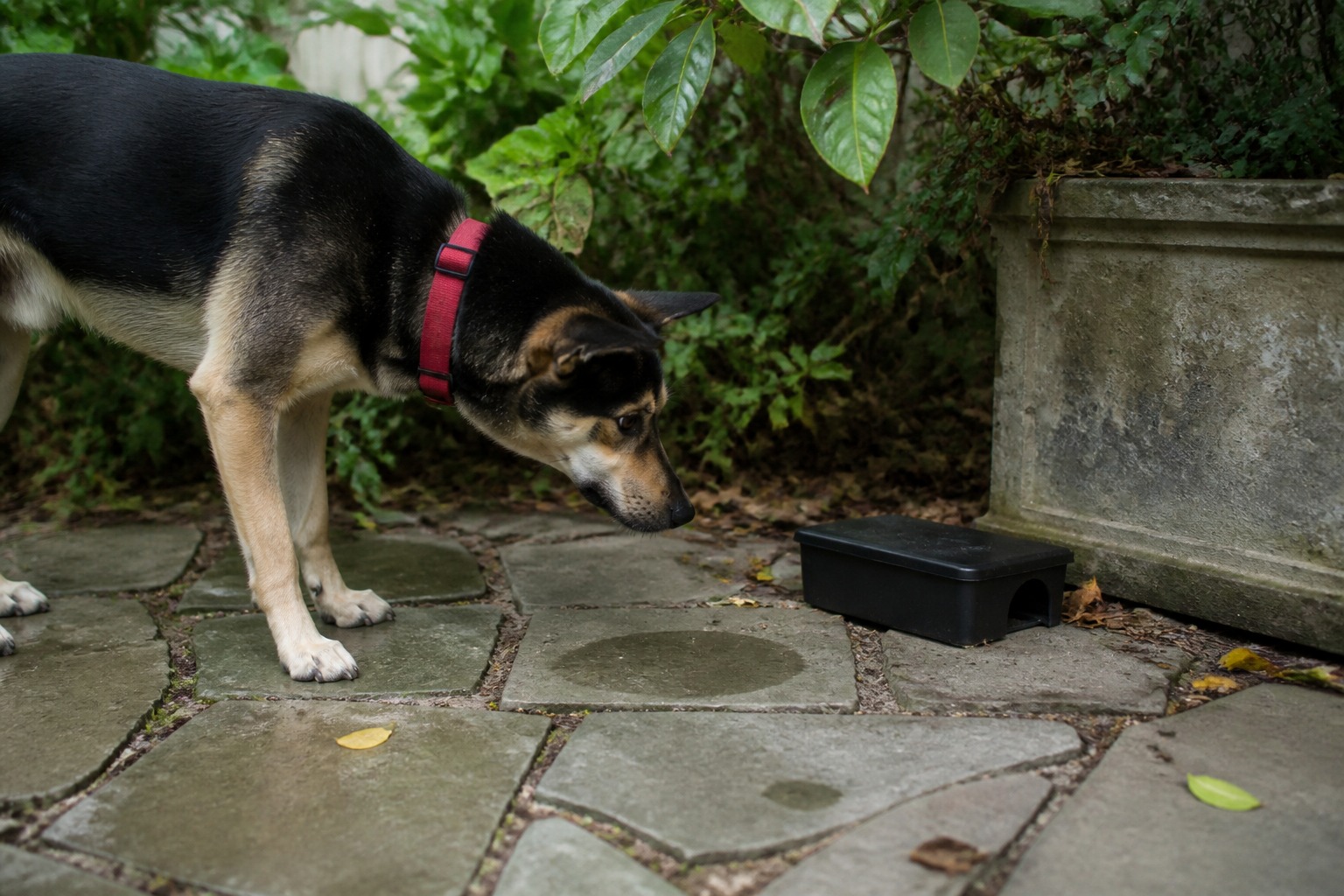
If your dog gets into rat poison, the question every owner asks is the same: how worried should I be? With most older rodenticides, a calm-looking dog in the first hours is genuinely reassuring. With bromethalin, it is the opposite. This is the poison that can look harmless for days and then take a dog’s legs out from under them, and the dogs who “seem fine” are often the ones in the most quietly dangerous position.
Bromethalin is a neurotoxin found in many modern rat and mouse baits, frequently mixed with peanut butter or grain to lure rodents, which makes it just as appealing to a curious dog. It has no antidote. Understanding its two very different timelines is the single most useful thing a dog owner can know about it.
Why this poison even exists: a fix that backfired
For decades, the typical rat poison was an anticoagulant like brodifacoum or bromadiolone, the D-Con-style products that kill by preventing blood from clotting. In 2008, the Environmental Protection Agency moved to restrict the most potent of these second-generation anticoagulants to professional and agricultural buyers, and manufacturers came into compliance around 2011. The intent was to protect children, pets, and wildlife from the anticoagulants.
The unintended consequence: to keep selling consumer products, many manufacturers switched to bromethalin. And bromethalin is, in important ways, a harder problem than the poison it replaced. Anticoagulant poisoning has a two-to-five-day window before bleeding begins, a simple blood test (the PT test) that confirms exposure, and an effective antidote in vitamin K1. Bromethalin has none of those. There is no confirmatory test, no antidote, and a much shorter runway in its acute form. The regulatory fix made one kind of poisoning safer and another kind more treacherous.
The two faces of bromethalin
Here is the distinction that does not appear on the bait box and that catches even some clinicians off guard: bromethalin produces two different clinical syndromes depending on how much a dog ate.
The convulsant syndrome (higher doses). At larger doses, signs come on fast, usually within 2 to 24 hours. Bromethalin floods brain cells with sodium; water follows the sodium, and the central nervous system swells. The result is severe tremors, seizures, agitation, a dangerously high body temperature, and “running fits.” This is the emergency everyone pictures, and it is unmistakable.
The paralytic syndrome (lower doses). This is the deceptive one. At doses below the lethal range, a dog may show nothing for one to five days, then begin a slow, ascending paralysis: first mild lethargy and a poor appetite, then wobbliness and weakness in the hind legs, then a creeping loss of coordination that can progress over one to two weeks. An owner who saw their dog eat a few pellets, watched them act normal all evening, and concluded the danger had passed is exactly the person this syndrome blindsides.
The most dangerous bromethalin patient I see is the one who looks great in the waiting room. With this toxin, a normal exam on day one tells you almost nothing about day three. We treat based on the dose the dog ate, not on how they look, because by the time the low-dose signs show up, the window to decontaminate is gone.
That is the whole argument for acting immediately even when your dog seems fine. The treatable moment is before symptoms, not after.
How little it takes
Dose matters enormously, and the numbers are sobering for small dogs. Animal poison control centers recommend beginning decontamination at exposures as low as 0.1 mg/kg. Clinical signs have been documented at around 0.15 mg/kg, and deaths have occurred at under 1 mg/kg, both well beneath the average lethal dose. Reported lethal doses in dogs cluster in the range of roughly 2.4 to 4.7 mg/kg, but waiting for a “lethal” amount is the wrong frame entirely, because dogs are harmed far below it.
In practical terms, a ten-pound dog can reach a dangerous exposure from a small number of bait pellets. The lighter the dog, the less it takes, which is why toy and small breeds, puppies, and any dog who raids a bait station are the highest-stakes cases.
What treatment actually looks like
Because there is no antidote, everything rides on early decontamination and supportive care. If the ingestion is very recent, a vet will induce vomiting, then give repeated doses of activated charcoal over the next day or so to keep pulling the toxin out of circulation. A dog showing signs is hospitalized on intravenous fluids and treated aggressively for brain swelling and seizures as they appear.
One question owners sometimes raise is intravenous lipid emulsion therapy, since bromethalin is fat-soluble. It is worth knowing that this remains investigational for bromethalin: its effectiveness is unproven, and because signs can be delayed, even the timing is unclear. It is not a reliable rescue, which is one more reason prevention and early decontamination carry so much weight.
What to do if your dog eats it
The first move is information, not panic. Find the package and read the active ingredient, because the entire response depends on whether it says bromethalin or an anticoagulant. Then:
- Call immediately, even with no symptoms. Your veterinarian, an emergency clinic, or an animal poison control line can calculate your dog’s dose in mg/kg from the amount eaten and your dog’s weight, and tell you whether and how to decontaminate.
- Bring the packaging to the clinic. The active ingredient and concentration drive every decision.
- Inducing vomiting at home is a last resort, not a first response. Only consider it if you have confirmed bromethalin, your dog is fully alert, and you are more than an hour from care. The dose is 1 ml of 3% hydrogen peroxide per pound of body weight, up to a maximum of 45 ml (so a 10-pound dog gets about 10 ml; an 80-pound dog gets no more than 45 ml). Never force it down, because a struggling dog can inhale the peroxide and develop aspiration pneumonia. Then drive in without waiting to see whether vomiting happens.
Keeping it out of the house entirely
It is fair to ask who keeps this around with pets in the home, and the honest answer is that plenty of households do, often without realizing what the active ingredient is. The bait stations are designed to contain the poison, but determined dogs defeat them. The safest policy is to avoid rodenticides altogether when pets or children share the space, and to lock away any lawn and garden chemicals. If you must control rodents, ask your vet or a pest professional about pet-safer options and placement.
This information is not a substitute for veterinary care or diagnosis. Always contact your veterinarian or an animal poison control center with any questions or concerns.
References
- Merck Veterinary Manual. “Bromethalin Poisoning in Animals.” Toxicology.
- VCA Animal Hospitals. “Bromethalin Rodenticide Poisonings in Dogs.”
- ASPCApro. “Treating Bromethalin Toxicosis.”
- Romano, Megan C., et al. “Fatal Bromethalin Intoxication in 3 Cats and 2 Dogs With Minimal or No Histologic Central Nervous System Spongiform Change.” Journal of Veterinary Diagnostic Investigation, vol. 30, no. 5, 2018.
- U.S. Environmental Protection Agency. “Rodenticides: Risk Mitigation Decision.”
Common questions
How quickly do bromethalin symptoms appear?
It depends on the dose. A large dose can cause tremors and seizures within 2 to 24 hours. A smaller dose may cause nothing at first, then a slow, ascending paralysis that appears 1 to 5 days later, which is why a dog who looks fine still needs treatment.
How much bromethalin is dangerous to a dog?
Poison control recommends starting decontamination at exposures as low as 0.1 mg/kg. Signs have appeared at 0.15 mg/kg and deaths at under 1 mg/kg, well below the average lethal dose. A small dog needs very little bait to be at risk.
My dog ate rat poison but seems totally normal. Is that good news?
Not with bromethalin. Because the dangerous low-dose syndrome is delayed by days, a normal-looking dog is exactly the situation where early decontamination matters most. Call your vet or a poison control line now, not after symptoms start.
Not a substitute for your vet. Our guidance is educational. For urgent symptoms, contact a vet or emergency clinic right away. Editorial standards
Dr. Solis is a board-certified veterinary dermatologist with over twelve years of clinical experience. She advises on skin conditions, allergies, and grooming practices that affect coat and skin health. All dermatology and allergy content at The Pet Times is reviewed by her team before publication.
Meet our experts ↗Keep reading
 Health & WellnessA Bee Sting Won't Wait for You to Look It Up: A Vet's Triage Guide for DogsDr. Lena Park · 9 min
 Health & WellnessOne Raw Fish Can Kill a Dog in Two Weeks. Most Owners Have Never Heard of It.Dr. Ravi Mehta · 6 min
 Health & WellnessYour Dog Ate Something Scary? 15 Times You Can Probably Stay HomeDr. Mara Chen · 7 min
 Health & WellnessYour Dog's Penis Won't Retract? Start the 20-Minute Clock.Dr. Priya Nair · 6 min
 Health & WellnessHydrogen Peroxide for Dogs: The First-Aid Staple That's Being RetiredDr. Ravi Mehta · 7 min
 Health & WellnessDogs Barely Sweat to Cool Down. That's Why Heat Sneaks Up on Them.Dr. Mara Chen · 8 min