


How to Stop Your Cat From Treating Your Houseplants Like a Salad Bar
You love your plants and so, unfortunately, does your cat. Here is why cats nibble greenery and how to protect both your plants and your cat.

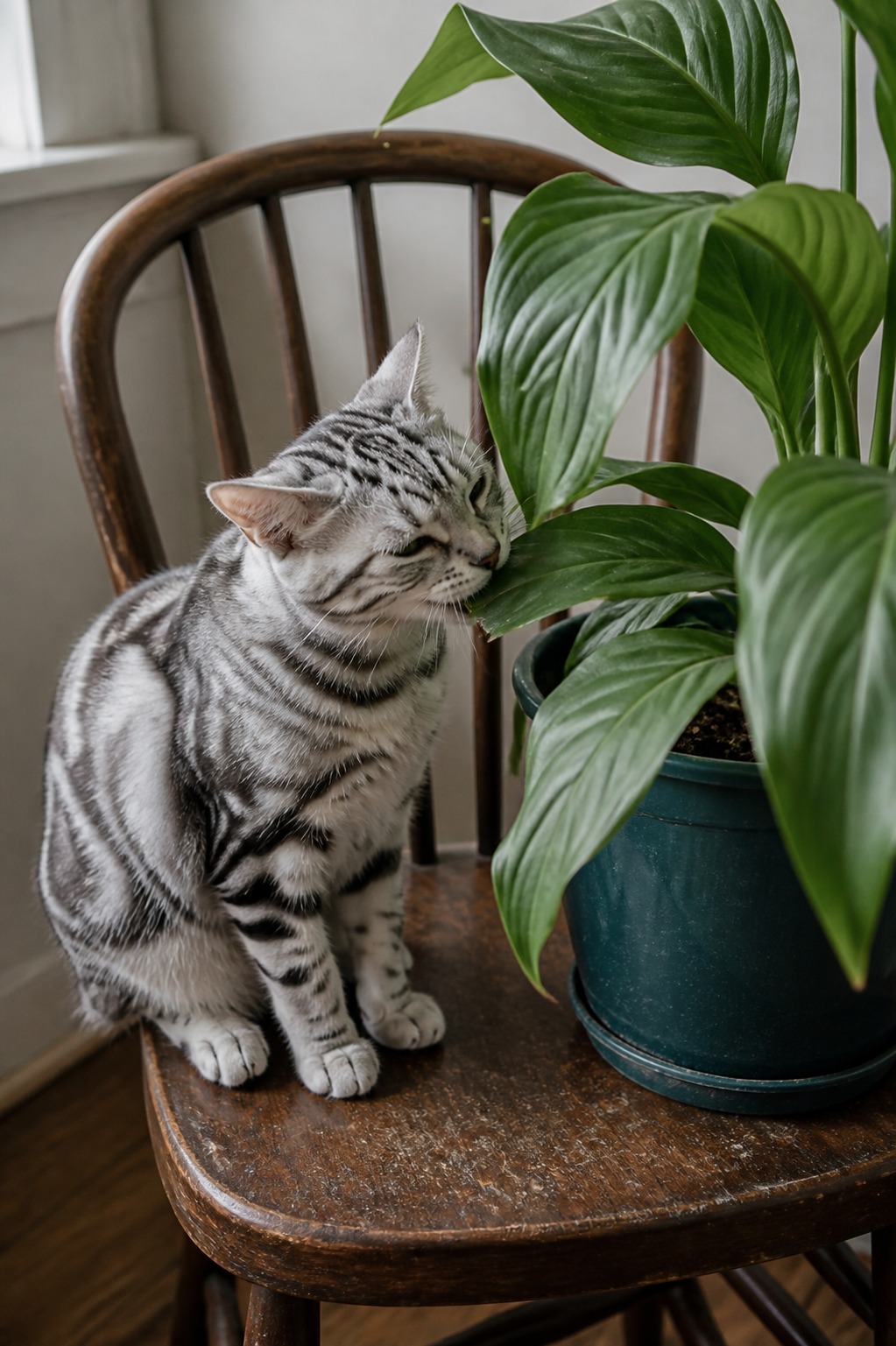
At some point your houseplants became your babies. You picked them out with care, chose the right pots, and watched them flourish on the windowsill. Then your cat decided your peperomia looked like a snack. You did your homework and made sure your plants were non-toxic, which is genuinely important, but it does not stop the nibbling. Facepalm forever.
So why does your cat treat your greenery like a salad bar, and what can you actually do about it? Let us get into it.
Why does my cat eat my plants?
The answer may be a little unsatisfying in its simplicity. Wild felines regularly eat plants, and it appears to be a behavior our domestic cats inherited from their ancestors. Many cats eat plants simply because they enjoy the taste. Others do it because they are bored or stressed, or because they are drawn to the movement of leaves and vines.
Younger cats tend to be bigger plant-eaters than older ones, which points to play and self-entertainment as part of the picture. There is also some evidence that cats nibble greenery when they want a little help with digestion. What it is not, despite the popular belief, is a way to bring up hairballs.
Can my houseplants be saved?
You spend all this effort sneaking kale into your smoothie and hitting your daily greens, and the only family member who is genuinely enthusiastic about vegetation is the one who should not be eating it. Your houseplants are paying the price for this feline fascination with leaves, stems, and flowers. The goal is twofold: keep your cat safe first, and protect your plants second.
What can be done about it?
Changing any behavior is a challenge, and it almost always works better with a combination of approaches: some prevention and management, some room to let your cat do what comes naturally in a safe way, and some active behavior modification.
A cat cannot chew a plant they cannot reach, so making your treasured pots inaccessible is a cornerstone of household harmony. Hanging baskets keep dangling leaves out of paw’s reach, and so do floating shelves. For plants that are genuinely dangerous to cats, the safest move is to put them in rooms your cat cannot access, or to rehome them to cat-free friends. Common toxic houseplants include lilies, philodendrons, English ivy, pothos, snake plants, and dieffenbachia.
You can also make plants less appealing. Many cats dislike citrus, so try mixing a low concentration of lemon, lime, or orange juice with water in a spray bottle and lightly misting your plants. Another trick is wrapping aluminum foil around the base of a plant, since plenty of cats find stepping on foil distinctly unpleasant.
Give them another option
Often the best way to head off a behavior problem is to offer an acceptable alternative. Instead of telling your cat not to chew plants at all, you give them a more useful instruction: chew these plants, not those. Create a little garden of greenery your cat is welcome to munch. Catnip, silver vine, cat thyme, and rosemary are all cat-friendly options, though it is always wise to check with your veterinarian about which are best for your particular cat.
Boredom is the enemy of a well-behaved cat, so make it easy for your cat to leave your plants alone by giving them plenty of other things to do. Good enrichment options include catios, cat trees, boxes to use as tunnels, and food puzzles. Playful cats are often captivated by the motion of leaves and vines, so offering other ways to play, either with you or with toys on their own, frequently spares your plants.
The takeaway is simple. To protect your fragile plant babies, you mostly need to put in a little effort to keep your cat happy and occupied. Truly, what else is new?
The one plant that changes the whole calculation: lilies
Most of this article is about protecting your plants from your cat. Lilies flip that entirely: with lilies, you are protecting your cat from the plant, and the stakes are life and death. True lilies (the genus Lilium, which covers Easter, Asiatic, Stargazer, Oriental, and Tiger lilies) and daylilies (Hemerocallis) cause acute kidney failure in cats, and the danger is not limited to eating a leaf. Every part is toxic: petals, leaves, stem, pollen, and even the water in the vase. A cat that brushes past a bouquet and later licks a few grains of pollen off its coat can be poisoned. Dogs, notably, do not react the same way; they may get a mild stomachache, but they do not develop the kidney failure that kills cats.
This is why “is it non-toxic?” is the wrong first question for a cat home. The right one is “are there any lilies anywhere my cat could reach, including cut flowers?” If the answer is yes, there is no safe placement, no high shelf, no closed room that makes it acceptable. The plant should not be in the house at all.
When to call the vet, immediately
If you suspect any lily exposure, do not wait for symptoms. Treatment works best when it begins within about 18 hours of exposure, and the window closes fast. Call your veterinarian or an emergency clinic right away, and if you cannot reach one, call the ASPCA Animal Poison Control Center at (888) 426-4435. Early signs of lily poisoning include drooling, vomiting, loss of appetite, and lethargy, but by the time kidney signs appear, the situation is already advanced. With lilies, “wait and see” is the one thing you cannot afford to do.
What newer research adds
The “plants help with digestion” idea got an interesting wrinkle from research suggesting plant-eating in cats and other carnivores may be an ancestral, instinctive behavior that helps purge intestinal parasites rather than something individual cats learn for a specific tummy ache. In other words, a tidy bit of greenery may be normal feline behavior, not necessarily a sign that something is wrong.
References
Dr. Nair is a veterinarian focused on diet and feeding. She covers everyday nutrition, treats, and the many "can they eat this?" questions owners ask, grounding each answer in what is actually safe and sensible for dogs and cats.
Meet our experts ↗Keep reading
 TrainingThe Paw on Your Mouth at 4 A.M.? You Trained That.Dr. Amara Solis · 6 min
 TrainingYour Cat's Begging Is a Report Card on YouDr. Mara Chen · 8 min
 TrainingYour Cats Don't Hate Each Other. They Just Don't Smell Like a Family Yet.Dr. Amara Solis · 9 min
 Health & WellnessYour Cat Peed on Your Clothes. The Fabric Is the Clue.Dr. Lena Park · 8 min
 TrainingThe Cat-Anxiety Mistake That Actually Gets Cats KilledDr. Amara Solis · 8 min
 Health & WellnessYour Cat Pooping on the Carpet Isn't Spite. It's a Message You Rule Out in OrderDr. Amara Solis · 8 min