


Itchy After Every Yard Romp? Don't Blame the Grass Yet
Grass allergies in dogs are real, but grass is also the most over-accused suspect in the yard. Here's how vets actually figure out what's making your dog itch, and what treatment looks like now.

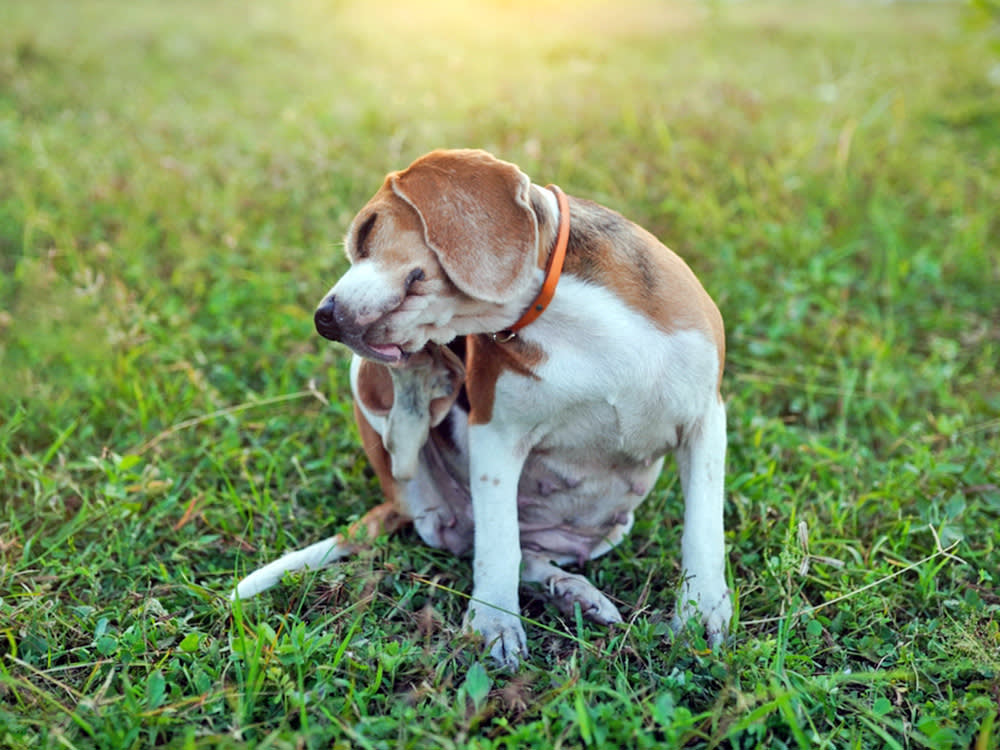
Here is the pattern that sends people to the search bar: the dog comes in from the yard, flops down, and starts working on their paws. Ten minutes of licking. Then the belly scratching starts. It gets worse the week the lawn gets mowed. Case closed, right? The dog is allergic to grass.
Sometimes, yes. Dogs can genuinely be allergic to grass, all varieties of it, and for an unlucky few the reaction is severe enough to reshape their daily life. But in the exam room, “the yard” is where itching gets noticed, not necessarily where it comes from. Fleas, mites, molds, tree and weed pollens, and even ingredients in the food bowl can produce an identical picture, and a dog can be allergic to several of these at once. Treating “the grass” without confirming it means you can spend a whole season on workarounds while the real trigger keeps firing.
So before you rip out the lawn, it helps to know what a grass allergy actually looks like, what else can impersonate one, and how veterinarians pin the culprit down.
“The yard gets blamed because that is where the itching is easiest to see,” says Dr. Priya Nair. “But when we test these dogs, the list of triggers is often longer and stranger than anyone expected. Confirming it changes everything about how well treatment works.”
What a grass allergy looks like on a real dog
For most grass-allergic dogs, the trigger is touch: skin meeting blades or pollen directly. So the skin is where the evidence shows up:
-
Relentless scratching. The belly, armpits, neck, and ears take the worst of it. Bad flare-ups can turn into raw patches and secondary skin infections, because claws are not gentle tools.
-
Licking that never seems to finish. Paws are the classic target, since they touch grass with every step. Light-coated dogs often develop rust-brown staining on their feet and legs, which is saliva discoloration from constant licking, and a useful tell for your vet.
-
Hives. Raised bumps, medically called urticaria, tend to appear where skin and grass make the most contact. Hives say “allergic reaction,” though not specifically “grass.”
-
Puffy, irritated feet. Swelling between the toes, recurring infections, and moist raw patches from licking are all common. Feet are simply the hardest body part to keep off the lawn.
-
Sneezing and runny eyes. Less common, but airborne grass pollen can trigger upper-respiratory signs, classically right after mowing or leaf-blowing, when clippings and pollen go airborne.
One reassurance worth stating plainly: true anaphylaxis, the life-threatening kind of allergic reaction with vomiting, diarrhea, pale gums, weakness, labored breathing, or collapse, is very unlikely from grass itself. When a dog collapses in the yard, a sting from a bee or wasp hiding in that grass is a far more likely explanation. If you ever see those signs, go to a vet immediately. Minutes count.
The impersonators: what else causes the exact same picture
Environmental allergies in dogs mostly look alike from the outside. Any of these can produce the scratch-lick-swell pattern above:
- Fleas (a single bite can set off a flea-allergic dog)
- Dust mites
- Molds
- Tree and weed pollens
- Insects
- Food proteins
- Dander from other animals, including, humbling as it is, humans
This is why the mowing detail in your dog’s story matters, and also why it is not proof. Mowing throws grass pollen into the air, but it also stirs up mold spores and weed pollen. A dog who flares in spring might be reacting to any of it. The only way to know is testing.
How vets actually pin it down
There are two main routes, and they are not interchangeable.
Intradermal skin testing is the gold standard. A veterinary dermatologist injects tiny amounts of individual allergens into a shaved patch of skin, grid-style, and measures each reaction. Because it tests the skin directly, the organ that is actually suffering, the results map well onto real life, and the allergen panel can be customized. The trade-offs are real, though: your dog has to come off allergy medications for weeks beforehand (itchy weeks, unfortunately), and the procedure requires sedation, because no dog voluntarily holds still while being dotted with the very things that make them itch.
Serum (blood) testing is far easier: one blood draw, sent to a lab, no medication washout drama. Many labs run region-specific panels matched to the plants where you live. The catch is accuracy. Blood testing throws more false positives, flagging allergens your dog is not truly allergic to.
Neither test is perfect, and your vet will read the results alongside the exam and your at-home observations. Food allergies are a separate investigation entirely, requiring a strict elimination diet trial over several weeks. There is no reliable blood test shortcut for those.
Treatment: what works, what mostly doesn’t
Immunotherapy is the long game and the best one. Once testing identifies the triggers, a custom serum exposes your dog to gradually increasing amounts of them, by injection every few days to weeks or by daily oral drops. It takes months to kick in, but it is the closest thing to actually retraining the immune system rather than muffling it, and dogs can get durable, long-term relief.
Antihistamines mostly disappoint. This surprises people, because Benadryl is the first thing everyone reaches for. The published numbers are humbling: one study found only 18 percent of dogs improved on an antihistamine, and a randomized trial of cetirizine (Zyrtec) found no benefit over placebo at all. They are cheap and safe to try, but do not let a failed antihistamine experiment delay real treatment.
Modern itch drugs do the heavy lifting. Oclacitinib (Apoquel) and the injectable antibody lokivetmab (Cytopoint) target the itch pathway directly and work for many allergic dogs. Steroids like prednisone remain the blunt instrument for severe flares, effective, but with side effects that make them a short-term tool.
Home care stacks the odds. Regular baths with an oatmeal-based or vet-prescribed medicated shampoo rinse allergens off the coat. A damp-towel wipe-down after yard time, with extra attention to paws and belly, removes pollen before it soaks in. And a detail most people never consider: take your shoes off at the door. Indoor-leaning dogs still flare when the household tracks pollen inside all season.
When to call the vet
A grass allergy will not kill your dog, but it can quietly wreck their quality of life, and self-trauma from scratching creates infections that are harder to treat than the allergy itself. Book an appointment when you notice the scratch-lick pattern, when feet look swollen or stained, or when flare-ups repeat each season. And treat suspected anaphylaxis, with vomiting, weakness, pale gums, or collapse, as an emergency, full stop.
What’s new since this was written
Allergic skin disease is not a niche problem, and the data keeps confirming it. Skin allergies were the number-one reason dogs generated pet insurance claims in Nationwide’s analysis again in 2025, the fifteenth straight year they topped the list, and claims climb roughly 10 percent in spring and summer, exactly when grass and its pollen peak.
Dogs with confirmed environmental allergies also have a newer treatment option. In September 2024, the FDA approved ilunocitinib (Zenrelia), a once-daily oral JAK inhibitor for allergic itch and atopic dermatitis in dogs 12 months and older, the same drug family as Apoquel. It comes with a meaningful caveat your vet will walk you through: the FDA flagged safety concerns around giving vaccines while a dog is on the drug, so timing matters. It is not automatically better for your dog, but it gives your vet another lever if the current plan is not controlling the itch.
References
- FDA: FDA Approves New Treatment for Allergic Skin Conditions in Dogs
- FDA: Dear Veterinarian Letter regarding important safety information associated with the use of Zenrelia (ilunocitinib tablets)
- Nationwide: Chronic Conditions Dominate this Year’s List of Most Common Pet Health Problems
- Cook, Christopher P., et al. “Treatment of Canine Atopic Dermatitis with Cetirizine, a Second Generation Antihistamine: A Single-Blinded, Placebo-Controlled Study.” The Canadian Veterinary Journal, vol. 45, no. 5, May 2004, p. 414. pmc.ncbi.nlm.nih.gov/articles/PMC548625
- Hensel, Patrick, et al. “Canine Atopic Dermatitis: Detailed Guidelines for Diagnosis and Allergen Identification.” BMC Veterinary Research, vol. 11, no. 196, 11 Aug. 2015. doi:10.1186/s12917-015-0515-5
- Hsiao, Yun-Hsia, et al. “Effects of Cetirizine in Dogs with Chronic Atopic Dermatitis: A Randomized, Double Blind, Placebo-Controlled Trial.” Journal of Veterinary Science, vol. 17, no. 4, 2016, p. 549. doi:10.4142/jvs.2016.17.4.549
- Mason, Ken, et al. “Immunoglobulin E-Specific Allergens against Leaf in Serum of Dogs with Clinical Features of Grass Leaf Allergy.” Veterinary Dermatology, vol. 34, no. 5, 2023, pp. 393-403. doi:10.1111/vde.13166
- Mason, Kenneth, and Merja Ruutu. “Canine Dermatitis on Contacting Grass Leaf: A Case Series.” Veterinary Dermatology, vol. 34, no. 2, 2023, pp. 115-124. doi:10.1111/vde.13143
- Roussel, A. J. J., et al. “Characterisation of Dog Sensitisation to Grass Pollen in Western France from 1999 to 2010.” The Veterinary Record, vol. 172, no. 26, 2013, p. 686. doi:10.1136/vr.100710
Not a substitute for your vet. Our guidance is educational. For urgent symptoms, contact a vet or emergency clinic right away. Editorial standards
Dr. Solis is a board-certified veterinary dermatologist with over twelve years of clinical experience. She advises on skin conditions, allergies, and grooming practices that affect coat and skin health. All dermatology and allergy content at The Pet Times is reviewed by her team before publication.
Meet our experts ↗Keep reading
 Health & WellnessThe Fleas on Your Dog Are 5% of the Problem. The Rest Is in Your CarpetDr. Ravi Mehta · 10 min
 Health & WellnessPink-Nosed Dogs Sunburn. So Do Black Labs, Just Differently.Dr. Lena Park · 8 min
 Health & Wellness'Natural' Dog Shampoo Isn't a Safety Claim. Nobody Is Checking.Dr. Priya Nair · 7 min
 Health & WellnessYour Dog Can't Catch Poison Ivy. But It Can Hand It to You.Dr. Priya Nair · 6 min
 Product PicksStop Shopping for an Itch Shampoo. Start Shopping for the CauseDr. Ravi Mehta · 10 min
 Health & WellnessBenadryl for Dogs: Great for a Bee Sting, Overrated for Everyday ItchDr. Ravi Mehta · 10 min