


Your Dog Can't Catch Poison Ivy. But It Can Hand It to You.
Dogs almost never react to poison ivy, but their fur ferries the rash-causing oil straight to you. Here's the real risk and how to decontaminate safely.

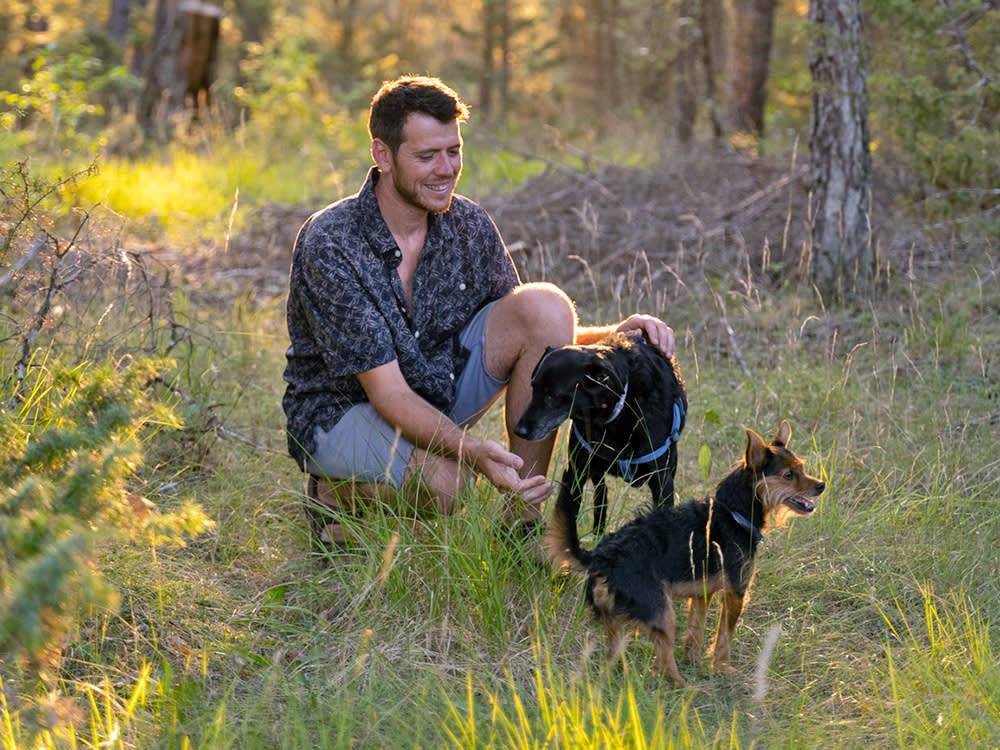
Here is the twist that flips the usual poison ivy question on its head: your dog is almost certainly immune, and you are the one at risk. People search “can dogs get poison ivy” picturing a miserable, rashy pup. The reality is that dogs bulldoze through poison ivy, poison oak, and poison sumac with no reaction at all, then trot back to you wearing an invisible coat of the exact oil that gives humans a blistering rash. The danger is not to the dog. The danger is the delivery.
That reframing is the whole point of this article. Once you understand that your dog is a carrier rather than a victim, the practical advice changes completely. You stop worrying about treating a dog rash that will almost never happen, and you start thinking about decontamination, protecting yourself, and keeping the oil from spreading through your house.
Why dogs shrug off the plant that wrecks us
Poison ivy, oak, and sumac all contain urushiol, an oil in the plants’ sticky sap. In most people, urushiol triggers a severe allergic contact dermatitis. In dogs, it essentially does nothing. In fact, there has not been a single confirmed, documented case of a true poison ivy reaction in a dog.
Two things protect them. First, their coat. Fur keeps the oil off the skin in the first place, and urushiol tends to stick to whatever it touches, so it clings to the hair rather than reaching the surface underneath. Second, dogs simply do not seem to develop the allergic response that humans do. That second point comes with a caveat: dogs can develop an allergy to almost anything with repeated exposure, so it is theoretically possible for an individual dog to become sensitized over time. But as a practical matter, a rashy dog after a walk in the woods is far more likely to have something else going on.
What people mistake for a poison ivy rash on a dog
Because a genuine poison ivy reaction is so unlikely, a red, itchy patch on your dog after a hike is almost always a different skin problem wearing a convincing disguise. The usual suspects include hot spots (moist dermatitis), atopy (environmental allergies), mange, ringworm, food allergies, and pyoderma, a bacterial skin infection. Dogs can also get contact dermatitis from other plants entirely; members of the Commelinaceae family, like the inch plant, can irritate a dog’s skin, usually more mildly than poison ivy hits a person.
The takeaway is not to self-diagnose “poison ivy” and wait it out. If your dog has an irritated patch of skin, get it looked at, because the likely real causes all have their own treatments.
The actual risk: your dog as an urushiol shuttle
This is where the real story lives. Urushiol is remarkably persistent and transferable. A dog who runs through a patch of poison ivy comes home with oil on their fur and paws, and that oil readily moves onto your hands when you pet them, onto your arms when they lean on you, onto the couch, the bedding, the car seat, and your clothes. You can develop a full poison ivy rash without ever having touched the plant yourself.
I’ve treated plenty of people, so to speak, for poison ivy they swear they never went near. Then it turns out the dog spent the afternoon in the underbrush and got a long cuddle on the couch that evening. The dog is fine. The owner is covered in a rash. That pattern is incredibly common, and it’s completely preventable if you decontaminate the dog before the oil spreads.
How to decontaminate a dog safely, without dosing yourself
If you know or suspect your dog ran through poison ivy, the goal is to get the oil off their coat, and to protect yourself while you do it. Order of operations matters.
Gear up first. Put on a long-sleeved shirt, long pants, and waterproof gloves, long dish gloves are ideal. You are trying to keep the oil off your own skin during the bath.
Then wash. Urushiol is an oil, and oils come off with soaps and detergents built to cut grease. A grease-cutting dish soap like Dawn is genuinely effective for this. If your dog has sensitive skin, use a dog shampoo instead and do a lather, rinse, and repeat cycle. There are urushiol-removal products made for human skin, but they have not been evaluated for dogs and can irritate them, so skip those.
If the weather allows, bathe your dog outside to keep the oil out of your bathroom. Lather thoroughly, paying special attention to the paws, face, and sides, the parts most likely to have brushed the plant. Massage the soap in, make sure every area is covered, then rinse and dry. When you finish, throw away disposable gloves, and immediately wash the clothes you were wearing, alone, on a hot cycle with detergent.
If your dog ate some poison ivy along the way, don’t panic. It is generally harmless to them, though any plant can cause mild stomach upset, so keep an eye out for vomiting, drooling, diarrhea, or discomfort just to be safe.
Keeping the oil out of your life in the first place
Preventing exposure is harder than washing it off, because you can’t teach a dog “leaves of three, let them be.” But you can shrink the odds.
Learn to recognize the plants. Poison ivy, oak, and sumac grow across nearly all of the United States and southern Canada, in almost any area with natural plant growth, so knowing what they look like in your local environment is genuinely useful.
If you have any of these plants in your own yard, removal is the cleanest fix. Having a professional do it is safest. If you tackle it yourself, follow published guidance to remove the plant completely and keep it from returning, and never mow or burn it. Mowing shreds the plant and spreads the oil over a wide area, where it can persist for years. Burning is worse: urushiol can travel in the smoke and reach your lungs, causing dangerous airway irritation.
On walks and hikes, keep your dog leashed and in sight. It won’t stop every encounter, but it lets you steer them away from obvious patches and keeps them from disappearing into roadside brush and bringing an unpleasant surprise home.
What’s new since this was written
The core biology here has not changed, dogs remain functionally immune to urushiol, but the public-health framing has sharpened around the transfer risk, which is the part that actually sends people to the doctor. Current guidance from poison-control and dermatology sources continues to emphasize that urushiol can stay active on surfaces, including pet fur, for a long time, sometimes many months on dry material, which is why “the dog seems fine, so we’re fine” is misleading. The oil doesn’t care that the dog is unbothered.
One practical update worth knowing: the recommendation to wash exposed skin promptly still holds, and the window matters. Getting urushiol off skin within roughly the first hour meaningfully reduces the reaction, which is another argument for bathing a suspected-exposed dog sooner rather than later, before the oil has time to spread to every human and surface in the household. As always, if a rash is severe, spreading to the face or covering a large area, or if there’s any trouble breathing after exposure to burning plants, that is a call to a human doctor, not something to manage at home.
References
Common questions
Can I get poison ivy from my dog?
Yes. Urushiol oil clings to your dog's fur after they run through the plant, and it transfers to your hands, arms, clothing, and furniture. This is the main poison ivy risk a dog creates.
What happens if my dog eats poison ivy?
It's generally not harmful, because dogs don't react to urushiol the way people do. Eating any plant can cause mild stomach upset, so watch for vomiting, drooling, or diarrhea, but poison ivy itself rarely causes a problem.
How do I wash poison ivy oil off my dog?
Wear long sleeves and waterproof gloves, then bathe your dog with a grease-cutting dish soap like Dawn, or a dog shampoo for sensitive skin, focusing on paws, face, and sides. Rinse well, dispose of gloves, and wash your clothes on hot immediately.
Not a substitute for your vet. Our guidance is educational. For urgent symptoms, contact a vet or emergency clinic right away. Editorial standards
Dr. Nair is a veterinarian focused on diet and feeding. She covers everyday nutrition, treats, and the many "can they eat this?" questions owners ask, grounding each answer in what is actually safe and sensible for dogs and cats.
Meet our experts ↗Keep reading
 Health & WellnessMost 'Natural' Fly Repellents for Dogs Are Useless or Toxic. Here's What Isn't.Dr. Amara Solis · 8 min
 Health & WellnessRingworm in Dogs Isn't a Worm. And Half the Cure Happens at HomeDr. Priya Nair · 7 min
 Health & WellnessThe Fleas on Your Dog Are 5% of the Problem. The Rest Is in Your CarpetDr. Ravi Mehta · 10 min
 Health & WellnessYour Dog's Cracked Paws Are Trying to Tell You SomethingDr. Lena Park · 8 min
 Health & WellnessWhat Bit My Dog? Read the Map Before You Reach for the CreamDr. Lena Park · 7 min
 Health & WellnessIs That a Tick or a Skin Tag? The One Test That Tells YouDr. Amara Solis · 10 min