


You Can't Tell Your Cat's Breed by Looking. Here's What Actually Works
That 'Siamese' or 'Maine Coon' might just be a domestic shorthair with a good look. Here's how to read the trait clusters that actually point to a breed, when apps help, and what a DNA test can and can't tell you.

Affiliate disclosure. This article contains affiliate links. We may earn a small commission if you buy through a link, at no extra cost to you. How we handle recommendations.
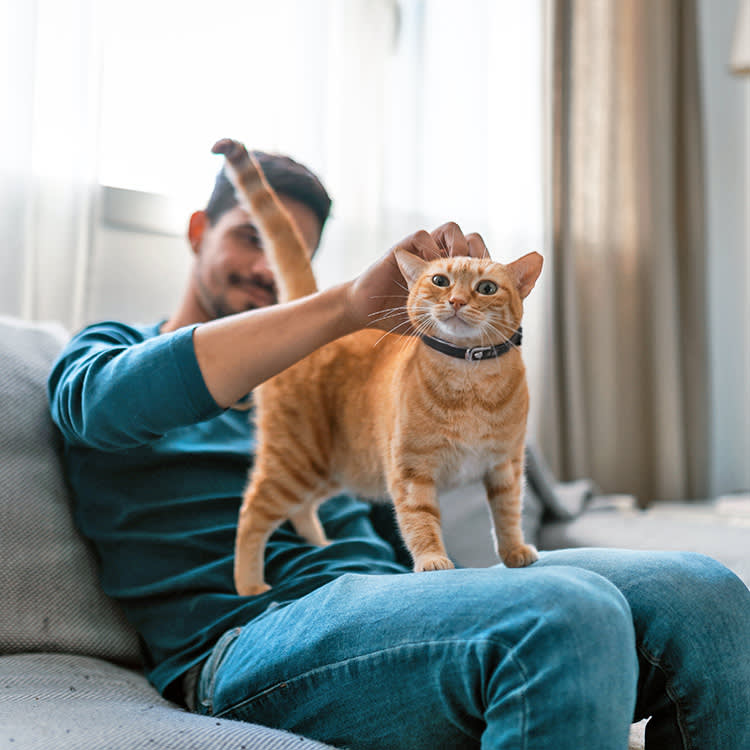
Pet parents are endlessly curious about their cat’s “breed,” and there is a hard truth waiting at the end of that curiosity: you usually cannot tell just by looking, and most cats are not a specific breed at all. The majority of cats are domestic mixed breeds, domestic shorthairs and domestic longhairs, no matter how strikingly they resemble something fancier. A cat can look unmistakably Siamese and simply be a color-point domestic shorthair with no pedigree behind it.
So the honest goal of this guide is not to hand you a label, it is to make you a better reader of evidence. Appearance is a clue, never a verdict. What actually points toward a breed is a cluster of traits lining up together, backed where it counts by the right tools. Get that mindset first, and the rest becomes a fun, low-stakes investigation instead of a wishful guess.
What “breed” actually means
Start with the definition, because it clears up half the confusion. A breed is a population of cats whose predictable traits came from selective breeding, with those traits logged in an official registry. For a cat to truly count as a specific breed, it has to match a breed standard, a defined set of physical and sometimes behavioral traits (heavy bone and tufted ears for a Maine Coon, for instance), and it has to breed true, meaning two registered parents of that breed reliably pass those traits to their kittens.
The key distinction that follows: breed and appearance are not the same thing. Resembling a breed is common; being one, in the registry sense, is not. Keep that gap in mind and you will avoid the most common error, mistaking a look for a lineage.
Reading the physical traits
You cannot pin down a breed from any single feature, but several features pointing the same direction give you a real hint. Here are the traits worth evaluating together.
Coat length and texture. Shorthair coats, an inch or less, are the most common. Medium and longhair coats run over an inch and may show a ruff, “britches,” or tufted paws and ears. Texture matters too: Siamese and Oriental types tend toward silky, short coats, while British Shorthairs and Scottish Folds carry plush, dense fur.
Pattern and color. The pattern vocabulary is wide, tabby in its mackerel, classic, spotted, and ticked forms, plus tortoiseshell, calico, bicolor, color-point, smoke, shaded, and silver, and some combinations are informative. Color-point coats with blue eyes suggest the Siamese family, though Ragdolls, Birmans, and Himalayans share the look. Shaded or silver coats may point to Chinchilla lines, and cinnamon or fawn coloring shows up more in Oriental groups.
Standout phenotypes. A few features are near-signatures: no coat at all points to a Sphynx type, while a curly coat often traces back to Devon Rex, Cornish Rex, or Selkirk Rex ancestry.
Body build. Oriental or “foreign” types run long, fine-boned, and tubular, with a wedge head and long tail (Siamese, Oriental Shorthair). Cobby cats are stocky, round, and heavy-boned with a short tail (Persian, British Shorthair). In between sit the balanced, semi-foreign frames of the American Shorthair and Ragdoll. The big forest and working types are rectangular and substantial, with strong muzzles and lynx-like ear tips on the Maine Coon, or a triangular head, double coat, and heavy ruff on the Norwegian Forest Cat.
Eyes, ears, and tail. Almond or slanted eyes lean Oriental; large, round eyes lean Persian or exotic. Eye color runs from the blue of color-points to the copper of some British Shorthairs, plus odd-eyed white cats that appear across many breeds. Large, high-set, wide-based ears suggest Oriental and Siamese types; small, rounded, lower-set ears suit cobby cats; folded ears need pedigree context because of the health implications tied to Scottish Folds; and lynx-tipped ear furnishings are common in longhaired forest types. For tails, a natural bob suggests Manx or Bobtail lines (or a spontaneous mutation in a mix), a plumed long tail fits longhairs like Ragdolls and Maine Coons, and kinks or curves show up in certain regional populations.
Personality. Behavior can support a guess without proving one. The Siamese and Oriental breeds have a reputation for being talkative, people-oriented, and full of energy, while a relaxed, floppy, go-with-the-flow cat gets associated with Ragdolls. Treat temperament as one more clue in the cluster, not a diagnosis.
The tools: apps, databases, and experts
Once you have a sense of the traits, a few tools help you narrow things down, each with a catch.
Breed-ID apps use computer vision to analyze photos and offer likely matches with confidence scores. They are fast, fun, and good at flagging the obvious stuff: a hairless body, folded ears, a color-point coat, a bobtail. Their weakness is that lighting, angle, grooming, and the sheer prevalence of mixed cats muddy the results, and they love to slap “Siamese” on anything color-point. Use them well: feed the app several sharp photos, the face head-on, a side profile, the full body, the tail, and a tight coat shot, redo them in neutral light and across seasons to catch coat changes, and treat whatever few candidates it returns as leads to research rather than a verdict.
Online breed databases are how you check that list. The CFA and TICA both put out detailed standards, complete with drawings and the colors and patterns each breed permits, and breed clubs add galleries plus the subtle tells that separate look-alikes, Maine Coon versus Norwegian Forest Cat head and muzzle shape, Ragdoll versus Birman paw patterns. Use them to confirm or rule out what an app suggested, focusing on trait clusters that fit one breed more than another.
Experts add judgment a photo cannot. A seasoned breeder or breed-club mentor can read nuanced features off images and video, veterinarians can assess health-related features like brachycephaly or ear folds and advise on whether DNA testing would clarify ancestry and risks, and breed-specific rescues are practiced guessers, though still guessing.
What a DNA test can (and can’t) do
For a non-pedigreed cat, a feline DNA test gives you the most objective data available, and it is worth being clear-eyed about its limits. A cheek-swab test can estimate ancestry, identify trait genes (long or short hair, dilute color, point pattern, tabby type, white spotting, bobtail mutations), and flag health insights, screening for known heritable risks like PKD1 (historically in Persian lines), blood type, and certain carrier states. That health angle is often the most practically useful part, because it can change how you care for your cat.
What DNA cannot do is prove pedigree. Tests give probabilities based on the company’s reference data, so they can suggest ancestry but cannot certify a cat as “purebred”, only registration papers do that. They also lose precision for rare lineages, where a thin dataset may generalize a niche breed into a broader type. When choosing a kit, lean toward brands with a big feline reference panel, methods they’ll explain, and reporting that spans ancestry, traits, and health; decide whether you want extras like oral-microbiome testing or broad carrier screening; and check sample type, turnaround, and privacy policy. If you want to try one, Basepaws makes a widely used cat DNA kit covering breed, health, and dental traits. Let the results round out your read on the cat’s looks and behavior, rather than override plain common sense.
Putting it together
Work in that order and you will land on the most accurate description possible. Begin by cataloging the physical traits, coat length and texture, color and pattern, head and ear shape, eye color and shape, body build, tail, and any standout features, then hold them up against the official CFA and TICA standards to find the closest matches. Then run apps to generate candidates and verify those against standards and reputable galleries. Bring in experts, breeders, breed clubs, seasoned rescuers, and your vet, who can spot subtle signs and discuss health implications. Finally, if you want real clarity on ancestry, traits, and health risks, order a DNA test. For many shelter cats, the most truthful answer will still be domestic shorthair or longhair, with specific traits highlighted, a “blue-eyed seal color-point domestic shorthair” rather than a single purebred label. And that is not a lesser answer; it is the accurate one.
Owners come in certain their cat is a Maine Coon, and I get it, the cat is huge and fluffy. But big and fluffy isn’t a pedigree. What I love telling people is that ‘domestic shorthair with gorgeous Siamese-style points’ is a real, complete description. Your cat doesn’t need a fancy label to be exactly what you think they are.
What newer research adds
The science underneath these tools has a humbling detail that explains why cat breed-ID is so much fuzzier than dog breed-ID: cats are far less genetically distinct by breed. Cats were domesticated relatively recently, roughly 8,000 years ago, versus tens of thousands of years for dogs, and deliberate breeding for specific traits only took off about 150 years ago. Many cat breeds share overlapping stretches of DNA, so even a good test often reports a blend of breed groups rather than a clean single answer.
The testing market has also shifted. Wisdom Panel now advertises a substantially larger feline breed database, referencing 70-plus breeds, compared with the 20-something breeds on some competitors like Basepaws, while Basepaws leans into detailed health and dental reporting. Neither is a pedigree certificate, and both compare your cat’s genes against breed averages rather than confirming lineage, but the panels keep growing and the health reporting keeps getting more useful, which is genuinely the strongest reason for most owners to test at all.
References
- Lipinski, Monika J., et al. — “The Ascent of Cat Breeds: Genetic Evaluations of Breeds and Worldwide Random-Bred Populations,” Genomics, 2008
- Salonen, Milla, et al. — “Breed Differences of Heritable Behaviour Traits in Cats,” Scientific Reports, 2019
- The International Cat Association (TICA) — Breeds and Standards
- Cat Fanciers’ Association (CFA) — Breed Standards
Common questions
Can Google Lens identify my cat's breed?
Sometimes, for cats with distinctive looks. Google Lens can surface look-alike images and breed names and is reasonably good with standout traits like hairlessness, folded ears, color-point coats, or a bobtail. But it over-assigns common labels, tagging nearly any color-point cat 'Siamese.' Use it to build a shortlist, then verify against CFA or TICA breed standards, and consider a DNA test if the answer really matters.
How much does a cat DNA test cost?
Most feline DNA kits run about $75 to $160, depending on brand and features. Ancestry-only kits are cheaper; kits that add comprehensive health and trait screening cost more. Check what's included, the number of health conditions screened, the breed panel depth, sample type (usually a cheek swab), and turnaround time, before you buy.
Can you tell a cat's breed from a photo?
Only roughly. Take several clear photos in natural light, run them through a breed-ID app for a shortlist of three to five candidates, then compare against official breed standards and factor in behavior. Even with great photos, most cats are best described as domestic shorthair or longhair with breed-like traits rather than a single purebred breed.
Sara Lim leads our Product Picks coverage, testing and comparing the things pets and their owners actually use. From everyday essentials to home-and-style finds, she focuses on honest, useful recommendations rather than hype.
Meet our experts ↗Keep reading
 Health & WellnessThis Cat Is 26. Her Secret Is 15 Boring Habits, Not One Magic Trick.Dr. Priya Nair · 9 min
 TrainingYour Cat Isn't Getting 'Brain Rot' From That Video. It Thinks It's HuntingDr. Ravi Mehta · 5 min
 LivingTortie or Calico? It's Not About the Colors. It's About the White.Dr. Mara Chen · 8 min
 TrainingWhy a Cat Will Nurse a Duckling, and Why You Should Still Watch CloselyDr. Amara Solis · 6 min
 Health & Wellness13 Small Cat-Care Upgrades Your Cat Will Actually NoticeDr. Priya Nair · 8 min
 LivingMy Cat's New Year's Resolutions, In Her Own WordsNina Vasquez · 3 min