


Most Dog Coughs You Can Soothe at Home. A Few You Really Can't.
A hacking, honking dog cough is usually kennel cough, and usually something you can nurse through with steam, honey, and rest. But home remedies soothe; they don't cure. Here's the home-care playbook, exact honey doses included, and the coughs that mean skip it and call the vet.

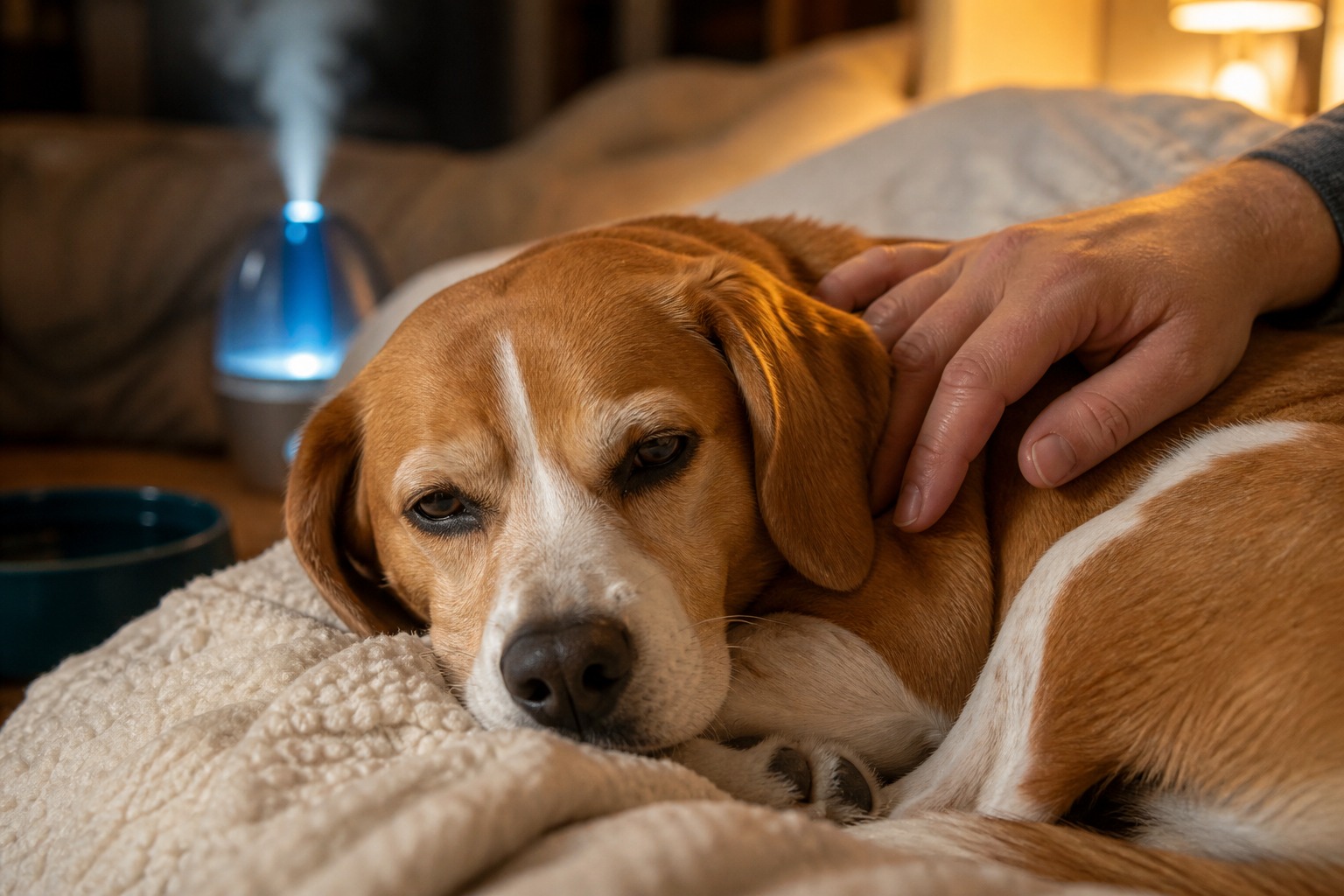
The first cough gets your attention. The second one starts the spiral: what is this, is it serious, do I need the vet tonight? Here is the calming truth and the important caveat in one breath. Most dog coughs are mild, many are a garden-variety case of kennel cough, and you can genuinely make your dog more comfortable at home. But home care soothes a cough. It does not cure the thing causing it, and a handful of coughs are not home-care coughs at all. Knowing which is which is the whole point.
First, what you’re probably dealing with
The most common culprit behind a sudden cough is kennel cough, a contagious respiratory infection dogs pick up from other dogs. It’s caused by a mix of bacteria and viruses, most famously Bordetella bronchiseptica, along with canine parainfluenza virus and others. It usually isn’t life-threatening, but it can make a dog thoroughly miserable, and in rare cases it turns serious if it’s ignored.
The signature sign is a dry, hacking cough with a honking quality, often followed by a gag or retch like your dog is trying to clear their throat. You may also see mild sneezing or nasal discharge, and in worse cases, a dog who goes off their food or turns lethargic. Coughing fits tend to spike with exercise or excitement, so a dog who’s fine on the couch may hack hard the second they get up to greet you.
It spreads the way you’d expect a respiratory bug to: direct contact with an infected dog through sniffing, licking, and play; shared water bowls, bedding, and toys; and airborne droplets in crowded, poorly ventilated spaces like boarding kennels, daycare, dog parks, and shelters. A dog with a weakened immune system, whether from stress, poor nutrition, or another illness, catches it more easily and may have a rougher time shaking it.
In a typical mild case, symptoms ease over one to three weeks. That timeline matters, and we’ll come back to it, because a cough that won’t respect it is telling you something.
The home-care playbook
There’s no magic cure for kennel cough; it largely resolves on its own. What good home care does is buy comfort while your dog’s body handles the infection, soothing the throat, easing inflammation, and supporting recovery. Here’s what actually helps.
Add moisture to the air
The simplest move is one of the most effective. Warm, humid air calms irritated airways and loosens mucus, so it eases a cough driven by dryness. Run a hot shower and let your dog sit in the steamy bathroom for 10 to 15 minutes. A humidifier in your dog’s sleeping area does the same job overnight, which is especially welcome in dry winter air. Aim for a session or two a day.
Reach for honey (with the right dose)
There’s a reason honey headlines so many human cough drops: it’s a natural cough suppressant that coats and soothes a raw throat, and its antimicrobial properties help too. For dogs, the amounts are specific:
- Small dogs: about one teaspoon, two to three times a day.
- Large dogs: up to one tablespoon, two to three times a day.
- Use raw, unprocessed honey for the most benefit. Manuka honey is a well-regarded option.
- Never give honey to a puppy under one year old, because of the risk of botulism.
Most dogs happily lick it straight off the spoon, but you can stir it into a little warm water, or into a dog-safe herbal tea like chamomile, to boost the soothing effect. Honey also mixes well with coconut oil, dosed at roughly one teaspoon per 10 pounds of body weight, spread across the day.
Keep the fluids coming
Hydration thins mucus and comforts the throat, so make fresh water constantly available and refresh it often to tempt a reluctant drinker. A splash of low-sodium chicken broth in the bowl can coax a picky dog to drink, and some dogs enjoy licking ice cubes. One caution worth flagging: Pedialyte comes up a lot in home-remedy lists, and most vets advise against giving it to dogs, so skip it unless yours specifically tells you otherwise.
Simmer some plain chicken broth
Warm, low-sodium chicken broth pulls double duty: it hydrates, its warmth soothes the throat, and it delivers a little easy nutrition to a dog who isn’t eating much. Making your own is easy and safer than store-bought, which is often loaded with salt and onion or garlic. Boil chicken with no salt or seasoning, strain out every bit of bone and excess fat, and serve it warm, not hot.
Support the immune system, carefully
Vitamin C can give the immune system a nudge, the same instinct that sends people reaching for it with a cold. You can add small amounts of dog-safe produce like blueberries or a bit of orange in moderation, feed a balanced, high-quality diet, and use vet-approved immune supports such as certain probiotics. The firm rule: don’t start any supplement without checking with your vet first, since more is not better and some interact with other conditions.
Switch to a harness, not a collar
This one applies well beyond kennel cough, to any airway issue, including tracheal collapse. A collar presses directly on the throat, which can trigger and worsen coughing fits, and small and flat-faced (brachycephalic) dogs are especially vulnerable. A well-fitted harness spreads the pressure across the chest instead, so you can still take gentle, short walks without setting off the cough. Keep the leash slack and the outings brief.
And the underrated one: rest
Like us, dogs recover faster when they slow down. Skip the walks and the play sessions, give your dog a quiet, comfortable spot away from noise and commotion, and keep the household calm, since stress drags on the immune system and can prolong things. Soft bedding and a low-key routine do more than they get credit for.
The coughs that are not home-care coughs
Now the caveat that keeps this article honest. Reach for the vet, not the honey, if any of these are true:
- Your dog is breathing rapidly or with obvious effort, or has pale or bluish gums.
- They’re weak, collapsing, refusing food and water, or coughing up blood or froth.
- The cough is wet and gurgling, worse at night, rather than the dry honk of kennel cough. That pattern can point to heart or lung disease.
- Your dog is very young, very old, brachycephalic, or immunocompromised.
- The cough hasn’t improved past that one-to-three-week window, or is getting worse instead of better.
That last point deserves emphasis, because the respiratory landscape has shifted. Starting in 2023, vets began seeing an atypical canine respiratory illness in which dogs cough for a stubborn six to eight weeks, or slide into pneumonia, and test negative for the usual kennel-cough bugs. The practical takeaway for you at home is simple: a cough that blows past the normal recovery timeline is a reason to see your vet, not to keep waiting it out.
Home remedies are wonderful for comfort, and I encourage them for a mild, bright, still-eating dog with a classic honk. What I don’t want is for soothing measures to become a reason to wait. If the breathing changes, the gums go pale, or that cough is still hanging on at three weeks, that’s my visit, not a bigger dose of honey.
The best remedy is not catching it
Since kennel cough spreads in exactly the places dogs congregate, prevention is worth a line. A Bordetella vaccine, often required by boarding facilities and daycares for good reason, meaningfully lowers the risk, and keeping shared bowls and toys clean cuts transmission. Ask your vet whether your dog’s lifestyle, the daycare regular versus the homebody, calls for it.
References
- American Kennel Club. “Kennel Cough in Dogs: Symptoms and Treatment.” akc.org
- American Veterinary Medical Association. “Canine respiratory disease.” avma.org
- Cornell University College of Veterinary Medicine, Baker Institute. “Canine Infectious Respiratory Disease.” vet.cornell.edu
This article covers a health topic and is meant to inform, not to replace a veterinary exam. If your dog’s cough is severe, worsening, or paired with any of the warning signs above, contact your veterinarian.
Common questions
How long does kennel cough last in dogs?
Mild kennel cough usually runs its course in one to three weeks. If the cough drags on past three weeks, worsens, or your dog seems genuinely sick, that's beyond a home-remedy situation and warrants a vet exam for secondary infection or another cause.
When is a dog cough an emergency?
Get help fast if your dog has labored or rapid breathing, pale or bluish gums, weakness or collapse, won't eat or drink, or is coughing up blood. Very young, very old, brachycephalic, and immunocompromised dogs also need a vet sooner rather than later.
Not a substitute for your vet. Our guidance is educational. For urgent symptoms, contact a vet or emergency clinic right away. Editorial standards
Dr. Solis is a board-certified veterinary dermatologist with over twelve years of clinical experience. She advises on skin conditions, allergies, and grooming practices that affect coat and skin health. All dermatology and allergy content at The Pet Times is reviewed by her team before publication.
Meet our experts ↗Keep reading
 Health & WellnessEye Gunk Is Normal. The Color and the Count Tell You When It Isn't.Dr. Ravi Mehta · 9 min
 Health & WellnessCan Dogs Catch Your Flu? Canine vs. Human Influenza ExplainedDr. Lena Park · 8 min
 Health & WellnessYou Found a Lump on Your Dog. Here's the One Thing You Can't Do About It.Dr. Nina Kohl · 8 min
 Health & WellnessYour Dog Can't Have Down Syndrome. What You're Seeing Is Still Real.Dr. Amara Solis · 8 min
 Health & WellnessSomething's Wriggling in the Poop. A Straight-Talk Guide to the 5 Worms Puppies Get.Dr. Lena Park · 7 min
 Health & WellnessYour Dog Isn't 'Just Getting Old.' He's in Pain.Dr. Ravi Mehta · 7 min