


Cooked Fish Is Great for Dogs. Raw Salmon Can Kill Them
Fish is one of the best proteins you can share with a dog, but one preparation is genuinely dangerous. Raw salmon from the Pacific Northwest can carry a parasite whose infection kills most untreated dogs.

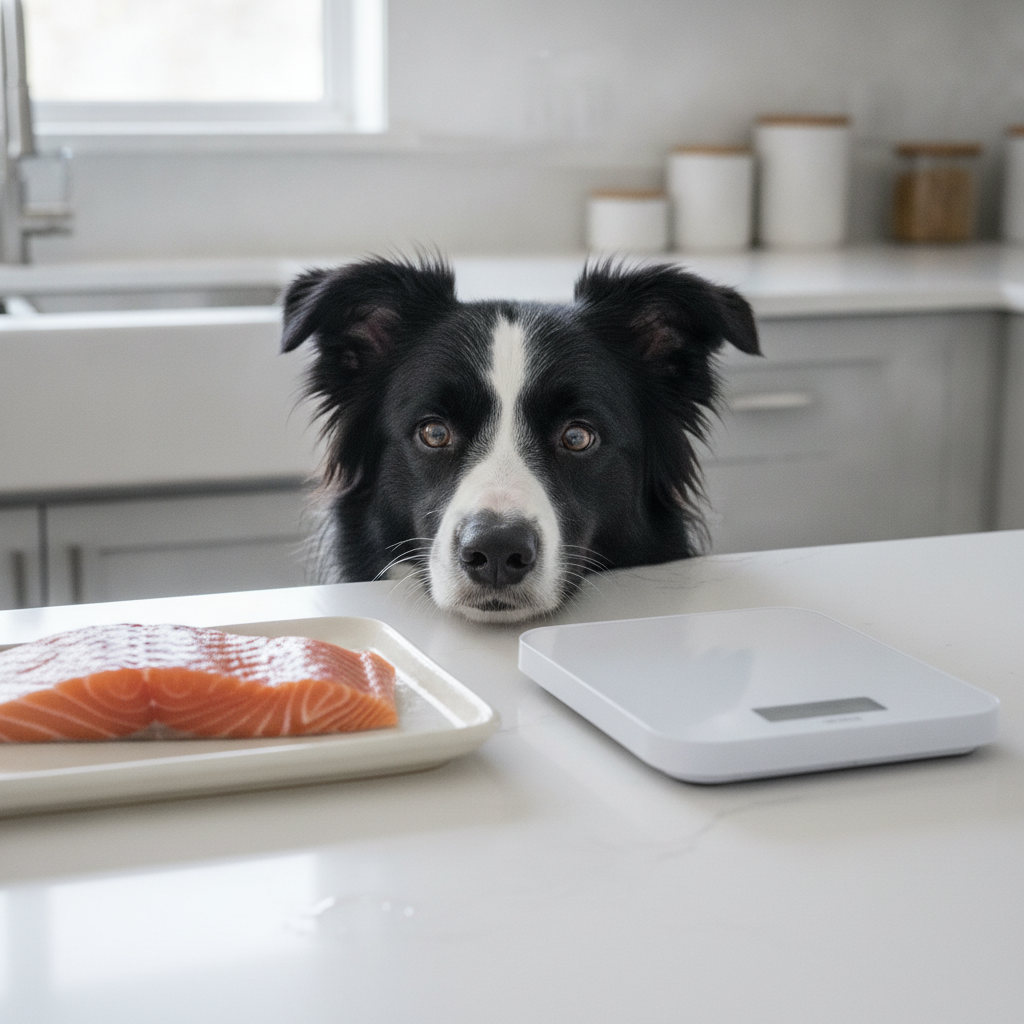
Look at the label on almost any bag of dog food and you will find fish somewhere in the ingredients, which is a fair clue that fish belongs in a dog’s diet. It is lean protein, it is loaded with the omega-3 fatty acids that support skin, coat, joints, and brain, and it is a useful alternative for dogs allergic to chicken or beef. Most of the “can dogs eat fish” question has an easy, encouraging answer.
But there is one version of fish that is not a “watch the portion” caution. It is a genuine, sometimes-fatal danger, and it is worth leading with because most guides bury it near the bottom: raw salmon, in the wrong part of the country, can kill a dog.
The one that can actually kill: salmon poisoning disease
Raw or undercooked salmon, trout, and other Pacific Northwest fish can carry a fluke, and that fluke can carry a rickettsial organism called Neorickettsia helminthoeca. When a dog eats the infected raw fish, the organism triggers salmon poisoning disease. This is not a stomachache. Symptoms usually appear about a week after the meal, vomiting, diarrhea, loss of appetite, depression, high fever, and swollen lymph nodes, and left untreated, roughly 90 percent of affected dogs die, usually within about two weeks.
The good news is twofold. The disease responds well to prompt treatment, typically the antibiotic doxycycline, and most treated dogs recover fully. And it is entirely preventable, because thorough cooking destroys the parasite. The takeaway is blunt: never feed a dog raw salmon or trout, and if a dog eats raw Pacific fish and later runs a fever with GI signs, get to a vet and mention the fish specifically.
Salmon poisoning is the one I make sure owners actually hear, because the timing fools people. The dog eats raw fish, seems fine for days, then crashes with a fever a week later, and nobody connects the two. If your dog got into raw salmon or trout, tell your vet that detail up front. It changes everything about how fast we treat it.
The everyday risks worth managing
Set the raw-fish danger aside and the rest of the cautions are ordinary, the kind you manage rather than fear.
Bones are a choking and injury hazard. Fish bones are small, sharp, and brittle, and they can lodge in or tear the digestive tract, so debone anything you cook, or choose a soft-boned fish like sardines that is safe whole. Seasonings and oils are the usual culprits behind an upset stomach: garlic and onion are toxic, and excess oil can cause digestive upset or even pancreatitis, so plain is the rule. And mercury is a slow, cumulative concern rather than an acute one, which is why fish choice matters.
Choosing the right fish
Not all fish are equal. Aim for low mercury, boneless or deboned, and properly cooked by steaming, baking, or boiling with no seasoning or oil.
Good picks include salmon (cooked, never raw), whitefish, flounder, haddock, and cod. If you want high omega-3s with low mercury, wild-caught salmon, sardines, and trout are the standouts. Sardines are especially convenient, small, low-mercury, omega-3-rich, and soft-boned, just buy them in water without added salt. Tilapia is safe cooked and deboned, but it delivers far fewer omega-3s than salmon or sardines. Lobster is not toxic but is a poor choice, often cooked with butter, garlic, and salt, and high in sodium and cholesterol; if you offer it, keep it small, plain, shell-free, and never raw.
The fish to keep off the menu are the long-lived, high-mercury species that concentrate mercury over years: tuna, shark, swordfish, king mackerel, and tilefish. And beyond salmon poisoning, trout and some whitefish can carry parasites too, which is simply another reason to cook fish to at least 145 degrees Fahrenheit.
How much, and how often
Fish is a treat or a topper, not the foundation of the diet, and it should stay under 10 percent of your dog’s total intake so it does not throw off the balance of a complete dog food or stack up mercury exposure. As a rough weekly guide: one to two small servings for dogs under 20 pounds, two to three for dogs 20 to 50 pounds, and three to four for dogs over 50 pounds.
What’s new since this was written
The clearest recent update is how firmly the research now backs the raw-fish warning. A 2022 clinical review of salmon poisoning disease reinforced both the roughly 90 percent untreated fatality rate and how well dogs respond to prompt doxycycline. In practice that sharpens the message: the danger is real, but it is also very treatable if you act fast and tell the vet about the raw fish, so the story is one of prevention plus early recognition, not doom.
The mercury picture has not meaningfully improved, which keeps the fish-selection advice steady: favor small, short-lived, low-mercury fish like sardines and wild salmon, and treat the big predator fish as off-limits for regular feeding. None of this dims the case for fish overall. Cooked and chosen well, it remains one of the better proteins you can share.
References
- “Salmon Poisoning Disease in Dogs.” MSD Veterinary Manual. https://www.msdvetmanual.com/infectious-diseases/rickettsial-diseases-in-dogs/salmon-poisoning-disease-in-dogs
- Headley, S. A., et al. “Salmon Poisoning Disease in Dogs: Clinical Presentation, Diagnosis and Treatment.” 2022. https://pmc.ncbi.nlm.nih.gov/articles/PMC9718139/
- “Salmon Poisoning.” Washington State University Veterinary Teaching Hospital. https://hospital.vetmed.wsu.edu/2021/10/29/salmon-poisoning/
- Pali-Schöll, I., et al. “Comparing Immediate-Type Food Allergy in Humans and Companion Animals — Revealing Unmet Needs.” Allergy, vol. 72, no. 11, 2017, pp. 1643–1656. https://doi.org/10.1111/all.13179
Common questions
Can dogs eat raw fish?
No. Raw and undercooked fish can carry parasites and bacteria, and raw salmon and trout from the Pacific Northwest can transmit salmon poisoning disease, which is often fatal without treatment. Cooking to at least 145 degrees Fahrenheit kills these risks.
Can dogs eat sardines?
Yes, and they're one of the best choices. Sardines are small, low in mercury, rich in omega-3s, and soft-boned enough to eat whole. Buy them packed in water, not oil, with no added salt.
Which fish should dogs avoid?
Skip long-lived, high-mercury species: tuna, shark, swordfish, king mackerel, and tilefish. These accumulate mercury over their long lives, and regular servings can cause neurological problems.
Not a substitute for your vet. Our guidance is educational. For urgent symptoms, contact a vet or emergency clinic right away. Editorial standards
Dr. Mehta is a board-certified veterinary nutritionist who evaluates pet food formulations, ingredient quality, and the science behind dietary trends. He writes and reviews all nutrition content at The Pet Times, including our food rankings and feeding guides.
Meet our experts ↗Keep reading
 FoodYou Can't Train a Dog to Eat Slowly. You Make It Physically Impossible.Dr. Lena Park · 6 min
 Health & WellnessA Raw-Food Recall, Decoded: What Blue Ridge Beef's Salmonella Scare MeansDr. Ravi Mehta · 6 min
 FoodSalmonella and Listeria in Darwin's Raw Pet Food: The Exact Lots to TossDr. Amara Solis · 4 min
 Health & WellnessBlue Ridge Beef Recall of Puppy and Kitten Food Now Covers 16 StatesDr. Ravi Mehta · 4 min
 FoodThe Recalled Raw Food Was Never the Only Thing at Risk. Your Kitchen Was.Dr. Nina Kohl · 5 min
 Health & WellnessOne Customer Complained. That's the Only Reason the Duck Was Pulled.Dr. Lena Park · 5 min